When Does the Purple Hosta Bloom? Planting Methods and Precautions
The purple hosta has both ornamental and medicinal value, making it an extremely useful plant. When is the blooming season of the purple hosta? Planting methods and precautions:
When is the blooming season of the purple hosta:
The purple hosta begins blooming in early July, with a flowering period of about ten days; the white hosta is still blooming in August, with a full bloom period of up to twenty days. The hosta has the special habit of opening at night, and its fragrance is rich and intense, making it an indispensable part of a garden's night scene. It can also be potted for indoor and corridor decoration. Planting hostas in large patches can be developed into a tourism industry. The purple hosta has a wide range of uses; the entire plant can be used medicinally, and it also has high ornamental value.
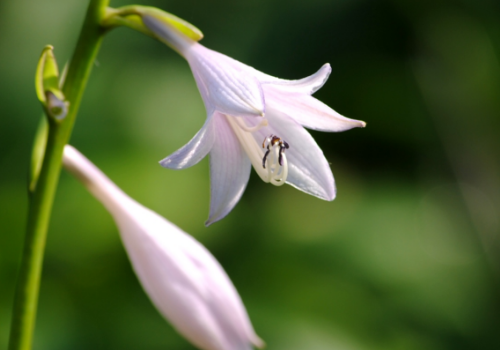
Purple hosta planting methods and precautions:
1. Planting techniques:
The purple hosta prefers warmth and a humid climate, prefers shade, and should avoid prolonged direct sunlight. It has extremely strong tillering ability and cold resistance, and is not demanding about soil, growing well in ordinary soil. It turns green in early to mid-April, enters the withering period from late September to early October, with a growth period of 175-185 days. When planting, deep, fertile, moist and well-drained sandy loam is most suitable. The purple hosta needs fertilizing before early spring sprouting and before flowering, to make the leaves lush and increase the number of blooms. Before turning green in spring and before winter, it needs thorough watering. During the growing season, water promptly; in the rainy season, drain promptly, drain promptly, and promptly cut off remaining flowers.
2. Precautions:
This is mainly because the plants are too densely packed and caused by excessive water accumulation during the rainy season. The root collar epidermis of diseased plants appears brown and water-soaked, with moonlight-colored mycelium growing on it, eventually forming a white mycelium layer resembling white silk, causing the leaf stalk base to rot and the plant to fall over. Chemical control: In the early stage of the disease, irrigate the base with 50% carbendazim at 600-800 times dilution or 25% Kekuxing at 300-400 times dilution, so as to prevent the leaf stalk base from rotting.
Do you now understand the knowledge about the purple hosta?
Pairing Hostas with Home Decor Styles
The hosta is both a medicinal plant and a landscape plant. It is one of the flowers in classical Chinese courtyards and is an extremely beautiful landscape plant. The hosta, because its flowers open at night and are richly fragrant, is an indispensable flower in a night garden, and can also be potted for indoor and corridor decoration. Planting hostas in large patches is also a great project for developing tourism. The purple hosta blooms in early July, with a full bloom period of about ten days; the white hosta blooms in August, with a full bloom period of twenty days.
What Is the Flower Language of the Hosta?
The hosta is both a medicinal plant and a landscape plant. It is one of the flowers in classical Chinese courtyards and is an extremely beautiful landscape plant. In addition, the entire hosta plant can be used medicinally, making it a medicinal plant where every part is treasure. If its flowers are used medicinally, they have the functions of draining dampness, regulating menstruation and stopping leukorrhea. Its roots are similar to honeysuckle and can be used to clear heat, and also have effects such as reducing swelling, detoxifying and relieving pain. Its leaves can also be used to detoxify and reduce swelling.
So, what is the flower language of such a precious and versatile hosta in the complete collection of flower languages? And what legendary stories does it have? Let's take a look together!
The flower language of the hosta: tranquil and gentle
The hosta is a perennial herbaceous plant. The leaves grow in clusters, ovate or heart-shaped. The flower stem emerges from the leaf cluster, forming a raceme. It blooms from summer to autumn, with flowers as white as jade (there are also light purple flowers). Before opening, they resemble a hairpin head, and they are fragrant. Cultivated for ornamental purposes.
The hosta also has several alternative names. First, because of its pure white color, it is called “white calyx.” Second, because its shape resembles a crane or an immortal, it is called “white crane immortal,” “white crane flower,” and “Yuchunbang.” The name “yuzan” (jade hairpin) is said to come from the fact that its pure white, jade-like flowers closely resemble the hairpins on the hair buns of women in ancient China. Also, because its flowers before opening are like a white jade hair scratcher, it has another name, “yusaotou” (jade scratcher). Whenever spring arrives, the soft green stems and leaves put out new buds, and in summer, strings of white inflorescences emerge from the leaf clusters, like milky white jade hairpins clustered and inserted on the emerald branches.
The hosta's leaves are delicate and lustrous, its buds resemble hairpins, its color is white as jade, and its fragrance is pleasant. It is one of the important flowers in classical Chinese courtyards. In modern courtyards, it is mostly planted under forest trees, in rock gardens, or on the back side of buildings, exactly as in the saying, “How lovely is the hosta's fragrance, a few branches blooming by the wall corner.” It can also be planted in clusters of two or three to accent a garden. There is even a poem praising it: “Facing the wind, a single jade hairpin, holding affection, waiting for whom? She keeps her feelings and does not display herself; not yet displayed, her feelings are even truer.” This vividly and charmingly describes the elegant posture and gorgeous colors of the hosta, standing tall and graceful.
The hosta, because its flowers open at night and are richly fragrant, is an indispensable flower in a night garden, and can also be potted for indoor and corridor decoration. Planting hostas in large patches is also a great project for developing tourism. The purple hosta blooms in early July, with a full bloom period of about ten days; the white hosta blooms in August, with a full bloom period of twenty days.