Southern Magnolia Winter Care Methods and Value Analysis
The efficacy and benefits of the southern magnolia are quite high; it has not only ornamental value but also medicinal value. How to care for southern magnolia in winter? What value does it have:
How to care for southern magnolia in winter:
1. After transplanting, to improve the survival rate and reduce transpiration, the tree should be regularly supplemented with water; according to different temperature and humidity conditions, promptly spray water on the crown and trunk. Within half a month after transplanting, persist in spraying the tree, 3 to 4 times a day, but the ground must not accumulate water, to ensure the tree's water needs; afterward, reduce the number of sprays as appropriate according to weather conditions.
2. Drainage: If there is excessive rainfall after transplanting, drainage channels need to be opened to prevent water accumulation at the roots, which could cause root rot and death of the southern magnolia.
3. Trunk protection: The trunk and branches of this tree are most easily scorched by intense sunlight, causing the bark to crack and decay, resulting in serious damage. For newly planted southern magnolias, apply whitewash after transplanting; you can also wrap the trunk with straw rope for about 2 m to reduce water evaporation; during drought, spray water on the straw rope to create a moist micro-environment.
4. Pruning branches and removing leaves: Because its branches and leaves are lush and its leaves are large, newly planted saplings have high water transpiration and are prone to wind damage, so leaves should be thinned immediately when transplanting. If the soil ball is loose or too small and the root system is severely damaged, some small branches or excess branches should also be thinned. By pruning branches and removing leaves, water evaporation can be reduced and the water supply pressure on the injured roots can be eased. Pruning should remove inner-canopy branches, overlapping branches and diseased or pest-infested branches, while striving to maintain the integrity of the tree shape; leaf removal should preferably remove 1/3 of the leaves on the branches; removing too many will make it difficult for the roots to absorb water.
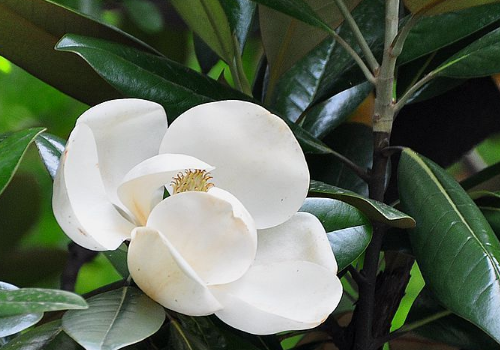
What value does the southern magnolia have:
Ornamental value of the southern magnolia: The leaves of the southern magnolia are relatively thick and the flowers are large and fragrant. It is suitable for solitary planting, group planting or row planting, and can be used as landscape, street trees or shade trees.
Greening role of the southern magnolia: The southern magnolia has a tall and graceful tree shape, a certain cold tolerance, and strong resistance to toxic gases such as sulfur dioxide in factories and mines, so it can purify air and protect the environment. Medicinal value of the southern magnolia: Hypotensive effect: The flower buds of the southern magnolia have a slow hypotensive effect on anesthetized or non-anesthetized subjects. Ganglionic blocking and muscle relaxant effects: Magnoflorine in the bark of the southern magnolia has curare-like effects and ganglionic blocking effects, and these effects can be antagonized by anticholinesterase drugs such as neostigmine. Antibacterial and antifungal effects: Honokiol contained in the bark has anti-ulcer effects.
Now you have learned how to care for the southern magnolia.
What varieties of white magnolia are there? How to care for white magnolia in winter
The white magnolia has a pretty flower shape and a fragrance that spreads all around, and there are many varieties for people to choose from. It has high ornamental value, so it is very popular. So, what varieties of white magnolia are there? How to care for white magnolia in winter? Below, let us introduce the varieties of white magnolia, as well as the methods for cultivating white magnolia in winter.
What varieties of white magnolia are there
Common white magnolias include Yulan magnolia, purple magnolia, saucer magnolia and southern magnolia.
1. Yulan magnolia: Yulan magnolia is a deciduous tree, up to 25 m tall, with trunk diameter up to 200 cm. The crown is narrowly ovate when young, and broadly ovate or loosely broad-ovate when mature. Flowers are terminal; flower buds form in the previous autumn, blooming before leaves appear; flowers are fragrant, jade-white, sometimes with a reddish tinge at the base; there are 9 tepals in total, with 3 petal-like sepals and 6 petals, and numerous stamens and pistils. The white magnolia is white as jade and its fragrance resembles orchid; its tree form is majestic, with tall ones exceeding 10 m, and the crown is ovate. The large leaves are obovate, with a short and abruptly pointed apex and a cuneate base, glossy on the surface; the whole plant has sparsely spreading branches, and young branches and buds are covered with short down. Flowers open before leaves, terminal and large, 12-15 cm in diameter. There are 9 tepals, bell-shaped. Flowers are actinomorphic, with a rose-like corolla, distinct stamens, apocarpous pistils, and a superior ovary. The flowering period is in March, lasting about ten days.
2. Purple magnolia: Deciduous shrub or small tree, up to 3-5 m tall, often clumping; bark grayish brown, wood aromatic; branchlets green-purple or light brown-purple, with obvious lenticels. Leaves elliptic-obovate or obovate, 8-18 cm long and 3-10 cm wide, apex acute or acuminate, base gradually narrowed and extending down along the petiole to the stipular scar; upper surface dark green, sparsely short-pubescent when young; lower surface grayish green, short-pubescent along the veins; lateral veins 8-10 per side; petiole 8-20 mm long; stipular scar about half the length of the petiole. Flower buds ovoid, covered with pale yellow silky hairs; flowers open at the same time as leaves, bottle-shaped, upright on stout, hairy pedicels, slightly fragrant; tepals 9-12, the outer 3 sepal-like, purple-green, lanceolate, 2-3.5 cm long, often caducous; inner two whorls fleshy, purple or purplish red outside, whitish inside, 8-10 cm long and 3-4.5 cm wide; filaments dark purplish red, 8-10 mm long; anthers about 7 mm long, laterally dehiscing; connective extending into a short pointed tip; carpels dark purplish red; style 1, about 1.5 cm long, pale purple, glabrous. Aggregate follicle fruit dark purplish brown or brown, cylindrical, 7-10 cm long; mature follicles nearly spherical, with a short beak at the apex. Flowering period March-May, fruiting period August-October.
3. Saucer magnolia: Deciduous small tree. Leaves obovate to broadly elliptic, 6-15 cm long and 4-715 cm wide, green and glossy on the upper surface, pale green and pubescent on the lower surface; petiole short, pubescent. Pseudobuds ovoid. Flowers open before leaves; tepals 9, outer whorl tepals 2/3 the length of inner whorl tepals, pale purplish red, rose-colored or white, with purplish red tinges or stripes; anther locules laterally longitudinally dehiscing; distinct simple pistils glabrous or hairy. Flowering period March-April; fruit ripening period September-October.
4. Red magnolia: Deciduous large shrub, up to 3-5 m tall, often clumping. Buds with grayish brown fine hairs; branchlets purplish brown. Leaves obovate or elliptic-ovate, 10-18 cm long and 4-10 cm wide, apex acute or acuminate, base cuneate, lower surface pubescent along the veins. Flowers open before leaves or rarely at the same time as leaves, large, bell-shaped; sepals 3, lanceolate, pale purplish brown, 2-3 cm long; petals 6, oblong-obovate, 8-10 cm long, purple or purplish red outside, white inside; filaments and carpels purplish red; style 1, apex pointed, slightly curved. Aggregate fruit oblong, 7-10 cm long, pale brown. Flowering period April-May.
5. Southern magnolia: Deciduous evergreen tree, up to 30 m tall in its place of origin; bark pale brown or gray, splitting into thin scales; branchlets stout, with diaphragmed pith; branchlets, buds, lower leaf surfaces and petioles densely covered with brown or grayish brown short down (lower leaf surfaces of young trees glabrous). Leaves thickly leathery, elliptic, oblong-elliptic or obovate-elliptic, 10-20 cm long and 4-7 (10) cm wide, apex obtuse or shortly obtusely pointed, base cuneate, upper surface dark green and glossy; lateral veins 8-10 per side; petiole 1.5-4 cm long, without stipular scar, with a deep groove. Flowers white, fragrant, 15-20 cm in diameter; tepals 9-12, thickly fleshy, obovate, 6-10 cm long and 5-7 cm wide; stamens about 2 cm long, filaments flattened, purple, anthers introrse, connective extending into a short point; gynoecium ellipsoid, densely covered with long down; carpels ovate, 1-1.5 cm long, style curled. Aggregate fruit cylindrical-oblong or ovoid, 7-10 cm long and 4-5 cm in diameter, densely covered with brown or pale grayish yellow down; follicles dehiscing along the back, rounded on the back, with a long beak on the outer side at the apex; seeds nearly ovoid or ovate, about 14 mm long and about 6 mm in diameter, outer seed coat red; seeds with the outer seed coat removed have the apex extended into a short neck. Flowering period May-June, fruiting period September-October.
How to care for white magnolia in winter
1. Temperature
Suitable temperature is the key to ensuring that white magnolia safely overwinters. After the autumn equinox, white magnolia should be moved indoors promptly for care. Indoor temperature controlled at about 5-10°C is relatively suitable. In winter, if the room temperature becomes too high for some reason, appropriate cooling measures should also be taken.
2. Humidity
The humidity around the white magnolia can also be improved by spraying water into the air. On clear days, appropriate window ventilation should also be carried out (from 10 a.m. to 2 p.m.), but be careful to guard against the threat of cold winter winds.
3. Light
The duration of light in winter is shorter, but the white magnolia should still be ensured sufficient sunlight indoors.
4. Fertilizer and water
In winter, temperatures are low and plant transpiration is weak, so very little water is needed. Watering should be controlled, "do not water if not dry," and no fertilization is needed.
The above are the varieties of white magnolia introduced for everyone, as well as the methods for cultivating white magnolia in winter. Is everyone clear now? For more home knowledge, please stay tuned.
Rose R. chinensis Rose illustrated guide: How to grow roses / How to propagate roses
Rose profileRose R. chinensis
Aliases: Yueyuehong, Gengshen Qiangwei, Sijihua, Shengchun, Douxuehong, Yueguihong, Yueguihua, Yueji, Yueyuekai, Yueyuehua, Yanxuehong, Chouchunhua, Yuejigang, Yueguanghua, Tongchuizi, Sijichun, Shouke
Classification: Shrub flowers
Family and genus: Plantae, Angiosperms, Dicotyledoneae, Rosales, Rosaceae, Rosa
Full flowering period: All seasons
Rose, known as the queen of flowers and also called "Yueyuehong," belongs to Rosaceae. It is an evergreen or semi-evergreen low shrub that blooms in all seasons, mostly red, occasionally white; it can be used as an ornamental plant and as a medicinal plant, and is also called Chinese rose. Its natural flowering period is from May to November; the flowers are large and fragrant, and it is widely used in horticultural cultivation and cut flowers. The main types of Chinese rose include cut-flower roses, edible roses, climbing roses, ground-cover roses, etc. China is one of the places of origin of Chinese rose. It is the city flower of Beijing, Tianjin and other cities. Red cut flowers have also become a must-give gift between lovers and a theme of love poetry. Chinese rose (scientific name: Rosa chin...
Rose cultivation methods and precautions, introduction to roses
Rose, known as the queen of flowers and also called "Yueyuehong," belongs to Rosaceae. It is an evergreen or semi-evergreen low shrub that blooms in all seasons, mostly red, occasionally white; it can be used as an ornamental plant and as a medicinal plant, and is also called Chinese rose. Its natural flowering period is from May to November; the flowers are large and fragrant, and it is widely used in horticultural cultivation and cut flowers. The main types of Chinese rose include cut-flower roses, edible roses, climbing roses, ground-cover roses, etc. China is one of the places of origin of Chinese rose. It is the city flower of Beijing, Tianjin and other cities. Red cut flowers have also become a must-give gift between lovers and a theme of love poetry.
Chinese rose (scientific name: Rosa chinensis), also known as Yueyuehong (Jiangsu and Zhejiang), Yueyuehua, Changchunhua (Changchun, Jilin), Gengshen Qiangwei, is native to Guizhou, Hubei, Sichuan and other places in central China, and is now found all over the world. It is the city flower of Fuyang, Beijing, Tianjin, Shijiazhuang, Nanyang, Changzhou, Huai'an and Liuzhou, and the national flower of Iraq, the United States and Luxembourg.
The natural flowering period is from May to November; the flowers are large and fragrant, and it is widely used in horticultural cultivation and cut flowers. The main types of Chinese rose include cut-flower roses, edible roses, climbing roses, ground-cover roses, etc. China is one of the places of origin of Chinese rose. It is the city flower of Beijing, Tianjin, Wuhu, Handan, Shijiazhuang and other cities. Red cut flowers have also become one of the must-give gifts between lovers and a theme of love poetry. Chinese rose has good antifungal activity and synergistic anti-drug-resistant fungal activity.
Morphological characteristics of the rose
Rose is a deciduous shrub or evergreen shrub, or a trailing and climbing vine plant. The stem is brownish tinged with green, with hooked prickles or no prickles, but there are also roses with almost no prickles. Branchlets are green; leaves are dark green, alternate, odd-pinnately compound; leaflets generally 3-5, broadly ovate (elliptic) or ovate-oblong, 2.5-6 cm long, apex acuminate, with sharp teeth, leaf margin serrate, glabrous and smooth on both sides; stipules adnate to the petiole, entire or glandular-serrate, apex separated into auricles.
Flowers are borne at the top of branches, often in clusters, rarely solitary; flower colors are numerous and varied, 4-5 cm in diameter, mostly double-flowered and some single-flowered; sepals caudate and long-pointed, margin pinnately lobed; styles distinct, extending beyond the mouth of the hypanthium, equal in length to the stamens; each ovary has 1 ovule. It has the reputation of being the queen of flowers. Flowers are slightly fragrant; flowering period April-October (north), March-November (south), with the most flowering in spring; most are complete flowers, or bisexual flowers. Fleshy rose hips, red-yellow when mature, splitting open at the top; the "seed" is an achene, chestnut brown. Fruit ovoid or pear-shaped, 1-2 cm long, sepals deciduous.
1. Flowers: Flowers are borne at the top of stems, solitary or clustered. There are single, semi-double and double forms, with rich flower colors and diverse flower shapes.
2. Fruit: The fruit of the rose is spherical or pear-shaped, green before maturity and orange-red when mature. It contains 5-14 bony achenes (seeds).
3. Seeds: The outer layer of rose seeds is the pericarp; the pericarp has inner and outer layers, the outer layer being bony and very hard; the inner layer is fibrous, with fibers interwoven vertically and horizontally and very strong toughness. The seed coat is a very thin membranous layer tightly wrapping the embryo. There is a certain gap between the pericarp and the seed coat.
4. Leaves: Odd-pinnately compound leaves; leaflets 3-7, ovate or oblong; leaf margin serrate, [1] most varieties have smooth and glossy leaf surfaces (some varieties are rough and dull), and most varieties are purplish red when leaves first unfold, then gradually turn green.
5. Stem: The primary stem of the rose is purplish red, young stems are green, and old stems are grayish brown; the stem bears sharp and upright prickles, and the density of prickles varies by variety.
6. Roots: The morphology of the rose root system is closely related to the propagation method. Seedlings have obvious main roots and strong lateral roots; seedlings propagated by cuttings have only lateral roots, no main roots, and the number of lateral roots is relatively small, with poorer vitality.
Evergreen or semi-evergreen shrub, 1-2 m tall. Stems upright; branchlets spreading, green, glabrous, with curved prickles or no prickles. Pinnately compound leaves with 3-5 leaflets, rarely 7, 10-15 cm long including the petiole; leaflets broadly ovate to ovate-elliptic, 2.5-6 cm long and 1.5-3 cm wide, apex acute or acuminate, base rounded or broadly cuneate, margin with sharp fine serrations, upper surface bright green, both sides glabrous; terminal leaflet with a long petiolule, lateral leaflets with shorter petiolules; petiole and rachis with sparse glandular hairs and fine prickles; stipules with ciliate glandular hairs or pinnate lobes along the margin, glabrous on both sides, base adnate to the petiole. Flowers several in clusters or solitary, about 5 cm in diameter; pedicel 3-5 cm long, green, often glandular-hairy; hypanthium nearly spherical; sepal lobes triangular-ovate, apex caudate-acuminate, entire or pinnately divided, glabrous outside, short-tomentose inside and along the margin; petals double, deep red, pink, rarely white; stamens numerous; styles distinct, ovary pubescent. Rose hips spherical, yellow-red, 1.5-2 cm in diameter, sepal lobes persistent. April-October in the north, March-November in the south.
Rose is a deciduous shrub or evergreen shrub, or a trailing and climbing vine plant. The stem is brownish tinged with green, with hooked prickles or no prickles, but there are also roses with almost no prickles. Branchlets are green; leaves are dark green, alternate, odd-pinnately compound; leaflets generally 3-5, broadly ovate (elliptic) or ovate-oblong, 2.5-6 cm long, apex acuminate, with sharp teeth, leaf margin serrate, glabrous and smooth on both sides; stipules adnate to the petiole, entire or glandular-serrate, apex separated into auricles.
Flowers are borne at the top of branches, often in clusters, rarely solitary; flower colors are numerous and varied, 4-5 cm in diameter, mostly double-flowered and some single-flowered; sepals caudate and long-pointed, margin pinnately lobed; styles distinct, extending beyond the mouth of the hypanthium, equal in length to the stamens; each ovary has 1 ovule. It has the reputation of being the queen of flowers. Flowers are slightly fragrant; flowering period April-October (north), March-November (south), with the most flowering in spring; most are complete flowers, or bisexual flowers. Fleshy rose hips, red-yellow when mature, splitting open at the top; the "seed" is an achene, chestnut brown; fruit ovoid or pear-shaped, 1-2 cm long, sepals deciduous.
Ecological habits of the rose
Strong adaptability, cold-tolerant and drought-tolerant, with no strict requirements for soil, but best in slightly acidic sandy loam rich in organic matter and well drained. Potting soil should be loose, pot diameter appropriate, moisture moderate, apply light fertilizer frequently, remove flowers and prune branches, prevent and control pests and diseases, and repot every year. It likes sunlight, but too much direct strong light is unfavorable to flower bud development and petals are prone to scorching; it likes warmth, and generally 22-25°C is the most suitable temperature for flower growth; high summer temperatures are unfavorable to flowering.
It needs sufficient sunlight, air circulation, good drainage and a wind-sheltered environment; in midsummer it needs appropriate shading. For most varieties, the optimum temperature is 15-26°C during the day and 10-15°C at night. It is relatively cold-tolerant; when the winter temperature is below 5°C, it enters dormancy. If high summer temperatures persist above 30°C, most varieties bloom less, quality declines, and they enter a semi-dormant state.
Most varieties can tolerate a low temperature of -15°C. It requires fertile, loose, slightly acidic soil rich in organic matter, but has a wide adaptability range to soil. Relative air humidity is preferably 75%-80%, but slightly dry or slightly humid conditions are also acceptable. It has the characteristic of continuous flowering. It needs to maintain air circulation and be pollution-free; if ventilation is poor, powdery mildew is likely to occur, and harmful gases in the air, such as sulfur dioxide, chlorine and fluorides, are all toxic to Chinese rose.
Distribution area of the rose
China is one of the places of origin of Chinese rose. Modern roses have extremely complex blood relationships.
Chinese rose is the city flower of Zhengzhou, Beijing, Tianjin, Nanyang, Dalian, Changzhi, Yuncheng, Bengbu, Jiaozuo, Putian, Qingdao, Weifang, Wuhu, Shijiazhuang, Handan, Xingtai, Langfang, Shangqiu, Luohe, Anqing, Ji'an, Huai'an, Huaibei, Huainan, Jiaonan, Nanchang, Yichang, Xuchang, Changzhou, Taizhou, Cangzhou, Suzhou, Hengyang, Shaoyang, Fuyang, Xinyang, Deyang, Tianshui, Dongtai and other cities. Among them, Laizhou City and Shiqiao Town in Nanyang City are the "hometown of Chinese rose," and Shuyang, Jiangsu is the largest Chinese rose production base in East China. Among them, Chinese roses produced in Laizhou, Shandong, Shuyang, Jiangsu and Nanyang, Henan are famous at home and abroad.
Cultivation techniques of the rose: Flowering period control
Chinese rose is also called "Yueyuehong," with a natural flowering period from May to November and continuous blooming. However, controlling the flowering period of Chinese rose during the Olympics is still very important, especially for potted Chinese roses and cut-flower Chinese roses; the flowering period must be well controlled to successfully complete the temporary flower display tasks at various venues and stadiums during the Olympics and the supply tasks for fresh cut flowers.
In actual work, analyze specific situations individually. For field-planted Chinese roses, according to their geographical location, while ensuring continuous flowering, make them bloom more and bloom well from August 8 to 24. The following methods are for reference: around June 20, prune all spent flowers and some already fully bloomed flowering branches of field-planted Chinese roses at a 50% ratio, cutting to the round bud position at the mature middle part of the flowering branch; their ornamental flowering period is about August 1-15; around June 30, prune all spent flowers and all flowering branches after full bloom by the above method; their ornamental flowering period is about August 10-25; after June 30, prune spent flowers at any time to let them bloom naturally. For potted Chinese roses and cut-flower Chinese roses, calculate the date of flower use well, and about 45 days before flower use, carry out comprehensive branch pruning.
Fertilizer and water management: In the pruning under the above various situations, scientific fertilizer and water management should be carried out according to plant growth. After the plant is pruned, when the new generation of buds does not sprout, spray 0.2% urea on the leaves once every 5 or 6 days, which can promote new bud sprouting; if the plant grows quickly and new branches grow rapidly beyond the planned range, controlling water supply can delay growth. During water control, after branches and leaves wilt, spray water promptly; recovery within 1 hour is the critical point. Water is the carrier of various enzymes in the plant body; insufficient water supply lowers enzyme activity and slows metabolism, thus slowing plant growth. If new branches bud later than planned, at this time spray 0.2% monopotassium phosphate on the leaves once every 5 or 6 days, and the flower buds will grow rapidly. The flowering period of Chinese rose consumes a large amount of water and internal nutrients, so the water supply must be sufficient.
Flowering conditions
1. Sunlight must be long. The place where Chinese roses are planted must be both ventilated and able to receive more than half a day of sunlight. This is the primary condition for it to bloom profusely like brocade. If placed in a half-shade half-sun location or a shaded place with insufficient light, it can bloom at most only in spring and autumn in a year. Therefore, households whose living conditions cannot meet the light requirements had best not grow Chinese roses and instead grow relatively shade-loving flowers and plants.
2. Prune often. Although the sunlight conditions are good, if it is not pruned for a long time, the Chinese rose will not grow well either. The pruning method is: after December each year, when the Chinese rose leaves fall, carry out one pruning, leaving branches about 15 cm high, with the pruning position about 1 cm above an outward-growing leaf bud, and at the same time remove side branches, diseased branches and concentric branches. After May, each time flowering finishes, cut off 2/3 or 1/2 of that flowering branch, so there will be more opportunities for regenerated flower buds. If you want larger flowers, you can also remove some when there are many flower buds, which can both concentrate nutrients and achieve the purpose of extending the flowering period and opening in batches.
3. Fertilize frequently and promptly. Generally, for newly planted or transplanted potted Chinese roses, loose loess rich in humus can be used for cultivation; it is best to mix in 1/4 rice husk ash or a small amount of broad bean shells, bean cake or chicken and pigeon manure, etc., so that the Chinese rose can continuously absorb various nutrients such as nitrogen, phosphorus and potassium from the soil. For old potted Chinese roses that need repotting, base fertilizer can also be applied as above; for those not repotted, scrape open 2-3 cm of the soil surface and work in some fresh fish innards or chicken and pigeon manure, bean cake crumbs, etc. as base fertilizer. This is best done in January-February when the Chinese rose is dormant. In this way, the fertilizer will gradually ferment into fertilizer liquid and seep into the roots with rainwater or irrigation water, achieving good results. After May is the peak growth season for Chinese roses; every 10 days, apply topdressing once. Fully decomposed and fermented fish juice or vegetable leaf juice can be mixed at a ratio of 3 parts fertilizer to 7 parts water and applied; stop fertilizing by November. If the above requirements can be followed, the fresh flowers of Chinese rose can meet you every month. Chinese rose is by nature averse to heat; it grows best at 20-25°C; above 30 degrees, growth becomes difficult. If fertilization is handled well, its weakness of fearing high summer temperatures can be overcome.
4. Repotting. Chinese roses do not need to be repotted and root-pruned every year. If it is moving from a small pot to a large pot, it can be done in all four seasons.
Early spring management
In early spring, the roots of the Chinese rose begin to spread in the soil. At this time, the most important care work is pruning.
In warm areas, this is in late February; in colder northern areas, pruning work should be carried out in March-April. Pruning generally removes about 1/3 of the plant height, first cutting off weak branches, diseased branches and dead branches. The new branches produced by the plant in 2011 are the most vigorous; choose 2-3 such main branches to keep, at most 5. According to the plant's original growth condition, generally prune with branch shears at a position about 50 cm above the ground and 1 cm above a robust bud. The so-called robust bud is an un-sprouted, plump, already swollen bud. In order not to let buds grow into overly dense branches, choose and keep robust buds on the outer upper side of the plant. In addition, pruning should be carried out at a plump part of the branch. When pruning with shears, a "click" sound indicates a plump part. If the cut feels soft, continue cutting downward to a hard place. The aged parts at the branching nodes of the plant are rough and prominently swollen, with no strong buds at all, so they should also be cut off.
The middle part of 2-3-year-old main branches is where new buds frequently emerge, so when pruning, only 10-20 cm needs to be left. Generally, if you want more flowers in the flowering period, carry out light pruning. If you want the flowers in the flowering period to be good and do not seek many flowers, carry out heavy pruning. In addition, for plants with poor growth, one should resolve to prune heavily, because such plants have poor root development; if the crown is too large, it is easy to cause insufficient nutrient supply. While pruning, it is best to carry out one high-concentration disinfection, which has a significant effect on preventing pests and diseases.
To make the pruned branches lean outward, use supports (wooden sticks, etc.) to fix them, making the tree shape balanced and graceful and avoiding branches and leaves rubbing against each other in the wind. Branches issued from buds at the lower part of leaning branches are more robust and bloom abundantly, so attention should be paid to protecting them.
After Awakening of Insects, insects successively wake from hibernation and begin activity. At this time, dissolve 10 mL of Sumithion (insecticide) and 20 g of wettable sulfur powder used for treating powdery mildew in 10 L of water, and spray the plants with the fully dissolved concentrated solution. Because Chinese roses have not yet grown leaves at this time, there is no need to worry about phytotoxicity.
About 20 days after pruning, buds begin to sprout. Among them, weak and small buds are often naturally eliminated during the sprouting process. To make the flowers bloom well, keep buds according to the thickness of the main branches: keep 3-4 buds on thick branches, keep 1-2 buds on pencil-thick branches, and remove all the rest. In cold regions, sprouting is later, so bud removal can be postponed.
If base fertilizer was applied in December, topdressing may not be needed in early spring; when buds sprout, scatter an appropriate amount of chemical fertilizer around the roots to promote budding. After buds sprout, on clear days if the soil surface is dry, to prevent the surface from freezing, irrigate in the morning or before noon.
Summer management
Once the peak flowering period of potted Chinese roses passes, they enter the hot and humid summer, and are mostly in a dormant or semi-dormant state. Strengthening summer management of potted Chinese roses and carrying out rejuvenation care can break the dormant period and keep them blooming continuously throughout the summer. The main management measures are:
1. Shading and ventilation. Potted Chinese roses have limited soil, and in high-temperature weather the soil is easily heated and dries out, so the Chinese roses must be shaded and cooled. It is best from 8 a.m. to 4 p.m. to place the potted flowers under trees in the courtyard or in a ventilated place under a trellis, so that the potted flowers receive scattered light and create suitable environmental conditions for the Chinese roses to grow and bloom.
2. Apply more fertilizer and water. Chinese roses bloom many times and need sufficient nutrients and water to ensure vigorous growth. Entering summer, their evaporation and consumption are both large and growth is rapid; during the flowering period, apply light fertilizer once every 10 days. Bean cake and poultry manure can also be soaked in water, sealed and fermented, then mixed with water as topdressing, making the plants bloom abundantly and leaves lush, breaking the summer dormancy of Chinese roses. For watering, it is advisable to use sun-warmed water to reduce the temperature difference between the potting soil and the water; using too-cold water will stimulate the root system and affect the normal development of the plant.
3. Spray more water. Chinese roses enter a semi-dormant state above 33°C, and are most favorable for growth at an average temperature of 20-25°C. Therefore, in summer, in addition to appropriate shading, more water should be sprayed; it is best to spray water once in the morning and once in the afternoon to create a humid environment and promote the growth of flowers and leaves.
4. Thinning branches and pruning. After the Chinese rose blooms, it should be cut below the third compound leaf under the flower to promote the development of sturdy new branches and early budding and flowering. Weak short branches should be pruned first and high; robust branches should be pruned later and short, to promote the weak and suppress the strong, and promote uniform flowering. The pruning length of long branches should not exceed one half, to avoid delayed axillary bud sprouting. In addition, each flush should not retain too many flowers; for potted Chinese roses, 3-5 is appropriate. Retaining too many flowers disperses nutrients too much, making flowers small and affecting the next flush.
5. Loosen soil and weed. While clearing weeds on the pot surface, a fine wire rake can be used to gently break the surface layer around the flowerpot, enhancing the looseness and aeration of the potting soil and promoting normal root growth.
6. Prevent and control pests and diseases. The place where flowerpots are placed should often be sprayed with 15% quicklime water or carbendazim or potassium permanganate aqueous solution for sterilization. July-August, the rainy season with high temperatures, is a high-incidence period for leaf spot and powdery mildew; spray with 0.3-0.5 degree Baumé lime sulfur mixture once a week, 2-3 times in total. In June-July, if longhorn beetle larvae are found causing damage, the branch tips should be cut off immediately. Once other leaf-eating pests are found, spray 800 times monocrotophos pesticide for control, which can kill eggs and larvae.
Pot cultivation techniques
1. Potting up
This refers to newly bred small seedlings or field-planted Chinese roses before sprouting, when large plants are lifted and started to be planted in pots. For small seedlings from coarse sand or hydroponics, as well as bare-root field-planted seedlings, when potting up, it is advisable to plant them in plain sandy loam for a period, and after the root system grows sturdy, use fertilized culture soil and place bottom fertilizer before moving them into a pot one size larger. For small seedlings rooted in culture soil or small pots from field planting with soil balls, ordinary culture soil can be used for potting up. When potting up, new pots should first be soaked thoroughly with water, and old pots should be washed clean; according to pot size, place 1 cm to 3 cm thick coarse sand at the bottom of the pot as a drainage layer. Then fill part of the soil according to the size of the plant. For bare-root potting up, pile the soil in the center of the pot into a small mound, hold the plant upright with the left hand, fill soil with the right hand, and as soil is added, gently lift the seedling upward so that the roots hang down at 45°. After planting, firm the soil. For those with root clusters and soil, also straighten the root hairs and plant the plant upright. Small seedlings are generally not restricted by time for potting up; once cultivated and surviving, they should be potted up promptly to prevent leggy and weak growth. Large field-planted plants must be potted up during the dormant period after leaf fall in early winter or before sprouting in early spring; otherwise normal growth and development will be affected, tree vigor will weaken, and it will take a long time to rejuvenate. When potting up, the soil should be moist and loose. After potting up, do not water thoroughly for the time being, and pay attention to shading and wind protection. This can not only promote rapid healing of broken roots but also make it easy to rejuvenate and grow vigorously.
2. Repotting into a larger pot
According to the plant's growth momentum and development needs, remove the whole root ball from a small pot and plant it into a large pot, including transitioning from plain soil cultivation to culture soil. Repotting into a larger pot is generally not restricted by time. For example, small seedlings potted in a No. 2 pot in spring, if growing vigorously, can be moved into a No. 9 tube pot between July and August. Larger plants can also be planted into a pot one size larger. When removing from the pot, pinch the plant stem with the index and middle fingers of the right hand, keep the palm close to the soil surface, and support the pot bottom with the left hand and turn the pot over. For small seedlings, tap the pot edge lightly with the hand; for large pots, hold the pot with both hands and lightly knock the pot rim against a hard place, and the whole root ball can be removed. The original potting soil should be watered beforehand; when removing from the pot it must not be too dry or too wet. For repotting into a larger pot, use culture soil. First remove the whole surface soil layer (the "treasure cover") and the lower drainage layer, then slightly loosen and straighten the fibrous roots coiled around the outside of the root ball; operate gently and do not let the root ball break apart. Then place it in the pot, add 20-60 g of hoof pieces as base fertilizer, fill soil and firm it; after repotting into a larger pot, normal care can continue.
3. Repotting
For all kinds of potted Chinese roses that have developed into form after two years of potting, in order to keep the plants growing vigorously and the plant shape well proportioned, after leaf fall each year and before sprouting, combine pruning with replacing the potting soil and applying base fertilizer. Repotting generally still uses flowerpots of the original specification, no longer increasing the size. For those stored closed in soil cellars in winter, after removing the whole root ball from the pot, trim the roots: first remove the surface cover layer and bottom drainage layer of the root ball, then cut off the overly dense fibrous roots coiled around the outside of the root ball, check and remove decayed roots and root nodules, and retain the root-protecting soil without letting the root ball break apart. In total, remove no more than 1/2 of the old potting soil, then place in a cold cellar for heeled-in storage, and pot with new soil the following spring. For those kept in a cold room or plastic-film cold frame in winter, they can be repotted with new soil into the original pot; the key operation points are the same as for repotting into a larger pot. After repotting, water thoroughly once, then they can be placed in a cold room or cold frame for care.
4. Water and fertilizer
During the growth period of potted Chinese roses, water should be given timely and checked, and the potting soil should often be kept moist. In hot and dry seasons, it is advisable to spray water on the leaf surface and surrounding environment to keep the branches fresh; in cold seasons, water should be controlled, but the potting soil should not dry out completely. Fertilization should be based on the fertilizer preferences of different varieties, the needs of each stage of growth and development, and temperature, light and growth vigor, applying base fertilizer or topdressing timely and in appropriate amounts.
Pruning techniques
Promptly cut off spent flowers of Chinese roses to concentrate nutrients and keep the plants strong and flowering without decline. If spent flowers are not removed in time, the several axillary buds close below the spent flowers often sprout and form weak branches. These small branches both consume nutrients and damage the plant shape; even if they can bloom, most are deformed or relatively poor small flowers. In addition, except for flowers from which seeds are to be collected, spent flowers must never be allowed to set seed.
After the first batch of flowers blooms, medium branches should be moderately cut, retaining 3-4 buds on the branch; weak branches should be heavily cut, retaining 1-2 buds; strong branches should be lightly pruned, retaining 5 buds, appropriately inhibiting growth. The second pruning should be light, cutting only above the second leaf below the spent flower, retaining the axillary bud of the second leaf. This is a bud with the best advantages in both growth and development, and is in a dominant position in the whole plant; cutting off this bud will affect the next flowering period, flower quality and plant growth.
After the beginning of autumn, post-bloom pruning (third batch of flowers) uses moderate cutting, retaining 3-4 buds per branch. To take care of plant shape balance, one may also cut down to the branches that bloomed in the previous batch. Overlapping branches, crossing branches, overly dense branches and leggy branches should be cut off to facilitate ventilation and light transmission and a well-proportioned plant shape.
At the same time, post-bloom pruning of Chinese roses should also be combined with controlling the flowering period. For Chinese roses used for National Day, prune 45 days before flowering, moderately cut and retain 3-4 buds, and afterward each branch will send out 2 small branches. After pruning, strengthen fertilizer and water, pay attention to preventing waterlogging and powdery mildew, and flowers will successively open in late September.
In addition, pruning can make polyantha roses bloom earlier or later. Light pruning for such roses can retain more mature branches, making the plants bloom two weeks earlier; heavy pruning can make the plants send out strong branches that bloom in autumn, delaying autumn flowering by two weeks. Therefore, considering the whole, different pruning can be used on plants to advance or extend the flowering period.
Rose cultivation methods: Methods to promote flowering
Chinese roses have large and numerous flowers and need much fertilizer, so more fertilizer should be applied, and sufficient organic fertilizer should be applied before budding. For potted Chinese roses, repot once in early spring. The potting soil formula is: (loam) 5 : (leaf mold) 2 : (decomposed manure) 2 : (sandy soil) 1, then add a small amount of rapeseed cake and mix well. Afterward, topdress once every 10-15 days. For topdressing, liquid fertilizer made by composting cake fertilizer plus phosphate fertilizer can be diluted with water and applied. Especially after peak flowering in May, fertilizer should be applied promptly to promote summer and autumn flowering. [6]
During the growth season, Chinese roses should receive sufficient sunlight, preferably maintaining 8 hours of light per day. If used for indoor viewing, they should be moved in before 11 a.m. and moved out before 4 p.m., thus receiving soft light around noon, which helps extend the flowering time.
Chinese roses enter a semi-dormant state above 33°C, and are most favorable for growth at an average temperature of 20-25°C. Therefore, in summer, appropriate shading and frequent water spraying should be carried out. To cool down and supplement humidity, during the growth season it is best to spray water once in the morning and once in the afternoon to create a humid environment and promote the growth of flowers and leaves.
After the Chinese rose blooms, it should be cut below the third compound leaf under the flower to promote the development of sturdy new branches and early budding and flowering. The key points of pruning technique are: weak short branches should be pruned first and high; robust branches should be pruned later and short, to promote the weak and suppress the strong, and promote uniform flowering. The pruning length of long branches should not exceed 1/2, to avoid delayed axillary bud sprouting. In addition, each flush should not retain too many flowers; for potted Chinese roses, 3-5 is appropriate, and for field-planted Chinese roses it depends on plant vigor. Retaining too many flowers disperses nutrients too much, making flowers small and affecting the next flush. [7]
Fresh-cut techniques
Chinese roses should be harvested and cut when temperature is low and humidity is high. If Chinese roses are cut too early, the flowers often do not open normally after cutting. Generally, cut 1-2 days before flowering. The cutting time is related to variety; usually when 4-6 petals have loosened the flower bud, they can be cut. Sometimes it is found that after cutting, the flower buds of cut Chinese roses have not yet opened but already droop prematurely; this situation is mainly due to cutting too early at the bud stage, when the sepals still tightly wrap the flower bud. It is best to cut when the sepals form a 90° angle with the petals. When cutting, the branch should have 5 internodes or a longer length, but there must be at least two buds on the branch. One hour after cutting, insert into water to absorb water, then grade by length, tie in bundles of 10, and wrap with cellophane. Cut Chinese roses have a short freshness period and do not tolerate long-distance transport. If cut Chinese roses are not to be sold on the market, they should immediately be stored in a low-temperature warehouse. The storage temperature is 1-2°C; it is best to insert them in water for wet storage. The water quality for wet storage is important; low pH is beneficial to cut Chinese roses. Be careful not to insert leaves into the water, either. The freshness-promoting agent in the flower-holding container is a mixed solution composed of silver thiosulfate and aluminum sulfate. Usually, all vase preservation solutions for Chinese roses are called Cornell formula solution. To overcome the bent-neck phenomenon of Chinese roses, cobalt acetate with a mass fraction of 360×10E-6 can be added to the preservative. In addition, ethephon-ammonium formate can prevent red cut Chinese roses from rotting and premature wilting.
Rose propagation methods: Propagation
Mostly use cutting propagation, and also division and layering propagation. Cuttings can be taken in all four seasons, but woody cuttings in winter or autumn are preferable; for green cuttings in summer, attention should be paid to water management and temperature control. Otherwise, rooting is difficult. Winter cuttings are generally carried out in a greenhouse or plastic tunnel; if cutting in the open field, attention should be paid to adding moisture-retention measures. For those propagated by sowing, it is used for sexual crossbreeding. For a few famous varieties that are difficult to root, grafting propagation is used, and the rootstock is preferably wild rose. Such as yellow-series varieties.
Management
Rose transplanting is carried out between November and March of the following year. Pruning can be carried out at the same time as transplanting. First cut off dense branches and dead branches, then cut off old and weak branches, leaving 2-3 outward-growing buds so as to spread in all directions; appropriately shorten particularly strong branches to strengthen the growth of weak branches. In summer, when new branches grow too densely, thin them out. After each batch of flowers fades, promptly cut off the upper part of the branch connected to the spent flower, so that it does not set seed and consume nutrients, and retain the full middle and lower branches to promote early new branches and bloom again. Chinese roses like heavy application of base fertilizer before flowering and topdressing with quick-acting nitrogen fertilizer after flowering to strengthen seedlings and promote flowers. Chinese roses have strict water requirements and must not be too wet or too dry; too dry causes withering, and too wet damages roots and causes leaf fall.
Grafting
Mainly cuttings, supplemented by sowing and tissue culture, etc. Commonly used grafting rootstocks include: wild rose, pink cluster rose, "Baiyutang" (rose), etc.
For open-field planting of Chinese roses, choose a wind-sheltered, sunny place with good drainage. In addition to heavy application of base fertilizer, topdressing should also be applied during the growth season. Pruning is an important operation. In addition to dormant-period pruning, during the growth period attention should also be paid to bud removal, cutting off spent flower branches and rootstock sprouts. Greenhouse cultivation mainly aims at supplying cut flowers, often planted at 30 cm × 30 cm spacing, maintaining 15-17°C at night and 21-25°C during the day. Potted Chinese roses can be used for indoor viewing. The key points of cultivation and management are: loose potting soil, appropriate pot diameter, moderate moisture, light fertilizer applied frequently, flower removal and branch pruning, pest and disease control, and repotting every year.
Grafting is one of the most widely used methods in propagating Chinese roses. Grafting belongs to the category of asexual propagation; it combines parts of two plants into a whole and lets them continue growing as one plant. In the grafted combination, the upper part is called the scion, and the part bearing the scion is called the rootstock. Some Chinese rose varieties are few in number and have striking flower colors, while own-root seedlings have weak root systems and grow extremely slowly. Using robust rootstocks for grafting makes these Chinese rose varieties grow robustly and enhances disease resistance.
Grafting can also truly reflect the various traits of the original variety, with extremely strong heredity and stability. Through practical observation, for plants formed by growth and development after grafting, from the date of grafting to the opening of the first flower, the fastest takes only 23 days; individual plants can even bloom 1 to 2 days earlier, and most grafted plants usually take about 40 to 45 days to bloom. It can thus be seen that compared with cuttings, grafting can advance the flowering time.
Taking the Beijing area as an example: on June 15, 2012, grafting and cuttings were done on the same day. Around July 25, about 20% of the grafted plants were already flowering, while only about 10% of the cutting seedlings flowered around September 20 or even later. This shows that the advantage of grafting is very strong. Of course, graft propagation is complicated to operate and requires relatively high technical skill. The specific issues of graft propagation are explained one by one below.
Factors affecting graft survival
1. Selection of rootstock:
For rose grafting, a suitable grafting rootstock must first be selected. The rootstock not only bears the roles of mechanical support and absorption and conduction of water and nutrients, it also controls the plant's function of absorbing organic matter and is responsible for the manufacture of various enzymes and the storage of nutrients, and it has a great influence on the various characteristics of the stems, leaves, flowers, and fruits of the upper part of the plant. Of course, the scion in turn also plays an important role in the growth and development of the rootstock root system. Various experiments have proved that the quality of the rootstock is one of the important factors related to whether an ideal grafted rose seedling can be produced. The rootstocks usually used are Rosa multiflora and its varieties, such as 'Fentuan' rose, 'Maniti' rose, Dutch rose, and Japanese thornless rose, etc. These Rosa species have well-developed root systems and resistance to cold and drought, and have strong compatibility with the grafted varieties and stable heredity.
2. Graft compatibility between rootstock and scion:
Graft compatibility refers to the similarity in internal tissue structure, genetic and physiological characteristics between the rootstock and the scion. Through grafting, the plant can be promoted to heal and survive and to be physiologically compatible after survival. The manifestations of weak compatibility and strong compatibility are relatively complex. Generally speaking, the closer the kinship relationship, the stronger the compatibility. Compatibility is strongest between the same variety or the same species. The graft compatibility between different species of the same genus varies by species.
3. Cambium of both rootstock and scion:
The cambium parts of both the rootstock and the scion must be in close contact over a fairly large area, which is one of the factors for graft survival. Theoretically, complete alignment of the cambium of both rootstock and scion is the most ideal grafting result, but in actual operation it is very difficult to achieve; one can only seek to achieve the largest possible area of contact.
4. Temperature, moisture, and oxygen conditions during grafting:
Temperature is a necessary condition for cell activity; only cell activity, including cell division, can promote the growth of the scion.
Generally, different rose varieties can promote rapid cell growth within a temperature range of 13-32°C. When grafting outdoors, one should choose the period of the year with the above temperatures and with the cambium in vigorous activity. Such conditions generally appear in spring, early summer, and September and October. The callus tissue growing from the cambium is composed of thin-walled and plump cells, which easily lose water and dry out, causing the scion to dry up and die. Therefore, the union must be bound tightly to maintain the moisture of the tissue. The rapid division of callus cells is often accompanied by respiration, and at this time oxygen is indispensable. Therefore, using plastic tape to bind the union has the dual effect of retaining water and promoting respiration.
5. Quality of rootstock and scion:
According to the growth pattern of the rootstock and the comparison of its cutting seedlings and seedling plants, selecting one-year-old seedling plants as rootstock for rose grafting is relatively ideal, because they have well-developed root systems, strong disease resistance, smooth main stems, and moderate thickness. Of course, using cutting seedlings for grafting also has its advantages, such as a short cutting time and easy rooting.
Grafting techniques
1. Disinfection of tools before grafting: during grafting, while ensuring that the cambium of the rootstock and scion are aligned, it is also necessary to ensure that the cut surfaces of the rootstock and scion are flat. Binding movements should be nimble and quick to avoid oxidation and discoloration of the cut surface.
2. Selection and storage of scions: the selection of rose scions is directly related to the survival quality of the grafted seedlings and whether robust grafted plants can be formed. Stored scions can be taken out for grafting at any time, eliminating the trouble of collecting them just before grafting, saving a great deal of time, and allowing grafting at any time. The selection and storage of scions should note the following points:
(1). The scion wood must be healthy and free of pests and diseases. If there is powdery mildew, black spot, or red spider, etc., it should not be used.
(2). Usually, one-year-old or less than one-year-old post-flowering scion wood can be selected. From the second axillary bud below the bract, the entire flowering branch can be used as scion wood. Flowering branches vary in length, from 150 cm long to about 10 cm short, and the number of graft buds they contain varies. Sometimes on the same scion branch the plumpness and fullness of the graft buds differ, so buds should be selected individually. Generally speaking, graft buds taken from the middle part of the scion branch are most suitable for grafting and have the best survival rate.
(3). As long as there are plump graft buds, scions can be stored for later use at any time of the year. Of course, in summer they should be cold-stored, and in winter they can be stored in sand. The time for cold storage and sand storage should not be too long. Usually, the number of scions for cold storage and sand storage should be roughly equal to the number of rootstock plants. Or the number for cold storage or sand storage can be determined by the grafting speed. The prerequisite for cold storage and sand storage is proper moisture retention and heat retention; only proper moisture retention and heat retention can maintain the normal physiological activity of the scion wood. Practice has proved that scientific cold storage and sand storage are beneficial to the survival rate and survival quality of grafting.
Grafting period
According to the growth habits and growth patterns of roses, grafting can be carried out at any time of the year, but specific situations must be analyzed specifically. When the temperature reaches above 33°C, the survival rate of grafting is relatively reduced, and below 5°C the grafted plants are in a dormant state, so using the winter dormant period for grafting is suitable.
Grafting methods
According to production practice and the mainstream methods of rose grafting, rose grafting methods can be divided into chip budding with wood, T-shaped budding, large-open budding, and rootless rootstock grafting.
1. Chip budding with wood:
(1). On the sunny side of the rootstock 4-6 cm from the ground, use a single-edge safety razor blade to cut a shield-shaped incision 1 to 2 cm long at an oblique angle of 30-40°. Then, using the same method and the same size, select a plump and full graft bud on the scion wood and insert it into the already cut rootstock incision. Use a white plastic tape of moderate elasticity and width to bind firmly from bottom to top with each loop pressed against the edge, with moderate tightness.
(2). When inserting the graft bud into the incision, the cambium should be aligned over as large an area as possible, so that the rootstock xylem is not exposed. This method is simple, convenient, and quick to operate and has a relatively high survival rate, but it requires high technical skill, and one must master the technique of matching the rootstock and scion in one attempt.
2. T-shaped budding: T-shaped budding is also a popular method in rose grafting production.
(1). Use a short-bladed vertical knife to make a horizontal cut on the branchless sunny side of the rootstock 4-6 cm from the ground, about 5-8 mm wide, with the depth just reaching the xylem. Then make a vertical cut downward from the middle of the horizontal cut, about 1.5-2 cm long, so that the bark forms a T-shaped opening.
(2). Cut the scion wood from the mother plant, remove the leaf blades while keeping the petioles, select a plump and full graft bud, and use a sharp knife to make a horizontal cut about 0.5 cm above it, penetrating about 3 mm into the xylem. Then use the knife to push and cut upward from about 0.5 cm below the graft bud, just reaching the xylem, up to the incision above the graft bud.
(3). Use the knife to lift open the bark of the T-shaped incision on the rootstock, insert the graft bud into the incision, and after insertion make slight adjustments so that the horizontal incision of the graft bud is aligned with the horizontal incision of the rootstock without exposing the rootstock cambium; placing it in position in one attempt is most ideal. After the graft bud is properly placed, bind it with plastic tape, and the graft bud must be exposed when binding. Although this method seems cumbersome and time-consuming, with skilled operation one plant can be grafted in one minute, and the graft survival rate is extremely high and the survival quality is excellent.
3. Large-open budding: large-open budding is also a very popular grafting method. It requires high technical skill, and the incisions of the rootstock and scion must not be exposed for too long. The operation points are as follows:
(1). On the smooth branchless sunny side of the rootstock 4 to 6 cm from the ground, use a short-bladed vertical knife to make a horizontal cut, with the depth just reaching the xylem. Then aim at one end of the horizontal cut and make a vertical cut downward 1.5-2 cm, then at the other end of the horizontal cut make another cut in the same way. Both cuts should just reach the xylem. Then make another horizontal cut about 0.5 cm below the horizontal cut, and use the knife to remove a small square piece of cut bark to expose the xylem, then use the knife to lift it open.
(2). Remove the leaf blades from the scion wood while keeping the petioles, select a plump and full graft bud, and use a knife to make a horizontal cut about 0.3 cm above the graft bud, then aim at one end of the horizontal cut and make a vertical cut downward 1.5-2 cm, then at the other end of the horizontal cut make another vertical cut in the same way, and then aim at the two vertical cuts and make a horizontal cut to form a rectangular bud piece with the graft bud, with all four cuts reaching the xylem.
(3). Use a knife or hand to lift open the rootstock bark and quickly insert the graft bud and make slight adjustments. Align the two horizontal cuts of the rootstock and scion and bind with plastic tape, with moderate tightness. When this method is used for grafting, the contact area of the cambium of the rootstock and scion is large, and supply is rapid, which can greatly improve the survival rate and survival quality.
(4). Rootless rootstock grafting: rootless rootstock grafting is grafting onto already lignified new rootless Rosa branches, followed by cutting propagation. This method of rose graft propagation meets the needs of factory-based, specialized, and large-scale production and is not limited by season. Carrying out all-weather assembly-line production indoors can greatly improve production efficiency, survival rate, and survival quality. Rootless rootstock grafting can adopt the above methods of chip budding with wood, T-shaped budding, and large-open budding. When using this method for propagation in summer, the graft bud must have 1-2 leaves, and after cutting, moisture-retention care should be carried out. If rootless rootstock graft cutting is carried out in a greenhouse in winter, the greenhouse temperature at night must not be lower than 5°C, and for cutting in a sun-facing cold frame, cold-protection measures must be strengthened to avoid frost damage.
Whether rootless rootstock grafting is carried out in summer or winter, the cutting density of the cuttings after grafting is sparser than ordinary rose cutting density. When cutting, the cuttings should all lean northward at 70°, while the graft bud side faces the sunny place. Technical requirements: plant and row spacing 5 cm x 5 cm, cutting depth about 3 cm.
Disease and pest control of roses
1. Slug moth
Mainly the larvae of the yellow slug moth, brown-edged green slug moth, beautiful brown slug moth, mulberry brown slug moth, and flat slug moth, which feed heavily on leaves in high-temperature seasons. Control method: once discovered, immediately spray-kill with 800 times dilution of 90% trichlorfon crystal, or spray with 2.5% fenvalerate emulsifiable concentrate 1500.
2. Scale insects
Mainly including white scale, Japanese wax scale, red wax scale, brown soft scale, cottony cushion scale, chaff scale, and snake-eye scale, etc. Their damage characteristic is piercing and sucking the sap of young rose stems and young leaves, causing poor plant growth, and they are mainly induced by high temperature and high humidity, poor ventilation, and insufficient light. Control method: during the peak hatching period of the nymphs, spray-kill with 2000 times dilution of 25% buprofezin wettable powder.
3. Aphids
Mainly rose tube aphid, green peach aphid, etc. They pierce and suck the sap of young and tender organs of the plant, damaging young stems, young leaves, flower buds, etc., and seriously affecting plant growth and flowering. Control method: promptly spray-kill with 2000 times dilution of 10% imidacloprid wettable powder.
4. Rose three-section sawfly
Mostly in the larval stage, dozens or more than a hundred gather to cause damage, and in a short time can eat all the young leaves of the plant, leaving only a few main leaf veins, seriously harming the normal growth of the plant. Control method: for a small number of potted plants, when they first appear, pick the leaves where large numbers of larvae gather and crush them to death. If they appear in large numbers, spray-kill with 4000 times dilution of 75% phoxim emulsifiable concentrate.
5. Carmine spider mite
It can occur 10-16 generations a year, with adult mites, young mites, and nymphs gathering on the underside of leaves to pierce and suck and cause damage. Eggs are mostly laid on both sides of the leaf veins on the underside of leaves or under gathered fine silk webs. Each female mite can lay 50-150 eggs, up to 500 at most. The time to complete one generation is only 10 to 13 days under a temperature condition of 23-25°C, and about 7 to 8 days at 28°C. It breaks out severely in high-temperature and dry seasons, often causing a large number of dense small white spots on the upper surface of leaves, with the underside of leaves turning yellow and occasionally with dead spots. Control method: once discovered, promptly spray-kill with 2000 times dilution of 25% fenbutatin oxide wettable powder.
6. Scarab beetles
Mainly copper-green scarab, black velvet scarab, white-spotted flower scarab, small green flower scarab, etc., which often use adults to nibble new leaves, young shoots, and flower buds, seriously affecting plant growth and flowering. Control method: taking advantage of the adults' death-feigning behavior, shake them off in the evening and kill them. Taking advantage of the adults' phototaxis, use black light lamps to trap and kill them. When adults feed and cause damage, spray-kill with 1000 times dilution of 50% malathion emulsifiable concentrate.
7. Borer
The rose borer is the larva of the rose stem sawfly, which bores holes in the stem, drills into the stem to gnaw and feed, causing branches to break and the upper part to die. The larva is white, with a pale yellow head, and a body length of about 15-17 mm. The adult has wings, a black body, and yellow on both sides of the abdomen. The pupa is vermilion. It usually occurs 1 generation a year, causes damage from May to June, and pupates inside the stem to overwinter, and is a relatively harmful pest. Black spot: mainly infects leaves, petioles, and young shoots. When the leaves first become diseased, purple-brown to brown small spots appear on the upper surface, and after expansion they are mostly round or irregular dark brown lesions. Fungicides such as carbendazim, thiophanate-methyl, and daconi can be sprayed.
8. Powdery mildew
It infects young leaves, with white powdery matter appearing on both sides. Early symptoms are not obvious. After the powdery layer appears for 3-5 days, the leaves become water-soaked and gradually lose green and turn yellow, and when severely damaged they cause leaf drop. During the onset period, spraying carbendazim or triadimefon is sufficient, but Guoguang Yingna has the best effect.
9. Leaf blight
Mostly invades from leaf tips or leaf margins, initially as small yellow spots, then rapidly expands inward into irregular large lesions. In severely damaged leaves, 2/3 of the whole leaf blights, and the diseased part loses green and turns yellow, then brown, dries up, and falls off. To control the above diseases, in addition to strengthening fertilizer and water management, diseased branches and leaves should be cut off in winter, fallen leaves on the ground should be cleared away, and the initial infection sources should be reduced. When disease occurs, integrated control should be adopted, and fungicides such as carbendazim and thiophanate-methyl should be sprayed.
10. Black spot
Mainly infects leaves, petioles, and young shoots. When the leaves first become diseased, purple-brown to brown small spots appear on the upper surface, and after expansion they are mostly round or irregular dark brown lesions. Fungicides such as carbendazim, thiophanate-methyl, and daconi can be sprayed.
Overview of rose variety classification
Among angiosperms, in the class Dicotyledoneae, the three outstanding plants in Rosaceae - rose, Rosa chinensis, and Rosa multiflora - are actually all plants of the genus Rosa. In Chinese, people are accustomed to calling varieties with large flower diameters and solitary flowers Rosa chinensis, those with small flowers growing in clusters Rosa multiflora, and those from which essence can be extracted rose. But in English they can all be collectively called rose. According to officially registered varieties, there are about thirty thousand roses. In fact, more than 200 major varieties under the genus Rosa are all called rose abroad, and in Taiwan they are all called rose.
Main types
The main types of Rosa chinensis include edible rose, climbing rose (CI series), large-flowered hybrid tea rose (cut-flower roses are mainly large-flowered hybrid tea roses) (HT series), floribunda rose (polyantha rose) (F/FI series), miniature rose (Min series), tree rose, grandiflora rose (Gr series), shrub rose (sh series), ground-cover rose (Gc series), etc.
Climbing rose (CI series)
A new star in landscaping - the climbing rose is a climbing shrub of the genus Rosa in the subfamily Rosoideae, and the plant is relatively tall. Each year it sends out thick new branches from the base, and thicker lateral branches grow from the tips of two-year-old climbing branches. It has a four-season flowering habit, but the quantity of flowers is greatest only in late spring or early summer. It is a climbing growth type, with well-developed root systems, extremely strong resistance, rapid branch sprouting, and strong growth vigor. A single plant sprouts 7-8 main branches per year, and each main branch again branches in an open pattern. The highest annual growth can reach 5 m, and it has very strong disease resistance.
It is extensively managed, tolerant of pruning, rich in flower forms, and blooms continuously in all four seasons (some are also one-season or two-season flowering types), with brilliant, unrestrained flower colors, long flowering period, and rich fragrance. Flower colors include vermilion, bright red, fresh red, pink, golden yellow, orange yellow, bicolor, and pure white, etc. It sprouts at two-year-old nodes, blooms all over the plant, and has numerous flower heads, and can form landscapes such as flower balls, flower columns, flower walls, flower seas, flower waterfalls, arch shapes, and corridor shapes.
Cut-flower roses
Varieties include:
1. Red series: Royal Carriage, Dushutai, Uncle Walter (classic variety), Orange-red Flame, Vermilion Queen, Chang'e Flying to the Moon, Summer Camp, Mozart, etc.
2. Yellow series: Spectrum (classic variety), Huan Teng, Changhong, Golden Sunshine, King of Light, etc.
3. Pink series: Pink Fan, Lan Yue Liang, Grand Parade (classic variety), Angela, etc.
4. White series: Baihe, Climbing Green Cloud.
5. Bicolor series: Eden Rose (classic variety), Huaxian, Colorful Cloud, Flying Tiger, Flower Soul, Climbing Electronic Watch, Purple Robe Jade Belt (classic variety), etc.
6. Orange series: Kunteng, Western Land, Sweet Dream, Xishui, etc.
Large-flowered hybrid tea rose (HT series)
There are many varieties, and it is the main part of modern roses. Its characteristics are: robust plants, single or clustered flowers, large flowers, elegant and beautiful flower form, many flower colors, bright and lively, with fragrance, and strong ornamental value.
Varieties include:
1. White: including Tingwalter, Kennedy (classic variety), Wedding White, First White, White Satin, Green Cloud, Titanic (classic variety), White Christmas (classic variety), White Wine, etc.
2. Yellow: including Golden Phoenix, Ohio Gold, Gold Medal Chapter, Rhine Gold (classic variety), Gold Medal, Solido, Green Field, Princess Cantor, etc.
3. Red: including Crimson Fan, Super Star (classic variety), Mister Lincoln lipstick, Cartor Poker, Hanqian, Rose Center, Congressman Buda, Fragrant Magic, Olympic Games, Fragrant Cloud, etc.
4. Blue: including Blue Moon (classic variety), Blue Peace, Sapphire, Blue Ribbon (classic variety), Jacaranda, Blue Perfume (classic variety), Blue River (classic variety), Paradise, etc.
5. Black-red: including Mister Lincoln (classic variety, one of the 10 most fragrant rose varieties, a large-flowered hybrid tea rose representative variety, rose evaluation standard flower), Warrior, Da Zi Guang, Black Whirlwind, Ban Li Yan, Black Pearl, Vermilion Ink Double Glow, etc.
6. Green: including Green Star, Green Calyx.
7. Orange: including Jiesta. Joey, Kwintelli, Golden Bull, Maxina, Grand Medal, etc.
8. Pink: including Pink Fan, Pink Peace (classic variety), First-Class Lady, Japanese Pink, Drunken Fragrant Wine, Chuck Red, Tang Red, etc.
9. Bicolor: including Peace (classic variety), Fire Peace, Chicago Peace (classic variety), Double Delight (classic variety, first among the 10 most fragrant rose varieties), Greek Homeland (fragrant) (classic variety), Mister Lincoln Capriccio, Love, My Choice, Light of Peace, Chacok, Modern Art, Princess of Monaco, Colorful Cloud, Gariwada, Float, etc.
Floribunda rose (F/FI series)
The floribunda rose has an expansive growth habit, with flower heads in clusters. It is cold-resistant, high-temperature-resistant, drought-resistant, waterlogging-resistant, and disease-resistant, and has extremely strong adaptability to the environment. It is widely used in urban environmental greening, arranging garden flower beds, expressways, etc.
Miniature rose (Min series)
A new variety in the rose family, with a short plant type, spherical shape, and numerous flower heads. Because of its unique qualities it is also called "diamond rose." It is mainly used for potted ornamentation, decorating lawns, and arranging flower color patterns.
Tree rose
Tree rose is also called rose tree or rose standard, and it achieves a standard upright trunk and crown through more than two grafting steps. Current tree rose specifications (height 0.4-2.0 m, trunk diameter 1-5 cm).
Advantages: good ornamental effect, unique shape, noble and elegant, clearly layered, and visually refreshing; diverse forms, including round ball type, fan type, waterfall type, miniature type, etc.; it retains the advantages of general roses such as strong fragrance, long flowering period, and diverse flower colors, while presenting a more novel, nobler, and more passionate appearance, and therefore has higher aesthetic value.
Habits: strong adaptability. The crown of the tree rose is farther from the ground than that of ordinary flowers, making it less likely to be infected by soil-borne pests and diseases; the trunk is taken from Rosa multiflora, with a well-developed root system and extremely strong vitality of Rosaceae Rosa chinensis. Especially in areas with relatively high alkalinity, where planting ordinary roses is difficult, tree roses fill the gap.
Ground-cover rose (Gc series)
The newest ecological vegetation flower - ground-cover rose, its growth situation is:
It is a creeping and expanding type, with a height not exceeding 20 cm. Each plant sprouts more than 50 branches a year, branches root when touching the ground, and each branch blooms 50-100 flowers at a time.
The root system is well developed, with the deepest roots reaching more than 2 m.
The coverage area is large, with a single plant covering more than 1 sq m.
The flowering is strongly gregarious, with continuous flowering in all four seasons.
Its biological habits are:
It is drought-tolerant, and can grow in areas with annual rainfall of 150-200 mm.
It is tolerant of barren soil, slopes, and dense shade, and can be planted and grow in areas where irrigation is difficult.
It is tolerant of high temperature and high humidity, and can grow normally at a low temperature of -30°C and a high temperature of 42°C.
It is extensively managed and has strong disease resistance. No pesticide application and no pruning are needed, reducing a large amount of management costs.
The effect of arranging color blocks and road strips is remarkable. The ground-cover rose has deep roots and lush leaves, large branch and leaf expansion, and strong leaf surface respiration. It has a high adsorption rate for urban dust and harmful substances, and is an excellent plant for water conservation and soil erosion control.
Varieties include: Brazilian Noir, Ground Cover No. 1, Hardfordjun, Rose Carpet, Kent, New Olympics, etc., Flower Carpet.
Peace rose
The Peace rose was bred by the Frenchman Francis Meilland in 1939 under the iron heel of fascism. He sent this rose to the United States under the code number 3-35-40. After the American horticulturist Beye received this variety that had crossed the ocean, he immediately distributed it to important flower nurseries in the northern and southern United States for propagation. A few years later, this new variety made a comeback and caused a sensation throughout the United States. In 1945, the American Pacific Rose Society named this variety Peace and declared: We firmly believe that this most remarkable new rose variety of the contemporary era should be named after "peace," the greatest wish of the people of the world today, and we believe that the Peace rose will serve as a model and grow forever in the gardens of our descendants. On the day the Peace rose was named, it happened that the allied forces captured Berlin and Hitler perished. And when the Peace rose received the unconditional surrender of American imperialism. When the United Nations was established and held its first meeting in San Francisco, in the vase of every delegate's room there was a bouquet of Peace roses presented by the American Rose Society. On it was a note reading: We hope the "Peace" rose can influence people's thinking and give the world lasting peace. During the Second World War, fascist bandits in a village called Lidice fourteen kilometers from Prague killed one hundred and seventy-five men over the age of fifteen and put women and children into concentration camps. After the war, in memory of these people, many rose experts and some voluntary donors built a rose garden here in 1955, among which the main variety was the Peace rose.
Red Hat rose
Product name: Red Hat rose
Category: flowering shrub category -> Red Hat rose
Product introduction: Red Hat rose scientific name: Rosa chinensis Jacq
Scientific name: Rosa chinensis Jacq
Family and genus: Rosaceae
Climbing rose
Distribution: native to Hubei, Sichuan, Yunnan, Hunan, Jiangsu, Guangdong and other provinces, and now commonly cultivated in various places, especially the original species and Yueyuehong. The original species and most varieties were introduced abroad as early as the early 18th century and became important original material for modern rose hybrid breeding.
Morphological characteristics: evergreen or semi-evergreen upright shrub, usually with hooked prickles. Leaflets 3-5 cm, broadly ovate to ovate-elliptic, 2.5-6 cm long, apex acute, margin sharply serrate, glabrous on both sides, glossy on the surface; petiole and rachis scattered with prickles and short glandular hairs, stipules mostly adnate to the petiole, margin with glandular cilia, flowers often several clustered, rarely solitary, about 5 cm in diameter, dark red, pink, to nearly white, slightly fragrant; sepals often pinnately lobed, margin glandular hairy; pedicels mostly slender, glandular hairy. Fruit ovoid to spherical, 1.5-2 cm long, red. Flowering period late April to October; fruit ripening period September to November.
Variety evolution
Breeding and variety evolution: the process of rose breeding and variety evolution is divided into three independent periods. In these three periods, the breeding methods are relatively different, but taking gene changes as the theme of breeding is common to all. The three periods are divided as follows:
1. Early period (prehistoric to 1875)
2. Modern period (1875-1967)
3. Modern era (1967 to present)
The first period lasted about 5,000 years. By 1875, Mendel had published his famous laws of hybridization and inheritance, and rose breeding had also developed into directed cross-breeding. From then on, most rose breeders considered breeding issues from the perspective of Mendelian inheritance or qualitative inheritance, while quantitative inheritance or weighted inheritance behavior in breeding was still little known or rarely applied at that time.
The outline of rose breeding in the first period is as follows:
1. Numerous rose species were collected and all planted together.
2. Only very few of them contributed to rose breeding in the second period.
3. Intraspecific hybridization was a naturally occurring process.
4. New varieties came only from natural pollination.
5. Rose breeding work was concentrated in Western Europe and the United States.
6. The natural evolutionary trend was from diploid to tetraploid.
7. A primitive, enormous gene pool was formed.
8. Domestication reduced genetic resources.
9. Rose varieties before 1875 were inferred.
The second period began with the application of directed techniques and ended in 1967. Starting in 1967, molecular biology techniques began to be applied in roses. This period lasted 90 years.
The third period, which began in 1967, has already gone through more than 30 years.
The beginnings of rose breeding: early horticultural workers selected superior types from wild roses and planted them together. Very early in prehistoric times, several rose species or several domesticated varieties among them were cultivated in China, Persia, Mesopotamia, Egypt, Greece and Italy, far earlier than the first year of the Common Era. In ancient horticulture, it is unclear whether roses were propagated by seed or asexually, but over more than 5,000 years, a large number of new varieties appeared through sowing seeds obtained from natural pollination.
The domestication of varieties and the production of intraspecific hybrid crosses was a long process. Some undesirable primitive types were discarded, asexual propagation techniques were developed, and the progress of domestication accelerated. Through introduction by travelers and variety replacement, horticulturists obtained new genetic resources (for any domesticated species, its genetic changes are very small). Early breeders knew that planting one variety together with other varieties had a great influence on the offspring, and they also retained quite a lot of records on female parents and the production of new varieties, enabling us to confirm the evolutionary process of some varieties. However, breeders at that time still did not clearly understand that male parent characteristics would be passed on to the next generation through pollination. At that time, some diploid varieties also evolved into tetraploid varieties. Almost all the main varieties of modern roses are tetraploid. It is worth noting that within some everblooming varieties, vigor increased with increasing ploidy. If this knowledge had been understood earlier, it might have stimulated breeders of that period to take an interest in directionally breeding tetraploid new varieties from diploids.
The rose native to China played a more important role in the breeding of new rose varieties in Western Europe than any other rose species. It brought to new varieties the everblooming and shrubby characteristics that were previously unknown. Multiflora rose was also a very important parent, bringing the umbel inflorescence characteristic to roses.
In the second period, research in biomolecules developed unprecedentedly. However, there was not much scientific research on roses. This situation can be seen from the past two journals, Plant Breeding and Horticultural Abstracts: among the thousands of papers each year in them, very few articles were about roses. Scientific research work on roses mainly focused on taxonomic cytology, physiology, morphology, growing conditions, variety and rootstock research. The goals of breeding research were trait inheritance, simplification of cross-breeding procedures, and improvement of direct and indirect selection rates. There was relatively little research on low-energy-consumption and pest- and disease-resistant varieties, and it lagged far behind fruit trees. For example, almost all breeding work was confined to universities or research institutes.
In the second period, there were two major discoveries. First, the breeding of everblooming, large-flowered varieties, which was achieved by Pernet in 1900. It marked the first success in directed interspecific hybridization breeding of roses.
The second major achievement was in 1920, the breeding of the old compact variety "pompon de paris". This new type was rediscovered in Switzerland and is now named R. roulettii Corre von. It is the origin of some modern miniature roses.
In the early part of the second period, people discovered a large number of gene types in roses. Faced with numerous genetic resources, breeders in the second period seized the opportunity with red-hat roses and red-hat rose bases. Some parents were selected and retained, while others were discarded. Cross-breeding techniques were further developed, and indoor cross-breeding began. Many different primitive parents could be crossed with one another, and as a result, the originally clear boundaries between different types disappeared.
In the 1930s, roses were divided into greenhouse roses and open-field roses. Encouraged by the demand for the two types of varieties, breeders began to select and breed types suitable for their respective specific environments. Today, breeders mainly focus on the first type, because the quality of greenhouse varieties is 3-5 times that of open-field varieties, making greenhouse varieties particularly striking. Because there have always been abundant genetic resources among varieties, breeders have been quite successful in breeding work for both types, and gradually some types suitable for greenhouse production have been bred, including some small-flowered, medium-flowered and large-flowered varieties.
Overall, there is no methodological difference in the selection and breeding of greenhouse roses and open-field roses. When it comes to methods or breeding procedures, breeders mostly use negative methods to select their seedlings. During the selection process, about 99% of seedlings are eliminated. This method of strict selection among tens of thousands of seedlings each year lasted nearly 100 years, which inevitably led to serious loss of genes. Worse still, almost every breeder selected the same traits, and therefore applied the same selection criteria.
Differences from roses
Rose stems are tall and long, with mostly straight thorns, small flowers, a single flower color, and a short flowering period. In contrast, rose branches are upright, flower colors are rich, and the fragrance is strong. Rose leaflets are also 5-9 in number, but the underside of the leaf is wrinkled, the leaf back is whitish with small prickles, and the whole leaf is relatively thick with sunken veins. Rose stems are low and short, with large thorns, roughly 3 or 4 hooks per node; flowers are large, flower colors are rich, the scent is faint or absent, and leaflets are generally 3-5 in number, with flat and smooth leaves.
The uses of roses and their effect on the home environment
1. A rose in the home gives you a poetic home. Different types of roses have different flower meanings. For example, the flower meaning and symbolic representative meaning of pink roses: first love, elegance, nobility, gratitude; the flower meaning and symbolic representative meaning of red roses: pure love, passionate love, chastity, courage; the flower meaning and symbolic representative meaning of white roses: respect, loftiness, purity; the flower meaning and symbolic representative meaning of orange-yellow roses: full of youthful spirit, beauty; the flower meaning and symbolic representative meaning of green-white roses: innocence, frugality or a pure heart; the flower meaning and symbolic representative meaning of black roses: individuality and creativity; the flower meaning and symbolic representative meaning of blue-purple roses: preciousness, cherishing. Such an interesting flower, if you plant one, gives your whole home a new face.
2. A dark appearance makes the owner feel more energetic. Usually, dark things give people a visual impact. Imagine if, when you return home, facing four walls that are all white, and the furniture you see is all light-colored, it is very lifeless. If you suddenly see a thriving rose beside the television, the whole person will certainly immediately feel energized, because vision is suddenly changed. When a person feels refreshed, life also becomes especially lively, and the feeling is particularly good.
3. The role of greening the home is also self-evident. Roses are evergreen or deciduous shrubs, with green branchlets, scattered prickles, and some are almost thornless. Leaf margins are serrated, both sides are hairless, and smooth. Stipules are fused with the petiole. Flowers are borne at the tips of branches, flowers are often clustered, rarely solitary, and flower colors are very numerous. There are countless varieties, mostly double-flowered, and some single-flowered. Flowers have a slight fragrance. The fleshy rose hip, after ripening, is red-yellow, with the top split open; the "seed" is an achene, chestnut brown. Such a beautiful rose continuously absorbs components in the air that are harmful to human life and releases oxygen beneficial to the human body, so the greening effect is achieved without notice.
Feng shui effects
First, planting roses in one's own garden can make family members feel refreshed and sharp. Roses are evergreen or deciduous shrubs, with green branchlets, scattered prickles, and some are almost thornless. Leaf margins are serrated, both sides are hairless, and smooth. Stipules are fused with the petiole. Flowers are borne at the tips of branches, flowers are often clustered, rarely solitary, and flower colors are very numerous. There are countless varieties, mostly double-flowered, and some single-flowered. Flowers have a slight fragrance. The fleshy rose hip, after ripening, is red-yellow, with the top split open; the "seed" is an achene, chestnut brown. Its bright red appearance makes people feel energized. At the same time, it should be noted that roses are relatively toxic plants, so we cannot plant them in places relatively close to us, such as the living room and bedroom, and when planting in the garden we also cannot plant too many, because their fragrance is toxic.
Then, plant a few roses in the backyard of the home, and the family's life becomes happier and happier. The flower meaning and symbolic representative meaning of pink roses: first love, elegance, nobility, gratitude; the flower meaning and symbolic representative meaning of red roses: pure love, passionate love, chastity, courage; the flower meaning and symbolic representative meaning of white roses: respect, loftiness, purity; the flower meaning and symbolic representative meaning of orange-yellow roses: full of youthful spirit, beauty; the flower meaning and symbolic representative meaning of green-white roses: innocence, frugality or a pure heart; the flower meaning and symbolic representative meaning of black roses: individuality and creativity; the flower meaning and symbolic representative meaning of blue-purple roses: preciousness, cherishing. The symbolic meaning of roses is very obvious. If a family lives together every day and looks at roses from afar, associating them with the meanings they represent, and thereby cherishing every day of living with family, happiness begins right there, and this home where they live together also becomes a feng shui home.
The garden uses of roses: landscaping
Roses have indispensable value in landscaping. Among flowers, roses are the most frequently used in gardens in both the north and the south. Roses are the main ornamental flowers in spring, with a long flowering period, high ornamental value and low price, and are loved by gardens everywhere.
The "link" role
Because of their climbing growth habit, roses are mainly used for vertical greening and have a unique role in garden streetscapes and beautiful flower environments. If they can form ornamental
purposeful paths and flower columns, made into various arches, grid shapes, and frame-type supports for roses to climb on, and then through appropriate pruning and shaping, they can decorate buildings and become a clever "link" connecting buildings and gardens
Environmental protection role
They can be made into continuous flower hedges, flower screens, and flower walls, used in government offices, schools, residential communities, urban squares and other places. They can not only purify the air and beautify the environment, but also greatly reduce noise pollution in surrounding areas and alleviate the greenhouse effect of cities in hot summer.
The dietary or medicinal value of roses
The medical information and health dietary information on Hugarden Network are for reference only and cannot be used as a basis for diagnosis or medical treatment. For any health problem, consult professional medical personnel, and for the treatment of any disease, please follow medical advice.
Ultimate flower-protecting task: love yourself, start from reality, and strictly follow medical advice. For illness, do not be careless, do not delay, do not give up hope, face it bravely, use love to warm the silent world, and use your heart to care for the flower field within.
Medicinal value
[Aliases] Yueyuehong, Sijihua, Shengchun, Douxuehong, Yueguihong, Yueguihua, Yueji, Yueyuekai, Changchunhua, Yueyuehua. Yanxuehong, Chouchunhua, Yuejigang, Yueguanghua, Tongchuizi, Sijichun, Shouke.
[Definition]: The dried flower of the Rosaceae plant rose.
[Collection]: It can be harvested throughout the year, and picked when the flowers are slightly open.
[Nature, flavor and meridian tropism]: Sweet, bland, slightly bitter, neutral. Enters the liver meridian.
[Effects]: Activates blood and regulates menstruation, soothes the liver and relieves depression, reduces swelling and detoxifies.
[Indications]: 1. Liver depression and blood stagnation, irregular menstruation, dysmenorrhea, amenorrhea, and distending pain in the chest and hypochondrium; 2. traumatic injury, blood stasis swelling and pain, carbuncle and gangrene swelling and toxin, scrofula. [11]
[Trade name] Yuejihua. The best quality is flower buds or initially opened flowers that are complete, dry, brightly colored, and have a clear fragrance.
[Prescription names] Yueji, Yuejihua, Yueyuehong, Sijihua.
Rose is not only an ornamental flower with a long flowering period and fragrant, brilliant colors, but also a good gynecological medicine. Traditional Chinese medicine believes that rose is sweet in flavor and warm in nature, enters the liver meridian, and has the effects of activating blood and regulating menstruation, reducing swelling and detoxifying. Because rose has obvious effects in removing blood stasis, promoting qi movement, and relieving pain, it is often used to treat conditions such as irregular menstruation and dysmenorrhea.
Clinical reports show that when women have amenorrhea or scanty, pale and low-volume menstruation, lower abdominal pain, accompanied by poor spirits and dry bound stool, or when the above symptoms appear during menstruation, treatment with Shengchun Tang has good results. The medicinal composition of Shengchun Tang is: rose 10g, angelica 10g, Salvia miltiorrhiza 10g, white peony root 10g, add an appropriate amount of brown sugar, and decoct in clear water for oral administration. The decoction tastes sweet and fragrant, with no difficulty in swallowing. Take 3 doses 3-5 days before each menstruation, each time adding one egg to cook together. Its effect is reliable, and it is truly a wonderful formula for regulating menstruation, regulating qi, and activating blood.
Used together with bitter orange flower, rose is even more of a good formula for treating menstrual diseases caused by disharmony of qi and blood. Use 15g each of rose and bitter orange flower, decoct in water and take. Rose emphasizes activating blood, while bitter orange flower tends toward promoting qi movement. When the two medicines are combined, one is qi and one is blood, regulating both qi and blood, and their effects of regulating menstruation and activating blood, promoting qi and relieving pain are very good. It mainly treats conditions such as women's liver qi discomfort, qi and blood disharmony, and obstructed meridians and vessels, leading to irregular menstruation, chest and abdominal pain, poor appetite, or even nausea and vomiting.
For common gynecological diseases, folk single prescriptions and proven prescriptions using rose are also very effective. For example: steep 20g of fresh rose in boiled water and take it to treat irregular menstruation or abdominal pain during menstruation; use 30g of rose root, 15g each of cockscomb and Leonurus japonicus, decoct in water and cook eggs to eat, which can treat dysmenorrhea;
For excessive menstruation and excessive vaginal discharge, use 15g of rose (or root), decoct in water and take, or stew with pork and eat; decoct 10g of rose and 12g of jujube together, and after the decoction is ready add an appropriate amount of honey and take it. This formula is fragrant and sweet, not like medicine, and is very effective for menopausal hot flashes during menstruation. In addition, women often steep rose petals in water as tea, or add them to other beauty teas for drinking, which can also activate blood and beautify the face, helping people stay youthful.
The cultural background of roses
One of China's top ten famous flowers. The rose is known as the "queen of flowers", and it also has an unyielding spirit, with a fragrance that carries far.
Status in traditional culture
Roses occupy a weak position in traditional Chinese culture, but new archaeological discoveries show that the rose was the totem plant of the northern lineage of the ancient Chinese ancestors, equivalent to the legendary Yellow Emperor's tribe.
Roses are now the city flower of Beijing and other cities.
The Rose Flower Festival runs from May 1 to May 20. Every year at this time, Zhengzhou holds the Rose Flower Festival. Not only do the organizers present roses of various colors, but ordinary people in the city can also bring out famous varieties they have cultivated at home for many years. At that time the whole city is filled with flowers, and parks and streets are full of beautiful fresh flowers with rich fragrance.
Legend
Long ago, at the foot of Shennong Mountain there was a family surnamed Gao. They had a daughter named Yulan, just eighteen years old, gentle and quiet. Many young gentlemen and nobles came to propose marriage, but Yulan did not agree. Because she had an elderly mother who had been coughing and coughing up blood all year round, and although many medicines were used, none were effective. So Yulan, without telling her parents, posted a notice seeking medical treatment: "Whoever cures my mother's illness, I am willing to marry him." A young man named Zhongyuan responded to the notice and offered a prescription. After Yulan's mother took his medicine, she indeed recovered. Yulan did not break the agreement and married Zhongyuan. On their wedding night, Yulan asked what miraculous prescription was so effective. Zhongyuan replied: "Rose, rose, a good remedy for clearing cough. This is a family secret formula: stewed rock sugar with roses is a miraculous decoction for clearing cough and stopping bleeding, specially treating women's diseases." Yulan nodded and remembered it in her heart.
National flowers and city flowers of roses
It is the city flower of Fuyang, the city flower of Beijing, the city flower of Tianjin, the city flower of Shijiazhuang, the city flower of Nanyang, the city flower of Changzhou, the city flower of Huai'an, and the city flower of Liuzhou.
The national flower of Iraq, the United States, and Luxembourg.
The flower meaning of roses
The flower meaning of roses: waiting for hope with hope, happiness, glory, and beauty ever renewed. [13]
The flower meaning and symbolic representative meaning of pink roses: first love, elegance, nobility, gratitude.
The flower meaning and symbolic representative meaning of red roses: pure love, passionate love, chastity, courage.
The flower meaning and symbolic representative meaning of white roses: respect, loftiness, purity.
The flower meaning and symbolic representative meaning of orange-yellow roses: full of youthful spirit, beauty.
The flower meaning and symbolic representative meaning of green-white roses: innocence, frugality or a pure heart.
The flower meaning and symbolic representative meaning of black roses: individuality and creativity.
The flower meaning and symbolic representative meaning of blue-purple roses: preciousness, cherishing.
Rose pictures