How to grow Jasminum multiflorum and solutions to common pests
Jasminum multiflorum is a flower very similar to jasmine. How do you grow Jasminum multiflorum? Solutions to common pests:
How to grow Jasminum multiflorum:
1. Planting: For potted Jasminum multiflorum, every 2-3 years, repot in March or after flowering. The potting soil can be mixed with 2 parts garden soil, 1 part compost, and 1 part sand.
2. Fertilizing: Apply 20% cake fertilizer water once a week; in summer, apply phosphorus and potassium 2 extra times to promote sturdy new shoots and flower bud differentiation.
3. Watering: Water just enough to keep the potting soil moist; when the air is dry, mist around midday to increase humidity. In early November, move it into a greenhouse, a sunny spot, or an enclosed balcony, and water as needed so the soil does not become too dry.
During the growing season, except for shading around midday in midsummer, give it plenty of light at all other times.
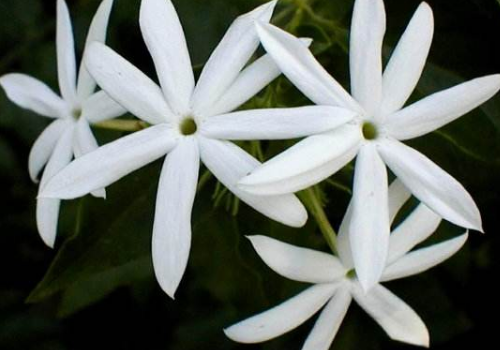
Solutions to common pests of Jasminum multiflorum:
1. How to control the leaf roller moth: First, prune off the affected parts to prevent infection of other branches and leaves; second, spray with a 25% azocyclotin wettable powder at 1000-2000 times dilution; finally, handpick the insects to remove them completely.
2. How to control red spider mites: First, for chemical control, spray with 20% dicofol at 1000-1500 times dilution; second, spray with soapy water, tobacco water, or laundry detergent solution, which can also control red spider mites; finally, use insects that are natural enemies of red spider mites, such as ladybugs and lacewings, place them together with the red spider mites, and once the red spider mites are gone, release them.
Now you have learned how to grow Jasminum multiflorum.
Little tricks to help your flowers and plants solve pest problems
Chrysanthemum
Many people like to grow some flowers and plants indoors, which both beautifies the environment and cultivates enjoyment. But flowers and plants are not only somewhat delicate to grow, they are also easily favored by small insects, which is annoying and frustrating. Next, I will introduce several common pests of flowers and plants and their control methods.
Chrysanthemums easily attract aphids
Aphids are mostly green and black, good at flying, with tubular cornicles, resembling fleas. They prefer flowers such as chrysanthemums, redbud, roses, and Chinese roses. They often gather on tender shoots, flowers, and the undersides of leaves, sucking sap, causing leaves to wrinkle and affecting flowering. Generally, the pest damage becomes more obvious in mid-April.
Countermeasures: When scattered aphids appear, brush them off with a brush dipped in water, and promptly dispose of the brushed-off aphids to prevent spread. You can also soak 40 grams of tobacco powder in 1 kg of water for 48 hours, filter to obtain the stock solution, dilute with 1 kg of water when using, add 2-3 grams of laundry detergent or a little soapy water, stir well, and spray the plants. If using physical methods, you can use cardboard or plastic boards coated with yellow color and glue to trap and kill aphids; or use silver-white tin foil to reflect light and drive aphids away.
Jasmine: beware of red spider mites
Red spider mites are obovate, with flat backs and bellies, and come in red, dark red, orange-red, and other colors. Orchids, jasmine, kumquat, and others are more prone to red spider mites. They often hide on the undersides of leaves and on flower buds, causing leaves to lose green color and wither, flower buds to shrink, and in severe cases the plant may wither and die. Generally, pest damage is more serious in June-July.
Countermeasures: Soak orange peel in 10 times its amount of water for a day and night, filter, and spray the plants once a day for 3 consecutive days. In addition, you can light a coil of mosquito repellent incense and place it in the flowerpot, then tie a plastic bag tightly around the pot; after 1 hour of fumigation, both eggs and adults can be killed. This is a good method that is both economical and quick-acting.
Chinese roses: keep away from yellow slugs
The larvae of the yellow slug have a yellow-brown head and yellow-green thorax, with a pair of spines on each side of the dorsal line of each segment. They are commonly seen on camellias, redbud, Chinese roses, and Malus spectabilis, and often eat all the leaves of the flowers.
Countermeasures: Yellow slugs prefer light and have strong phototaxis, so you can place a lamp beside the flowers to trap and kill them.
In addition, for the brown, rather pointed small insects that often "attack" plants such as Anthurium and Cyclamen, and the mosquito-like flies that infest poinsettias and pansies, you can spray with garlic juice, chili water, or Sichuan pepper water in the early stages.
(The author is a professor at Nanping Agricultural School, Fujian Province)
Little tricks to help your flowers and plants solve pest problems
Chrysanthemum
China Landscape Web, November 4 news: Many people like to grow some flowers and plants indoors, which both beautifies the environment and cultivates enjoyment. But flowers and plants are not only somewhat delicate to grow, they are also easily favored by small insects, which is annoying and frustrating. Next, I will introduce several common pests of flowers and plants and their control methods.
Chrysanthemums easily attract aphids
Aphids are mostly green and black, good at flying, with tubular cornicles, resembling fleas. They prefer flowers such as chrysanthemums, redbud, roses, and Chinese roses. They often gather on tender shoots, flowers, and the undersides of leaves, sucking sap, causing leaves to wrinkle and affecting flowering. Generally, the pest damage becomes more obvious in mid-April.
Countermeasures: When scattered aphids appear, brush them off with a brush dipped in water, and promptly dispose of the brushed-off aphids to prevent spread. You can also soak 40 grams of tobacco powder in 1 kg of water for 48 hours, filter to obtain the stock solution, dilute with 1 kg of water when using, add 2-3 grams of laundry detergent or a little soapy water, stir well, and spray the plants. If using physical methods, you can use cardboard or plastic boards coated with yellow color and glue to trap and kill aphids; or use silver-white tin foil to reflect light and drive aphids away.
Jasmine: beware of red spider mites
Red spider mites are obovate, with flat backs and bellies, and come in red, dark red, orange-red, and other colors. Orchids, jasmine, kumquat, and others are more prone to red spider mites. They often hide on the undersides of leaves and on flower buds, causing leaves to lose green color and wither, flower buds to shrink, and in severe cases the plant may wither and die. Generally, pest damage is more serious in June-July.
Countermeasures: Soak orange peel in 10 times its amount of water for a day and night, filter, and spray the plants once a day for 3 consecutive days. In addition, you can light a coil of mosquito repellent incense and place it in the flowerpot, then tie a plastic bag tightly around the pot; after 1 hour of fumigation, both eggs and adults can be killed. This is a good method that is both economical and quick-acting.
Chinese roses: keep away from yellow slugs
The larvae of the yellow slug have a yellow-brown head and yellow-green thorax, with a pair of spines on each side of the dorsal line of each segment. They are commonly seen on camellias, redbud, Chinese roses, and Malus spectabilis, and often eat all the leaves of the flowers.
Countermeasures: Yellow slugs prefer light and have strong phototaxis, so you can place a lamp beside the flowers to trap and kill them.
In addition, for the brown, rather pointed small insects that often "attack" plants such as Anthurium and Cyclamen, and the mosquito-like flies that infest poinsettias and pansies, you can spray with garlic juice, chili water, or Sichuan pepper water in the early stages.
(The author is a professor at Nanping Agricultural School, Fujian Province)