When to Divide Broadleaf Lady Palm and Why It Is Not Suitable for Growing at Home
Broadleaf lady palm is also one of the plants, and a great many people know about it. So when should broadleaf lady palm be divided? Why is it not suitable to grow at home:
When to divide broadleaf lady palm:
Broadleaf lady palm division propagation is generally carried out in spring when repotting. (The best time for division is March to April.)
Use a sharp knife to divide the original clump with many shoots into several clumps. When dividing, damage the roots as little as possible and do not damage the buds, so that each clump contains more than 8-10 plants. After the divisions are potted, place them in a semi-shaded spot, keep them moist, and frequently spray water on the leaf surface to prevent the leaves from turning yellow and withering. After new shoots sprout, move them to a sunny spot for care, then carry out normal management.
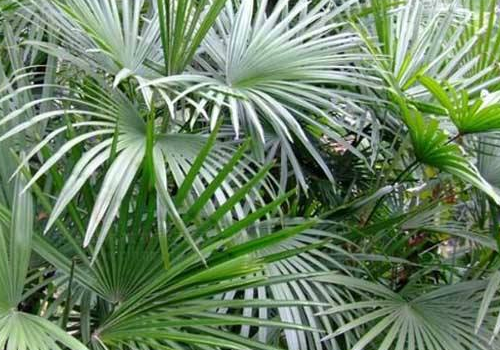
Why broadleaf lady palm is not suitable to grow at home:
Broadleaf lady palm can be grown at home. The idea that it is unlucky is nonsense.
Broadleaf lady palm is a plant that is very good for the human body and is very suitable for growing indoors. It can absorb exhaust gases and provide a steady supply of fresh oxygen, letting the owner feel relaxed at home and cultivate their character. It has the function of warding off evil and bringing in wealth.
That is all for the introduction on when to divide broadleaf lady palm. It can be planted at home.
Broadleaf Lady Palm Rhapis excelsa Illustrated Guide: How to Grow Broadleaf Lady Palm / How to Propagate Broadleaf Lady Palm
Broadleaf Lady Palm ProfileBroadleaf Lady Palm Rhapis excelsa
Aliases: Guanyin bamboo, Jintou bamboo, Zong bamboo, Husan bamboo, palm bamboo, dwarf broadleaf lady palm
Classification: Palmae family plant
Family and genus: Plantae, Angiosperms, Monocotyledoneae, Arecales, Arecaceae, Rhapis
Full bloom period: Summer
Broadleaf lady palm, also known as Guanyin bamboo, Jintou bamboo, palm bamboo and dwarf broadleaf lady palm, is an evergreen foliage plant of the genus Rhapis in the Arecaceae family. Broadleaf lady palm is a clumping shrub with erect stems, 1-3 m tall. The stems are slender like fingers, unbranched, with leaf nodes, wrapped in leaf sheaths with brown reticulate fibers. Clumping shrub, 2-3 m tall, stems cylindrical, noded, 1.5-3 cm in diameter, the upper part covered by leaf sheaths, but decomposed into somewhat loose, horsetail-like, pale black, rough and hard reticulate fibers. Leaves palmately parted, with 4-10 unequal segments, bearing 2-5 ribs, united at the base (that is, the tip of the petiole) for 1-4 cm, 20-32 cm long or more...
Broadleaf Lady Palm Growing Methods and Precautions, Introduction to Broadleaf Lady Palm
Broadleaf lady palm, also known as Guanyin bamboo, Jintou bamboo, palm bamboo and dwarf broadleaf lady palm, is an evergreen foliage plant of the genus Rhapis in the Arecaceae family. Broadleaf lady palm is a clumping shrub with erect stems, 1-3 m tall. The stems are slender like fingers, unbranched, with leaf nodes, wrapped in leaf sheaths with brown reticulate fibers.
Clumping shrub, 2-3 m tall, stems cylindrical, noded, 1.5-3 cm in diameter, the upper part covered by leaf sheaths, but decomposed into somewhat loose, horsetail-like, pale black, rough and hard reticulate fibers. Leaves palmately parted, with 4-10 unequal segments, bearing 2-5 ribs, united at the base (that is, the tip of the petiole) for 1-4 cm, 20-32 cm long or longer, 1.5-5 cm wide, broadly linear or linear-elliptic, broad at the apex, truncate and with several pairs of slightly deeper-cut small segments, the margins and ribs bearing somewhat sharp serrations, transverse veinlets numerous and obvious; petiole convex on both sides or slightly flat above, margins slightly rough, about 4 mm wide, the small hastula at the tip slightly semicircular or obtusely triangular, hairy. Inflorescence about 30 cm long, the common peduncle and the base of the branched inflorescences each enclosed by 1 spathe, densely covered with brown curled tomentum; 2-3 branched inflorescences, bearing 1-2 times branched small flower spikes, the flowering branches nearly hairless, flowers spirally arranged on the small flowering branches. Male flowers ovate-oblong in bud, with a pointed tip, the corolla tube elongated at maturity, club-shaped oblong when flowering, 5-6 mm long, calyx cup-shaped, deeply 3-lobed, lobes semi-ovate, corolla 3-lobed, lobes triangular, filaments thick, enlarged and keeled in the upper part, anthers cordate or cordate-oblong, apex obtuse or slightly emarginate; female flowers short and thick, 4 mm long. Fruit globose-obovoid, 8-10 mm in diameter. Seeds globose, embryo located opposite the raphe, near the base. Flowering period June-July.
Produced in southern to southwestern China. Also distributed in Japan.
The tree form is graceful and it is a good material for garden landscaping. The roots and leaf sheath fibers are used as medicine.
Chinese species name: Broadleaf lady palm
Latin species name: Rhapis excelsa (Thunb.) Henry ex Rehd.
Chinese family name: Arecaceae
Latin family name: Palmae
Chinese genus name: Rhapis
Latin genus name: Rhapis
Aliases: Guanyin bamboo, Jintou bamboo, palm bamboo, dwarf broadleaf lady palm, an evergreen foliage plant of the genus Rhapis in the Arecaceae family.
Morphological Characteristics of Broadleaf Lady Palm
Broadleaf lady palm is a clumping shrub with erect stems, 1-3 m tall. The stems are slender like fingers, unbranched, with leaf nodes, wrapped in leaf sheaths with brown reticulate fibers. Leaves clustered at the top of the stems, palmately parted almost to the base, with 3-12 segments, 20-25 cm long and 1-2 cm wide; petiole slender, about 8-20 cm. Spadix axillary, flowers small, pale yellow, very numerous, unisexual, dioecious.
The berry of broadleaf lady palm is globose and the seed is globose. Broadleaf lady palm is native to Guangdong, Yunnan and other places in China, and is also found in Japan. There are more than 20 species in the same genus, mainly distributed in Southeast Asia. It often grows abundantly on hillsides and beside ditches in shady, moist thickets. Cultivated forms include large-leaf, medium-leaf and fine-leaf broadleaf lady palm, as well as variegated broadleaf lady palm. Broadleaf lady palm prefers a warm, moist, semi-shaded and well-ventilated environment, fears strong sunlight, and is slightly cold-tolerant, able to withstand low temperatures of around 0°C.
The flowering period of broadleaf lady palm is April-May.
Ecological Habits of Broadleaf Lady Palm
Broadleaf lady palm prefers a warm, humid and well-ventilated semi-shaded environment, does not tolerate waterlogging, and is extremely shade-tolerant. In summer, when it is hot and the light is strong, it should be shaded appropriately. The suitable temperature is 10-30°C. When the temperature is above 34°C, the leaf margins often scorch and growth stalls. The overwintering temperature should not be lower than 5°C.
Broadleaf lady palm has a small plant form and grows slowly, and its requirements for water and fertilizer are not very strict. It requires loose, fertile acidic soil, does not tolerate barren or saline-alkaline conditions, and requires relatively high soil moisture and air humidity.
Ornamental period: flowering period April-May, fruit ripens October-December.
Functions and effects: analgesic, stops bleeding. Main indications: used for various traumatic pains. For epistaxis, hemoptysis, excessive postpartum bleeding, etc. Nature, flavor and meridian entry: bland, neutral. Enters the liver and kidney meridians.
Cultivation Techniques of Broadleaf Lady Palm, Potted Broadleaf Lady Palm
For potting broadleaf lady palm, a mixture of leaf mold, garden soil and river sand in equal parts can be used as the substrate, and an appropriate amount of base fertilizer can be added when planting. During the vigorous growth period from May to September, apply liquid fertilizer 1-2 times a month; the potting soil should be kept moist, better wet than dry, but it must not be waterlogged, otherwise the roots easily rot. In autumn and winter, appropriately reduce the amount of watering. During the growing season, shade is needed, especially in summer when exposure to strong sunlight should be avoided, otherwise the leaves turn yellow and the plant grows slowly and stays short; generally a shading level of about 50% is appropriate. Broadleaf lady palm requires a well-ventilated environment for growth; poor ventilation easily leads to scale insects. If only a few occur, promptly remove them by hand, and use an 800-fold omethoate solution for control. At the same time, pay attention to ventilation and timely pruning of dead branches and withered leaves.
Broadleaf lady palm has a compact and elegant plant form, upright clumps, delicate leaf shapes, and dark green, glossy leaves. It has both a tropical charm and the elegance of bamboo, and is an important indoor foliage plant. It is very shade-tolerant, suitable both for small and medium potted plants for general household indoor display and appreciation, and for large pots used in indoor arrangements in large buildings; it is one of the large indoor foliage plants. In a bright room it can be enjoyed for a long time, and in a darker room it can be enjoyed continuously for 3-4 weeks.
Care of Potted Broadleaf Lady Palm
Broadleaf lady palm is native to southern China and is a tropical plant with a graceful posture and evergreen foliage. Common forms are divided into large-leaf and small-leaf. The large-leaf form is slightly thicker, with large and thick leaves, also known as Jintou broadleaf lady palm; the small-leaf form has thin stems and small, thin leaves, namely broadleaf lady palm.
Broadleaf lady palm prefers a warm, shady, moist and well-ventilated environment, is not cold-tolerant, and fears strong sunlight. In the Shanghai area it is grown as a greenhouse potted plant. It requires moist, well-drained loam rich in humus, with slightly acidic soil being most suitable.
To grow broadleaf lady palm well, attention should be paid to winter cold protection, summer shading, reasonable fertilization, and appropriate pruning. Broadleaf lady palm is vigorous; in winter, as long as it is moved indoors and kept above 0°C, it can overwinter safely. If the temperature is above 10°C, it can keep its leaves green. Because winter temperatures are low, the plant enters dormancy and basically stops growing, so watering should be controlled, the potting soil should be kept on the dry side, and fertilization should be stopped; wet potting soil and low temperatures can cause root rot or massive leaf drop in broadleaf lady palm. In spring, as temperatures rise, it is generally moved outdoors for care after Qingming; in summer it should be placed under a shade shed or in tree shade. In a semi-shaded and moist environment, new shoots can grow continuously and old leaves remain emerald green; blazing sun and dry hot wind are the main causes of leaf scorch and drying in broadleaf lady palm. Therefore, in the hot summer season, in addition to normal watering care, frequently spraying water on the leaves and splashing water on the ground can increase relative air humidity and reduce dust accumulated on the branches and leaves, helping the plant grow well. During the plum rain and summer shower seasons, prevent water accumulation in the pot. Summer and autumn are the growing seasons for broadleaf lady palm, and fertilizer and water management should be appropriately increased. Keep the soil moist, but avoid waterlogging and drought. Apply decomposed cake fertilizer water or human waste every 20 days or so to promote plant growth.
When scorched or withered leaves are found at ordinary times, prune them promptly. For small potted broadleaf lady palms, repot and change the soil once a year; for large plants, repot once every 2-3 years, generally carried out in spring when they are moved out of the shed. The culture soil commonly uses 2 parts garden soil, 1 part barnyard manure soil, and 0.5 part each of leaf mold and rice husk ash, mixed for use. This culture soil is relatively heavy, easily retains moisture and is rich in fertilizer, suitable for the growth of broadleaf lady palm.
Growing Methods of Broadleaf Lady Palm, Hydroponic Method
Hydroponic Method for Broadleaf Lady Palm
Genus Rhapis of the Arecaceae family, also known as Guanyin bamboo. Native to Guangdong, Guangxi, Hainan, Yunnan and other places.
Characteristics
Evergreen clumping shrub. Stems cylindrical, unbranched, noded like bamboo, bearing brown coarse fibrous leaf sheaths, like palm. Leaves clustered at the top of the stems, leathery, dark green and glossy, palmately parted, with 4-10 segments. Dioecious.
Habits
Prefers a warm, shady, moist and well-ventilated environment. The suitable temperature for growth is 20-30°C, and in winter it should be kept above 4°C. It can withstand short-term low temperatures of around 0°C.
Propagation
Generally carried out by division combined with repotting. Choose a plant with large, dense clumps, first lift the plant out of the pot, then use a sharp knife to divide the clump into several clumps. When dividing, cut the root system as little as possible, and keep the divided plants with a certain plant form, then repot them. After watering thoroughly, place them in a semi-shaded, moist place, and frequently spray water on the leaf surface. After growth resumes, they can be transferred to normal care.
Sowing in autumn: after the seeds mature, sow them in pots as soon as they are collected, move them into a greenhouse in winter, and seedlings emerge the following spring.
Key Care Points
Key Care Points for Hydroponics
1: Shade-tolerant, but when light is too weak it easily produces yellow leaves, and poor ventilation breeds parasites.
2: During the growing period, water should be sprayed on the leaf surface frequently.
How to Obtain Hydroponic Material
It is best to wash the roots of potted plants. The root system of broadleaf lady palm is relatively hard in texture and is not prone to rot after hydroponics, but new roots sprout slowly, requiring as long as one and a half months.
Propagation Methods of Broadleaf Lady Palm
Broadleaf lady palm can be propagated by sowing and division, and home cultivation is mostly based on division propagation.
Sowing
Use loose, permeable soil as the substrate, generally a mixture of leaf mold and river sand, etc. Before sowing, the seeds can be treated by soaking in warm water (soaked in 30-35°C warm water for two days), and sowing is done when the seeds begin to germinate. Because germination is generally uneven, the soil covering after sowing should be slightly deeper. Generally, they germinate 1-2 months after sowing, and the germination rate can reach about 80%. When the cotyledons of the seedlings reach 8-10 cm long, they can be transplanted. It is worth noting that when transplanting, 3-5 plants must be planted as one clump to facilitate survival and growth.
Division Propagation
Generally carried out in spring when repotting. Use a sharp knife to divide the original clump with many tillers into several clumps. When dividing, damage the roots as little as possible and do not damage the buds, so that each clump contains more than 8-10 plants; otherwise growth is slow and the ornamental effect is poor. After the divisions are potted, place them in a semi-shaded spot, keep them moist, and frequently spray water on the leaf surface to prevent the leaves from turning yellow and withering. After new shoots sprout, move them to a sunny spot for care, then carry out normal management.
Disease Control of Broadleaf Lady Palm, Broadleaf Lady Palm Bud Rot
It mainly harms young buds and tender tissue. When the disease begins, the unexpanded leaves first wither, turning brown, then droop. The pathogen spreads from the base of the tender leaves to the young and tender tissues of the bud, causing the young buds to die and rot and the plant to stop growing; in severe cases the whole plant dies. The base of the central unexpanded tender leaves turns brown and rots, giving off a foul odor. This disease also harms palm-family plants such as areca palm, fishtail palm, royal palm, false betel nut and coconut, and is the most serious disease harming palm-family plants.
The pathogen overwinters as oospores in diseased buds and leaves and roots, or with diseased residues in the soil, and spreads through rainwater or irrigation water and water splashing. It is prone to occur in rainy seasons and on rainy days, at temperatures of 20°C to 25°C, with relative humidity above 90%, and when moisture lingers for a long time.
Control Methods
At ordinary times, ventilation and light transmission should be strengthened, and moisture should be strictly prevented from lingering on the leaf surface for a long time. When a small number of diseased leaves are found, promptly cut them off from the base of the stem and burn them. If in the early stage of the disease, use 50% carbendazim wettable powder plus 75% chlorothalonil wettable powder at 800-fold solution, or 80% mancozeb wettable powder at 500-fold solution, or 1:1:100 Bordeaux mixture, sprayed alternately on the heart leaves and the whole plant, once every 10 days, for 3 to 4 consecutive times, which has a very good control effect.
Leaf spot, leaf blight and downy mildew are common threats, and 70% thiophanate-methyl wettable powder at 600-800-fold solution or 1% Bordeaux mixture can be sprayed for control. The main pest is scale insects, which can be killed by spraying 80% dichlorvos emulsion at 1000-1500-fold solution or 40% omethoate emulsion at 1000-fold solution.
Variety Classification of Broadleaf Lady Palm
Multifid broadleaf lady palm: Produced in western Guangxi and southeastern Yunnan. Can be used as garden landscaping material.
Dwarf broadleaf lady palm: Produced in southern to southwestern China. Commonly cultivated in various places. Graceful tree form, can be used for garden landscaping and appreciation.
Slender broadleaf lady palm: Produced in western Guangdong, Hainan and southern Guangxi. Short and graceful tree form, can be used as garden landscaping material.
Thick broadleaf lady palm: Produced in southwestern Guangxi. Can be used for garden appreciation. The fibrous roots can set bones.
Filamentous broadleaf lady palm: Produced in the Shiwandashan area of southern Guangxi.
Dwarf Broadleaf Lady Palm
Open classification: Biology, plants, species, woody plants, broadleaf lady palm
Latin name: Rhapis humilis;
Chinese name: Dwarf broadleaf lady palm;
Family name: Arecaceae
Genus name: Rhapis
Adapted regions: South China, Southwest China; southern subtropical evergreen broad-leaved forest region (main cities: Fuzhou, Xiamen, Quanzhou, Zhangzhou, Guangzhou, Foshan, Shunde, Dongguan, Huizhou, Shantou, Taipei, Liuzhou, Guiping, Gejiu); tropical monsoon forest and rainforest region (main cities: Haikou, Sanya, Qionghai, Kaohsiung, Tainan, Shenzhen, Zhanjiang, Zhongshan, Zhuhai, Macao, China, Hong Kong, China, Nanning, Qinzhou, Beihai, Maoming, Jinghong)
Ecological classification: Woody plants > evergreen shrubs; ornamental classification: foliage plants
Height range: 2-3 (M)
Morphological characteristics: The plant is upright, leaves semicircular, segments narrow, long and softly drooping; growth habit: shade-loving, prefers moist acidic soil
Propagation and cultivation: foliage plant; landscape use: foliage plant.
Broadleaf lady palm is an evergreen shrub of the Arecaceae family. Its stems are slender like fingers, with leaf nodes, unbranched, and its leaves are palmately parted, green like bamboo and full of tropical charm. It is a widely cultivated foliage plant. The same genus, slender-leaf broadleaf lady palm, is less than 1 m tall, with more slender palmately parted leaves about 0.6-1.6 cm wide, graceful in form, often introduced, and especially suitable for home cultivation. Broadleaf lady palm is native to Guangdong, Guangxi, Yunnan and Guizhou in China, and is also found in Japan. It often grows abundantly in shady, moist thickets on hillsides and beside ditches. It likes a warm, moist, semi-shaded and ventilated environment, fears strong sunlight, and prefers to grow in loose, moist sandy loam rich in humus. If the soil is dry and barren, growth will be poor. Broadleaf lady palm is robust by nature and easy to manage. From May to September it needs shading, and a light transmittance of 60% should be maintained. During the growing period, the soil should be kept moist, better wet than dry; when the air is dry, water should be sprayed frequently to maintain relatively high humidity in the environment. Fertilize 1-2 times a month, with manure or other nitrogen fertilizers. In poorly ventilated places, scale insects sometimes occur; if only a few are found, they should be removed by hand. In addition, dead branches and yellow leaves on the plant should be pruned promptly. Broadleaf lady palm is mostly propagated by division or dug from the wild. Division is often carried out in April when repotting. Repot once every 2-3 years. When dividing, each clump should not have fewer than 10 stems; otherwise growth recovery is slow and the ornamental effect is poor. After the divisions are potted, place them in a semi-shaded spot, do not water too much, and after new shoots sprout, move them to a sunny spot for care, then carry out normal management.
Care and Appreciation of Broadleaf Lady Palm Bonsai
(1) Care and management. Placement: Broadleaf lady palm is a southern plant and should be placed in a warm, moist, ventilated and relatively shaded place. In summer, a shed is needed for shade, and in winter it should be put in a greenhouse. Watering: Usually keep the potting soil moist, but it must not be waterlogged. In summer, water in the morning and evening, and spray water on the leaf surface. In winter, appropriately reduce it. Fertilizing: During the spring and summer growing period, it is advisable to apply thin fertilizer frequently, with decomposed cake fertilizer water being better; a small amount of ferrous sulfate can be added to the fertilizer to make the leaves emerald green. Pruning: Pruning broadleaf lady palm is very simple, mainly cutting off its withered yellow leaves and diseased leaves; if the layers are too dense, thinning can also be done. Repotting: Repot once every 2 years; for newly grown plants, division planting or rearrangement can be carried out. Repotting should preferably be done in spring from March to April. Replace more than 1B2 of the old soil and fill with loose leaf mold. Broadleaf lady palm has few pests and diseases, mainly scale insects, which can be removed by manual washing. Regularly applying a small amount of ferrous sulfate solution can prevent leaf yellowing.
(2) Appreciation. Broadleaf lady palm is elegant in posture, with upright green stems and leaves like an umbrella, evergreen in all seasons, and of high ornamental value. If made into a forest-style arrangement and paired with rocks, it is even more poetic and picturesque.
Slender-Leaf Broadleaf Lady Palm
Plant alias: Slender bamboo palm
Latin name: Rhapis gracilis Burret
Family name: Arecaceae;
Genus name: Rhapis
Distribution area: Native to southern China to northern Sumatra.
Height range: 1.5 m tall
Morphological characteristics: 1.5 m tall, 1 cm in diameter. Palmately parted, with 2-4 segments, about 15 cm long and about 2.5 cm wide, margins and ribs with fine teeth, apex acute and toothed, petiole fibers brown.
Growth habit: It has relatively high requirements for cultivation and care, and strong light or long-term low light should usually be avoided. The germination type is the distant ligule type. The primary leaf is the entire-margin subtype.
Landscape use: It is a common potted ornamental palm and can also be used for outdoor garden landscaping.
Ornamental period: flowering period April-May, fruit ripens October-December.
Species classification: Multifid broadleaf lady palm: Produced in western Guangxi and southeastern Yunnan. Can be used as garden landscaping material.
Dwarf broadleaf lady palm: Produced in southern to southwestern China. Commonly cultivated in various places. Graceful tree form, can be used for garden landscaping and appreciation.
Slender broadleaf lady palm: Produced in western Guangdong, Hainan and southern Guangxi. Short and graceful tree form, can be used as garden landscaping material. Thick broadleaf lady palm: Produced in southwestern Guangxi. Can be used for garden appreciation. The fibrous roots can set bones.
Filamentous broadleaf lady palm: Produced in the Shiwandashan area of southern Guangxi.
Broadleaf lady palm can be propagated by sowing and division, and home cultivation is mostly based on division propagation. For sowing, use loose, permeable soil as the substrate to facilitate survival and growth. Division propagation is generally carried out in spring when repotting; after new shoots sprout, move them to a sunny spot for care, then carry out normal management. For potting broadleaf lady palm, a mixture of leaf mold, garden soil and river sand in equal parts can be used as the substrate, and an appropriate amount of base fertilizer can be added when planting. During the vigorous growth period from May to September, apply liquid fertilizer 1-2 times a month; the potting soil should be kept moist, better wet than dry, but it must not be waterlogged, otherwise the roots easily rot. In autumn and winter, appropriately reduce the amount of watering. During the growing season, shade is needed, especially in summer when exposure to strong sunlight should be avoided, otherwise the leaves turn yellow and the plant grows slowly and stays short; generally a shading level of about 50% is appropriate. Broadleaf lady palm requires a well-ventilated environment for growth; poor ventilation easily leads to scale insects. If only a few occur, promptly remove them by hand, and use an 800-fold omethoate solution for control. At the same time, pay attention to ventilation and timely pruning of dead branches and withered leaves.
Hydroponic Method for Broadleaf Lady Palm. Genus Rhapis of the Arecaceae family, also known as Guanyin bamboo. Native to Guangdong, Guangxi, Hainan, Yunnan and other places. Characteristics: Evergreen clumping shrub. Stems cylindrical, unbranched, noded like bamboo, bearing brown coarse fibrous leaf sheaths, like palm. Leaves clustered at the top of the stems, leathery, dark green and glossy, palmately parted, with 4-10 segments. Dioecious. Habits: Prefers a warm, shady, moist and well-ventilated environment. The suitable temperature for growth is 20-30°C, and in winter it should be kept above 4°C. It can withstand short-term low temperatures of around 0°C. Propagation: Generally carried out by division combined with repotting. Key care points for hydroponics: 1: Shade-tolerant, but when light is too weak it easily produces yellow leaves, and poor ventilation breeds parasites. 2: During the growing period, water should be sprayed on the leaf surface frequently. How to obtain hydroponic material: It is best to wash the roots of potted plants.
Jintou Bamboo
Open classification: Biology, plants, nature, woody plants, trees
Latin name: Rhapis excelsa
Family name: Arecaceae
Genus name: Rhapis
Adapted regions: South China, Southwest China, southern subtropical evergreen broad-leaved forest region (main cities: Fuzhou, Xiamen, Quanzhou, Zhangzhou, Guangzhou, Foshan, Shunde, Dongguan, Huizhou, Shantou, Taipei, Liuzhou, Guiping, Gejiu) tropical monsoon forest and rainforest region (main cities: Haikou, Sanya, Qionghai, Kaohsiung, Tainan, Shenzhen, Zhanjiang, Zhongshan, Zhuhai, Macao, China, Hong Kong, China, Nanning, Qinzhou, Beihai, Maoming, Jinghong)
Ecological classification: Woody plants > evergreen shrubs
Ornamental classification: Foliage plants
Height range: 2.5-3 (M)
Morphological features: The plant is upright and tall, with elegant leaf shapes
Growth habits: Prefers warm, humid and semi-shaded environments; slightly poor cold tolerance; not tolerant of strong direct sunlight; afraid of waterlogging; suitable for fertile, loose and well-drained loam; winter temperature should not be lower than 0°C.
Propagation and cultivation: Mostly propagated by division and cuttings. Division: between February and March, select 3-5 one- or two-year-old mother bamboos as a clump and replant them with soil. Cuttings: carried out in May-June; cut one-year-old branches into cuttings with 2-3 nodes, remove some leaves, insert into a sand bed, keep moist, and they can root the same year. Transplanting should be done in February-March. For potted plants, repot once every 2-3 years, take out the old bamboo, remove the old soil, cut off the fine rhizomes and old bamboo, and add fertile soil. During the growing period, keep the pot soil moist, place in a semi-shaded spot for care, frequently spray water on the leaf surface, and fertilize once a month. In winter, move indoors to a sunny spot. Leaf blight and rust often occur; use 65% zineb wettable powder at 2000 times dilution to control rust. Pests include scale insects and aphids; spray with 40% omethoate emulsifiable concentrate at 1500 times dilution to kill them.
Landscape uses: Bambusa multiplex f. fernleaf has dense clumps, short culms and elegant branches and leaves. It is often used for potted ornamental display, embellishing small courtyards and living rooms, and is also often used to make bonsai or as low hedge material. Foliage plant. That clump of palm bamboo in the garden: Today, four clumps of palm bamboo planted in the garden near the unit's main gate caught my attention. Interestingly, at first I actually mistook them for palm trees, thinking they were a variety of palm. But later I learned that they are actually a type of bamboo, properly called palm bamboo (Rhapis), a common bamboo species in Miao residential areas. Besides being used as an ornamental plant, its leaves can also be used to make ropes for tying objects. These clumps of palm bamboo in our garden were probably mostly transplanted from Miao communities. Rhapis belongs to the palm family (Arecaceae), is a tree, and is not a bamboo; bamboo belongs to the grass family (Poaceae).
The leaves of palm bamboo are very large, and there is simply no difference between them and the leaves of palm trees. The leaves of palm bamboo are like fans, only torn into strips and unable to be made into fans like the leaves of fountain palm, so up close they look more like large open palms with spread fingers. Because the leaves all grow at the top and the stems are not thick and strong, the notable feature of palm bamboo is that it is top-heavy. In addition, its tillering ability is strong, and often in a very small area it can grow twenty or thirty stems, so the bamboo leaves at the top are packed so densely that no wind can pass through. And this characteristic also compensates for its ugly stems; the often dense bamboo leaves cover the whole body like a big hat, making it easy not to notice the ugly stems.
This is just like a thin, frail woman wearing a gorgeous large gown: not only does she not appear too slight, but she instead gains a kind of elegant charm. A few days ago there were strong winds and hail, and other flowers and trees all suffered some damage to varying degrees, but apart from its leaves being blown over and tilted, palm bamboo was not seriously harmed, and still stands as a lush mass of new green quietly in the campus garden.
Some people say that palm bamboo is not easy to grow: it likes warmth yet fears direct sunlight, likes moisture yet needs good ventilation, so it has high climate requirements. But from my observation, palm bamboo is actually not very particular. It grows at the garden's roadside, where the sun often shines scorchingly on it, and severe drought has not broken it. As far as I know, the soil layer in that garden is not thick; after just one hoe strike there is hard stone. Yet even in such an environment, it grows more vigorous year after year, expanding its living space. However, it is actually very difficult to see such palm bamboo locally; I once saw this rare bamboo in a garden in a mining area, but it was only planted in a flowerpot, and compared with the palm bamboo at our unit, it also appeared much shorter.
Nevertheless, that palm bamboo had a vitality of its own, the surface of its short stems showing green, and the leaf fans overlapping layer upon layer, almost covering the entire flowerpot. When I first saw it, I likewise mistook it for a palm tree. It happened that the gardener was watering, and hearing my nonsense, first gave me a cold glance, then casually said: "Do palm trees look like that? That's palm bamboo." With his reminder, I immediately noticed the difference between that bonsai and other palm trees: a palm tree is just a single solitary planting, and its leaves are not so dense, whereas this pot not only had dense leaves but its stems were bamboo-like. Because of this encounter, I learned that palm trees are not the only things in the world that grow palm leaves; palm bamboo can grow palm leaves just the same. Palm bamboo can grow in flowerpots, which also shows that caring for it is not difficult, because the climate here does not change very much, especially for the cold-intolerant palm bamboo, since the temperature does not drop below 0°C.
The appearance of the palm tree is still highly ornamental: its clumps are upright, its branches and leaves are elegant, and it has a strong tropical palm charm. If paired with fine architecture and embellished with other flowers and trees, it appears even more refined and free from vulgarity, rich in the charm of classical aesthetics. But why is something so full of beauty rarely seen in the world? I think this is probably related to its own limitations. As an ornamental scene, it does not give off fragrance like peach and plum blossoms, nor display gaudiness like roses and peonies, still less inspire the spirit like tall trees and delicate bonsai; as a practical plant, it can neither build houses nor make farm tools.
In a world that pursues utility, no wonder it has been abandoned by people. Perhaps we cannot force everyone to appreciate palm bamboo, because only those who truly understand beauty will give it more attention. Like that gardener who criticized me, and the person who once transplanted palm bamboo into the garden before our eyes, they valued it so much and brought it into this murky human world because they understood how to appreciate beauty and knew that the beauty of palm bamboo is different, so as to dissolve the increasingly serious scent of rouge and stench of money in the mundane world. Although palm bamboo is only a minority in the great family of plants, I believe it will gradually grow stronger in this garden, because when I passed by it today, I saw that new stems had sprouted from its roots, and new leaves were slowly unfurling one by one.
Palm bamboo
Family and genus: Arecaceae, Rhapis; Category: bamboo-like
Morphological features: Palm bamboo is an evergreen clumping shrub, 1-3 m tall. It can sprout new single-stem culms from underground year after year. The culms are cylindrical, slender and jointed, with the lower part covered by reticulate fibrous leaf sheaths, unbranched, green like bamboo, with strong tillering ability. Leaves are clustered at the top, resembling palm leaves but smaller. Palmately deeply lobed leaves grow at the upper end of the stems, and the stems lengthen and grow as new leaves emerge. In seedlings, the bases of the leaf lobes are often fused together; after 3 years, new leaves grow with lobes split down to the base. Each leaf has 7-20 lobes, with fine teeth on the leaf margins. The spadix is relatively long, much branched, and axillary. Flowers are small, unisexual, pale yellow, dioecious. Flowering period is April-May. The small berry is white and pea-shaped. Fruit ripens in October. Seeds are spherical. Other related ornamental plants mainly include Rhapis excelsa, also called Guanyin bamboo, R. excelsa. This species is similar to palm bamboo, only with fewer leaf lobes and a taller plant form. It is also a good foliage potted flower for decorating interiors.
Origin and distribution: Native to the mountainous areas of southern China. Wild distribution in the primeval forests of Guangdong, Guangxi, Guizhou and Yunnan; mostly potted in the north. In China's Guangdong, Guangxi, Hainan, Yunnan, Guizhou and other provinces and regions, it is an evergreen clumping shrub. It likes warm, shady and humid environments; the optimum growth temperature is 20-30°C, and the overwintering temperature must not be lower than 4°C. It requires well-drained, humus-rich sandy loam. Tillering ability is relatively strong.
Growth habits: Prefers warm, humid and well-ventilated shaded environments, and fears direct sunlight. Growth is poor under dry conditions. Not cold-tolerant; requires organic-rich, slightly acidic, sandy, well-drained soil. If in alkaline soil, the leaves turn yellow and no new leaves are produced.
Ornamental application: Palm bamboo has luxuriant clumps, and its leaves spread out like fans, with the charm of tropical palms; it is a very good foliage plant. Suitable for arranging in corridors and corners, halls and meeting rooms, rotated once a month. South of the Yangtze River basin, it is an evergreen decorative plant for courtyards, windowsides, roadsides and other semi-shaded places. There is a variegated variety: variegated palm bamboo. On the market, small palm tree seedlings are often sold as palm bamboo seedlings; attention should be paid to identification and caution taken against being deceived.
Palm bamboo is a traditional excellent potted foliage plant in China. Its plant form is compact and elegant, and its leaf color is deep green and glossy, with excellent ornamental effect. Common cultivated varieties are divided into large-leaf and fine-leaf types. Palm bamboo is shade-tolerant and can be placed in a corner of a room without direct sunlight. Palm bamboo clumps are upright and its leaf shape is elegant; planted by windows, roadsides, flower beds and corridor corners, it is extremely beautiful, and it can also be potted to decorate interiors or made into bonsai.
The role and uses of palm bamboo; matching palm bamboo with home styles
1. Suitable for placement in any corner of the home, beautifying any place. Palm bamboo is an evergreen small tree; its cylindrical trunk rises straight up with no side branches, wrapped around by palm fiber, with an umbrella-shaped crown. Because the trunk does not branch, it does not take up space, so it can be placed anywhere.
2. In rural areas, palm bamboo is a relatively popular plant. Besides reflecting its farmhouse character, it also has uses in farm work. Because it can beautify the home at ordinary times, and when the time comes, the palm fiber wrapped around the trunk can be cut off and dried to twist palm rope, weave palm mats, string coir rain capes, and for other uses, so farming households like to plant it.
3. Suitable for people with relatively rugged personalities, creating a rugged home style. Usually this plant can be seen relatively often in farmers' backyards. Farmers are originally very busy; if they like to have some decoration at home, then this kind of plant decoration must certainly have strong self-survival ability. Therefore, planting palm trees can give the home some greenery, and life is not lacking in comfort.
The dietary therapy or medicinal value of palm bamboo
The medical information and health dietary therapy information on Huahua Network is for reference only and cannot be used as a basis for diagnosis or medical treatment. For any health problem, consult professional medical personnel, and for the treatment of any disease, follow doctor's orders.
Ultimate flower-care task: To love yourself, start from reality and strictly follow doctor's orders. Toward illness, do not be careless, do not delay, do not give up hope; face it bravely, warm the silent world with love, and care for the flower field in your heart with your heart.
Name of Chinese medicinal material
[Source] First recorded in "Dictionary of Families and Genera of Chinese Seed Plants."
[Pinyin name] ZōnɡZhú
[English name] palm
[Aliases] Jin tou bamboo, palm tree, Meisan
[Source]
Medicinal material basis: The leaves of the palm family plant palm bamboo.
Latin plant animal mineral name: Rhapis excelsa (Thunb.) Henry ex Rehd. [Chamaerops excelsa Thunb.]
Harvesting and storage: Can be harvested throughout the year, chopped and dried in the sun.
[Habitat distribution] Distributed from southeastern to southwestern China.
[Cultivation]
Biological characteristics: Likes a warm and humid climate and a well-ventilated environment, tolerant of shade, not cold-tolerant. It is advisable to choose moist, well-drained, humus-rich acidic soil for cultivation.
Cultivation techniques: Propagated by seeds and division. Seed seedling planting method: sow in spring; before sowing, soak the seeds to promote germination, then evenly broadcast on the seedbed. Cover with fine soil 2-3 cm, water to keep moist. Cultivate for 1 year, then dig holes and plant at a row spacing of 1 m and plant spacing of 0.5 m. Division propagation method: in spring, dig up the mother plant, cut it into several clumps of rooted plants, and plant according to the above method.
Field management: Newly planted seedlings should be slightly shaded, watered regularly, and the soil kept moist. Loosen the soil and weed 3-4 times each year, and apply dilute decomposed human and animal manure water 2-3 times. In summer, regularly spray water on the leaf surface of the plants to increase air humidity.
[Chemical composition] The leaves contain saponaretin, namely isovitexin, methylprotodioscin, methyl proto-pb, methyl protorhapissaponin.
[Nature and flavor] Sweet; astringent; neutral in nature
[Meridian entry] Enters the liver and kidney meridians
[Functions and indications] Astringes and stops bleeding. Mainly for nosebleed; hemoptysis; hematemesis; excessive postpartum bleeding
[Usage and dosage] Oral administration: calcined into charcoal, ground into powder and taken mixed with liquid, 3-6 grams.
[Discussions by various schools] "Outline of Xinhua Materia Medica": The fibrous roots of coarse palm bamboo are used for bone setting.
[Excerpt] "Chinese Materia Medica"
Palm bamboo root
Drug name: Palm bamboo root
Chinese pinyin: zong zhu gen
Latin plant animal mineral name: Rhapis excelsa. (Thunb.) Henry ex Rehd.
Chinese medicinal chemical composition: The underground part contains dioscin, methyl protodioscin, methyl proto Ph.
Effects: Dispels wind and removes dampness; astringes and stops bleeding
Family and genus classification: Arecaceae
Main indications: Rheumatic arthralgia; nosebleed; hemoptysis; traumatic strain
Original form: Palm bamboo, a clumping shrub, 2-3 m tall. Stem cylindrical, jointed, 2-3 cm in diameter, the upper part covered with brown, reticulate coarse fibrous leaf sheaths. Leaves alternate; petiole 8-20 cm long, initially covered with chaff-like hairs, somewhat flattened, elliptical in cross-section; leaves palmately deeply lobed, lobes 4-10, unequal, with 2-5 ribs, united at the base for 1-4 cm, 20-30 cm long or longer, 1.5-5 cm wide, broadly linear or linear-elliptic, apex broad, with irregular tooth gaps, margins and veins with small brown sharp teeth, transverse veins numerous and obvious. Spadix up to 30 cm long, much branched; spathes tubular, 2-3, borne on the peduncle and inflorescence axis, membranous, densely covered with brown curled pubescence. Flowers dioecious; male flowers smaller, calyx 1.5 mm long, lobes ovate; corolla lobes ovate, thick, 1 mm long; stamens 6; female flowers larger, ovoid-spherical. Berry spherical, 8-10 mm in diameter. Seeds spherical, embryo located opposite the raphe and near the base. Flowering period June-July. Harvesting and storage: Can be collected throughout the year, washed, cut into sections, used fresh or dried in the sun.
Resource distribution: Distributed from southeastern to southwestern China.
Efficacy classification: Wind-dispelling and dampness-removing drugs; astringent hemostatic drugs
Nature and flavor: Sweet; astringent; neutral in nature
Medicinal material basis: The root of the palm family plant palm bamboo.
Usage and dosage: Oral administration: decocted in water, 9-20 g; fresh product can be used up to 90 g.
Source: "Chinese Materia Medica"
Palm bamboo pictures
The feng shui role of palm bamboo, cultivation methods and precautions for palm bamboo
Palm bamboo is a common low-growing evergreen shrub with good ornamental value, medicinal value, horticultural value and environmental protection value, and is often used by people as home decoration. However, when mentioning the words palm bamboo, many friends are still relatively unfamiliar with it, because friends still do not know much about palm bamboo. In fact, its appearance is similar to the bamboo leaves in Guanyin's pure water bottle, so it is also called Guanyin bamboo, and it has a very good feng shui role. So what feng shui role does palm bamboo have, and what cultivation methods and precautions are there? Below let us learn about the feng shui role of palm bamboo, and the cultivation methods and precautions for palm bamboo.
What is palm bamboo
Palm bamboo, also called Guanyin bamboo, Jin tou bamboo, palm bamboo or dwarf palm bamboo, is an evergreen foliage plant of the genus Rhapis in the palm family, mainly distributed in Southeast Asia and southern and southwestern China, and also in Japan. Palm bamboo is an evergreen clumping shrub; the stem is upright and cylindrical, jointed, slender as a finger, unbranched, with leaf nodes, the upper part covered by leaf sheaths that decompose into slightly loose horsetail-like, light black, rough and hard reticulate fibers. Palm bamboo blooms, with the flowering period from April to May each year, and bears fruit from October to December in the second half of the year. The fruit of palm bamboo is spherical-obovoid.
The feng shui role of palm bamboo
Speaking of the feng shui role of palm bamboo, in fact many people do not understand it. Palm bamboo belongs to water-nature plants; the plant is tall and thick, and the branches and leaves are thick, large and green, with a great life-promoting effect. Placing a pot of palm bamboo at the entrance can increase the home's wealth and fortune. In addition, palm bamboo is a plant that protects the home and wards off evil, so if everything at home is going badly, or someone in the family is ill, or unlucky things keep happening at home, placing a pot of palm bamboo in front of the home's door can drive away the evil qi at home, ward off evil and suppress demons.
Cultivation methods and precautions for palm bamboo
Palm bamboo prefers a warm, humid and well-ventilated semi-shaded environment, is not tolerant of waterlogging, is extremely shade-tolerant, fears strong sunlight, and is slightly cold-tolerant, able to withstand low temperatures of around 0°C. At present, seed propagation and division propagation are mainly used. For seed propagation of palm bamboo, it is best to choose loose and permeable soil, generally mixing leaf mold and river sand. Before sowing palm bamboo, soak the seeds in warm water for 2 days; when the seeds begin to sprout, they can be sown. When sowing, pay attention to covering with soil; the soil cover should be a bit deep. One to two months after sowing, the seeds will germinate. When the cotyledons of palm bamboo seedlings grow to 8 to 10 cm, they can be transplanted.
Division propagation of palm bamboo is mainly carried out in March to April each spring. This is generally the season for repotting and changing soil. When propagating by division, first take the original clump of palm bamboo out of the old pot, remove the old mud, then keep an appropriate amount of old mud on the old roots of the palm bamboo, use mulberry shears to cut apart the root clumps, and at the same time cut off poorly growing blackened and rotten roots, with the cuts made flat. Then plant the divisions into prepared flowerpots, add culture soil, paying attention to putting coarse soil first and fine soil later; fill the culture soil to eight-tenths full, and do not bury the palm bamboo too deep in the soil; it is enough for the roots to be level with the culture soil.
Conclusion: Palm bamboo especially likes warmth, so when cultivating palm bamboo in winter, great attention must be paid to keeping it warm and protecting it from the cold, and in summer attention must also be paid to providing shade for palm bamboo. The above is an introduction to the feng shui role of palm bamboo and the cultivation methods and precautions for palm bamboo. We hope it is helpful to everyone.