How to grow a rabbit's foot fern? Detailed guide to cultivation methods and precautions
The rabbit's foot fern has a certain formaldehyde-absorbing effect. How to grow a rabbit's foot fern? Cultivation precautions:
How to grow a rabbit's foot fern:
1. When growing a rabbit's foot fern, you can choose a pot according to your ornamental needs - a tall pot or a hanging basket will both work, and you can also choose some unique pots, such as a specially made tree-fern pot or a piece of rotten wood. The soil should be mainly breathable and require good drainage; leaf mold can be used.
2. Light: The rabbit's foot fern is an evergreen herbaceous epiphytic fern that prefers a warm, semi-shaded environment and is suited to diffused light. It must not be exposed to direct sunlight, otherwise it easily wilts and curls. For home cultivation, it can simply be placed in a bright spot indoors.
3. Temperature: The rabbit's foot fern originates from New Zealand and Japan, and is distributed in tropical and subtropical regions of Asia, Oceania, the Americas, and the Pacific Islands. The rabbit's foot fern is neither tolerant of high temperatures nor cold, with a suitable temperature of 20°C-26°C. It grows poorly above 30°C or below 15°C, and during winter it must not go below 5°C.
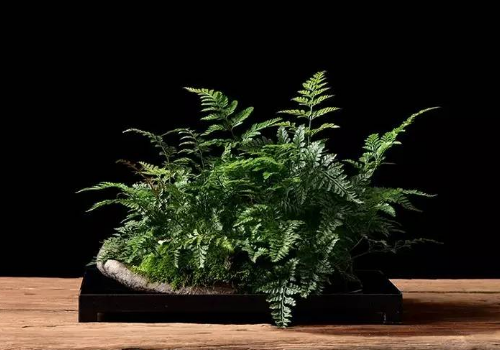
Cultivation precautions for the rabbit's foot fern:
1. Propagation method. The rabbit's foot fern is a fern and has no seeds, generally propagating through spores. However, ordinary home cultivation usually propagates through cuttings, carried out in spring.
2. Pests and diseases. The main disease that appears during the growth of the rabbit's foot fern is root rot, and the main pests are aphids and red spider mites, all caused by environmental factors.
Have you all learned the cultivation methods for the rabbit's foot fern?
Rabbit's foot fern Rabbit's foot fern illustrated guide: how to grow a rabbit's foot fern / how to propagate a rabbit's foot fern
Rabbit's foot fern profileRabbit's foot fern
Aliases: dragon's claw fern, rabbit's foot fern
Classification: fern
Family and genus: Plantae, Pteridophyta, Dicotyledoneae, Davalliaceae, Davallia
Full bloom period: does not bloom
The rabbit's foot fern, also known as dragon's claw fern or rabbit's foot fern, is a plant of the genus Davallia in the family Davalliaceae. Its rhizome is exposed, fleshy, about 6-12 cm long, with brown scales and hairs clinging to its surface, just like a rabbit's foot, which is why flower growers call it rabbit's foot fern or rabbit's tail fern. The rabbit's foot fern has graceful leaf shapes and an elegant form, and both its rhizome and leaves have extremely high ornamental value. It is a very popular indoor ornamental fern; it can also be used as a landscape plant set beside rockeries and rocks. Its rhizome can also be used medicinally, with the effects of dispelling wind and dampness, and clearing heat and cooling the blood.
Cultivation methods and precautions for the rabbit's foot fern Introduction to the rabbit's foot fern
The rabbit's foot fern, also known as dragon's claw fern or rabbit's foot fern, is a plant of the genus Davallia in the family Davalliaceae. Its rhizome is exposed, fleshy, about 6-12 cm long, with brown scales and hairs clinging to its surface, just like a rabbit's foot, which is why flower growers call it rabbit's foot fern or rabbit's tail fern.
The rabbit's foot fern has graceful leaf shapes and an elegant form, and both its rhizome and leaves have extremely high ornamental value. It is a very popular indoor ornamental fern; it can also be used as a landscape plant set beside rockeries and rocks. Its rhizome can also be used medicinally, with the effects of dispelling wind and dampness, and clearing heat and cooling the blood.
Morphological characteristics of the rabbit's foot fern
The rabbit's foot fern, also known as dragon's claw fern or rabbit's foot fern, is a plant of the genus Davallia in the family Davalliaceae. Its rhizome is exposed, fleshy, about 6-12 cm long, with brown scales and hairs clinging to its surface, just like a rabbit's foot, which is why flower growers call it rabbit's foot fern or rabbit's tail fern. It is a small epiphytic fern.
The rabbit's foot fern plant is 20-25 cm tall, with a long, creeping rhizome densely covered with woolly, lanceolate, gray-brown scales. The leaves are distant, with a broad ovate-triangular blade, a three- to four-times pinnately compound leaf. The sori are borne at the tips of the small veins near the leaf margin, and the indusia are nearly round.
The small leaflets of the rabbit's foot fern are delicate, elliptical or pinnately lobed, leathery, with a smooth, deep green, glossy leaf surface. The fronds are 10-30 cm long, supported by slender petioles, and the petioles are slightly darker in color, 10-30 cm long.
Ecological habits of the rabbit's foot fern
The rabbit's foot fern is neither tolerant of high temperatures nor cold, with a suitable temperature of 20°C-26°C. It grows poorly above 30°C or below 15°C, and during winter it must not go below 5°C.
Cultivation techniques for the rabbit's foot fern Key cultivation points
Light
The rabbit's foot fern is an evergreen herbaceous epiphytic fern that prefers a warm, semi-shaded environment and is suited to diffused light. It must not be exposed to direct sunlight, otherwise it easily wilts and curls. For home cultivation, it can simply be placed in a bright spot indoors.
Watering
The rabbit's foot fern should be kept with moist potting soil, and during the growing season water should be supplied abundantly; generally watering once every 2 to 3 days is sufficient. Although the soil should be kept moist, for the rabbit's foot fern a slight drying between waterings is also fine. The rabbit's foot fern also must not be overwatered; too much water can cause the leaves to drop.
Temperature
The rabbit's foot fern originates from New Zealand and Japan, and is distributed in tropical and subtropical regions of Asia, Oceania, the Americas, and the Pacific Islands.
Air humidity
It prefers a high-humidity environment and is not tolerant of dryness. During care, the plant and its growing environment should be frequently sprayed with water to increase humidity. The suitable humidity is around 80%; excessive dryness will cause the leaf margins to turn yellow and withered, or even the entire leaf to turn yellow and withered.
Soil and fertilizing
A loose, breathable sandy loam is best for the soil. The rabbit's foot fern has a low demand for fertilizer and dislikes concentrated fertilizer; during care, a small amount of diluted fertilizer can be applied.
Cultivation methods for the rabbit's foot fern How to grow a rabbit's foot fern well on a balcony
Balconies in homes today are generally enclosed, and after enclosure the glass blocks most ultraviolet rays, which is extremely unfavorable for sun-loving flowers. The rabbit's foot fern, however - a fern with high ornamental value that also prefers a shady, humid environment - can grow robustly in an enclosed balcony, and is therefore very popular.
The stem of the rabbit's foot fern is thick and strong, creeping along the ground and trailing all the way outside the flower pot. The stem is densely covered with pine-needle-shaped, pale gray-brown scales resembling animal fur, like a wolf's tail, hence its name. Leaves also grow on the stem, but sparsely; the petioles are about 9 cm long, and the blade is broad ovate-triangular, 10-15 cm in both length and width, somewhat resembling asparagus fern, arranged in a pinnate pattern. It has many aliases, such as white-haired snake, white-haired rock silkworm, hairy stone egg, and round-cap Davallia.
The light on an enclosed balcony can already meet the needs of the rabbit's foot fern; it is best to place it on the north half in summer and the south half in winter. If the air is dry, spray the leaves with water. The potting soil can be leaf mold rich in humus and with good drainage; it is even better if some carbonized tree bark can be mixed in. During the growing season it requires sufficient water, and once or twice a thin fertilizer water mainly of decomposed organic nitrogen should be applied, while a low-concentration foliar fertilizer can also be sprayed. In hot summer some leaves turn yellow and need to be removed promptly to facilitate new leaf growth in autumn. Its suitable growth temperature is 21-26°C during the day and 10-15°C at night, and the winter room temperature should not be lower than 5°C.
Ferns do not bloom or bear fruit and rely on conidia for reproduction, but a small household need not collect spores; cuttings will do. In spring, cut the rhizome of the rabbit's foot fern with 2-3 leaves or leaf buds into small sections of about 10 cm, bury them shallowly in the surface soil of humus soil and maintain humidity, and new roots can grow in about 40 days. The rabbit's foot fern has wild plants in East China, South China, Southwest China and other places, growing epiphytically on tree trunks and on damp, shady rocks near water, and can be dug up for cultivation. Cultivation is usually done in pots or hanging baskets. The most unique approach is to grow it in a specially made tree-fern pot, where the plant will flourish with luxuriant foliage. If there is no tree-fern pot, selecting a piece of attractively shaped rotten wood is also very suitable.
Propagation methods for the rabbit's foot fern Propagation method
Cut off the tip portion of the rhizome with 2-3 leaves, place it in a mixed substrate of peat or perlite and sand, put it in a warm, semi-shady, humid environment, fix it in place with wire or similar, and keep it moist; after about one month it will grow new leaves and new roots. Alternatively, it can be propagated by layering its rhizome. Although the soil should be kept moist, a slight drying between waterings is also fine; too much water will turn the scales on the rhizome brown.
Disease and pest control for the rabbit's foot fern
Common pests and diseases of the rabbit's foot fern include aphids, red spider mites, and root rot.
Aphids, red spider mites
Caused by a poor environment; can be controlled with 1% emamectin benzoate active ingredient at 2000 times dilution
Root rot
Can be controlled with 80% mancozeb at 1000 times dilution, or 2% ningnanmycin at 1000 times dilution, or a mixture of brassinolide and tetramycin: 2000 times: 1500 times.
Uses and purposes of the rabbit's foot fern Ornamental value
The rabbit's foot fern grows slowly and has brown rhizome scales; it is semi-hardy. Grown in a tall pot or hanging basket, its silvery-white stolons hang down, its leaf shapes are graceful, and its form is elegant. Both its rhizome and leaves have extremely high ornamental value. It is a very popular indoor ornamental fern; it can also be used as a landscape plant set beside rockeries and rocks, or as an accompanying plant in moss micro-landscapes.
The rabbit's foot fern is a green plant with graceful leaf shapes and an elegant form, like a youth dressed in a green robe. The rabbit's foot fern has very high ornamental value and is an indoor ornamental plant loved by many people.
Landscape uses of the rabbit's foot fern
The rabbit's foot fern can also be seen in many parks, arranged as a landscape plant beside rockery stones.
Medicinal or therapeutic value of the rabbit's foot fern
The medical information and health dietary information on Huahu.com is for reference only and cannot be used as a basis for diagnosis or medical treatment. Any health issues should be consulted with professional medical personnel, and treatment of any disease should follow a doctor's advice.
Ultimate flower-protecting mission: to love yourself, start from reality and follow the doctor's advice. Toward illness, do not be careless, do not delay, do not give up hope; face it bravely, warm the silent world with love, and care for the flower field within your heart.
Medicinal value
The rhizome of the rabbit's foot fern can also be used medicinally, with the effects of dispelling wind and dampness, and clearing heat and cooling the blood.
Cultural background of the rabbit's foot fern Origin of the name
The stem of the rabbit's foot fern is exposed, with brown scales and hairs clinging to its surface, just like a rabbit's foot, which is why flower growers call it rabbit's foot fern or rabbit's tail fern.
Flower language of the rabbit's foot fern
Flower language of the rabbit's foot fern: self-intoxication.
Rabbit's foot fern pictures
Can the rabbit's foot fern be grown hydroponically? Cultivation techniques for the rabbit's foot fern
The rabbit's foot fern is a very popular fern on the market today, with very high ornamental value. If grown at home, it can be made into a miniature landscape, or made into a hanging basket and placed indoors or on a balcony. However, the traditional soil-culture potted method no longer quite meets people's needs, and the gradually introduced hydroponic potted method is even more appealing, being not only simple and convenient but also clean and attractive. Many people then ask, can the rabbit's foot fern also be grown hydroponically?
Can the rabbit's foot fern be grown hydroponically?
1. Preparation
One healthy rabbit's foot fern, one planting basket, one transparent flower pot for convenient observation of the water level, an appropriate amount of cotton, non-woven fabric, and colored stones.
2. Production process
1. Making the planting basket
Spread cotton at the bottom of the planting basket and cover it with a layer of non-woven fabric to maintain the water supply to the plant during cultivation. A cotton thread passes through the bottom of the planting basket to secure the plant's roots.
2. Potting the hydroponic rabbit's foot fern
Rinse the rabbit's foot fern clean in water; the roots can be appropriately trimmed, and if trimmed, be careful to let the wounds dry slightly. Place the plant into the planting basket and secure it upright with cotton thread to prevent it from falling over. Cover with non-woven fabric on top, then decorate with colored stones. Thus a fresh and clean hydroponic rabbit's foot fern is finished.
3. Later care of the hydroponic rabbit's foot fern
First place the rabbit's foot fern in a semi-shady spot to recover for about a week. Once the whole plant has revived, cultivate it normally. Remember to always keep an eye on the water level in the pot, and if it is low, remember to top it up in time.
Change the water in the pot once every two weeks, and be careful to clean out the algae in the pot; if you like, you can keep a few small fish in the transparent pot below. The small fish can eat the substances secreted by the plant roots as well as metabolic waste, increasing the ornamental appeal while also cleaning the water in the pot.
Cultivation techniques for the rabbit's foot fern
1. Light
The rabbit's foot fern is an evergreen herbaceous epiphytic fern that prefers a warm, semi-shaded environment and is suited to diffused light. It must not be exposed to direct sunlight, otherwise it easily wilts and curls. For home cultivation, it can simply be placed in a bright spot indoors.
2. Watering
The rabbit's foot fern should be kept with moist potting soil, and during the growing season water should be supplied abundantly; generally watering once every 2 to 3 days is sufficient. Although the soil should be kept moist, for the rabbit's foot fern a slight drying between waterings is also fine. The rabbit's foot fern also must not be overwatered; too much water can cause the leaves to drop.
3. Temperature
The rabbit's foot fern originates from New Zealand and Japan, and is distributed in tropical and subtropical regions of Asia, Oceania, the Americas, and the Pacific Islands.
4. Air humidity
It prefers a high-humidity environment and is not tolerant of dryness. During care, the plant and its growing environment should be frequently sprayed with water to increase humidity. The suitable humidity is around 80%; excessive dryness will cause the leaf margins to turn yellow and withered, or even the entire leaf to turn yellow and withered.
5. Soil and fertilizing
A loose, breathable sandy loam is best for the soil. The rabbit's foot fern has a low demand for fertilizer and dislikes concentrated fertilizer; during care, a small amount of diluted fertilizer can be applied.
What precautions are there for growing the rabbit's foot fern
1. Propagation method
The rabbit's foot fern is a fern and has no seeds, generally propagating through spores. However, ordinary home cultivation usually propagates through cuttings, carried out in spring.
2. Pests and diseases
The main disease that appears during the growth of the rabbit's foot fern is root rot, and the main pests are aphids and red spider mites, all caused by environmental factors.
Why do the leaves of the rabbit's foot fern turn yellow and withered
1. Lack of water at the roots
Soak the flower pot in a container filled with water. When the soil surface becomes moist, take the pot out. Master watering this way every time. Cut off the withered leaves.
2. Improper light
Although the rabbit's foot fern is shade-tolerant and dislikes strong direct light, the growing conditions must still have a certain amount of light. It is best to care for it in semi-shade; it must not be placed in too shady a spot, and even less in direct sunlight in summer.
3. Air humidity too low
It not only likes water but also especially likes a humid growing environment. In addition to normal watering, the plant should also be frequently sprayed with water to increase humidity, so as to keep it growing well.
4. Excess fertilizer
It has a low demand for fertilizer and also dislikes concentrated fertilizer; apply as little and as thinly as possible.
From the above we can see that the rabbit's foot fern is also suitable for hydroponics. This is undoubtedly good news for most people. Whether hydroponic or soil-cultured, the cultivation methods for the rabbit's foot fern are not very difficult, so flower lovers who are interested may as well give it a try.