Peace lily: division timing and division method
Peace lily is also one of the plants, and it is something that a huge number of people know about, so when should a peace lily be divided? What is the division method:
When to divide a peace lily:
Peace lilies can be propagated by division and by sowing. A robustly growing plant can be divided about once every two years, generally in spring when repotting or after autumn. Division is very easy; generally speaking, it can be done around May each year, and of course it can also be done in other months, but it is best to avoid seasons that are too cold or too hot.
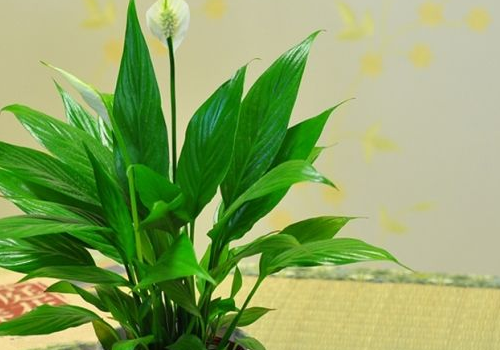
Peace lily division method:
First lift the whole peace lily out of the pot (stop watering 2 days in advance so the potting soil is not sticky), and carefully remove the potting soil. To be safe, if it does not affect division, try to keep some soil on the roots, as this can prevent wilting after repotting.
Cut the rhizome apart from the base of the clump, with at least one leaf per clump. After dividing and planting, water well and then place it in partial shade to recover; never put it in direct sun and do not fertilize. Note here that when cutting, you should include part of the stem, then apply charcoal ash to the wound to prevent rot. Once its root system returns to normal, just move it into normal care.
That is all for the introduction to the timing and method of dividing a peace lily. Now you know, right!
Can a peace lily be propagated by cuttings? The three major propagation methods of peace lily / division is the most practical
The peace lily, also called the white sail, has pure white flowers and is a beautiful flowering plant with an auspicious meaning, deeply loved by flower enthusiasts. When it comes to indoor flower propagation, everyone thinks of cuttings, so can a peace lily be propagated by cuttings? To be a true flower lover, besides mastering how to grow a peace lily, you should also know how to propagate it. Below are the three major propagation methods of peace lily, with division being the most practical. Let's take a look.
1. Can a peace lily be propagated by cuttings? No
Among the flowers introduced earlier, basically all can be propagated by cuttings, but the peace lily is very special. It easily produces suckers, and cuttings easily die, so division is mostly used for propagation. Because the answer to whether a peace lily can be propagated by cuttings is no. Below are three commonly used peace lily propagation methods, with specific steps as follows:
(1) Peace lily division propagation
① Time
Dividing a peace lily is actually very easy to talk about, but if you want a high survival rate from division, choosing the right time is also key. Generally speaking, it can be divided around May each year, and of course it can also be done in other months, but it is best to avoid seasons that are too cold or too hot.
② Removing the potting soil
A robustly growing peace lily can be divided about once every 2 years. At this time, flower enthusiasts should first lift the whole peace lily out of the pot (stop watering 2 days in advance so the potting soil is not sticky), and carefully remove the potting soil. To be safe, if it does not affect division, try to keep some soil on the roots, as this can prevent wilting after repotting.
③ Starting division
Generally speaking, a peace lily will not sprout before it is absolutely mature, so the growing point is often artificially damaged. Each small clump should ideally have more than 3 stems and buds, and you should keep as many roots as possible to help the new plant quickly produce new leaves and a full shape. When the new shoots grow to about 15 cm, cut them apart, then insert them into coarse sand and wait for them to take root.
Main points: Cut the rhizome apart from the base of the clump, with several leaves per clump. After dividing and planting, water well and then place it in partial shade to recover; never put it in direct sun and do not fertilize. Note here that when cutting, you should include part of the stem, then apply charcoal ash to the wound to prevent rot. Once its root system returns to normal, just move it into normal care.
(2) Tissue culture method
At home, the division propagation method can be used, but traditional peace lily division propagation simply cannot meet market demand. Now tissue culture can be successfully used to rapidly propagate its seedlings. Generally, in the tissue culture method, they are first planted in plastic pots, and after they grow 4-5 leaves they are divided and planted, then after 3-4 rounds of repotting and transplanting, when the seedlings are 30 cm tall they are planted conventionally, and then managed according to conventional cultivation.
(3) Seed propagation method
Seed propagation is also one of the main propagation methods of peace lily and is often used in cultivation bases, but it has one difficulty: it requires artificial pollination, and many people run into problems here, so it needs special explanation. The white thin sheet-like thing is not the flower; the protruding part in the middle is the flower, so the flower is relatively small. When the flower has pollen, use a clean brush to apply it on the flower and the pollination work is complete.
Care after propagation
After peace lily propagation is complete, care is very important. Peace lily does not like strong light and needs appropriate shading. In seasons with relatively strong light, it is best to shade out 60%-70% of the sunlight. Too strong light easily scorches the leaves; too dark and the leaves grow leggy and grow poorly. In winter, generally full light can be given.
That is all for the editor's introduction to peace lily propagation methods. Although compared with cuttings, division is a bit more troublesome, as long as we operate properly, even beginners can do it. If you only have one pot of peace lily, sometimes it really is a bit monotonous, but once you master division propagation, none of this is a problem. As long as everyone gives it a try, turning one pot into ten pots will become a reality.
What is the pruning method for hydroponic peace lily, and how is root division done for hydroponic peace lily
Peace lily is a common indoor potted plant and also an excellent foliage plant. Peace lily can purify the air and help with dry nasal mucosa. The effects of peace lily should not be underestimated. In fact, hydroponic peace lily is also a good cultivation method, but during cultivation, yellowing leaves and a pot that has become too small may appear. So what is the pruning method for hydroponic peace lily and how is root division done for hydroponic peace lily? Today let's learn together about what the pruning method for hydroponic peace lily is and how root division is done for hydroponic peace lily.
What is the pruning method for hydroponic peace lily
There is no need to specially cut it off. A peace lily should be renewed after being grown for 2-3 years; old ones no longer bloom vigorously and the leaves become smaller. Wait until the white flowers turn green, then turn black or the flower tips dry up, then you can cut the flowers off from the lower part; this does not affect normal growth and the next bloom
How is root division done for hydroponic peace lily
As long as each clump can get 3 or more roots (plants), it can be divided. If the plant is growing relatively weakly, it is not suitable for division. Generally, division can be done in spring, summer, and autumn. Tip the pot out, hold the roots with your hands, and break them apart.
What is the pruning method for hydroponic peace lily, and how is root division done for hydroponic peace lily. This article has already explained it in detail for everyone. In addition, a warm reminder: compared with soil cultivation, hydroponic peace lily management techniques are actually relatively simple, and the technical difficulty is not very complex, but throughout the entire hydroponic process, strengthening scientific management is still very important. It is the key to whether hydroponics succeeds.