How to care for Calathea lancifolia? Growing methods and precautions
Calathea lancifolia has high ornamental value and also has certain medicinal value. How to care for Calathea lancifolia? Precautions:
How to care for Calathea lancifolia:
1. Temperature. Calathea lancifolia originally comes from Brazil and other places, and is a tropical plant that prefers high temperatures and humid environments. The optimal growing temperature should be maintained at around 25°C. In summer, place it in a shady spot, and in winter, pay attention to cold protection.
2. Light. Calathea lancifolia grows best under diffused light and scattered light. In summer, if exposed to direct sunlight, it is extremely easy for the leaves to become scorched. If leaf scorching occurs, it should be moved immediately, and the scorched leaves should be removed.
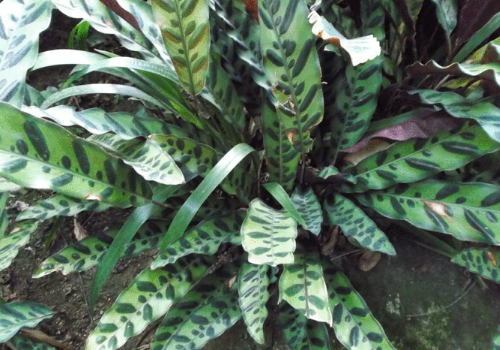
Precautions for growing Calathea lancifolia:
1. In summer, prevent direct sunlight; in winter, pay attention to cold protection. It can be moved to a wind-free, relatively warm indoor space to overwinter.
2. When watering, be careful not to overwater, otherwise it will cause root rot and even lead to disease. When the temperature is relatively low, pay attention to keeping the soil dry.
3. The soil for planting Calathea lancifolia must not become compacted, nor should waterlogging occur.
4. The fertilizer concentration for Calathea lancifolia must not be too high, otherwise it will scorch the leaves and may even cause the entire plant to die. Do not fertilize in winter when the plant stops growing, or in summer when it is too hot.
Have you learned how to care for Calathea lancifolia?
How to grow Calathea? How to care for Calathea?
How to grow Calathea? How to care for Calathea?Calathea is a perennial evergreen herbaceous plant in the Marantaceae family. It is native to the tropical rainforest regions from South America to Central America.
There are many horticultural ornamental cultivars of Calathea, with dozens of common species and varieties, such as Calathea zebrina (also known as velvet Calathea), Calathea picturata, Calathea makoyana, Calathea roseopicta (also known as rose Calathea), Calathea lancifolia, etc. Its horticultural varieties include Calathea bicolor, Calathea majestica, Calathea
amabilis, Calathea densiflora, etc. It has become a large family within the Marantaceae.
Morphological characteristics: Stems erect, plant height 30〜60, rhizomes fleshy. Leaves ovate or broadly lanceolate, varying by variety. Petioles long, leaf blades thin, leaf surface light green, gray-green, etc., with brilliant feather-like markings or irregular markings. The leaf underside is often purplish-red or gray-green, and the leaf margins are flat or wavy. Flowers often have pale green bracts, with low ornamental value.
Growth habits: It prefers high-temperature and high-humidity environments. The suitable growth temperature is 18〜30; below 10 it enters a dormant state, and some species have withered stems and leaves. It likes light, and in summer it should be kept in semi-shade. The soil should be loose, fertile, rich in humus, and well-drained loam.
Propagation method: Use division propagation, carried out in April to May each year when repotting and changing soil. Remove the mother plant from the pot, remove the old soil, cut and separate the overly dense plants into clumps, then replant them immediately and strengthen watering management. When dividing, care should be taken to protect the root parts that carry soil.
Pest and disease control: When Calathea grows in a poorly ventilated environment, it is often prone to damage by scale insects and red spider mites. When red spider mites are found, 40% dimethoate emulsifiable concentrate at 800〜1000 times dilution can be sprayed twice at weekly intervals for control. Scale insects are best treated at the nymph stage.
Horticultural uses: Calathea has an elegant form and varied leaf colors and patterns. It is an important indoor shade-tolerant foliage plant, suitable for indoor potted decoration in homes, used to decorate living rooms, studies, and bedrooms. Indoors, as long as there is relatively sufficient scattered light, it can grow normally and can be enjoyed year-round. In southern regions, it can be planted in semi-shade outdoors as a courtyard flower and tree companion planting.
Cultivation techniques for Calathea makoyana
Calathea makoyana, also known as mosaic plant, is a foliage plant in the genus Calathea of the Marantaceae family. It has tubers at the base, plant height 20-30 cm, leaves long elliptical, leaf surface green-white, with relatively dark brown markings along the edges of the midrib, leaves evergreen year-round, with a unique metallic luster; the brown patches resemble a peacock displaying its tail feathers, with fresh, gorgeous, and soft colors. It is a common indoor foliage plant. Many plants in this genus have relatively high ornamental value and are important plants used around the world to decorate indoor environments. Common varieties include: (1) Calathea zebrina. Also known as zebra plant, leaves long elliptical, large and thin, leaf surface green like velvet, with zebra-stripe-like feathery bands on both sides of the midrib, leaf underside purplish-red.(2) Maranta purpurea. Leaves broadly elliptical, surface green, markings not obvious, leaf underside purplish-red.
(3) Maranta variegata. Also known as Calathea lancifolia, leaf surface green, with pale yellow feathery stripes on both sides of the midrib, leaf underside deep purple, flowers pale yellow.
(4) Calathea albolineata. Plant height 50-60 cm, stems weak, leaves large and thin, ovate-lanceolate, with irregular white patches among the green leaves.
(5) Calathea ornata. Also known as red-feather Calathea, leaves long elliptical, surface pale green, with white or pink parallel double-line stripes on both sides of the midrib, very beautiful.
Calathea makoyana is native to the Americas. It prefers semi-shade and high-temperature, humid environments, and is not cold-tolerant. The suitable growth temperature is 20-30°C. Above 35°C or below 7°C, growth is poor. The overwintering temperature must not be too low, otherwise the leaves tend to curl. It requires loose soil rich in humus and well-drained.
Calathea plants are mainly propagated by division, mostly in spring from April to May when repotting. Division should not be done too early, otherwise the relatively low temperature can easily damage the roots and affect survival and growth. When dividing, they can be separated into 2-3 clumps per plant; too few will affect growth. After planting, water thoroughly once and place in semi-shade for care. Before new roots emerge, watering should be controlled, and the soil should not be too wet.
The potting soil can be mixed with 3 parts leaf mold, 1 part peat or sawdust, and 1 part sand, with a small amount of soybean cake added as base fertilizer. When potting, first place a 3 cm thick layer of coarse sand at the bottom of the pot as a drainage layer to facilitate drainage.
From May to September, during growth, shade the plant or place it in semi-shade, maintaining 40%-60% light transmission, and avoid direct sunlight, otherwise the leaves are easily scorched or the edges become withered and curled. If placed indoors for a long time, with low temperature and insufficient light, growth will also weaken and the leaves will lose their characteristic luster. In winter, it can receive direct sunlight through glass.
Calathea has relatively high humidity requirements. During routine care, the flower pot can be placed on an inverted flower pot, and water should often be sprayed on the leaf surface and surrounding environment to keep the surroundings and ground moist, so as to increase environmental humidity. Water before the potting soil dries out completely, otherwise the leaves easily curl and scorch at the edges due to dryness. During the peak growth season, apply a light soybean cake fertilizer or slow-release chemical fertilizer once a week; do not use too much nitrogen fertilizer. During high summer temperatures, apply a thin fertilizer once every half month, and stop fertilizing when the temperature is below 15°C. During care, maintain good ventilation conditions, otherwise scale insects are likely to occur, affecting stem and leaf growth and reducing ornamental value.
Calathea makoyana is a perennial evergreen herbaceous plant. Its leaf surface has feather-like markings alternating between dark green and white or pale yellow, and it has a unique metallic luster, resembling the tail feathers of a peacock, hence the name. Calathea makoyana is small in size and beautiful in form, with fresh and gorgeous leaf colors, thus becoming outstanding among foliage plants. For potting, use a culture soil mixed evenly with leaf mold, garden soil, and a small amount of river sand. During the growth period, apply a dilute liquid fertilizer once every 3-4 weeks. When fertilizing, be careful not to apply too much nitrogen fertilizer. Generally, the ratio of nitrogen, phosphorus, and potassium is 2:1:1, which can make the leaf color glossy and gorgeous. Soilless cultivation can also be used, and it is enough to apply nutrient solution 1-2 times a month during the growth period. Watering should be done to keep the potting soil moist. Calathea makoyana likes humid air, so attention should be paid to increasing air humidity by spraying water, sprinkling water, etc. Especially in summer, more attention should be paid to increasing humidity and lowering temperature to facilitate growth. For home cultivation, it can be placed in a bright indoor location, and strong direct light must be avoided, otherwise it easily causes scorching at the leaf edges. If kept in a dimly lit place for a long time, the leaves will lose their characteristic luster. In winter, place it in a well-lit spot, and also pay attention to cold protection. Room temperature should be kept above 13°C, stop fertilizing, and control watering. In northern winters, indoor air is dry. In addition to spraying and washing the leaf surface with cool boiled water once every 3-5 days, it is best to cover it with a plastic film cover at night to keep it warm and moist. If conditions permit, a humidifier can be used to increase indoor humidity. To maintain its gorgeous leaf color, the leaves should also be gently wiped with clean water regularly. Calathea makoyana is mostly propagated by division. When dividing, it is best to plant 3-5 plants per pot.