Can artichokes be grown in flower pots? A detailed guide to pot cultivation methods
Artichoke, this is a kind of vegetable, many people know about it, it is quite eye-catching, but the price makes people step back, so how do you grow artichokes? Can you use flower pots:
How to grow artichokes:
1. Sowing time: early autumn, September to October, when the climate is more suitable for seed germination and planting. Also avoid direct sun exposure; it is best to first germinate the seeds in a seedling tray before planting. This method can ensure the germination rate of artichokes.
2. Planting seedlings: The distance between artichoke seedlings should not be less than 1 m. Do not water the seedlings too much during the growing period; keeping the soil moist is enough.
3. Fertilizing: When the seedlings grow to 15 cm, start fertilizing. Use organic compound fertilizer; only by supplementing nutrients can artichokes grow larger and have higher yields.
4. Pests: If artichokes get aphids, use aphid-control pesticides with low residue.
5. Harvesting: Harvesting artichokes must be completed within 15 days. If the flowers bloom too long, they will become old, affecting the price and affecting the taste.
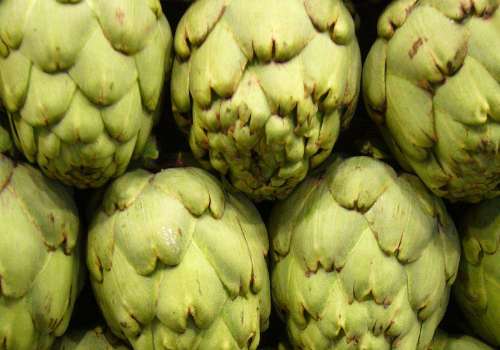
Can artichokes be grown in flower pots:
Artichokes have very high nutritional requirements and are not suitable for pot cultivation.
If you want to consider growing them in flower pots, then you must choose a relatively large flower pot, and the soil must also be fertile. With this planting method, do not expect artichokes to grow very large fruits; it is already good if they can grow well.
You can also buy artichokes at a flower shop and put them in a vase. The vase must have water. In this way, artichokes can survive in the vase for one week.
That is all for the introduction to artichoke growing methods. It is still not recommended to grow them in flower pots. If it is for ornamental purposes, they can still be considered for planting.
A detailed guide to artichoke cultivation techniques
Artichoke is also called cardoon, and it evolved from cardoon. Some people also call it French lily or lotus lily. Artichoke originated along the Mediterranean coast, and France is the country that cultivates the most artichokes in the world. Artichokes in China were introduced from France and were first planted in Shanghai. They are now cultivated in Shanghai, Zhejiang, Yunnan, Taiwan and other regions. Taiwan Province has a relatively large cultivation area. Artichokes are generally used to make canned products for sale. So what are the cultivation techniques for artichokes? The editor will introduce them to you in detail right away.
Cultivation techniques
Seed propagation
In the warm areas of the south, sow in September. In October, when the seedlings are about 10 cm or more tall and have 4~6 true leaves, transplant them to the field. In the Yangtze River basin and areas to the north, raise seedlings in protected areas in winter and spring, transplant them to the field from April to May, and harvest after buds appear the following spring. If black film shading treatment is used during the seedling stage, they can bolt, form buds, and be harvested in early autumn of the same year.
Artichoke seeds have thick and hard seed coats, so seed soaking and germination promotion treatment should be carried out before sowing. The method is to place the seeds in warm water at 55°C to soak them, stirring constantly, then after they cool to normal temperature, soak them for another 12~16 hours. Take them out, rinse them with clean water, wrap them in a wet cloth, and place them at 20°C to promote germination until the radicles emerge. They can be raised in 72-cell plug trays or 6 cm square nutrient soil blocks. Place one germinated seed in each soil block or cell, and cover the seeds with fine sandy soil or vermiculite. Keep the seedbed temperature at about 25°C. When the outside temperature is stable at 17°C and the seedlings have 5~7 true leaves, transplant them to the field with soil attached. When the seedlings have 3~5 true leaves, they can be properly covered with black film.
Planting methods
Apply base fertilizer according to soil fertility: For planting density, make beds 1.5 m wide including trenches and plant a single row, with a plant spacing of 100 cm and 6000 plants per hectare. Water with setting water while planting. For autumn planting, cultivate twice in a row after planting to increase soil temperature and promote seedling recovery and root development. For seed-raised seedlings, when the plant height is about several centimeters, apply compound fertilizer once, using 300-450 kg of compound fertilizer per hectare. When buds begin to appear, apply human waste and urine as a top dressing to promote flower bud growth. During the bud harvesting period, apply urea every 15-20 days, using 300 kg per hectare. Water after each top dressing. Prevent drought during the flowering stem stage. During the rainy season, pay attention to drainage to prevent waterlogging.
Pest and disease prevention
Black cutworm: It often occurs in warm areas in April. Do a good job of forecasting and prediction. Before the third-instar larvae of black cutworm, spray 90% trichlorfon 800-1000 times solution or other effective pesticides on rainless nights.
Aphids: They occur throughout the year. As soon as they are first found, spray with pesticides such as dimethoate and pirimicarb. Do this before flowering stems bolt and buds appear, spraying continuously 3 times.
Root rot occurs in years with a lot of rain. The main symptom is that the roots rot and turn black, and then the plants wilt and fall over. The traditional control method is to use a knife to cut away the rotten roots, apply agricultural streptomycin sulfate, and then use loose soil to press and fill the cut surface.
Timely harvesting
Generally harvest 10~15 days after buds appear. The first bud harvest should be 2~3 days earlier to promote the growth of secondary flower buds.
When planting artichokes, attention should also be paid to overwintering protection. In relatively warm areas, they can overwinter in the open field in winter. But in northern areas, some protective measures are needed for overwintering. Artichokes are very nutritious and taste sweet and fresh. Older people eating more of them can lower cholesterol. Besides being used as food, the roots of artichokes can also be used as medicine, can enhance liver function, treat chronic hepatitis, and also have diuretic, swelling-reducing, and digestion-promoting effects. Their economic value is very high.
New artichoke cultivation techniques
Artichoke, also known as Cynara scolymus, cardoon, French lily, and lotus lily, is a perennial herbaceous plant. Its place of origin is along the Mediterranean coast, and it evolved from cardoon (C. cardunculus L.). It is cultivated the most in France. It was introduced to Shanghai, China from France in the 19th century. In China, it is mainly cultivated in small amounts in Shanghai, Zhejiang, Hunan, Yunnan and other places. Consumption and imports of artichokes in developed countries such as the United States and Western Europe continue to increase (the vegetable is called Artichoke in supermarkets). Canned products are in short supply in the international market. To meet the needs of the international market, Taiwan Province of China has a relatively large planting area, and the products are exported to earn foreign exchange. Artichokes are eaten for their flower buds, and the leaf stalks can be boiled and eaten after softening cultivation.
Artichoke is a cultivated variety in the genus Cynara of the Asteraceae family that is eaten for its flower buds. It is tolerant of light frost and is suitable for planting at an altitude of 1700~2100 m.
1. Land selection
It is suitable for contiguous planting in fields with convenient transportation, facing the sun, sufficient light, no surrounding environmental pollution sources, and convenient irrigation and drainage. Soil with medium to upper fertility, loose texture, and strong water-holding capacity, such as loam or clay loam, should be selected.
2. Land preparation
Deeply plow the land, remove weeds, stones, etc., and level the land. Make trenches and open beds and ridges along the direction of water flow and wind direction, with a ridge height of 25~30 cm. The cross-section of the bed and ridge is trapezoidal, and the bed surface is full.
3. Fertilizing
Apply sufficient base fertilizer, applying more than 2 tons of decomposed farmyard manure per mu, spread the farmyard manure evenly; chemical fertilizer should mainly be nitrogen-potassium compound fertilizer, applying 40 kg per mu. Fertilizer should be applied in the middle layer.
4. Transplanting
The transplanting period is mid-to-late October in autumn. Row spacing is 1.2~1.3 m, plant spacing is 70~80 cm, and density is 700~800 plants per mu, planted in alternating holes. After planting, cover with plastic film.
5. Fertilizer and water management
After planting, water sufficiently to set the roots. After survival, the aim is to keep the field soil moist. When irrigating, the water surface must not exceed the bed surface; irrigate and drain quickly. In the rainy season, dredge ditches and manage beds for drainage. Where conditions permit, drip irrigation or sprinkler irrigation can be used. Top dressing should mainly be nitrogen fertilizer and manure water, and hole application is preferable. Apply seedling fertilizer frequently, apply stem and bud fertilizer heavily, and apply foliar fertilizer at the appropriate time.
6. Common pests and diseases
Diseases are mainly damping-off and root rot, and the main pests are underground pests and wild insects.