How much is a jin of Rangoon creeper seeds? Detailed planting methods
Rangoon creeper (Quisqualis indica) is one of those plants that many people love to grow, and it is super attractive when in bloom. So how do you plant Rangoon creeper seeds, and how much is a jin?
How to plant Rangoon creeper seeds:
Both spring and autumn rainy seasons are suitable for sowing, and it is best to sow immediately after harvesting in autumn (September to October). Alternatively, after harvesting the fruit, bury the fruit in slightly moist fine soil with a small crack, and sow in February to March of the following spring (you can first soak them in warm water at about 30-40°C for one day to promote germination).
The seedbed should be 120 cm wide, with row spacing of 18-22 cm and plant spacing of 10 cm. When sowing, insert the seeds diagonally into the soil with the pointed end down and the fruit stalk end up, then cover with about 3 cm of fine soil and keep it moist. They will sprout and emerge in about one month. During the seedling stage, pay attention to weeding. When the seedlings are 10-15 cm tall, they can be transplanted with soil or transplanted the following spring.
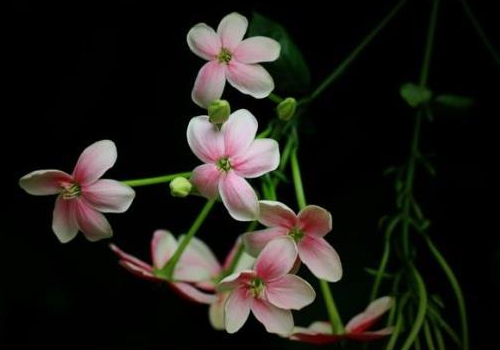
How much is a jin of Rangoon creeper seeds:
Rangoon creeper is native to Sichuan, Guizhou, and areas south of the Nanling Mountains. There are no wild records north of the middle and lower reaches of the Yangtze River. It likes light and tolerates partial shade, and it has high medicinal value. Currently on the market it is generally about 20 yuan per kilogram, but prices vary by region and variety, so prices differ. It is recommended to inquire before purchasing, and the quoted price should be taken as final.
That is all for the introduction to Rangoon creeper sowing time and seed prices. Now you understand, right!
Rangoon creeper introduction
Rangoon creeper, also known as Liuqiuzi, is a deciduous vine of the Combretaceae family. When young, it often appears shrub-like; the young tender parts are covered with rust-colored soft hairs. The leaves are membranous, ovate or elliptical. The flowers are pendulous spikes, with about 10 or more flowers. The bracts are linear, and the calyx is green; the petals are oblong or obovate-oblong, with obtuse rounded tips, initially white and later turning red. The flowering period is in summer and lasts up to 3 months.It is distributed throughout areas south of the Yangtze River in China, most commonly in Guangdong and Guangxi, followed by Sichuan, Yunnan, Fujian, and Taiwan, China. Abroad, it is distributed in India, Myanmar, and the Philippines. Rangoon creeper flowers are very beautiful, and it also has twining stems that can climb, making it an excellent material for flower hedges, flower trellises, and flower corridors. Whenever the summer flowering period arrives, abundant flowers hang down and dense leaves form shade, natural and beautiful, so it is widely cultivated in tropical regions for ornamental and shade purposes. The seeds can be used medicinally and are a major traditional Chinese medicine for expelling roundworms.
Rangoon creeper can be propagated by seeds, but in the Guangzhou area, whether cultivated or wild, it rarely fruits, so air layering (branch ringing) is commonly used for propagation. The specific method is: in March, select well-growing branches 3-4 m long, cut a wound about 3-4 cm long with a knife at a suitable position near the ground, then bury it in soil, or press it into a seven-jin pot filled with sun-dried old flower soil. After layering, pay attention to watering. After about 3 months, when new roots have grown and growth is vigorous, cut it away from the mother plant and carry out temporary planting. During the temporary planting period, strengthen water and fertilizer management, applying dilute liquid fertilizer once a month, and after half a year it can be planted in place.
Rangoon creeper is easy to cultivate and manage. As long as some garbage or chicken feathers are placed in the planting hole as base fertilizer when planting in place, and afterward, if the weather is dry, attention is paid to irrigation, and liquid fertilizer is applied 1-2 times a year, it can grow vigorously.
Rangoon creeper Quisqualis indica Rangoon creeper illustrated guide: how to grow Rangoon creeper / how to propagate Rangoon creeper
Rangoon creeper profileRangoon creeper Quisqualis indica
Rangoon creeper cultivation methods and precautions, introduction to Rangoon creeper
Rangoon creeper, a deciduous climbing shrub. Leaves opposite, long elliptical to elliptically lanceolate, 5-13 cm long, 2-6 cm wide, with yellowish-brown short soft hairs on both sides; petioles hairy, persistent petiole bases thorn-like. Corymb-like spikes terminal; calyx tube slender tubular, about 6 cm long, apex 5-lobed; petals 5, oblong or obovate, white then turning red, fragrant; stamens 10, in 2 whorls; ovary inferior, 1-loculed, style filiform. Fruit olive-shaped, blackish-brown. Flowering period May-September, fruiting period June-October. Mainly produced in Sichuan, Fujian, Guangdong, and Guangxi. This species is a famous antiparasitic medicine at home and abroad since ancient times, and has a history of at least more than 1,600 years in treating pediatric diseases.
Morphological characteristics of Rangoon creeper
Rangoon creeper is a climbing vine, shrub-like when young. The young tender parts are covered with brownish-yellow short soft hairs. Leaves elliptical, oblong to ovate-lanceolate, opposite or nearly opposite, thin papery, apex acuminate or sometimes caudate, base nearly rounded, surface nearly hairless, underside covered with brownish-yellow soft hairs, margin entire or slightly undulate, lateral veins 7-8 on each side, about 5-13 cm long, about 2.5-6 cm wide; petioles hairy, without joints, densely covered with brownish-yellow soft hairs when young, about 1 cm long, and after leaf fall the persistent petiole base gradually hardens into a thorn-like body. Flowers are nearly corymb-like spikes, terminal, with more than 10 flowers, bisexual; bracts ovate to linear-lanceolate, hairy, early deciduous, about 5-8 mm long; calyx green, calyx lobes triangular, apex with 5 small teeth, hairy; calyx tube slender, sparsely covered with yellow short soft hairs, about 5-9 cm long; petals 5, oblong or obovate-oblong, apex obtuse rounded, white when first opening and later turning red, about 1.2-2.4 cm long, about 2-10 mm wide; stamens 10, filaments arranged in 2 whorls at different heights, the upper whorl inserted above the stigma and extending outside the corolla, the lower whorl inserted below the stigma and not extending outside the corolla; ovary inferior, spindle-shaped, hairy, 5-angled, 1-loculed, ovules 3; style slender, base united with the calyx tube, upper part free, slightly extending outside the corolla; stigma slightly enlarged, somewhat flattened on both sides. Fruit is a drupe, greenish-black or brown, ovate to spindle-shaped, narrowly pointed at the apex, obtusely rounded at the base, with an obvious circular fruit stalk scar, with 5 longitudinal ridges, occasionally 4-9 ridges, hairless, leathery, dehiscing at the top after maturity, splitting into 3-5 valves, about 2.5-4 cm long, about 1.2-3.3 cm wide. Seed 1, cylindrical spindle-shaped, white, with many longitudinal wrinkles, about 2.5 cm long, about 10 mm wide. Flowering period May-September, fruiting period late autumn September-October, and the leaf-fall period is from November to February in winter.
Ecological habits of Rangoon creeper
It likes a warm and humid climate, is not cold-tolerant, fears frost, and tolerates shade. It is suitable to cultivate in sunny, wind-sheltered sites with deep soil layers, medium fertility, and yellow or black sandy loam. Cultivation techniques: propagate by seeds, division, cuttings, and layering.
The fruit is elliptical or ovate, with 5 longitudinal ridges, occasionally 4-9 ridges, 2.5-4 cm long, about 2 cm in diameter, surface blackish-brown to purplish-brown, smooth, slightly glossy, narrowly pointed at the apex, obtusely rounded at the base, with an obvious circular fruit stalk scar; hard in texture, the cross-section mostly appears five-pointed star-shaped, the shell at the ridges is thicker, and the middle is a nearly round cavity. The seed is long elliptical or spindle-shaped, about 2 cm long, about 1 cm in diameter, surface brownish-brown or blackish-brown, with many longitudinal wrinkles; seed coat thin, easy to peel off; cotyledons 2, yellowish-white, oily, with cracks in the cross-section. Slight fragrance, slightly sweet taste. Those that are large, have a purplish-brown glossy surface, plump kernels, and uniform white color are considered best.
Medicinal source: the mature fruit of the Combretaceae plant Rangoon creeper.
Harvesting and storage: It begins to bear fruit 3 years after planting. After August, harvest when the fruit shell changes from green to brownish-brown or blackish-brown. Knock the fruits down with a bamboo pole, then sun-dry or oven-dry.
Distribution area of Rangoon creeper
Produced in Sichuan, Guizhou, and areas south of the Nanling Mountains. There are no wild records north of the middle and lower reaches of the Yangtze River. Mainly produced in Fujian, Taiwan, China (cultivated), southern Jiangxi, Hunan, Guangdong, Guangxi, Sichuan, Yunnan, and Guizhou. Distributed in India, Myanmar, and the Philippines.
It grows in sunny shrublands on flat land, hillsides, roadsides, and is also cultivated. It is distributed in southwestern China and Jiangxi, Fujian, Taiwan, China, Hunan, Guangdong, Guangxi, and other places. It is mostly distributed in Taiwan, China, China, India, Myanmar, and the Philippines. It mostly grows in sunny shrublands on hillsides, roadsides, and flat land at altitudes of 1,000-2,500 m.
Landscape uses of Rangoon creeper
Rangoon creeper flowers are fragrant and gorgeous, and the leaves are deep green and dense. The vine grows 1-2 zhang, and it can be used as a green hedge and green canopy. It can also be made into a medium-sized bonsai within two meters, and it is a good ornamental tree species in gardens. With abundant flowers and lush leaves, it is light and elegant, with intoxicating fragrance. In garden applications, it is an excellent trellis plant or semi-upright green partition plant. In the hot summer, it gives people a refreshing visual experience. The flowers can be used as cut flowers. The fruit can be used medicinally.
Functions and uses of Rangoon creeper
Common antiparasitic medicine
Rangoon creeperRangoon creeper Latin: Fructus Quisqualis. Medicinal properties: This product is elliptical or ovate, with 5 longitudinal ridges, occasionally 4-9 ridges, 2.5-4 cm long, about 2 cm in diameter. Surface blackish-brown to purplish-black, smooth, slightly glossy. Apex narrowly pointed, base obtusely rounded, with an obvious circular fruit stalk scar. Hard in texture, the cross-section mostly appears five-pointed star-shaped, the shell at the ridges is thicker, and the middle is a nearly round cavity. The seed is long elliptical or spindle-shaped, about 2 cm long, about 1 cm in diameter; surface brownish-brown or blackish-brown, with many longitudinal wrinkles; seed coat thin, easy to peel off; cotyledons 2, yellowish-white, oily, with cracks in the cross-section. Slight fragrance, slightly sweet taste.Pumpkin seedPumpkin seed Latin: Semen MoschataePumpkin seedMedicinal properties: Seeds flattened round, 1.2-1.8 cm long, 0.7-1 cm wide. Surface pale yellowish-white to pale yellow, both sides flat and slightly raised, edges slightly ridged, one end slightly pointed, with a micropyle, hilum slightly protruding or indistinct. After removing the seed coat, the endosperm is membranous, cotyledons 2, yellow, thick, oily. Slight fragrance, slightly sweet taste.Agrimony budAgrimony bud Latin: Radix Agrimoniae Pilodae. Medicinal properties: The dried rhizome is conical or conically cylindrical, yellowish-white, often curved, about 1-3 cm long. The outside is covered with several lanceolate yellowish-white membranous scale leaves, with several longitudinal veins, brown at the base. Texture brittle and easily broken. Slight bean-like odor, taste slightly sweet then bitter and astringent.Torreya seedTorreya seed Latin: Semen Torreyae. Medicinal properties: This product is ovate or long ovate, 2-3.5 cm long, 1.3-2 cm in diameter. Surface grayish-yellow or pale yellowish-brown, with longitudinal wrinkles, one end obtusely rounded, where an elliptical hilum can be seen, the other end slightly pointed. Seed coat hard, about 1 mm thick. The seed kernel surface is wrinkled, the outer endosperm grayish-brown, membranous; the inner endosperm yellowish-white, enlarged, rich in oil. Slight odor, taste slightly sweet and astringent.WuyiWuyi Latin: Flos Genkwa. Medicinal properties: Square block-shaped, surface brownish-yellow, with many small holes. Light in body, loose and brittle in texture. Cross-section yellow-black, easily peeling off in scales. Strong peculiar odor, taste slightly sour and astringent.Carpesium fruitCarpesium fruit Latin: Fructus Carpesii. Medicinal properties: This product is cylindrical, tiny, 4-4 mm long, less than 1 mm in diameter. Surface yellowish-brown or dark brown, with many longitudinal ridges. The apex contracts into a slender shape, and the tip expands into a white ring; the base is slightly pointed, with an attachment scar. Pericarp thin, fibrous, seed coat very thin and transparent, cotyledons nearly white, slightly oily. Peculiar odor, slightly bitter taste.OmphaliaOmphalia Latin: Omphalia. Medicinal properties: This product is subspherical or irregularly lumpy, 1-3 cm in diameter. Surface blackish-brown or grayish-brown, with slightly raised reticulate fine lines. Texture solid, not easy to break, cross-section uneven, white or light grayish-yellow, appearing powdery or granular, often with yellowish-brown marble-like textures. Odorless, taste slightly bitter, granular sensation when chewed, slightly sticky, with no residue after long chewing.Areca nutAreca nut Latin: Semen ArecaeAreca nutMedicinal properties: This product is flattened spherical or conical, 1.5-3.5 cm high, 1.5-3 cm in diameter at the base. Surface pale yellowish-brown or pale reddish-brown, with slightly sunken reticulate grooves, the center of the base has a circular sunken micropyle, beside which there is 1 obvious scar-like hilum. Texture hard, not easy to break, cross-section shows marble-like patterns alternating brown seed coat and white endosperm. Slight odor, taste astringent and slightly bitter.Chinaberry bark Chinaberry barkChinaberry bark Latin: Cortex Meliae. Medicinal properties: This product is irregularly plate-like, trough-shaped, or semi-rolled tubular, variable in length and width, 2-6 mm thick. The outer surface is grayish-brown or grayish-brown, rough, with interwoven longitudinal wrinkles and dotted grayish-brown lenticels; when the rough bark is removed it is pale yellow; the inner surface is nearly white or pale yellow. Texture tough, not easy to break, cross-section fibrous, in layers, easy to peel off. Odorless, bitter taste.
Cultivation techniques of Rangoon creeper Cultivation techniquesPropagate by seeds, division, cuttings, and layering. Seed seedling and transplanting: collect mature plump fruits in autumn, sow immediately after collection, or store mixed with wet sand and sow in spring. When the seedling is about 30 cm tall, it can be planted in place.
Division propagationIn March, transplant suckers taken from vigorous mother plants.Cutting propagationThere are stem cutting and root cutting methods. For stem cutting, in February-March or September-October, cut vigorous 1-2-year-old branches as cuttings, 20-25 cm long, insert diagonally into the seedbed, and transplant the following year. For root cutting, from December to January-February of the following year, cut and dig out lateral roots beyond 30 cm from the main root, select those with a diameter greater than 1 cm and cut them into cuttings about 20 cm long, insert them into the seedbed, and transplant after 1 year.Layering propagationIn February-March, first bend vigorous long branches and bury them in soil, or use serpentine layering, and after rooting, cut them off and transplant. For seedlings propagated by the above methods, plant in place in mid-to-late February or during the rainy season. Row spacing 3.3 m x 2.3 m, apply farmyard manure in the holes, mix evenly with soil, plant 1 seedling per hole, and water after planting to settle the roots.Field managementIn the 1-2 years after planting in place, frequently cultivate and weed, and topdress 2-3 times each year. After entering the fruiting stage, topdress once each at budding and after fruit harvest every year. In winter, pay attention to earthing up or covering weeds at the base to protect against cold. For row-planted specimens, a trellis should be set up for them to climb. Prune once each year in early spring or after fruit harvest to make the branches evenly distributed. For block planting, a trellis should be set up for them to climb.
Medicinal dietary or medicinal value of Rangoon creeper
The medical information and health dietary information on Hugarden website is for reference only and cannot be used as a basis for diagnosis or medical treatment. For any health problem, consult professional medical staff, and for the treatment of any disease, follow doctor's advice.
Ultimate flower-protecting mission: to love yourself, start from reality and strictly follow doctor's advice. For illness, do not be careless, do not delay, do not give up hope, face it bravely, warm the silent world with love, and care for the flower field in your heart with care.
| [Aliases] Liuqiuzi (Nanfang Caomu Zhuang), Shijunzi (Hou Ningji's Yaopu), Wulengzi (Yaocai Ziliao Huibian), Suoziguo (Nanning Shi Yaowu Zhi), Dongjunzi, Bingganzi (Zhongyaocai Shouce). It is said that the doctor Guo Shijun of Panzhou used this medicine alone to treat various pediatric diseases and achieved good results. Later generations named this medicine Shijunzi in his memory. [Prescription names] Shijunzi, Junzi, Shijunzi kernel, Shijunzi flesh, Shijun flesh, Shijun kernel, Junzi flesh, stir-fried Shijunzi kernel, Shijunzi flesh. In prescriptions, writing Shijunzi or Junzi refers to shelled Junzi, also called shell Shijun. It refers to the fruit with the shell. Shijunzi kernel, also known as Shijunzi flesh, Shijun flesh, Shijun kernel, Junzi kernel, Junzi flesh, is the clean kernel obtained after removing the shell of Shijunzi, used raw as medicine. Stir-fried Shijunzi kernel, also known as stir-fried Shijunzi flesh, stir-fried Shijun flesh, stir-fried Shijun kernel, is Shijunzi kernel stir-fried over gentle heat until slightly yellow and fragrant before use as medicine. [Trade names] Jian Shijunzi: also known as Jian Shijun, Jian Junzi. Produced in the Fuqing and Putian areas of Fujian Province. Round in shape and with plump kernels, the best quality. Chuan Shijunzi: also known as Chuan Shijun, Chuan Junzi. Produced in Sichuan. Lower quality. Shijunzi: the general term for Shijunzi produced in various places. Those that are large, with yellow fruit skin and plump kernels are considered best. Medicinal usesThe dried mature fruit of Rangoon creeper is used as medicine. It is sweet in taste, warm in nature, non-toxic, and enters the spleen and stomach meridians. The medicinal material is mainly produced in China's Fujian, Jiangxi, Guangdong, Guangxi, Hunan, Yunnan, Guizhou and other provinces. In traditional Chinese medicine it is classified as an antiparasitic medicine and spleen-strengthening medicine. The Chinese medicine name is Shijunzi. The medicinal name was first recorded in Kaibao Bencao. It can kill parasites, remove food stagnation, and strengthen the spleen. It has effects such as expelling parasites and resisting skin fungi. It mainly treats abdominal pain due to worm accumulation, abdominal distension, diarrhea and dysentery, pediatric malnutrition, and milk-food stagnation. In modern clinical use, it is applied to expel roundworms, pinworms, and tapeworms, and externally for various skin fungal infections and Trichomonas vaginalis, among other treatments.
The leaves of Rangoon creeper are used as medicine. They are pungent in taste, neutral in nature, and enter the spleen and stomach meridians. In traditional Chinese medicine they are classified as an antiparasitic medicine. The Chinese medicine name is Shijunzi leaf. It has effects such as killing parasites and detoxifying, regulating qi and strengthening the spleen. It mainly treats pediatric jaundice accumulation, pediatric accumulation, abdominal distension and fullness, sores, boils, and ulcers.
The root of Rangoon creeper is used as medicine. It is pungent and bitter in taste, neutral in nature, and enters the spleen and lung meridians. In traditional Chinese medicine it is classified as a spleen-strengthening medicine and lung-diffusing medicine. The Chinese medicine name is Shijunzi root. It has effects such as descending adverse qi and stopping cough, killing parasites and strengthening the spleen. It mainly treats cough, dysentery, and worm accumulation.
Medicinal identificationThis product is the dried mature fruit, harvested in autumn when the fruit skin turns purplish-black, remove impurities, then sun-dry or oven-dry; surface blackish-brown to purplish-black, smooth and glossy, elliptical or ovate, cross-section mostly five-pointed star-shaped, the fruit shell at the ridges is thicker, the middle is a nearly round cavity, texture hard, seed coat thin and easily shed; cotyledons yellowish-white, 2, cross-section with cracks, oily; slight fragrance, slightly sweet taste. This species is recorded in the 2005 edition of the Chinese Pharmacopoeia and is designated as the legal original plant source species of the Chinese medicine Shijunzi, mainly using traits as indicators to control the quality of the medicinal material. Traditional experience considers those that are large, purplish-black, glossy, with plump kernels and yellow-white color to be best[12].
Steamed pork loin with Rangoon creeper
Main ingredients: Rangoon creeper 8 g, pork (lean) 100 g
Seasoning: salt 2 g
Method: 1. Remove the shells from the Rangoon creeper and take out the Rangoon creeper kernels for later use.
2. Mash the Rangoon creeper kernels and lean pork together and mix evenly, adding a little salt.
3. Put the Rangoon creeper meat patty into a pot and steam until cooked, or place it on top of rice while cooking and steam until cooked.Chemical compositionThe seeds contain potassium quisqualate, and also contain 20-27% fatty oil. The oil contains oleic acid 48.2%, palmitic acid 29.2%, stearic acid 9.1%, linoleic acid 9.0%, myristic acid 4.5%, arachidic acid, and sterols. The seeds also contain sucrose, glucose, fructose, pentosan, malic acid, citric acid, succinic acid, alkaloids such as N-methylnicotinic acid inner salt, proline, etc. The fruit shell also contains potassium quisqualate. The flowers contain cyanidin monoglycoside. The seeds contain about 0.5% quisqualic acid, present in the seeds as a potassium salt, namely potassium quisqualate. In addition, they also contain about 0.18% trigonelline, and also contain malic acid, citric acid, succinic acid, 1-proline, 1-asparagine, fatty oil, pyridine, K+, Na+, SO4=, and D-mannitol, etc. The seeds contain amino acids and their salts, fatty acids, triterpenoids, and sterol compounds; the fruit flesh contains fatty compounds and hydrolyzable tannins; the flowers and leaves contain flavonoids; the seed kernels contain fatty acids, mainly unsaturated fatty acids, and also saturated fatty acids. Among them, quisqualic acid and potassium quisqualate are the active antiparasitic ingredients.
Functions and indications
Kill parasites; remove food stagnation; strengthen the spleen. Mainly for abdominal pain due to roundworms; pediatric malnutrition; milk-food stagnation; abdominal distension; diarrhea and dysentery
Usage and dosage: Oral administration: decoct in soup, 6-15 g, crush and add to the decoction; or make into pills or powders; remove the shell, stir-fry until fragrant, and chew. For children, 1 to 1.5 seeds per year of age per day, with the total amount not exceeding 20 seeds.
Rangoon creeper supplementary formulas
Shijunzi Powder "Buy Yao Xiuzhen Xiao'er Fang Lun"; Shijunzi Powder "Youke Zhunsheng"; Shijunzi Pill "Heji Jufang"
Processing methods1. Shijunzi: take the original medicinal material, remove residual fruit stalks and impurities. Crush when used. 2. Shijunzi kernel "Huoyou Xinshu": "cut thinly." "Puji Fang": "pound into extremely fine powder." "Yingtong Baiwen": "soak in water, remove the black skin." Current method: take clean Shijunzi, remove hard shells and moldy or spoiled fruits. Crush when used. The raw product is especially good at killing parasites. 3. Stir-fried Shijunzi kernel "Yingtong Baiwen": "stir-fry until cooked." Current method: take clean Shijunzi kernels, place in a pot, heat over gentle fire, stir-fry until the surface is yellow with slight scorch spots and aroma is released, take out, and cool. Crush when used. 4. Roasted Shijunzi "Boji Fang": "wrap in dough, roast over slow fire, remove the dough when the dough is cooked." "Chuanxin Shiyong Fang": "roast and remove the skin." "Yizong Cuiyan": "roast over slow fire until fragrant and cooked, then use." Current method: before use, burn over a small fire, take out when the skin is scorched and the kernel is yellow, remove the shell and use. Stir-fried and roasted products have a strong effect on strengthening the spleen, removing accumulation, and treating malnutrition, and are mostly used for pediatric malnutrition. Store in a dry container in a ventilated and dry place. Prevent mold and insects. Pharmacological action: roundworm-expelling effectIn in vitro tests, Rangoon creeper has a strong inhibitory effect on earthworms, leeches, pig roundworms, etc. For example, it has been reported that a 10% aqueous extract of Rangoon creeper can cause earthworms to become comatose or die within 0.5-2 hours, but a 95% ethanol extract is ineffective. Someone tested the antiparasitic effects of 50% ethanol extracts of 20 kinds of Chinese medicines on pig roundworms, earthworms, and leeches. The results showed that 8 kinds, including Rangoon creeper, Carpesium fruit, Wuyi, areca nut, Cyrtomium rhizome, Sichuan chinaberry fruit, Omphalia, and evodia fruit, had significant effects, among which Rangoon creeper had the strongest effect. Experiments using the pig roundworm head recording method showed that Rangoon creeper kernel extract has a strong paralyzing effect on the head of pig roundworms. Before paralysis, there is often first an excitation phenomenon. Its active ingredient is water-soluble, while high-concentration alcohol, petroleum ether, and chloroform extracts are all ineffective, and Rangoon creeper ash is also ineffective. The active antiparasitic ingredient of Rangoon creeper is generally considered to be the potassium quisqualate it contains. Potassium quisqualate has a clear inhibitory effect on whole pig roundworms in vitro, but cannot kill them. Japanese researchers obtained quisqualic acid from Quisqualis indica and found it also has a clear effect on pig roundworms, causing movement incoordination in whole pig roundworms, with a minimum effective concentration of 1:1000. However, some people have also extracted pyridine and its analogues from Rangoon creeper, with a content of about one-thousandth, and pyridine compounds have antiparasitic and deworming effects, so it is believed that the roundworm-expelling effect of Rangoon creeper may also be related to this. There are also reports that a mixture of Rangoon creeper oil and castor oil also has a clear roundworm-expelling effect on humans and animals.Pinworm-expelling effectExperimental results on mice naturally infected with mouse pinworms showed that Rangoon creeper powder and the combination of Rangoon creeper and Stemona powder both have a certain pinworm-expelling effect. For larvae, Rangoon creeper powder is ineffective, but when Rangoon creeper powder and Stemona powder are combined, there is a slight effect.Anti-skin fungus effectRangoon creeper aqueous infusion has varying degrees of inhibitory effect in vitro on skin fungi such as Trichophyton violaceum, Trichophyton concentricum, Trichophyton schoenleinii, Microsporum audouinii, Microsporum ferrugineum, Microsporum lanosum, Epidermophyton inguinale, and Nocardia asteroides.Other effectsRangoon creeper powder has a certain pinworm-expelling effect on naturally infected mouse pinworm disease. When combined with Stemona powder, the effect is better than when used alone, and it also has a slight effect on larvae. The aqueous infusion (1:3) has some inhibitory effect on certain skin fungi in test tubes. Anti-intestinal parasites: aqueous infusion or ethanol infusion at 36% concentration can paralyze pig roundworms cultured in vitro at constant temperature within 5 minutes; Rangoon creeper oil at 40% concentration cannot paralyze pig roundworms after 30 minutes, while the oil-removed aqueous infusion at 19% concentration can paralyze pig roundworms within 3 minutes. Before the worms are paralyzed, there is always a short period of excitation; 100% decoction of Rangoon creeper kernel, shell, and leaf has a paralyzing effect on earthworms, with the leaf stronger than the kernel and shell, and with lower toxicity; 0.1% potassium quisqualate can cause earthworms to die within 8 hours, and also has an inhibitory effect on pig roundworms.Rangoon creeper - pharmacology (toxicology)Rangoon creeper has low toxicity. When a crude preparation (26.6 g/kg) was given orally to dogs, apart from producing vomiting and hiccups, there were no other poisoning symptoms; its gum also produced the same effect at 0.83 g/kg. When the aqueous extract was injected subcutaneously into mice, after a few minutes they showed an inhibited state, with slow and irregular breathing, and after 1-2 hours mild convulsions occurred throughout the body, followed by respiratory arrest. The minimum lethal dose was about 20 g/kg. When Rangoon creeper oil 50-100 mg/10 g was given orally to mice or rabbits, no poisoning phenomenon was observed. Toxicity: crude preparation 26.6 g/kg or the contained gum 0.83 g/kg by gavage can both cause hiccups, vomiting, and central inhibition in dogs; subcutaneous injection in mice first causes inhibition, then spasms, and finally death due to respiratory inhibition, with a minimum lethal dose of 20 g/kg.
Common formulas1. To treat abdominal pain caused by roundworms in children, with clear foamy saliva from the mouth: Shijunzi (shell removed) ground into extremely fine powder, mixed with rice water, taken on an empty stomach before dawn. (Shijunzi Powder, "Buy Yao Xiuzhen Xiao'er Fang Lun") 2. To treat worms in the abdomen of adults and children: Shijunzi (shell removed) 1 qian, areca nut 1 qian, realgar 5 fen. Grind the above into powder. For adults, take 1 qian each time, taken with decocted chinaberry root soup. (Xiachong Powder, "Gujin Yijian") 3. To treat mass in the abdomen of children, enlarged abdomen, emaciated muscles and sallow complexion, gradually developing into malnutrition: Shijunzi kernel 3 qian, Momordica seed kernel 5 qian. Grind into powder, make water pills the size of longan. Each time take one pill, break open the top of one egg, put the medicine inside, steam until cooked over rice, and eat on an empty stomach. ("Jianbian Danfang") 4. To treat tapeworm disease: 1 duck egg, break a small hole, add Shijunzi flesh powder 1 qian, areca nut powder 1 qian, seal the opening with paper, steam until cooked and eat. The worm will come out with the stool. ("Yinan Jizheng Jianfang") 5. To treat hookworm disease: Shijunzi 4 g, areca nut 4 g, add water 100 ml, decoct into 30 ml. The full adult dose is 90 ml, children 11-15 years old 60 ml, 9-10 years old 45 ml, 7-8 years old 30 ml. Take orally in 3 divided doses, once each morning on an empty stomach, for 3 consecutive times. ("Jiangsu Zhongyi") 6. To treat five types of malnutrition in children, disharmony of the spleen and stomach, distension of the heart and abdomen, recurrent pain, inability to eat, gradually leading to emaciation: Magnolia officinalis bark (peeled, roasted with ginger juice), dried tangerine peel (white removed), Chuanxiong each 1 fen, Shijunzi kernel (soaked, black skin removed) 1 liang. Grind the above into fine powder, refine with honey into pills the size of zaozi. For those over three years old, one pill; for those under three years old, half a pill, dissolved in old rice water. (Shijunzi Pill, "Jufang") 7. To treat yellow disease with craving to eat raw rice, tea leaves, charcoal, soil, tile scraps, and the like: Shijunzi flesh 2 liang (chopped, lightly stir-fried), areca nut 2 liang, Nanxing 3 liang (both stir-fried with ginger juice). Grind together into powder, make into pills with red yeast rice paste, the size of parasol tree seeds. Take more than 100 pills each time, taken with dark plum and Sichuan pepper soup. ("Wanbing Huichun") 8. To treat pediatric deficiency edema, with floating of the head, face, and scrotum: use Shijunzi 1 liang (shell removed, roasted thoroughly with honey 5 qian), grind into powder. After each meal, take 1 qian with rice soup. ("Jianbian Fang") 9. To treat chronic non-healing head sores: burn Shijunzi until scorched, pound and sift into powder, mix with raw oil and apply. ("Shenghui Fang") 10. To treat head and facial sores: Shijunzi kernels, soak three to five in a little sesame oil, chew finely at bedtime, swallow with sesame oil, and over time it will heal by itself. ("Puji Fang") 11. To treat toothache from decayed teeth: decoct Shijunzi in water and rinse frequently. ("Pinhu Jijian Fang") 12. To treat ascariasis:
(1) Stir-fry Shijunzi kernels until dry, chew and swallow once 1-2 hours after breakfast, 10 g for those under 12 years old, 20 g for those 13 and above. (2) Shijunzi leaves, 24 g for those under 2-5 years old, 30 g for 5-10 years old, 40 g for 10-15 years old, 60 g for adults, decoct in water and take. 13. To treat biliary ascariasis abdominal pain: grind 7-10 Shijunzi seeds into powder, dark plum 3 g, Sichuan pepper 3 g, decoct in water to obtain the juice and take it to swallow the powder, 2-3 times daily. 14. To treat pediatric ascariasis: equal amounts of Shijunzi kernels and Stemona, grind each into powder, mix evenly, take 3 g each time on an empty stomach. 15. To treat pediatric malnutrition: Shijunzi kernels 30 g, Magnolia officinalis bark, dried tangerine peel, Chuanxiong each 0.3 g, grind together into powder, refine with honey into pills, for those under three years old take one pill, for those under three years old take half a pill, dissolved in old rice water. 16. To treat otitis media: Shijunzi, alum, and borneol in appropriate amounts (ratio 4:3:1). Take several Shijunzi seeds, pry open a small hole, insert a piece of alum the size of a soybean respectively, burn until the alum melts, add a little borneol, grind together into powder. First wash the affected ear with hydrogen peroxide or normal saline, wipe dry, then blow a little of the medicinal powder into the affected ear, once daily. Mild cases heal with 1 use, severe cases with 2-3 uses. 17. To treat rectal prolapse: pound Shijunzi and add an appropriate amount of malt sugar (that is, maltose) to make pills; each pill 3 g, stew with lean pork 60-150 g, take medicine once every 3 days, 3 times as one course of treatment. 18. To treat toothache from decayed teeth: decoct Shijunzi in water. Rinse the mouth frequently. Clinical applications1. Treatment of ascariasis. Rangoon creeper has been used to expel roundworms, and in modern times quite a few observations have been made, but the results are not entirely consistent. According to reports ranging from dozens to hundreds of cases, the worm expulsion rate after medication varies from about 30 to 86%, and the egg negative conversion rate on stool re-examination is generally about 30-40%, though it can be as low as 15.4%. Some believe that after medication most patients' roundworms cannot be expelled completely in one time, and repeated medication is necessary; but others point out that repeated medication is of little benefit. Usage: Shijunzi kernels (raw kernels or stir-fried until fragrant and crisp) chewed and swallowed, or dried and ground into powder and taken with boiled water, or made into a decoction. Take once daily on an empty stomach or about 2 hours after meals, or in 2-3 divided doses daily, or for 2-3 consecutive days. Some cases were also given purgatives after taking it. Dosage of the original plant of Rangoon creeper: some take 1 seed per year of age, some give 1 g per year of age or add 1 g per year of age (for example, 3 g for 2 years old, 4 g for 3 years old, and so on), some calculate 0.5 g per kilogram of body weight as the daily dose, and some give 5-10 g according to age. However, it seems that 1 g per year of age or adding 1 g per year of age, with the maximum dose not exceeding 10 or 16 g; and giving 10 g (under 12 years old) or 20 g (over 13 years old) according to age have better effects. The level of efficacy has a certain relationship with usage and dosage. The effect of the decoction is not as high as swallowing the original medicine, but side effects are smaller. A single dose at one time is better than divided doses. Taking for 2 or 3 consecutive days is not significantly more effective than a single dose. Dosage and efficacy are in a certain positive proportional relationship; smaller doses (such as 1 seed per year of age) have lower efficacy than larger doses (such as 1 g per year of age), and side effects are also smaller. Some say adding a purgative can increase efficacy, but others believe it easily causes vomiting reactions and is unnecessary. Side effects: the most common is hiccups, followed by dizziness, headache, abdominal pain, diarrhea, etc. They are generally relatively mild and can disappear on their own. 2. Treatment of pinworm disease: stir-fry Shijunzi kernels until cooked, and chew them half an hour before meals. Children 3-15 seeds daily, adults 15-30 seeds, divided into 3 doses. Take for 15 consecutive days as one course, and take another course after 1 month. Avoid drinking strong tea before and after medication. Generally after 1-2 courses, symptoms can disappear. 3. Treatment of intestinal trichomoniasis: stir-fry Shijunzi until yellow, adults chew and take it, children take it as powder. Dosage: within 1 year old, 1 qian daily, in 1-2 divided doses; 1-3 years old, 1.5 qian daily; adults, once daily, 5 qian each time, for 3-5 consecutive days as one course; if necessary, take another 1-2 courses after 3-5 days. Seven cases were observed, including 3 adults who were cured after one course; 4 infants who were cured after 2-3 courses. Modern research main componentsThe seeds contain potassium quisqualate (Potassium quisqualate), which is the main roundworm-expelling component. They also contain about 25% fatty oil, and the oil contains oleic acid, palmitic acid, stearic acid, linoleic acid, myristic acid, arachidic acid, and sterols. They also contain sucrose, glucose, fructose, pentosan, malic acid, citric acid, succinic acid, and a small amount of alkaloids (trigonelline), pyridine, and its analogues.Pharmacological effects1. Antiparasitic effect. Experiments have shown that potassium quisqualate has a strong inhibitory effect on whole pig roundworms, but cannot kill them. Clinical experiments have shown that the roundworm-expelling ability of potassium quisqualate is similar to that of fresh Shijunzi kernels, but inferior to santonin. Some reports believe that the pyridine contained in Rangoon creeper is related to the antiparasitic effect. There are also reports pointing out that a mixture of Rangoon creeper fixed oil and castor oil has a high worm expulsion rate in animals and humans, with no significant side effects. In in vitro experiments, Rangoon creeper also has a strong expelling effect on earthworms and leeches. Rangoon creeper powder has a certain degree of pinworm-expelling effect on white mice naturally infected with mouse pinworms; when combined with Stemona powder, the effect is better than when used alone, and it also has a slight effect on larvae. 2. Antifungal effect. Rangoon creeper aqueous infusion (1:3) has varying degrees of inhibitory effect in test tubes on skin fungi such as Trichophyton violaceum, Trichophyton concentricum, Trichophyton schoenleinii, Microsporum audouinii, Microsporum ferrugineum, Epidermophyton inguinale, and Nocardia asteroides. Trait identification Trait identificationThe fruit is elliptical or ovate, with 5 longitudinal ridges, occasionally 4-9 ridges, 2.5-4 cm long, about 2 cm in diameter, surface blackish-brown to purplish-brown, smooth, slightly glossy, narrowly pointed at the apex, obtusely rounded at the base, with an obvious circular fruit stalk scar; hard in texture, the cross-section mostly appears five-pointed star-shaped, the shell at the ridges is thicker, and the middle is a nearly round cavity. The seed is long elliptical or spindle-shaped, about 2 cm long, about 1 cm in diameter, surface brownish-brown or blackish-brown, with many longitudinal wrinkles; seed coat thin, easy to peel off; cotyledons 2, yellowish-white, oily, with cracks in the cross-section. Slight fragrance, slightly sweet taste. Those that are large, have a purplish-brown glossy surface, plump kernels, and uniform white color are considered best.Microscopic identificationSeed cross-section: the seed coat epidermal cells are composed of large thin-walled cells containing brown material. Below the epidermis is a reticulate cell layer, with cells tangentially elongated, having reticulate textures, and often scattered with small vascular bundles. Cotyledon cells contain fatty oil droplets and numerous calcium oxalate cluster crystals, 10-15 μm in diameter.Physicochemical identification1. Take 5 g of the coarse powder of this product, use petroleum ether 50 ml, soak at 50°C for 1 h to degrease, and filter. Use 40% ethanol 20 ml for the residue, filter, and concentrate the filtrate under reduced pressure to dryness. Take a small amount of the concentrate, dissolve it with 50% methanol aqueous solution, spot it on filter paper, spray with ninhydrin test solution, place in an oven at about 100°C for 1-2 min, and purple spots appear. (Check amino acids) 2. Thin-layer chromatography: take the above ethanol-extracted concentrate, dissolve it with 50% methanol, and use potassium quisqualate, alpha-proline, and alpha-asparagine as controls. Spot together on a silica gel G thin-layer plate, develop with n-butanol-acetic acid-water (4:1:1), with a development distance of 13 cm. Use ninhydrin reagent for color development, and the sample shows spots of the same color at positions corresponding to the controls. Medical book records1. "Bencao Gangmu": Most antiparasitic medicines are bitter and pungent, but only Shijunzi and torreya seed are sweet yet kill parasites, which is also an oddity. Whenever adults or children have worm disease, eat several Shijunzi kernels on an empty stomach early in the morning, or swallow them with soup decocted from the shell, and the next day the worms will all die and come out. Some say eating them seven raw and seven roasted is also good. This substance is sweet in taste and warm in nature; it can kill parasites and also benefit the spleen and stomach, so it can astringe deficiency heat and stop diarrhea and dysentery, and is an important medicine for various pediatric diseases. 2. "Bencao Jingshu": Shijunzi is an important medicine for tonifying the spleen and strengthening the stomach. The five types of malnutrition in children, turbid urine, diarrhea and dysentery, and abdominal worms are all caused by spleen deficiency and stomach weakness, leading to milk-food stagnation and damp-heat congestion. When the spleen is strengthened and the stomach opened, milk intake will naturally be reduced, damp-heat will naturally disperse, the water passage will naturally be free, and all the aforementioned symptoms will be eliminated. It is neither bitter nor pungent, yet can kill malnutrition and roundworms, which is why it is a superior medicine for children. 3. "Bencao Zheng": Whenever children eat this, it should also not be frequent or excessive; it is roughly slippery in nature, and too much can damage the spleen. But Shijunzi specifically kills roundworms, while torreya seed specifically kills tapeworms. 4. "Bencao Zhengyi": Shijunzi, sweet and warm, is the warmth of mild warmth, definitely not comparable to warm dryness, so it can assist the transformation of food and drink and guide the stagnation in the intestines, and it is rich in fatty liquid, so it is slippery and free-flowing. What "Kaibao" calls turbid white urine refers to malnutrition accumulation. Whenever children have abdominal distension with accumulation, the urine is often like thin starch slurry. This is probably because the urine transport pathway in the kidneys is not clearly separated and drained, so the essence transformed from food and drink is also discharged together with the urine. This is seen most often, and it is not the red and white turbidity of adults and should not be mistaken for it. It also says that it mainly treats diarrhea and dysentery, which is also one symptom of malnutrition accumulation. Only because digestion is impaired, the stool changes abnormally, either as diarrhea or as accumulation. This substance can also aid digestion and remove accumulation, so it treats both, which is the meaning of what Pinhu called being able to benefit the spleen and stomach, remove deficiency heat, and treat the hundred diseases of children. 5. "Kaibao Bencao": Mainly treats the five types of malnutrition in children, turbid white urine, and treats diarrhea and dysentery. 6. "Bencao Gangmu": Strengthens the spleen and stomach, removes deficiency heat. Treats the hundred diseases and sores and tinea of children. Compatibility effectsRangoon creeper combined with chicken gizzard lining and Atractylodes macrocephala: Rangoon creeper removes malnutrition and transforms accumulation; chicken gizzard lining moves the spleen and promotes digestion; Atractylodes macrocephala strengthens the spleen and boosts qi. The three medicines used together have the effects of removing malnutrition and transforming accumulation, strengthening the spleen and boosting qi, and are used to treat pediatric malnutrition and poor appetite belonging to spleen deficiency. Rangoon creeper combined with aloe: Rangoon creeper is sweet in taste and warm in nature, killing parasites, removing accumulation, and strengthening the spleen; aloe is bitter in taste and cold in nature, clearing heat, promoting bowel movement, and killing parasites. Used together, their antiparasitic effect is more pronounced, and they can also purge heat and remove accumulation and expel intestinal worms, and are used to treat worm accumulation abdominal pain, heat congestion constipation, pediatric malnutrition with fever, indigestion, and other symptoms. Rangoon creeper combined with mirabilite: Rangoon creeper kills parasites; mirabilite purges and promotes bowel movement. Used together, they have the effect of killing parasites and promoting bowel movement, and are clinically used to expel and kill roundworms. Nutritional knowledgeRangoon creeper knowledge introduction: It is the mature fruit of the Combretaceae plant Rangoon creeper. After August, harvest when the fruit shell changes from green to brownish-brown or blackish-brown, remove impurities, and sun-dry or oven-dry. The fruit of Rangoon creeper is elliptical or ovate, with 5 longitudinal ridges, 2.5 to 4 cm long, about 2 cm in diameter. Surface blackish-brown to purplish-brown, smooth, slightly glossy. Apex narrowly pointed, base with an obvious fruit stalk scar; hard in texture, the cross-section mostly appears five-pointed star-shaped, the shell at the ridges is thicker, and the middle is a nearly round cavity. The seed is long elliptical or spindle-shaped, 2 cm long, about 1 cm in diameter, surface brownish-brown or blackish-brown, with longitudinal wrinkles; seed coat thin, easy to peel off, cotyledons 2, yellowish-white, oily, slight fragrance, slightly sweet taste. Those that are large, with a purplish-brown surface and plump kernels are considered best. Oral overdose of this product can cause hiccups, dizziness, listlessness, nausea, and even vomiting, diarrhea, and other reactions. Taking it with tea can also cause hiccups, so oral intake should not be excessive. Supplementary information on Rangoon creeper: According to different processing methods, it is divided into Shijunzi, Shijunzi kernel, stir-fried Shijunzi kernel, and roasted Shijunzi kernel. After processing, store in a dry container in a ventilated and dry place, prevent mold, and prevent insects. Shijunzi should preferably be used as medicine after processing the fruit, to reduce side effects, simplify operation, and save medicinal material. Suitable population for Rangoon creeper: suitable for children to take, and commonly used for worm accumulation abdominal pain and pediatric malnutrition. Dietary therapeutic effect of Rangoon creeper: sweet in taste, warm in nature. Enters the spleen, stomach, and large intestine meridians. Slightly fragrant and moist in quality. Expels parasites, strengthens the spleen, and removes accumulation. Mainly treats worm accumulation abdominal pain, pediatric malnutrition, milk-food stagnation, abdominal distension, and diarrhea and dysentery. Food incompatibility of Rangoon creeper: This product should not be taken with hot tea. Guidance for preparing Rangoon creeper: For worm accumulation abdominal pain, this product can be used alone by stir-frying until fragrant and chewing, or ground into powder and mixed with water; it can also be combined with areca nut, chinaberry root bark, and the like to enhance the effect of killing parasites and relieving pain; or add purgatives such as rhubarb to assist the antiparasitic effect; in addition, this product used with Stemona can externally treat pinworms. For all cases of pediatric malnutrition and milk-food stagnation with symptoms of sallow complexion, emaciated body, enlarged abdomen and abdominal distension, it can be combined with Picrorhiza scrophulariiflora, medicated leaven, malt, areca nut, and the like. Medication contraindications1. Avoid drinking hot tea while taking the medicine. Large doses can cause reactions such as hiccups, dizziness, and vomiting. 2. "Gangmu": Avoid drinking hot tea; if violated, diarrhea will occur. 3. "Bencao Jingshu": Avoid eating hot foods. 4. "Bencao Huiyan": For children with deficiency-cold of the spleen and stomach, it is also not suitable to use much; eating too much will cause hiccups. If there is no worm accumulation, taking it will certainly harm the person. 5. "Lingnan Caiyao Lu": Rangoon creeper, if eaten raw in too large an amount, causes hiccups. If children eat too much, there may be hiccups that do not stop for a day and night, but drinking water decocted from its shell stops them. Rangoon creeper toxicityThe toxicity of Rangoon creeper (Quisqualis indica) is not great. When a crude preparation (26.6 g/kg) was given orally to dogs, apart from causing vomiting and hiccups, there were no other symptoms of poisoning; its gum also produced the same effect at 0.83 g/kg. When an aqueous extract was injected subcutaneously into mice, they entered a depressed state within a few minutes, with slow and irregular breathing; after 1-2 hours, mild convulsions occurred throughout the body, followed immediately by respiratory arrest. The minimum lethal dose was about 20 g/kg. When 50-100 mg/10 g of Rangoon creeper oil was given orally to mice or rabbits, no poisoning was observed. Toxicity: gavage with a crude preparation at 26.6 g/kg or the contained gum at 0.83 g/kg can cause hiccups, vomiting and central nervous system depression in dogs; subcutaneous injection in mice first causes depression, then spasms, and finally death due to respiratory depression, with a minimum lethal dose of 20 g/kg.
The cultural background of Rangoon creeper
Historical researchRangoon creeper was first recorded in "Nanfang Caomu Zhuang" under the original name Liuqiuzi, which states: "Its shape is like that of a gardenia, with deep ridges and pointed ends, resembling chebulic myrobalan but lighter; when it is half yellow it is already ripe, with white flesh inside, sweet like a jujube, and a large pit. It treats the diseases of infants and children. It is found in both Nanhai and Jiaozhi." "Kaibao Bencao" first named it Shijunzi. "Bencao Tujing" states: "Shijunzi grows in Jiao, Guang and other prefectures, and today it is found in all the prefectures and commanderies of Lingnan. It grows in mountain wilds and by water banks. Its leaves are green, about two cun long, like two fingertips; its stem forms vines like a finger; in the third month it produces pale red flowers, which later turn deep red, with five petals; in the seventh and eighth months it bears seeds like a thumb, about one cun long, much like a gardenia but with five ridges; its shell is blue-black, with a white kernel inside; the fruit is harvested in the seventh month."Folk legend oneIt is said that during the Three Kingdoms period, Liu Bei's son contracted a strange illness: his complexion was sallow, his limbs were emaciated, his whole body was weak, and his belly was swollen like a drum, making a "thump thump" sound when tapped. Liu Shan also often cried and made a fuss, wanting to eat things like yellow earth and raw rice. One day, with a gentle breeze and bright sunshine, Liu Shan wanted to go out and play in the wild, so Liu Bei sent two soldiers to take him to play nearby. Who would have thought that after returning home at dusk, Liu Shan suddenly vomited and had diarrhea, clutching his belly with both hands and crying out in pain. When Liu Bei questioned the two soldiers about what had happened, Liu Shan's pain became even worse. Seeing Liu Shan crying and screaming, rolling around while clutching his belly, the two soldiers were so frightened that they knelt on the ground and did not dare stand up. Liu Bei hurriedly asked them what Liu Shan had actually eaten outside. One of the soldiers, trembling, knelt and said: "...The young master saw a kind of wild fruit and cried and shouted that he wanted to pick it. We could not stop him, so we let him pick a few to hold and play with. Who would have thought..." When Liu Bei heard this, he thought Liu Shan had been poisoned by eating the wild fruit. He immediately told the two soldiers to hurry and find a doctor. Who would have thought that not long after the two soldiers left, Liu Shan passed a great many roundworms and egg-like matter, and then stopped crying and fussing, becoming somewhat quieter. He even shouted that he was hungry. Liu Shan drank half a bowl of thin porridge, passed some more roundworms, and then played by himself alone. By the time the doctor arrived, Liu Shan had long since fallen into a quiet, deep sleep. In the days that followed, Liu Shan's belly became soft, and he no longer wanted to eat things like yellow earth and raw rice. Watching his son's health improve day by day, Liu Bei was overjoyed. He thought to himself that this wild fruit must have cured his son's strange illness. He urgently ordered the two soldiers to bring more than ten people to gather that unnamed wild fruit in the wild. After gathering it, they dried it in the air and ground it into powder, which was distributed among the people to treat the same strange illness as Liu Shan's. It truly was effective. Thereupon, the common people carried pigs and sheep, beat gongs and drums, and came beaming with joy to Liu Bei's camp to express their thanks. Liu Bei took out the wild fruit, which resembled an olive and had angles and ridges, and asked everyone what it was called, but the people shook their heads and did not know. At this moment, a person who looked like a scholar squeezed into the crowd and said loudly: "Since this wild fruit has no known name, and the person who first tasted it was the young master of Lord Liu Shijun, then we might as well call it 'Shijunzi'!" When everyone heard this, they clapped their hands again and again in approval!Folk legend twoIt is said that during the Northern Song dynasty, in the Panzhou area there was a physician named Guo Shijun, who was thoroughly versed in the medical arts and delighted in helping the poor, and was deeply respected by his neighbors. One day, he went up the mountain to gather medicinal herbs and was attracted by a fruit borne on a mushroom-like plant. The fruit's shape closely resembled the Chinese medicine gardenia, and also somewhat resembled the Chinese medicine chebulic myrobalan. He peeled off the outer shell of the fruit and tasted it, finding its flavor sweet and bland yet with a fragrant aroma, so he picked some and took them home. Because the fruits he had gathered were not yet fully dry, he worried that the medicine would deteriorate and grow moldy if stored too long, so he placed the fruits in a pot and roasted them. Before long, a fragrant aroma overflowed from the pot, making his young grandson crave it and clamor to eat it. Helpless, Guo Shijun had to pick out four or five of the roasted ones and give them to his grandson to eat. Who would have thought that the next morning his grandson actually passed several roundworms during a bowel movement. Guo Shijun thought it over and over but could not understand why, so he took out more than ten fruits and let his grandson eat them. Unexpectedly, before even an hour had passed, his grandson kept hiccuping and vomiting, and Guo Shijun hurriedly used ginger, dried tangerine peel, licorice and other medicines to counteract the poison. A few days later, he gave his grandson half the dose, and this time his grandson again smoothly passed several roundworms. From then on, whenever Guo Shijun encountered children with parasitic accumulations or malnutrition due to parasites, he would use this fruit in an appropriate dose to treat them, and often achieved good results. To commemorate this doctor, people gave this medicine a beautiful name, "Shijunzi."
Rangoon creeper pictures