How to grow bowl lotus well? These precautions you need to master
If bowl lotus is cultivated properly, it can produce flowers only about 5 cm in diameter, dainty and exquisite, with outstanding grace. Then, when its flowers are abundant and leaves lush, prune it to make it well-spaced and beautifully arranged, and then place small decorative items such as miniature hills, boats, bridges, chickens and ducks in the bowl. This can indeed create a fascinating artistic conception, full of elegant charm.
To cultivate bowl lotus, the growing container must not be too small; if the container is too small, it is not easy for it to bloom. The mouth of a household vegetable bowl is generally only 15 cm in diameter, which is too small. It is best to use a small round jar with a mouth 25 cm in diameter and about 20 cm high. For the growing soil, fertile river pond mud is the most ideal choice. After the floating leaves emerge, slightly raise the water level; after the upright leaves emerge, gradually fill the jar with water as the leaf stalks elongate, and then add a little water every day. During the growth period of bowl lotus, no additional fertilizing is needed. Too much fertilizer will cause fertilizer damage.
1. When planting or dividing the lotus rhizomes, special attention should be paid to protecting the terminal buds of the seed rhizomes and not allowing them to be bruised.
2. The container should be appropriately larger and deeper. Although it is called bowl lotus, if it is grown in a vegetable bowl, that is too small and too shallow. If the bowl is too shallow, it holds too little nutrient soil, and the plant cannot get sufficient nutrients; if it is too small, it cannot accommodate the spreading fibrous roots, and it will not grow well.
3. It should be given sufficient sunlight. Growers should not only place bowl lotus indoors to decorate the environment and admire it, leaving it indoors for a long time so that it cannot see sunlight, forgetting that it is a plant that loves sufficient sunlight. Only when the soil in the pot is warmed by the sun can it grow rapidly.
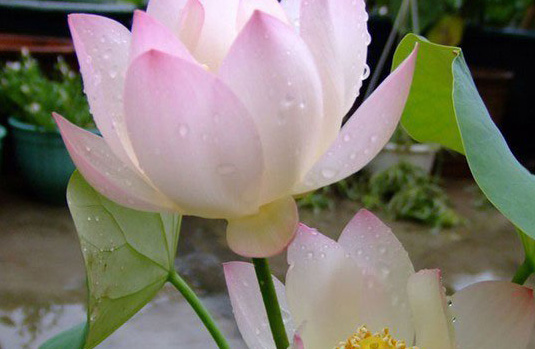
What are the requirements for cultivating bowl lotus, and what key points must be mastered to grow bowl lotus well?
Bowl lotus, also known as bowl lotus or pot lotus, is a lotus grown in a bowl, specially meant to be placed on indoor tables to beautify the living environment. If bowl lotus is cultivated properly, it can produce flowers only about 5 cm in diameter, dainty and exquisite, with outstanding grace. Then, when its flowers are abundant and leaves lush, prune it to make it well-spaced and beautifully arranged, and then place small decorative items such as miniature hills, boats, bridges, chickens and ducks in the bowl. This can indeed create a fascinating artistic conception, full of elegant charm. Below, the editor will introduce what requirements there are for cultivating bowl lotus and what key points must be mastered to grow bowl lotus well.
What are the requirements for cultivating bowl lotus:
To cultivate bowl lotus, the growing container must not be too small; if the container is too small, it is not easy for it to bloom. The mouth of a household vegetable bowl is generally only 15 cm in diameter, which is too small. It is best to use a small round jar with a mouth 25 cm in diameter and about 20 cm high. For the growing soil, fertile river pond mud is the most ideal choice. After the floating leaves emerge, slightly raise the water level; after the upright leaves emerge, gradually fill the jar with water as the leaf stalks elongate, and then add a little water every day. During the growth period of bowl lotus, no additional fertilizing is needed. Too much fertilizer will cause fertilizer damage.
Bowl lotus is delicate and susceptible to freezing damage. When winter comes, the jar or bowl should be moved indoors to a sunny place, and a small amount of water should be added every week. When Qingming comes the following year, repot it, take out the seed rhizomes, and replant them.
What key points must be mastered to grow bowl lotus well:
1. When planting or dividing the lotus rhizomes, special attention should be paid to protecting the terminal buds of the seed rhizomes and not allowing them to be bruised.
2. The container should be appropriately larger and deeper. Although it is called bowl lotus, if it is grown in a vegetable bowl, that is too small and too shallow. If the bowl is too shallow, it holds too little nutrient soil, and the plant cannot get sufficient nutrients; if it is too small, it cannot accommodate the spreading fibrous roots, and it will not grow well.
3. It should be given sufficient sunlight. Growers should not only place bowl lotus indoors to decorate the environment and admire it, leaving it indoors for a long time so that it cannot see sunlight, forgetting that it is a plant that loves sufficient sunlight. Only when the soil in the pot is warmed by the sun can it grow rapidly.
4. The water supply should be controlled according to the different growth stages of the plant. When bowl lotus is first planted, the water should not be too much; too much water will lower the temperature, which is unfavorable for the rooting and development of the young seedlings, and it also affects their breathing and aeration, and may even cause root rot. When the plant's leaves grow larger, clear water should gradually be added to the bowl to meet the needs of its leaves floating on the water surface for photosynthesis. Otherwise, the leaf edges will become scorched, withered, and yellow.
5. Pay attention to applying an appropriate amount of fertilizer. Bowl lotus likes fertilizer. If it lacks fertilizer, rooting and leaf growth will be slow, and it will lack vitality. Therefore, before planting, a small amount of decomposed cake fertilizer liquid or bean bran or peanut bran should be mixed into the pot soil as a base fertilizer. However, although bowl lotus is a fertilizer-loving plant, it must not be over-fertilized. Especially because the bowl lotus container is small and the plant is small, its fertilizer requirement is also small. If too much fertilizer is applied, it will only grow leaves and not bloom. In more serious cases, it can also cause the plant to die. If excessive fertilization is found, change the water frequently to wash away part of the fertilizer liquid and dilute it.
6. If the leaves grow too many and too densely, some leaves can be appropriately removed to facilitate the plant's breathing and aeration. This also helps with flowering.
The above is what the editor has brought to you about what requirements there are for cultivating bowl lotus and what key points there are for growing bowl lotus well. I hope that friends who like bowl lotus after reading this article will also go back and plant one.
To grow bowl lotus well, one should grasp the "six-character formula"
To grow bowl lotus well, one should grasp the “six-character formula”, briefly described as follows:
First is “protect”. That is, protect the terminal buds well. When planting them in the bowl or dividing the rhizomes, special attention should be paid to protecting the terminal buds of the seed rhizomes. They must not be bruised or damaged; otherwise, leaves will emerge slowly, or even not emerge at all, causing the rhizomes to rot.
Second is “bowl”. That is, for the planting container, one should choose a container that is appropriately larger and deeper. If the bowl is small, it holds little nutrient soil, and the plant cannot get sufficient nutrients; if the container is shallow, it cannot accommodate the spreading fibrous roots, and it will not grow well either. If conditions permit, it is best to choose a small round jar with a diameter of 25 cm and a height of about 20 cm.
Third is “light”. That is, sufficient sunlight should be given. Growers often only place bowl lotus indoors to decorate the environment and admire it, leaving it indoors for a long time so that it cannot see sunlight, forgetting that it is a plant that loves sufficient sunlight. Only with sufficient light can it grow well.
Fourth is “water”. The water supply should be controlled according to the different growth stages of the plant. When bowl lotus is first planted, the water should not be too much; too much water will lower the temperature, which is unfavorable for the rooting and development of the young seedlings, and it also affects their breathing and aeration, and may even cause root rot. When the plant's leaves grow larger, clear water should gradually be added to the bowl to meet the needs of its leaves floating on the water surface for photosynthesis. Otherwise, the leaf edges will become scorched, withered, and yellow.
Fifth is “fertilizer”. That is, pay attention to applying an appropriate amount of fertilizer. It is a fertilizer-loving plant. If it lacks fertilizer, rooting and leaf growth will be slow, and it will lack vitality. Therefore, before planting, a small amount of decomposed cake fertilizer or bean bran or peanut bran should be mixed into the pot soil as a base fertilizer. However, because the bowl lotus container is small and the plant is small, if too much fertilizer is applied, it will only grow leaves and not bloom, and may even cause the plant to die. If excessive fertilization is found, change the water frequently to wash away part of the fertilizer liquid and dilute it.