Detailed Explanation of the Design Method for Phalaenopsis Forcing Cold Rooms
For the first strain type, the reproductive growth temperature is the same as the vegetative growth temperature, with daytime temperatures maintained below 30°C and nighttime temperatures lower than daytime temperatures being sufficient to meet the forcing requirements. Therefore, the same greenhouses originally used for producing small, medium and large seedlings can also be used for forcing operations.
For the second strain type, the temperature required for forcing is below 30°C during the day and must be below 20°C at night. The main cooling equipment in domestic greenhouses is fans combined with wet pads, whose cooling capacity is affected by the relative humidity of the atmosphere. In the high-humidity environment at night, wet pads cannot function effectively, so the nighttime temperature is entirely determined by the atmospheric temperature. For flowers of this strain type, the original solution in Taiwan, China was to send them to high mountain areas for forcing, using the natural nighttime temperatures below 20°C in the mountains to meet the temperature requirements inside the greenhouse. Although daytime temperatures in the mountains sometimes exceed 30°C, wet pads and fans can be used to keep the greenhouse interior below 30°C.
The third strain type of Phalaenopsis has the most stringent forcing temperature conditions. Daytime temperatures must be below 25°C, and nighttime temperatures must be below 20°C. When daytime temperatures in mountain greenhouses exceed 30°C in summer, fans and wet pads cannot bring the interior temperature below 25°C. In other words, even greenhouses located in mountain areas cannot meet this requirement; only refrigeration machinery is sufficient to create and maintain temperatures below 25°C. The features of this type of cold room are as follows: during normal greenhouse cultivation operations, the insulating plastic sheeting has no effect, all fans and wet pads can operate normally, and environmental control equipment operates just as in a traditional greenhouse.
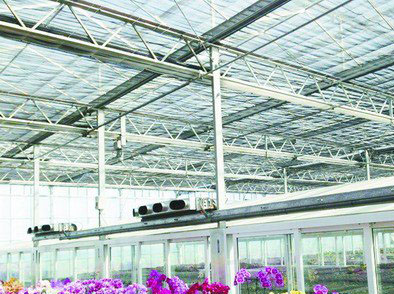
Phalaenopsis Greenhouse Cultivation Conditions
Although Phalaenopsis can still survive in nature without a greenhouse, with a greenhouse, Phalaenopsis can grow better, the production period can be controlled, quality is improved, and production quantity is stable, thereby meeting the requirements of industrialized orchid production. In summary, Phalaenopsis can be cultivated without a greenhouse, but a Phalaenopsis industry exists only within greenhouses.
What kind of greenhouse is suitable for producing Phalaenopsis? Is a more expensive greenhouse always better? The answer is that the suitability of a greenhouse and its price do not necessarily correspond. A greenhouse that works well abroad is not necessarily suitable for China, and greenhouses from different climate zones within the same country cannot be mixed and matched arbitrarily. For example, a Phalaenopsis production greenhouse in the Netherlands costs about 40 million yuan per hectare (figure below). It works very well in temperate regions, but it is unsuitable for North China, Central China and South China. The plastic-film greenhouse used in Taiwan, China (figure on the right) also requires additional equipment to be suitable for Central China and North China.
The hardware equipment of a greenhouse includes the main structure, covering materials, management equipment, environmental control equipment and control systems. The software systems matched with greenhouse production include space layout, material management, workflow planning, personnel training, etc.
When building a Phalaenopsis greenhouse, the first consideration is structural strength. Structural strength varies according to the climate conditions of each region. The greenhouse structure needs to resist wind pressure and snow pressure, and must also be able to bear the weight of various equipment inside the greenhouse. If the structural strength design of the greenhouse is poor, disasters may occur in coastal areas where strong winds blow down the greenhouse, or in winter blizzard conditions where accumulated snow crushes the greenhouse. The structural strength design of greenhouses follows civil engineering principles, and construction guidelines are already available to follow.
The second consideration for a Phalaenopsis greenhouse is covering materials. These include the roof and wall materials that isolate the greenhouse from the outside, as well as internal and external shade nets for adjusting light levels and various types of energy-saving cloth for insulation.
The greenhouse covering materials we commonly use include glass, polycarbonate panels, plastic film, etc. Different materials have different physical properties such as light transmittance, thermal insulation and material strength. The choice of greenhouse covering materials must be based on local climate characteristics and cultivation purposes. For example, the light quantity and light quality conditions required for small, medium and large Phalaenopsis seedlings and for spike forcing operations are different, so the roof covering materials used also need to differ.
The installation position of internal and external shade nets, as well as their own light transmittance and air permeability, also affect the light quantity and light quality inside the greenhouse, indirectly affecting temperature and relative humidity. Energy-saving cloth is used to help maintain the internal temperature of the greenhouse and reduce energy loss, but the air permeability of the energy-saving cloth is also a key factor. Good air permeability allows heat to dissipate easily, while poor air permeability easily causes excessively high internal humidity, making plants susceptible to disease.
The third consideration for a Phalaenopsis greenhouse is the installation of environmental control equipment. Different equipment can be installed according to different environmental control needs. For example, for temperature regulation operations, heating can use hot air heating, hot water heating or heat pump heating. Cooling can use natural ventilation, mechanical ventilation, wet pads or air conditioning.
In terms of relative humidity regulation, humidification can use overhead misting, misting under the growing beds and floor watering. Dehumidification operations can introduce outside air for internal-external air exchange, or a dehumidifier can be installed. For the regulation of light quantity and photoperiod, increasing light quantity or extending the photoperiod can involve installing artificial light sources. Reducing light quantity or shortening the light period can use shade nets.
The fourth consideration for a greenhouse is the environmental control system. This system includes various sensors and controllers and plays the role of the central nervous system. The environmental control system can be used to sense conditions such as temperature, relative humidity and light quantity inside the greenhouse, and compare them with preset conditions. If the existing greenhouse microclimate conditions deviate from the preset conditions, this environmental control system turns various environmental control equipment on or off to regulate the microclimate. If medium moisture and nutrient sensors are installed in the greenhouse, they can also be connected to this environmental control system for water and fertilizer control.
The above content is an introduction to greenhouse systems. If this greenhouse is used to cultivate Phalaenopsis, then what is the most suitable greenhouse for Phalaenopsis? There is no standard answer to this question. Because a dome-shaped plastic-film greenhouse suitable for South China is not necessarily suitable for North China; a greenhouse used for cultivating small, medium and large seedlings is not necessarily suitable for spike forcing and flowering; and if the greenhouse location lacks resources such as external heat sources or underground cold water, it is not suitable for installing a heat pump. Therefore, the selection and construction of a greenhouse must consider the local special climate conditions (typhoons, heavy rain, cold waves, sandstorms, etc.), as well as the physiological requirements of the cultivated Phalaenopsis and the cultivation purpose. If it is a high-temperature variety, in order to inhibit spike formation, the internal temperature of the greenhouse must be able to maintain high temperatures, and the installed heating equipment must have higher power. If the purpose is spike forcing, the forcing cold room greenhouse must be able to maintain low temperatures in summer.
Greenhouse cultivation is a double-edged sword; improper use can harm oneself instead. For example, if internal circulation fans are installed incorrectly, they not only fail to assist ventilation but instead promote the spread of disease. If greenhouse covering materials are chosen incorrectly and block part of the sunlight spectrum, Phalaenopsis petals will fade in color. Making good use of a greenhouse not only creates a growing environment suited to Phalaenopsis, but can also maintain a clean space to reduce pests and diseases and reduce the amount of chemical agents used.
Has the development of Phalaenopsis greenhouses reached its limit in the 21st century? The answer is no. In the new century, the greenhouse industry faces new challenges. The requirements for Phalaenopsis greenhouses are greater energy savings, reduced use of chemical agents, reduced labor demand, and adaptation to crop physiological needs. This requires combining the cultivator's professional knowledge with production cost conditions to carry out intelligent environmental control operations.
Conditions That Greenhouse Cultivation of Phalaenopsis Should Have
Although Phalaenopsis can still survive in nature without a greenhouse, with a greenhouse, Phalaenopsis can grow better, the production period can be controlled, quality is improved, and production quantity is stable, thereby meeting the requirements of industrialized orchid production. In summary, Phalaenopsis can be cultivated without a greenhouse, but a Phalaenopsis industry exists only within greenhouses.
What kind of greenhouse is suitable for producing Phalaenopsis? Is a more expensive greenhouse always better? The answer is that the suitability of a greenhouse and its price do not necessarily correspond. A greenhouse that works well abroad is not necessarily suitable for China, and greenhouses from different climate zones within the same country cannot be mixed and matched arbitrarily. For example, a Phalaenopsis production greenhouse in the Netherlands costs about 40 million yuan per hectare (figure below). It works very well in temperate regions, but it is unsuitable for North China, Central China and South China. The plastic-film greenhouse used in Taiwan, China (figure on the right) also requires additional equipment to be suitable for Central China and North China.
The hardware equipment of a greenhouse includes the main structure, covering materials, management equipment, environmental control equipment and control systems. The software systems matched with greenhouse production include space layout, material management, workflow planning, personnel training, etc.
When building a Phalaenopsis greenhouse, the first consideration is structural strength. Structural strength varies according to the climate conditions of each region. The greenhouse structure needs to resist wind pressure and snow pressure, and must also be able to bear the weight of various equipment inside the greenhouse. If the structural strength design of the greenhouse is poor, disasters may occur in coastal areas where strong winds blow down the greenhouse, or in winter blizzard conditions where accumulated snow crushes the greenhouse. The structural strength design of greenhouses follows civil engineering principles, and construction guidelines are already available to follow.
The second consideration for a Phalaenopsis greenhouse is covering materials. These include the roof and wall materials that isolate the greenhouse from the outside, as well as internal and external shade nets for adjusting light levels and various types of energy-saving cloth for insulation.
The greenhouse covering materials we commonly use include glass, polycarbonate panels, plastic film, etc. Different materials have different physical properties such as light transmittance, thermal insulation and material strength. The choice of greenhouse covering materials must be based on local climate characteristics and cultivation purposes. For example, the light quantity and light quality conditions required for small, medium and large Phalaenopsis seedlings and for spike forcing operations are different, so the roof covering materials used also need to differ.
The installation position of internal and external shade nets, as well as their own light transmittance and air permeability, also affect the light quantity and light quality inside the greenhouse, indirectly affecting temperature and relative humidity. Energy-saving cloth is used to help maintain the internal temperature of the greenhouse and reduce energy loss, but the air permeability of the energy-saving cloth is also a key factor. Good air permeability allows heat to dissipate easily, while poor air permeability easily causes excessively high internal humidity, making plants susceptible to disease.
The third consideration for a Phalaenopsis greenhouse is the installation of environmental control equipment. Different equipment can be installed according to different environmental control needs. For example, for temperature regulation operations, heating can use hot air heating, hot water heating or heat pump heating. Cooling can use natural ventilation, mechanical ventilation, wet pads or air conditioning.
In terms of relative humidity regulation, humidification can use overhead misting, misting under the growing beds and floor watering. Dehumidification operations can introduce outside air for internal-external air exchange, or a dehumidifier can be installed. For the regulation of light quantity and photoperiod, increasing light quantity or extending the photoperiod can involve installing artificial light sources. Reducing light quantity or shortening the light period can use shade nets.
The fourth consideration for a greenhouse is the environmental control system. This system includes various sensors and controllers and plays the role of the central nervous system. The environmental control system can be used to sense conditions such as temperature, relative humidity and light quantity inside the greenhouse, and compare them with preset conditions. If the existing greenhouse microclimate conditions deviate from the preset conditions, this environmental control system turns various environmental control equipment on or off to regulate the microclimate. If medium moisture and nutrient sensors are installed in the greenhouse, they can also be connected to this environmental control system for water and fertilizer control.
The above content is an introduction to greenhouse systems. If this greenhouse is used to cultivate Phalaenopsis, then what is the most suitable greenhouse for Phalaenopsis? There is no standard answer to this question. Because a dome-shaped plastic-film greenhouse suitable for South China is not necessarily suitable for North China; a greenhouse used for cultivating small, medium and large seedlings is not necessarily suitable for spike forcing and flowering; and if the greenhouse location lacks resources such as external heat sources or underground cold water, it is not suitable for installing a heat pump. Therefore, the selection and construction of a greenhouse must consider the local special climate conditions (typhoons, heavy rain, cold waves, sandstorms, etc.), as well as the physiological requirements of the cultivated Phalaenopsis and the cultivation purpose. If it is a high-temperature variety, in order to inhibit spike formation, the internal temperature of the greenhouse must be able to maintain high temperatures, and the installed heating equipment must have higher power. If the purpose is spike forcing, the forcing cold room greenhouse must be able to maintain low temperatures in summer.
Has the development of Phalaenopsis greenhouses reached its limit in the 21st century? The answer is no. In the new century, the greenhouse industry faces new challenges. The requirements for Phalaenopsis greenhouses are greater energy savings, reduced use of chemical agents, reduced labor demand, and adaptation to crop physiological needs. This requires combining the cultivator's professional knowledge with production cost conditions to carry out intelligent environmental control operations.
Greenhouse cultivation is a double-edged sword; improper use can harm oneself instead. For example, if internal circulation fans are installed incorrectly, they not only fail to assist ventilation but instead promote the spread of disease. If greenhouse covering materials are chosen incorrectly and block part of the sunlight spectrum, Phalaenopsis petals will fade in color. Making good use of a greenhouse not only creates a growing environment suited to Phalaenopsis, but can also maintain a clean space to reduce pests and diseases and reduce the amount of chemical agents used. What conditions should greenhouse cultivation of Phalaenopsis have?