What to do when greenhouse cucumbers wilt and die, affecting yield?
When cultivating greenhouse cucumbers, wilting symptoms are common, and in severe cases they cause dead plants. As the greenhouse cucumber planting area increases, cucumber wilting worsens year by year, affecting yield. Here are several common wilting symptoms of greenhouse cucumbers and their control countermeasures:
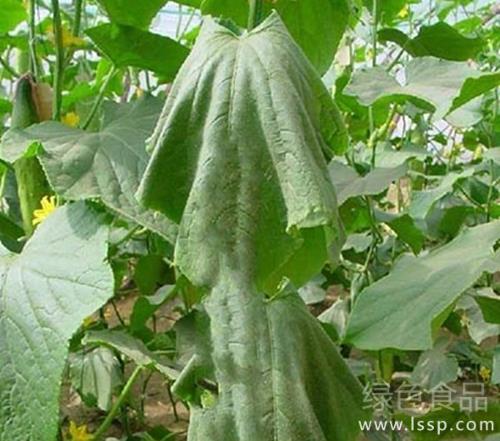
Cucumber Fusarium Wilt
I. Fusarium wilt:
Throughout the entire growth period, cucumbers can develop the disease, with the period from flowering to fruiting being the most severe. In the early stage of the disease, the leaves gradually wilt from bottom to top, resembling a water shortage, more obvious at noon, and they can still recover in the morning and evening. After a few days, the leaves wither and do not return to normal; in humid environments, white or pink mold grows on the surface of the diseased parts. To control Fusarium wilt, irrigate the cucumber roots with a 250-fold dilution of 2% Agricultural Antibiotic 120 aqueous solution, or a 500-fold dilution of 50% carbendazim wettable powder, or a 3000-fold dilution of 50% hymexazol wettable powder.
II. Acute wilting:
The cucumber plants are robust, but at noon on a sunny day the leaves suddenly wilt and can recover in the evening; when the stem base is cut, no discoloration of the vascular bundles is found, and no milky substance exudes. Cause: due to consecutive cloudy days and the removal of the straw mats, the cucumbers cannot carry out photosynthesis and are in a state of starvation; the ground temperature is low, root activity is weak, and once it turns sunny, the greenhouse temperature rises, humidity decreases, leaf transpiration is fast, root water absorption is weak, and less water is transported upward, so the leaves wilt. Control measures: after several consecutive cloudy days, if it turns sunny, do not remove all the straw mats at once; first remove part of them, then gradually remove all of them. When the leaves wilt severely, use a sprayer to spray water on the leaves to prevent excessive wilting from damaging the leaves.
III. Poor quality of grafted cucumbers or low compatibility between the rootstock and the scion:
In the early stage of the disease, the lateral roots of the black-seed pumpkin rootstock turn brown and rot, and the main root turns light brown or brown; in severe cases, the entire root system turns light brown or brown, causing the cucumber to wilt. Control measures: First, control the amount of watering and prevent flood irrigation, especially during consecutive rainy and snowy days, when watering is prohibited. Second, carry out intertillage and hoeing. Loosen the soil and prevent soil compaction. Third, chemical control: in the early stage of the disease, irrigate the roots with a 800-fold dilution of 70% thiophanate-methyl or a 500-fold dilution of 70% mancozeb wettable powder, applying 250 milliliters of the solution per cucumber plant.
IV. Flood irrigation:
After irrigation, the soil water content is high and air permeability is poor; under oxygen-deficient conditions, toxic substances are easily produced, causing the cucumber root system to be poisoned or suffocated from lack of oxygen and to wilt. 15 to 20 days before cucumber planting, water thoroughly to build up bottom soil moisture; if the arable layer is too deep, after watering, level the bed surface again so that the soil meets the standards of depth, permeability, fineness, levelness and firmness. Drip irrigation is preferable for watering; avoid flood irrigation and maintain soil air permeability.
Cucumber Wilting
V. Damage from root-knot nematodes:
Root-knot nematodes are distributed in the soil layer 3 to 9 cm below the surface. The root system of affected cucumbers forms root galls, which gradually enlarge; after the root tissue is damaged, the ability to absorb and transport fertilizer and water becomes poor, causing the plants to be stunted and the leaves to turn yellow, and in severe cases to wilt or die. To control root-knot nematode disease, treat the soil with chemicals before planting, or irrigate the roots during the growth period with a 1500-fold dilution of 1.8% abamectin emulsifiable concentrate.
VI. Excessive fertilizer concentration:
Applying too much fertilizer, especially chemical fertilizer near the cucumber root crown, easily burns the cucumbers. Applying fertilizer with a high nitrogen content can produce ammonia gas during decomposition in the greenhouse; when the temperature rises, the ammonia gas concentration becomes too high, causing wilting and dead plants. Apply less quick-acting fertilizer and more decomposed organic fertilizer, and carry out foliar topdressing; you can spray foliar fertilizers such as compound potassium dihydrogen phosphate and Spraying Treasure , etc.