Why Is My Money Tree Losing Leaves? Analysis of 13 Main Causes
Malabar chestnut, also known as Pachira aquatica and money tree. It is an evergreen small tree of the Malvaceae family. Native to Mexico and Costa Rica. Palmate leaves with 7-11 leaflets; indoor money trees have oblong to obovate leaves. There is a horticultural variety, the variegated money tree. Because the name "money tree" is very popular with merchants and ordinary citizens, and because of its beautiful plant shape, bright green leaves and hammer-shaped trunk, potted plants are suitable for indoor arrangement and beautification, so since 2006 it has developed very quickly in the Chinese flower market. On every holiday, hotels, restaurants, merchants and citizens rush to buy them for good luck and good fortune.
Money tree, an evergreen tree, likes high temperature and high humidity climates, has poor cold resistance; seedlings are afraid of frost, adult trees can tolerate light frost and long-term low temperatures of 5-6c. In South China it can overwinter outdoors; in areas to the north it must be moved into a greenhouse in winter to protect it from the cold. It likes fertile, loose, breathable and water-retentive sandy loam, likes acidic soil, and avoids alkaline or heavy clay soil. It is relatively tolerant of waterlogging and also slightly tolerant of drought.
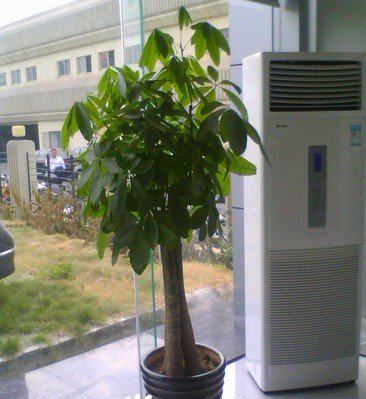
13 reasons for the money tree losing its leaves:
(1) Overwatering the money tree: the potting soil stays too wet for a long time, causing a lack of oxygen in the soil, rotting some fibrous roots, hindering normal respiration and the absorption of water and nutrients, and causing leaves to turn yellow and fall. After being affected, the young leaves first turn pale yellow, then the old leaves gradually turn yellow as well. Watering should be controlled immediately, fertilizing suspended, and the soil frequently loosened so that it is well aerated.
(2) Drought and dehydration of the money tree. Missing watering or watering only halfway (that is, wet on top and dry below) for a long time affects nutrient absorption and also easily causes the leaves to become dull and lusterless and to wilt and droop. First the lower old leaves age, and gradually wither, yellow and fall from bottom to top. At this point a small amount of water should be given along with misting, so that it gradually recovers before returning to normal watering.
What to Do When the Money Tree Loses Leaves and How to Prevent Money Tree Leaf Drop
The money tree is one of people's favorite foliage plants to grow at home. It not only has a good meaning, but its leaf shape is also attractive, and it can purify the air. However, many people find that not long after growing a money tree, the leaves become scorched or fall off. What should be done then? How should money tree leaf drop be prevented and treated in normal times?
What to Do When the Money Tree Loses Leaves and How to Prevent Money Tree Leaf Drop1. Control room temperature
An unsatisfactory room temperature is an important reason for the money tree losing leaves. Especially when the indoor temperature is below 8 degrees, the money tree loses leaves most severely. At this time it should be moved to a warm environment, or the flowerpot should be covered together with a plastic bag to keep it warm, so that the symptoms of money tree leaf drop can be prevented.
2. Adjust the light
When the money tree is placed in strong light, it easily loses leaves. The best preventive method is to put it in a place with light but not strong light, or with scattered light. In addition, growing the money tree under a draft will also cause leaf drop; placing it in a sheltered place can also prevent leaf drop.
3. Water regulation
Improper watering is also an important cause of money tree leaf drop. To prevent it, the water supply must be controlled. Water should be given promptly after the potting soil dries out, but not too much, otherwise the leaves will wither and fall off, and in severe cases root rot will occur. If these adverse symptoms appear, fertilizing must be stopped, otherwise these adverse symptoms will continue to worsen, and in severe cases the money tree will die.
What are the reasons for money tree leaves falling off? What are the preventive measures for money tree leaf drop?
When it comes to the money tree, I believe the first thing everyone thinks of is its beautiful symbolic meaning. The money tree is a common tree-type plant. Many flower lovers have also grown money trees at home. Money tree leaf drop is a common problem during cultivation. So how much do you know about the reasons for money tree leaf drop? Let's learn about it together with the editor.
Reasons for money tree leaf drop:
Overwatering the money tree.
The potting soil stays too wet for a long time, causing a lack of oxygen in the soil, rotting some fibrous roots, hindering normal respiration and the absorption of water and nutrients, and causing leaves to turn yellow and fall. After being affected, the young leaves first turn pale yellow, then the old leaves gradually turn yellow as well. Watering should be controlled immediately, fertilizing suspended, and the soil frequently loosened so that it is well aerated.
Drought and dehydration of the money tree.
Missing watering or watering only halfway (that is, wet on top and dry below) for a long time affects nutrient absorption and also easily causes the leaves to become dull and lusterless and to wilt and droop. First the lower old leaves age, and gradually wither, yellow and fall from bottom to top. At this point a small amount of water should be given along with misting, so that it gradually recovers before returning to normal watering.
Long-term fertilizer deficiency in the money tree.
If nitrogen fertilizer has not been applied for a long time or the pot and soil have not been changed, the soil lacks nitrogen and other nutrient elements, resulting in weak branches and leaves that are thin and yellow. The pot should be changed promptly, new loose and fertile culture soil should be used, and thin, well-rotted liquid fertilizer or compound flower fertilizer should gradually be added.
Overfertilizing the money tree.
Excessive fertilizing causes new leaves to be thick and fleshy and mostly uneven, while old leaves dry at the tips, become scorched yellow and fall off. Fertilizing should be stopped immediately, the amount of watering increased so that the fertilizer flows out through the drainage holes at the bottom of the pot, or the pot should be changed immediately and the soil ball rinsed with water before being replanted in the pot.
Hot high temperatures for the money tree.
In summer, if cool-loving flowers (such as cyclamen, fuchsia and begonia) are placed in a high-temperature spot exposed to direct strong sunlight, it very easily causes the leaf tips and leaf margins of young leaves to scorch, or the leaves to turn yellow and fall. They should be moved promptly to a well-ventilated, shady place.
Excessive shading of the money tree.
If sun-loving flowers are kept for a long time in a shady place or a place with insufficient light, the branches and leaves will turn yellow.
Alkaline soil and water for the money tree.
The soil and water in most northern regions contain relatively high levels of salt and alkali. When acid-loving flowers such as rhododendron, camellia, Michelia figo, gardenia, orchid, Michelia alba and osmanthus are planted, because the soil lacks absorbable soluble iron and other elements, the leaves gradually turn yellow. When planting, acidic soil should be used, and alum fertilizer water should be applied frequently during the growing period.
Poor ventilation due to crowding in the money tree.
If too much nitrogen fertilizer is applied, the branches and leaves grow too luxuriantly, and together with a long period without pruning, the inner branches and leaves do not get enough light, which easily causes the leaves to turn yellow and fall. Fertilizing should be reasonable and pruning strengthened so as to provide ventilation and light.
Dry air for the money tree. When the indoor air is too dry, some flowers that like a humid environment, such as spider plants and orchids, often show dry leaf tips or scorched leaf margins. Methods such as misting and covering with plastic film should be used to increase air humidity.
Improper temperature for the money tree.
If the room temperature in winter is too low, flowers that like high temperatures are often susceptible to cold damage, which causes the leaves to turn yellow, and in severe cases to wither, yellow and die. If the room temperature is too high, the plant transpires excessively, and the roots cannot supply enough water and nutrients, which also causes the leaves to turn yellow. Pay attention to adjusting the room temperature promptly.
Soil that is too acidic for the money tree.
Red soil in the south is acidic, and elements such as magnesium are easily lost. When planting trees and flowers that are alkali-tolerant or like slightly alkaline soil, such as oleander, boxwood and winter jasmine, interveinal chlorosis and yellowing of old leaves often occur. Calcium magnesium phosphate fertilizer can be applied, or a magnesium sulfate solution sprayed.
Damage from pests and diseases in the money tree.
Leaf spot disease caused by infection with fungi and other pathogens easily causes localized necrosis of the leaves, with yellow spots or patches appearing, and in severe cases the whole leaf withers, yellows and falls. After infection with mosaic virus, yellow-green mottled patches appear on the leaves; when attacked by scale insects, red spider mites and the like, the leaves also become locally yellow and withered, and in severe cases the whole leaf yellows and falls. In all cases, pesticides should be sprayed promptly for prevention and control.
Strong irritation of the money tree.
When preventing and controlling pests and diseases, using pesticide at too high a concentration, or contamination by toxic gases in the air, or suddenly watering with cold water when the temperature is high, all easily cause the leaf tips or parts of the leaf surface to turn yellow and scorch, and in severe cases the whole plant withers and dies. Therefore, pesticides should be used reasonably, and efforts should be made to eliminate sources of air pollution. In midsummer, avoid watering flowers with cold water around noon. Finally, it should also be mentioned that although yellow leaves on potted flowers are sometimes caused by one reason, they are often the result of multiple factors, so a correct diagnosis should be made before prescribing the right remedy.
The above is all the content I have learned today about the money tree. I hope flower lovers will find it helpful after reading this article. If you want to learn more about the money tree, please continue to follow Duorou Huapu, and we will provide you with more related knowledge!