What to Do When Dracaena Leaves Turn Yellow? Causes and Solutions
Dracaena likes warm, humid and sunny environments, but it can also tolerate shade. However, when grown indoors, if it is placed in too shady an environment for a long time, the leaves will also fade. So it is best to put the pot on a windowsill facing southeast, so that it fully receives sunlight. If the Dracaena is grown on a balcony, when the summer sun is too strong, move the pot indoors, especially at noon, and provide appropriate shading; generally a light level of 40-50% is enough, so that the scorching sun does not burn the leaves. Dracaena likes warmth and cannot tolerate severe cold.
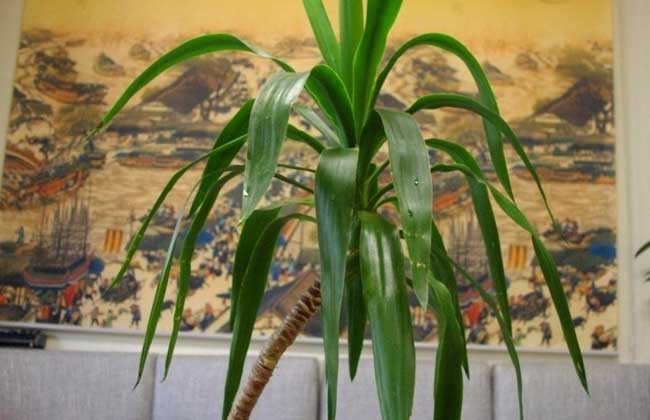
Insufficient light
[Cause] Dracaena likes warm, humid and sunny environments, but it can also tolerate shade. However, if it is placed in too shady an environment for a long time, the leaves will also fade.
[Solution] Put the pot on a windowsill facing southeast, so that it fully receives sunlight.
Temperature too low
[Cause] Dracaena likes warmth and cannot tolerate severe cold. The most suitable growing temperature is 20-28°C. If the summer temperature exceeds 32°C or the winter temperature drops below 15°C, the Dracaena enters a dormant or semi-dormant state. When the temperature is too low, because the roots cannot absorb enough water, yellow-brown patches appear at the leaf tips and leaf margins.
[Solution] In summer, keep it away from air conditioning to prevent the temperature from being too low and causing physiological disease.
Pest and disease damage
[Cause] When Dracaena is grown on a balcony or an indoor windowsill for a long time, it easily attracts red spider mites. When harmed by them, the Dracaena's leaves fade, the chlorophyll is destroyed, dense small yellow dots and small yellow patches appear on the surface, and the leaves gradually shrink, turn yellow and wither, and in severe cases fall off, losing their ornamental value.
[Solution] Red spider mites often hide on the branches, on the undersides of leaves, or in places where the foliage is dense, spinning webs to stay hidden; manual capture is relatively easy. If chemical agents are used for control, you can use a 20% dicofol emulsion, add 800-**** times water to make a solution and spray it; this pesticide has a good killing effect on adults, nymphs and eggs.
Unsuitable soil
[Cause] Dracaena likes loose, well-drained soil rich in humus and nutrients. Unsuitable soil pH can cause Dracaena leaves to turn yellow.
[Solution] Dracaena likes acidic soil, which can be adjusted with ferrous sulfate, and it can also be used to spray the leaves.
Causes of Dracaena leaves turning yellow What to do when Dracaena leaves turn yellow
Dracaena is one of the world's long-lived trees, but if you are careless during cultivation, yellowing leaves can also occur. So what causes Dracaena leaves to turn yellow? What should you do when Dracaena leaves turn yellow? Let's take a specific look at the causes!
Causes of Dracaena leaves turning yellow:
No repotting for a long time
Although Dracaena is a long-lived plant with strong vitality, if you keep treating it like a foundling for a long time, it will suffer too!
If it is not repotted for a long time, the plant's root system does not have enough room to grow, its ability to absorb nutrients declines, the plant's condition worsens, and yellowing leaves become a natural consequence.
Roots damaged during repotting
Many times, some damage cannot be avoided. Who can guarantee that one swing of a hoe will dig up a completely intact potato?
Repotting is the same. You always try your utmost to be careful, yet it is of no use, and the roots still get damaged. After the roots are damaged, the newly potted Dracaena cannot be given normal care and needs time to recover.
During the recovery process, leaves may turn yellow and even drop off.
Improper water and fertilizer management
If the new leaves of Dracaena turn yellow, it is due to insufficient water; if the old leaves turn yellow, it is due to insufficient nutrients.
Dry air can also cause the leaves to lack water and turn yellow.
Interference from pests and diseases
Large-scale leaf drop may be caused by root rot or pest interference. At this time, check the condition of the root system, then check whether there are insect eggs on the leaves.
What to do when Dracaena leaves turn yellow:
Repot
Dracaena can be repotted once every 2-3 years. Choose a pot that is slightly larger if possible, to give it enough growing space; with restriction, a thriving plant will never appear.
When repotting, do not merely try your best to avoid damaging the roots, but do your utmost to avoid damaging them. If you have done your duty and they are still damaged, then just let it recover on its own; it's fine, it is very strong!
Watering and fertilizing go hand in hand
Apart from winter, when Dracaena needs no fertilizer, it can be given light but frequent applications in spring, summer and autumn. Keep the potting soil moist, and when necessary spray water on the leaves and mist above the plant to increase air humidity.
A Dracaena kept in a cool place for a long time can also be given some appropriate sun exposure for photosynthesis, to smell the scent of sunshine.
The appearance of pests and diseases cannot be tolerated
When pests and diseases appear, be sure to inspect promptly, spray promptly, and promptly save those leaves that have not yet turned yellow.