White Clover (White Trefoil, White Flower Clover) Cultivation and Management Techniques
White Clover (White Trefoil, White Flower Clover)
Scientific name: trifolium repens
Alias: White Trefoil, Trefoil, Dutch Clover, White Flower Alfalfa, Golden Flower Grass, Shu Cao Qiao Yao
Family and Genus: Mimosaceae
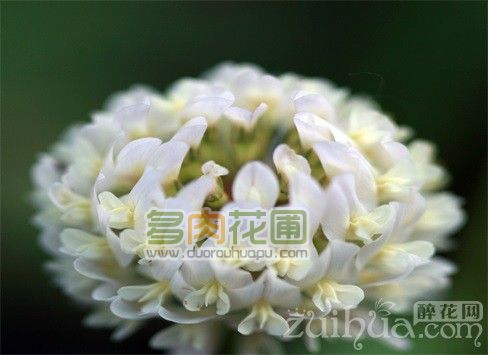
Morphological characteristics: Perennial evergreen herb. Clump-forming, plant height 25~50 cm. Palmately 3 leaflets, obovate, leaf margin finely serrate, apex notched, base wedge-shaped, with a white stripe running across the middle of the leaf. Capitulum axillary, taller than the leaf cluster, white.
Ecological habits: Heat-tolerant, cold-tolerant, drought-tolerant, not salt-alkali tolerant, light-loving and semi-shade tolerant. Tolerates trampling.
Cultivation and management: White Clover prefers light and a warm, humid climate. The most suitable growth temperature is 20~25°C. It can tolerate semi-shade and has strong adaptability. It is widely cultivated in the Yangtze River basin of China, and can remain evergreen and not wither in winter. It has low requirements for soil; as long as drainage is good, it can grow in all kinds of soil, and especially prefers calcareous and humus-rich clay soil.
Flowering period: April to November.
Flower language: The three leaflets respectively represent prayer, hope, and love; four-leaf and above clovers represent happiness.
Landscape uses: Long flowering period, strong reproductive capacity, good coverage effect. Large-scale planting in courtyards, plazas, forest edges, and open forest grassland, for slope protection.
Economic value: This species is an excellent forage grass, rich in protein and minerals, cold-resistant and heat-tolerant, and can adapt to both acidic and alkaline soils. It is a species in this genus with great promotion prospects in China. It can be used as green manure, embankment protection grass species, lawn decoration, as well as a nectar source and medicinal material, etc. Foreign scholars often divide this species into some subspecies and varieties based on geographical and morphological differences, as well as agriculturally bred cultivars.
Species identification: Species in the same genus --- Red Clover t.pratense has purple-red flowers. Often mixed-sown with White Trefoil.
Growth habits
Soil: It has low requirements for soil, especially likes clay and acid-tolerant soil, and can also grow in sandy soil, pH 5.5~7, and can even grow at 4.5. It prefers slightly acidic soil and is not tolerant of salt-alkali. When the pH is 6~6.5, it is favorable for nodule formation.
Light:White Trefoil is a long-day plant and is not shade-tolerant. When sunshine exceeds 13.5 h, the number of flowers can increase. White Trefoil prefers open areas with abundant sunlight and has obvious phototropic movement, that is, the leaves can move with changes in weather and time of day, as well as the angle and position of the light source.
Drought resistance: It has a certain degree of drought tolerance. High temperatures of around 35°C will not cause wilting. Its optimal growth temperature is 16~24°C. It prefers light, and in places with sufficient sunlight, it grows luxuriantly and has strong competitiveness.
Cold resistance: White Trefoil prefers a warm and humid climate, and is not tolerant of drought or long-term waterlogging. It is most suitable for growing in areas with annual precipitation of 800~1200 mm. Seeds begin to germinate at 1°C~5°C, and the optimal temperature is 19°C~24°C. Under conditions of snow accumulation up to 20 cm, snow duration up to 1 month, and temperature of -15°C, it can overwinter safely. It can also safely pass summer when the average temperature is ≥35°C and brief extreme high temperatures reach 39°C.
Artificial cultivation
Sowing propagation
1. Land preparation and fertilization
White Trefoil seeds are small, seedling growth is slow, and competitiveness with weeds is weak. Therefore, before sowing, the land must be finely prepared and weeds completely removed. When planting in places with heavy clay soil and high precipitation, ditches should be opened and beds made to facilitate drainage. While preparing the land, apply sufficient base fertilizer. Generally, apply 20~25 kg of calcium, magnesium, and phosphate fertilizer per mu. For soil extremely lacking in organic matter, also apply barnyard manure. For overly acidic soil, add 50 kg of lime per mu as base fertilizer. In mountainous areas where fertilizer sources are difficult, locally made burnt mud ash and plant ash can be used as seed fertilizer, and wild grass and leaves can be made into compost as base fertilizer.
2. Mixing with rhizobia
White Trefoil has the same rhizobia as Red Clover and Strawberry Clover. Mix every 10 g of rhizobia inoculum with 1 kg of White Trefoil seeds using a small amount of water, then sow.
3. Fine sowing
Can be sown in spring or autumn. In southern China, spring sowing is before mid-March, and autumn sowing is preferably before mid-October. The sowing rate is 0.25~0.5 kg/mu. White Trefoil mixed-sown with gramineous forage grasses such as ryegrass, cocksfoot, and timothy is suitable for establishing artificial grassland.
Cultivation techniques
Weeding: After White Trefoil emerges fully, it covers the whole ground, making mechanical weeding difficult to apply, so manual pulling is mostly used. Manual weeding 2~3 times in the same year can remove weeds and ensure growth. Generally, after covering the ground and finishing weeding in the same year, in subsequent years weeds occur only sporadically, basically eliminating weed damage.
Water management: White Trefoil has relatively strong drought resistance and slightly poorer waterlogging tolerance. When water is sufficient, growth vigor is stronger. In drought, appropriately supplement water; when there is too much rain, drain water and reduce waterlogging in time to facilitate growth. After forming a turf, except in cases of extreme drought, generally do not water, so as to avoid Pythium blight. Watering White Trefoil should follow the principle of less frequent but more abundant watering.
Pest and disease control
Club leaf disease
A type of disease caused by mycoplasma-like organism infection, commonly occurring, and severe in some areas. This disease causes plant leaves to become deformed, narrowed and elongated, with irregular notches on the edges, and the plant growth vigor is weak, affecting ornamental value. The disease can spread through contact or insect vectors such as leafhoppers, with July to August being the peak period of incidence.
To control this disease, the main measures should be good field management, enhancing plant disease resistance, and controlling virus-transmitting vectors.
Dodder
Severe in some areas. Dodder seeds are very small and can be carried by White Trefoil seeds. After germination and growth, they form yellow strands and parasitize the stems and branches of White Trefoil, absorbing its nutrients and water, causing nutrient deficiency in White Trefoil, plant yellowing, growth inhibition, and death in severe cases.
Control methods:
1. Strengthen quarantine to prevent dodder from spreading with seeds;
2. Manually cut or pull out infected plants. The key is to pull them out or cut them before dodder sets seed, to prevent its spread;
3. Chemical control: spray 1.5%~2% dinitro-o-cresol and dinitrophenol solution for control.
Leaf spot disease
Includes various fungal diseases, such as Stemphylium leaf spot, sooty blotch, Ascochyta leaf spot, Cercospora leaf streak, and yellow spot disease. Among them, Stemphylium leaf blight, sooty blotch, and Ascochyta leaf spot are the most common, producing various lesions of different shapes, sizes, and colors on leaves, causing leaf withering and falling. Improper lawn management, excessive plant growth, dense grass, and poor drainage lead to severe disease. Hot and rainy summer and autumn seasons are the peak period of incidence, which can cause large numbers of leaves to die and fall.
Control methods: By selecting disease-free seeds, removing diseased residues, doing good management and protection, balanced fertilization, and avoiding water accumulation, control disease occurrence, and according to the condition, spray fungicides such as carbendazim, thiophanate-methyl (thiophanate-methyl), and mancozeb in a timely manner for control.
The above is all the content I have learned today about White Clover. I hope flower lovers will find this article helpful after reading it. If you want to learn more about White Clover, please continue to follow Duorou Huapu, and we will provide you with more related knowledge!
Introduction to the main values of White Clover Introduction to the identification methods of White Clover
White Clover is one of the most widely used leguminous forage grasses in the world. It can be sown alone or mixed with gramineous forage grasses, and is mainly used for intercropping in economic forests, forage for livestock, poultry and fish, soil and water conservation, and landscape greening. What other values does White Clover have? Come and learn with the editor.
Main values
White Trefoil is rich in various nutrients and mineral elements and has high value for forage, greening, genetic breeding, and medicinal use. It can be used as green manure, embankment protection grass species, lawn decoration, as well as a nectar source and medicinal material, etc.
Economic value
Forage use
White Trefoil has excellent palatability and high digestibility, and is favored by various livestock and poultry. It is suitable for raising cattle, sheep, herbivorous fish, etc. Its nutritional composition and digestibility are higher than those of alfalfa and Red Clover. On natural grassland, the forage value of the grass population also increases with the increase in the proportion of White Trefoil, while hay yield and seed yield vary by region. It has the characteristics of early germination, late decline, and a long grass supply season. In the south, the grass supply season is from April to November. White Trefoil has creeping stems, long petioles, and a low grass layer, so during grazing it mostly consumes leaves and tender stems.
At the same time, as the grass ages, the decline in its digestibility is slower than that of other forage grasses. White Trefoil has the characteristics of tolerating trampling, spreading quickly, and having strong competitiveness with weeds after forming a population, so it is mostly used for grazing. However, grazing should be moderate to facilitate the regrowth of White Trefoil. When feeding, it should be matched with gramineous forage grasses to achieve carbon-nitrogen balance and prevent bloat caused by feeding only White Trefoil. In addition, it can be sun-dried into grass meal as a raw material for compound feed.
Ecological and ornamental
White Trefoil has strong invasiveness and competitiveness, can effectively inhibit weed growth, does not require long-term pruning, has extensive management and a long service life, has the effect of improving soil and conserving soil and moisture, and can be used for establishing greening lawns in gardens, parks, golf courses, etc.
Establishing lawns
White Trefoil has beautiful leaf and flower colors and a relatively long green period, and low planting and maintenance costs. From sowing to forming turf takes only 30~40 d. Planted once, it can be used continuously for 6-7 years or even 10 years. Seeds that fall to the ground have strong self-seeding reproductive ability. It is an excellent ornamental greening lawn species, and can be planted in patches or mixed with trees and shrubs to form a layered composite landscape. Mixed cultivation with other warm-season lawns can extend the green period. White Trefoil has a developed root system and dense lateral roots, which can anchor the soil. Its dense leaves can block rainwater erosion and wind erosion of the soil, so its water storage and soil conservation effect is obvious. It is suitable for planting on slopes, embankments, and lake shores for bank protection, preventing soil erosion, and at the same time it is easy to create a brilliant and natural ecological landscape. It is not prone to pests and diseases, has few weeds, and after forming turf basically no longer needs manual weeding, effectively reducing weeding labor and the use of chemical herbicides.
Improving soil and fertilizing fields
The main root and lateral roots of White Trefoil bear a large number of root nodules, which can fix nitrogen from the air. During cultivation, no nitrogen fertilizer is needed, only some phosphorus and potassium fertilizer, to make branches and leaves luxuriant. In slightly saline-alkaline soil, it is advisable to sow after mixing seeds with White Trefoil rhizobia, which can promote the growth and development of its roots. When intercropped between orchard rows, its root system is mainly distributed in the 15 cm soil layer at the surface, and will not compete with fruit trees' deep root systems for fertilizer and water. White Trefoil is semi-shade tolerant, and its rapid growth allows it to cover the orchard ground, establish a single population advantage, prevent the breeding of other weeds, and especially inhibit malignant broadleaf weeds such as Polygonum, Chenopodium, Amaranthus, and ragweed, reducing surface water evaporation. The secretions of grass roots and residual roots can input organic matter into the soil, alleviate nutrient deficiency in fruit trees, promote soil microbial activity, and play a role in improving soil, increasing soil fertility, and fertilizer utilization efficiency. White Trefoil flowers are a very good nectar source, attracting insects such as bees and butterflies to help pollinate and increase fruit set rate, forming a virtuous cycle ecosystem of fruit, grass, fertilizer, and water in the orchard.
Medicinal value
The whole plant of White Trefoil can be used as medicine. It is slightly sweet in taste and neutral in nature, and has the effects of clearing heat and cooling blood, calming the nerves and relieving pain, and eliminating phlegm and relieving cough. Foreign clinical trial reports show that the tincture of White Trefoil flowers can be used to treat colds, and the whole-plant tincture has an astringent and hemostatic effect, and is used as a drug for stopping bleeding in trauma and promoting wound healing. It has also been found that the isoflavones it contains have anticancer effects. The macromolecular substance polysaccharide extracted from White Trefoil has a series of medicinal and health functions such as improving immunity, anti-tumor, anti-aging, and lowering blood lipids.
Identification methods
Microscopic identification
Leaf transverse section: A small number of glandular hairs can be seen on the epidermis. The palisade tissue consists of 2~3 layers of cells and passes through the main vein; the spongy tissue consists of 3~5 layers of cells, with large intercellular spaces. The main vein is a bicollateral vascular bundle.
Stem transverse section: The outside is covered with a few unicellular non-glandular hairs. The cortex is broad. There are 10~12 vascular bundles, with many fibers outside the phloem, and the xylem is continuous into a ring. A small number of calcium oxalate square crystals can be seen in the pith and rays.
Root transverse section: The cortex is composed of several layers of parenchyma cells, in which several secretory cells can be seen aggregated, containing yellow-brown secretions.
Chemical composition
The leaves contain isoquercitrin, linamarin, and lotaustralin.
The whole plant contains coumestrol, tocopherol, saponins, and genistein. Genistein has hormone-like effects.
The above is all the content I have learned today about White Clover. I hope flower lovers will find this article helpful after reading it. If you want to learn more about White Clover, please continue to follow Duorou Huapu, and we will provide you with more related knowledge!