Is it beneficial to water flowers with leftover tea leaves and leftover tea?
Leftover tea leaves and leftover tea water are harmful and not beneficial at all when used to water any flowers. Leftover tea leaves and leftover tea water both contain a large amount of theophylline, and during the decomposition and fermentation process they produce a large amount of harmful gases and reducing substances. Watering with leftover tea water over a long period often causes alkaline damage on the soil surface and easily harbors pests and diseases. Before use, they need to be decomposed; it is best not to use undecomposed leftover tea leaves.
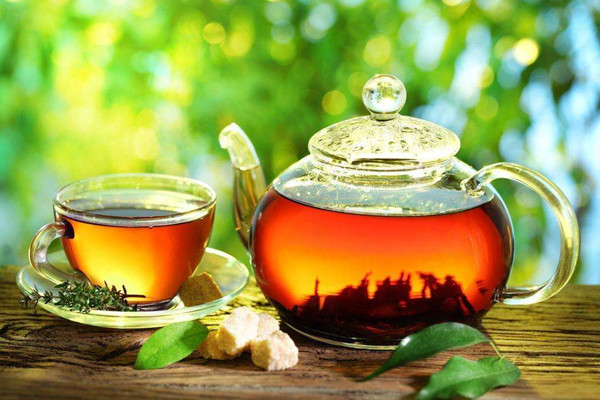
Can leftover tea water be used to water flowers?
Leftover tea water is an excellent potassium fertilizer and can be used to water flowers and trees. While maintaining soil moisture, it can also supplement nutrients for plants, promote well-developed root systems and lush branches and leaves.
Does leftover tea water need to be fermented?
Leftover tea water can be fermented alone before being used to water flowers, or it can be fermented together with rice-washing water and orange peel before being used to water flowers.
How to use leftover tea water to water flowers
1. After leftover tea water has been left to stand for one or two days, it has already fermented slightly and can be used to water acid-loving flowers and plants.
2. Put leftover tea water, rice-washing water and orange peel together for sealed fermentation. After fermentation is complete, pour off the residue, dilute with a certain amount of clean water, and water the flowers and plants once every few days.
3. Use of tea leaves: if there are a lot of tea leaves in the leftover tea water, you can first dry the tea leaves in the sun, and when a certain amount has been collected, add soil and ferment it. It can be used to improve soil quality.
Flowers suitable for leftover tea water
Leftover tea water is acidic and suitable for acid-loving plants, such as rhododendron, jasmine and spider plant. It is not suitable for alkaline-loving plants such as Chinese rose, chrysanthemum and cactus.
Watering management for flowers in summer
1. Watering Maintain good air humidity, preventing both drought and waterlogging. For flower growers, watering is the most frequent and most important management task. If the soil is too dry, flowers will wilt or even die; if the soil is too wet, the root system will be suffocated and root rot may even occur.
(1) Watering time Among the four seasons, the timing of watering in summer is the most particular. If you are slightly careless, it can injure the flowers or even kill them. Generally speaking, in summer it is best to water before 8 a.m. every day and after sunset in the evening. At this time, air temperature, soil temperature and water temperature are all similar, which is relatively suitable. Absolutely avoid watering under the scorching sun at noon, because at noon the soil in the pot is very hot. When cold water is poured on it, the soil temperature suddenly drops, and the flowers are likely to catch a cold just like people. The root hairs of the flowers are stimulated by the temperature change, which affects the normal absorption of water by the root system. Even ground-planted flowers should not be watered at noon. If you forget to water in the morning and at noon find that the potted flowers have wilted severely and need immediate watering to replenish water, you must move the potted flowers to a shady place, and after 20 minutes to 30 minutes, wait until the soil temperature on the pot surface has dropped before watering. Practice shows that foliage plants, such as broadleaf lady palm, Norfolk Island pine and parlor palm, can be watered at around 10 a.m. and sprayed several times in the afternoon; flowering plants, such as geranium, Aglaia odorata, camellia and rhododendron, can be watered thoroughly in the morning and sprayed several times in the afternoon as needed; succulent plants, such as Christmas cactus and cactus, can be watered thoroughly in the morning and sprayed in the afternoon to increase air humidity, and do not need to be watered every day.
(2) Watering methods and amount For potted flowers, no matter when, carefully follow the principle of watering thoroughly once the soil is dry. That is, once the flowerpot soil is dry, it should be watered thoroughly in time. Never water only halfway, yet many beginners in flower growing have the bad habit of watering only halfway. So-called halfway watering means that although the number of waterings is high, the amount of water each time is insufficient. The water poured in only moistens the surface soil layer while the bottom soil remains dry, thus forming in the pot a condition of wet on top and dry below. The result is that the wet upper layer makes the surface soil muddy and slushy, and over time causes the upper root system to rot and die; the dry lower layer makes the middle and lower soil very dry, and over time causes the middle and lower root systems to suffer from water shortage, early decline or death. At the boundary between the wet upper layer and dry lower layer, a hard compacted layer usually forms, making it difficult for the root system of potted flowers to penetrate downward, resulting in poor development, slow growth or no growth at all. This is also an important reason seriously affecting the quality of potted flowers and leading to their death. To check whether potted flower soil is dry or wet, you can tap the flowerpot up and down and listen to the sound. If it is crisp, it is dry; if it is heavy and dull, it is not dry. The number of waterings and the amount of water should be determined according to seasonal changes, weather conditions, flower species and their growth conditions, and must be appropriate. During high-temperature periods in summer, evaporation is high, so water more and more frequently; during vigorous growth periods, water and nutrient needs are high, so water more and more frequently; moisture-loving flowers should be watered more, while drought-tolerant flowers should be watered less; herbaceous flowers should be watered more, while woody flowers should be watered less. In short, when you hold the watering can, you must treat them differently and must not distribute water equally. You must water more when more is needed and less when less is needed. One thing must be noted: when flowers are blooming, do not water too much, to prevent flower drop.
(3) Water quality and water temperature for watering The quality of water used for watering flowers is also very particular. It is best to use collected rainwater to water flowers. If conditions do not allow it and only tap water can be used, then tap water should be stored in a container for a few days to let it settle. On the one hand, this allows the chlorine in the water to volatilize; on the other hand, it is better to water flowers when the water temperature is close to the air temperature. Generally speaking, the temperature difference between water temperature and air temperature should not exceed 5°C.
(4) Precautions for watering Generally, flower-growing enthusiasts like to use some traditional methods for cultivation. In fact, some methods are not only unhelpful to flowers but harmful. For example, casually pouring leftover tea into pots: after several times, only tea leaves are seen on the pot surface and no soil layer is visible. Especially in summer when the temperature is high, after a little time the tea leaves become moldy, resulting in a condition where the surface soil is wet while the middle and lower soil are dry, affecting soil permeability and aeration. Another example is that some people often use rice-washing water, fish soup and bone soup to water flowers, thinking that this can supplement nutrients for plants and make them grow more robust. In fact, this is also unscientific. Although these waters contain certain nutrients, the oils and fats in them are not absorbed by plants. Only after decomposition and fermentation can they be absorbed by plants. Even less should dishwashing water or face-washing water be used to water flowers, because these waters contain a certain amount of salt, and over time this often changes the composition of the soil. In addition, some people also like to place eggshells upside down in flowerpots and let the egg white flow into the soil, thinking that egg white is also a very good fertilizer. It goes without saying that its effect is the same as rice-washing water and fish soup. Water stored in jars and buckets for watering flowers is not better the longer it is stored. In fact, after a long time, on the one hand the water quality changes, and on the other hand it easily breeds insects. Therefore, in summer and autumn it is best not to store water for more than 3 days. In summer when there is a lot of rain, attention should be paid to timely drainage. After heavy rain, if water is found accumulated in the pot, the pot can be tipped over to drain the accumulated water; in continuous rainy weather, potted flowers can be moved to a rain-sheltered place to prevent excessive rainwater from being unfavorable to flower growth. In addition, some flowers can neither dry out nor receive too much water. When no one is at home to care for them temporarily, a strip of cloth can be buried in the pot soil, with the other end soaked in a water basin placed close to the flowerpot, so that water can slowly moisten the soil through the cloth strip. This simple automatic watering method for flowers is worth trying. Special attention should be paid to the fact that some flower species that go dormant in summer, such as cyclamen, do not need watering.