How to Grow the Aquatic Plant Nymphoides peltata (Fringed Water Lily)
Nymphoides peltata (fringed water lily)
Scientific name: nymphoides peltatum
Family and genus: Menyanthaceae, Nymphoides
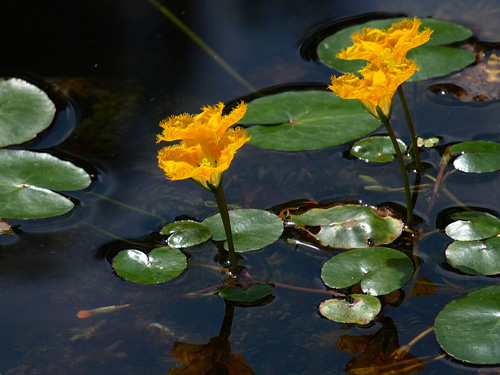
Morphological characteristics: A perennial floating herb. Stems are of two types: long stems creep along the bottom of the water, and short stems grow from the nodes of the long stems. Leaves are ovate, deeply cleft at the base into a heart shape. Umbels grow in the leaf axils, and the flowers are large and conspicuous, with a yellow corolla deeply divided into 5 lobes; the lobe margins are fringed, there is a distinct wrinkle in the middle of each corolla lobe, and there are hairs on both sides of the lobe.
Ecological habits: Sun-loving and cold-tolerant; prefers fertile soil and is suited to shallow or still water pools. It is highly adaptable.
Cultivation and management: During the growing season, promptly remove weeds and debris to keep the water clean, and apply fertilizer 1-2 times along with weeding to promote plant growth and development and improve its ornamental effect. In northern winters, overwintering treatment is required. The main pest is aphids, which can be controlled by spraying with a 1000-fold dilution of 40% dimethoate emulsion.
Flowering period: May to August.
Flower meaning: tenderness, grace
Landscape use: In midsummer the leaves are emerald green and stand out above the water surface, and the yellow flowers have a distinctive style. Used for water surface greening.
Medicinal effects: Promotes sweating and helps rash emerge; promotes urination and treats strangury; clears heat and detoxifies.
How to Grow Nymphoides peltata and Precautions During Cultivation
Nymphoides peltata, also called fringed water lily, is an aquatic herbaceous plant. It likes still water, and its leaves are round or ovate and float on the water surface. So, would you like to know what cultivation techniques there are for Nymphoides peltata? Do you want to grow it well? Today, we will get to know this plant, Nymphoides peltata.
How to Pronounce Nymphoides peltata
Yes, this is the "luxuriant Nymphoides peltata, gathered left and right" that appears in the Book of Songs. This character is pronounced "xìng", and it is an aquatic herbaceous plant in the Menyanthaceae family. The leaves of Nymphoides peltata are round or ovate, float on the water surface, and the leaves are much branched. From May to August each year, it produces small yellow flowers.
How to Grow Nymphoides peltata
If you like aquatic plants, you can find a large vat or a spacious basin and plant a pot of Nymphoides peltata, which is both ornamental and edible.
Choosing a Flower Pot
As with planting water lilies, you can choose a deeper large vat, with a water depth of about 40 cm, and at minimum not less than 10 cm. When planting, put a small amount of river pond mud in the container to hold the roots in place.
Sunlight Requirements
Nymphoides peltata is relatively easy to care for. Usually ensure sufficient sunlight. Most households will keep Nymphoides peltata in the courtyard for care. Normal sunlight exposure is enough, and it can grow very well without shading.
Water Requirements
When growing Nymphoides peltata, it must not lack water, otherwise the leaves will dry up, so water should be added to the container frequently. During the growing period, promptly remove debris from the water to keep the water clean.
In winter, ensure the container has sufficient water, and place it indoors in a sunny spot away from direct light for safe overwintering.
Precautions for Growing Nymphoides peltata
Keeping Warm
In northern winters, temperatures are lower. Although Nymphoides peltata has some cold tolerance, below -10°C it cannot turn green and grow normally in spring. So after winter begins, move the flower pot to a warm place, or cover it with plastic film to keep it warm.
Weeding and Fertilizing
During the growing period, apply fertilizer 1-2 times, not too frequently, to promote plant growth and development. In addition, promptly prevent and control aphids, do a good job of ventilation, and deal with aphids as soon as they are found.
That is all I have learned about aquatic plants today. I hope fellow flower lovers will find this article helpful after reading it. If you would like to know more about aquatic flowers, please continue to follow our Succulent Garden, and we will provide you with more related content as soon as possible!