A Detailed Guide to the Cultivation and Care of Marsh Marigold (Caltha palustris, also known as Kingcup)
How to Grow Kingcup and Points to Note: An Introduction to Kingcup
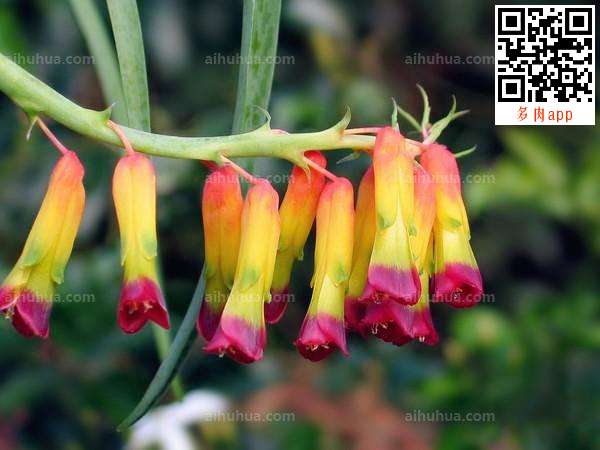
Kingcup is a perennial herb belonging to the genus Caltha in the buttercup family (Ranunculaceae), also known as marsh marigold and kingcup. There are two kinds of kingcup: one is a bulbous flower of the genus Lachenalia in the lily family, and the other is a flower of the genus Caltha in the buttercup family; kingcup generally refers to the lily-family Lachenalia, which has an underground tunicate bulb with a pale yellow tunic and a white bulb about 2 cm in diameter and about 1.5 cm in height, oblate in shape. Leaves lanceolate. The corolla is long-tubular and bell-shaped; flowers come in deep yellow, orange-yellow, blue-purple, and other colors, or in a tricolor combination of red, yellow and pale green. The flowers are beautiful and gorgeous. The strap-shaped green leaves bear reddish-brown spots and also have fairly high ornamental value.
Kingcup is native to the temperate regions of the Northern Hemisphere, including Iceland and the Arctic regions of Russia in Europe, and the temperate and Arctic regions of Asia and North America.
Kingcup flowers from May to September and begins to bear fruit in June.
Morphological Features of Kingcup
Kingcup is a perennial herb, entirely hairless, with numerous fleshy fibrous roots. The stem is (10-)20-48 cm tall and (1.5-)3-6 mm thick, solid, with fine longitudinal grooves, branching at or above the middle, rarely unbranched.
Basal leaves 3-7, with long petioles; the blade is round, round-kidney-shaped or heart-shaped, (1.2-)2.5-5 cm long and (2-)3-9 cm wide, with a rounded apex and a deeply cordate base, or with the two basal lobes overlapping each other, and the margin densely set all around with small regular-triangular teeth; the petiole is (4-)7-24 cm long.
The stem leaves of kingcup usually gradually become smaller upward, rarely nearly as large as the basal leaves, round-kidney-shaped or triangular-cordate, with shorter petioles or the uppermost leaves entirely sessile. At the top of the stem or branches there is a simple monochasial cyme composed of 2 flowers; the bracts are triangular-cordate with toothed margins; the pedicel is (1.5-)2-10 cm long; there are 5 sepals, yellow, obovate or narrowly obovate, 1-1.8(-2.5) cm long and 0.6-1.2(-1.5) cm wide, with a rounded apex; the stamens are 4.5-7(-9) mm long, the anthers oblong, 1-1.6 mm long, and the filaments narrowly linear; the carpels number (5-)7-12, nearly as long as the stamens, sessile, with a short style. The follicle is about 1 cm long and about 3 mm wide, with transverse veins and a beak about 1 mm long; the seeds are narrowly ovoid, 1.5-2 mm long, black, glossy, with a few longitudinal wrinkles.
Kingcup flowers from May to September and begins to bear fruit in June.
Ecological Habits of Kingcup
Kingcup prefers a warm climate and is not cold-tolerant; the optimum growing temperature is 15-18°C, and it requires well-drained fertile soil.
Cultivation Techniques for Kingcup: Key Growing Points
Kingcup carries out flower-bud differentiation in winter and blooms in early spring the following year. It is suitable for pot cultivation; the potting soil should be a sandy loam rich in humus, and the planting depth should be about 2 cm. After planting, it should be placed in a well-ventilated shady spot, and it will sprout in about 10 days. After the young shoots emerge, it should be moved to a spot with ample sunlight, the soil should be kept moist, and a light fertilizer should be applied. After the plant reaches 5-10 cm in height, apply liquid fertilizer about once every 15 days. The flowering period is 40-60 days, making it a seasonal flower of early spring. After the flowers fade, watering should be controlled so that the plant can pass through its dormant period smoothly.
Distribution Range of Kingcup
Kingcup occurs in the Cape Town region of South Africa; in China it is distributed in eastern Xizang, northwestern Yunnan, Sichuan, western Zhejiang, southern Gansu, Shaanxi, western Henan, Shanxi, Hebei, Inner Mongolia, and **. In the southwestern provinces it is distributed in mountain areas at altitudes of 1900-4000 m, in the Shaanxi and Shanxi area at 1300-2000 m, and from northern northeastern Hebei northward at 600-1400 m.
Kingcup usually grows by mountain-valley streams or in wet meadows, and sometimes also in grassy slopes or in rather shady, damp places under forests. It is widely distributed in the temperate and cold-temperate regions of the Northern Hemisphere.
The Role and Uses of Kingcup: Ornamental Value
The corolla of kingcup is long-tubular and bell-shaped; flowers come in deep yellow, orange-yellow, blue-purple, and other colors, or in a tricolor combination of red, yellow and pale green. The flowers are beautiful and gorgeous. The strap-shaped green leaves bear reddish-brown spots and also have fairly high ornamental value.
Kingcup is a very beautiful flower with a great variety of colors and extremely lovely blooms; its small yellow flowers in particular are charming and give a very fresh feeling.
Cultural Background of Kingcup: Aliases
In Taiwan, China, kingcup is called firecracker lily and ox-lip lily, and it is excellent in both flower and foliage.
The Flower Language of Kingcup
Kingcup flower language: happiness will surely come.
Kingcup is also called "the bride of the sun," and its flower meaning is "happiness will surely come," so people of the Aquarius sign must understand that every flower has something special about it and one should not waver.
Pictures of Kingcup