What is the difference between mini monstera and monstera
Mini monstera is also known as window-leaf monstera and oblique-leaf monstera. It belongs to the same genus as monstera. The mini monstera plant is short and small, and its perforations do not run through between the pinnate lobes like those of monstera; instead, they run through the long oval leaves along the midrib, and the leaves are not divided, with round or long oval window holes of various sizes arranged closely together forming one after another on the leaf surface.
In addition, mini monstera leaves are thinner, the leaf margin is entire, the petiole is slender and long, and the veins grow toward one side. Mini monstera is an indoor foliage treasure introduced from abroad in recent years.
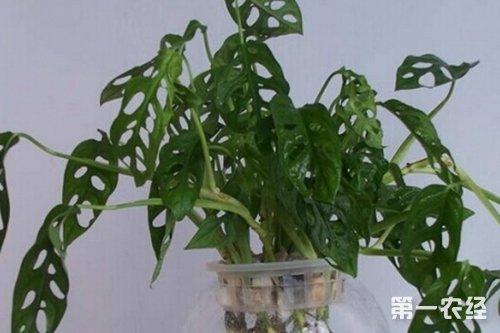
Image: mini monstera
Image: monstera
[Common question] What is the difference between mini monstera and monstera?
[Expert answer] There are mainly three differences between the two:
1. Mini monstera is shorter and smaller than monstera.
2. The perforations of mini monstera run through the long oval leaves along both sides of the midrib, the leaves are not divided, and the leaf surface forms one after another closely arranged round or oval holes of various sizes, while the perforations of monstera run through between the pinnate lobes.
3. Mini monstera leaves are thinner, the leaves are entire, the petiole is slender and long, and the veins lean to one side.
[Editor's comment] Mini monstera can be placed on an office desk to change your mood, while potted or garden-planted monstera cannot be moved easily at will. The editor of First Agricultural Economics above introduced several differences between the two. We hope this article is helpful to you.
How to cultivate mini monstera
Potted mini monstera is relatively simple. During the growing season, place it in a spot with bright indirect light indoors, and in winter place it near a south windowsill so it can receive more sunlight, which will make it grow more robustly. The suitable growth temperature is 20~30 degrees Celsius, and the air humidity should preferably be kept at 60%~80%. The overwintering room temperature needs to be kept above 12 degrees Celsius, otherwise it is prone to cold damage.
During the growth period, it is necessary to keep the potting soil moist frequently and spray water on the leaf surface, and apply compound fertilizer 1~2 times per month. If foliar topdressing can be used instead during the peak growing season, about once every half month, the growth will be even more vigorous. The potting soil and propagation methods are the same as those for monstera.
