How to grow Ranunculus? Ranunculus care methods
Ranunculus is also known as Persian buttercup. The flowers are borne singly at the tips of the stems, or long pedicels emerge from the leaf axils. The corolla is round. Flower colors include white, yellow, orange, red, purple, brown and so on. The flowering period is April to May. It is relatively cold-tolerant but not heat-tolerant, and enters dormancy in summer in most regions of China. It fears strong direct sunlight and grows well in dappled shade. It prefers a fertile loam rich in humus.
① For pot cultivation, the tubers can be planted into pots in early September. After planting, place them in semi-shade, keep the potting soil moist, and apply 2 to 3 times of dilute cake fertilizer water before flowering.
② At the early bud stage, keep 3 to 5 healthy buds per plant and remove the rest. At this time the potting soil should be slightly drier.
③ After flowering, if seeds are not needed, promptly cut off the spent flowers and apply 1 to 2 times of liquid fertilizer.
④ From June to July, when it enters the dormant period, the tubers can be knocked out of the pot and stored in sand, or left in the original pot to overwinter the summer. Because Ranunculus tubers are very small and store little nutrients, they easily shrivel when dry and easily rot when wet, so care must be taken to store them in slightly moist sandy soil and keep them in a ventilated, cool, low-temperature place to pass the summer.
⑤ Before winter begins, move them indoors in the north to overwinter, and the south should also take cold-protection measures so they can pass the winter safely.
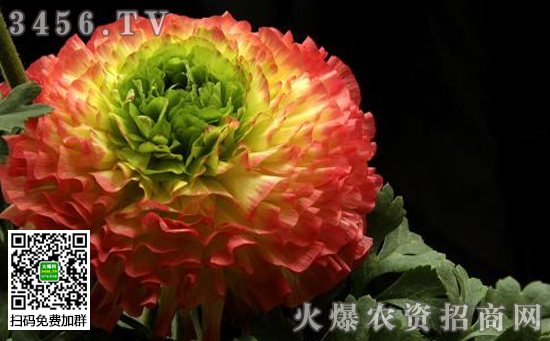
Ranunculus care methods
Ranunculus is usually propagated mainly by division. It is best to divide and replant between September and October. Dig up field-grown mother plants or take them out of pots, gently shake off the soil, and follow their natural growth form, grouping every 3 to 4 small tubers together. At the same time, note that each group must be broken off with a portion of the root crown at the upper end. Plant them in pots with an inner diameter of 15 cm to 20 cm, with 1 to 2 groups of tubers per pot. When potting, cover with soil shallowly, just enough to cover the root crown, then water thoroughly and place in dappled shade. In late autumn, move them into a low-temperature room to continue care, and they can bloom around March.
Ranunculus can also be propagated by sowing, but variation is relatively great. A healthy mother plant can be selected and grown separately, keeping only the first flower to set seed. The seeds should be pure and plump, and after harvesting, dried in the shade and stored. When the temperature drops to about 10°C after autumn, sow in pots or in the ground, and seedlings can sprout in about 20 days. If the temperature is on the high side when sowing, germination may instead fail to occur for a long time. Seedlings from sowing should be divided and potted into small pots before winter begins and moved into a low-temperature room to continue care. In late March of the following spring, move them outdoors for ground planting or repot into larger pots for final planting, and they can bloom before summer begins. From sowing to the next year's summer dormancy, it completes its growth stage, after which division propagation is carried out. Ranunculus tubers are relatively small and weak, so for summer dormancy it is best to keep them in the original pot in a cool, low-temperature, ventilated environment, keeping the potting soil moist. If too dry they easily shrivel, and if too wet they easily rot, so careful storage is required.
Ranunculus dislikes direct strong light. Potted plants should be placed in a dappled, fresh environment, protected from drought, waterlogging and smoke-dust pollution, and the potting soil and surrounding environment should be kept moist at all times. If the potting soil is high in organic matter, apply only 1 to 2 times of dilute liquid fertilizer mainly based on phosphorus and potassium fertilizer before and after budding. After flowering, cut off spent flowers at any time, then apply 1 to 2 times of liquid fertilizer to nourish the roots, and control water appropriately so they safely enter summer dormancy.
How to care for Ranunculus, Ranunculus growing methods and precautions / dislikes strong light
Ranunculus is a world-famous flowering plant with high ornamental value, and people around the world grow it. However, to grow it well, there are still many points that need attention. Regarding how to care for Ranunculus, what are the growing methods and precautions? Below, the editor will guide everyone to understand.
I. How to care for Ranunculus, understand its habits
To know how to care for Ranunculus, we first need to understand its growth habits. This plant relatively prefers a cool and semi-shaded environment and is relatively intolerant of heat, so in summer we need to pay attention to temperature control. In addition, daily watering and fertilizing are also points requiring attention. The details are below, so let us take a look.
II. Ranunculus growing methods and precautions
1. Soil, slightly alkaline soil
Before growing Ranunculus, we first need to choose soil. Just as building a house requires laying a good foundation, this is the step of laying a solid base. Generally, it is best to choose loose, fertile, well-drained neutral or slightly alkaline soil. Only in this kind of soil can it grow better.
2. Fertilizing, once every 10 days during the growing period
Fertilizer is a relatively important nutrient in the growth process of Ranunculus, especially after entering the growing period, when its demand for fertilizer is very high, and it basically needs fertilizing once every 10 days. However, when fertilizing, there is one point we must note: the fertilizer must first be diluted with water, because if the concentration is too high it can easily burn the plant.
3. Temperature, 20°C during the day / 7 to 10°C at night
When growing Ranunculus, keeping it growing at a suitable temperature is very important. It is relatively intolerant of heat and also fears cold. The suitable daytime temperature is about 20°C, while at night it can remain between 7 and 10°C. Only in this way can it grow better.
4. Water, avoid waterlogging
Throughout the entire growing period of Ranunculus, it must not lack water. From sprouting to flowering, we need to keep it with sufficient water so it can grow better. After entering the flowering period, its demand for water becomes even higher, and we should often keep the soil moist to ensure its flowers are large and vivid. But we need to control the amount of watering, and remember not to cause waterlogging, otherwise it can easily cause its root system to rot.
5. Light, avoid strong light
Ranunculus relatively prefers a cool and semi-shaded environment and relatively dislikes strong light, so when growing it we should best place it in a spot with scattered sunlight. In summer, when the light is relatively strong, we should move it to a semi-shaded indoor place to avoid scorching the plant.
6. Pests and diseases, handle promptly
In the process of growing Ranunculus, if we are not careful enough, pests and diseases can easily take advantage of the opportunity. Such problems are very harmful to the plant, so when discovered we must handle them promptly, because the longer it drags on, the harder it is to deal with. For specific treatment methods, everyone can refer to the article on Ranunculus pest and disease control, which has detailed introductions.