How to grow Anthurium clarinervium? Learn these methods to easily grow it well
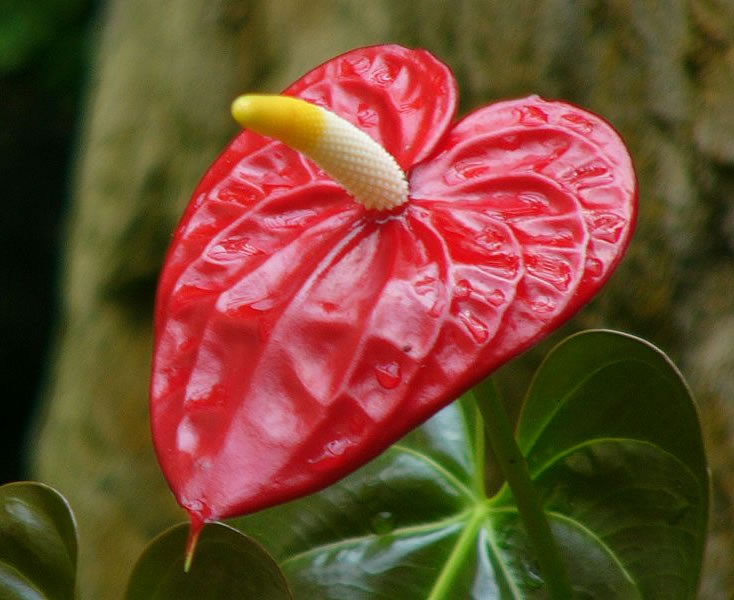
Anthurium clarinervium is also known as candlestick flower. The inflorescence consists of a red spathe and a yellow spadix. Besides red, the spathe also comes in pink, white and other colors. Varieties include Anthurium with dense leaves, white Anthurium and deep red Anthurium, etc.
Anthurium clarinervium likes a warm environment with high air humidity and good drainage. It prefers semi-shade and dislikes direct strong light. Propagation is mainly by division. When repotting, separate the suckers and pot them up separately. Each divided offset should have at least 3~4 leaves. After one year of cultivation, the offset can form flowering stems. Cuttings are also used for propagation.
When cultivating Anthurium clarinervium, choose a loose, fertile substrate with good aeration. You can mix leaf mold, peat soil, a small amount of perlite and a small amount of bone meal. Poor drainage easily causes root rot. During the growing period, the fertilizer and water supply is the same as for Anthurium andraeanum. It likes moisture, and the relative humidity should be kept above 85%~95%; the leaves need to be sprayed frequently to aid photosynthesis and keep the leaves clean.
Anthurium clarinervium requires a relatively high temperature, and it blooms more when the summer temperature is higher. It is best if the daytime temperature does not exceed 33°C and the nighttime temperature does not fall below 14°C. If it is below 10°C, growth will be poor. In summer, when the temperature is high and sunlight is strong, move it to a cool, ventilated place with shade, and a shading rate of about 80% is suitable. At the same time, spray the leaves several times a day to help lower the temperature and increase humidity. In winter, when the temperature is low and light intensity is weak, a shading rate of about 50% is enough. Anthurium clarinervium and Anthurium andraeanum are plants of the same genus, and their habits and care and cultivation methods are basically the same as those of Anthurium andraeanum.