How to grow Aechmea fasciata to keep its flower colors vivid
Aechmea fasciata, also known as the silver vase plant. It is a perennial epiphytic evergreen herbaceous plant. The leaves are green, leathery, with beautiful silvery-white stripes; the panicle is pyramidal, bearing pale rose-red bracts, and the small flowers are sessile and pale blue. It blooms in summer, and the flowering period can last up to 3 months.
Aechmea fasciata prefers a semi-shaded environment. In spring, summer and autumn it can be placed indoors in a spot with bright light, and in winter on a south-facing windowsill; it can also be moved outdoors to a semi-lit spot in spring and late autumn. With a bit more morning and evening sunlight, the leaf color becomes more vivid and the flowers more beautiful. However, too much shade will cause the leaf surface to lose its luster. In spring and autumn, apply a diluted decomposed cake fertilizer solution or compound fertilizer once a week. Generally no fertilizer is applied in midsummer and winter.
Aechmea fasciata requires relatively high air humidity. Keep the potting soil moist at all times, and the leaf cups need to be kept filled with water regularly. In dry weather and hot seasons, spray water frequently to raise the air humidity. It is not cold-tolerant, and the wintering temperature should be kept above 12°C. Young plants should be repotted once a year in spring. For the potting soil, use a growing medium made of leaf mold or peat soil mixed with about 1/5 river sand.
What is the difference between bee balm and common mint
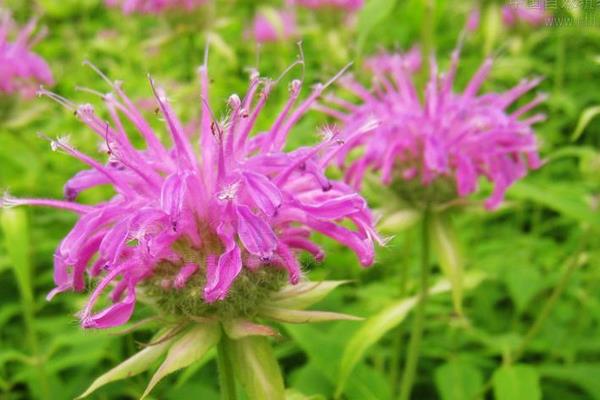
Bee balm (scientific name: Monarda didyma L.): also called Oswego tea, it is a perennial herbaceous plant with a plant height of 100-120 cm. The stems are upright and four-angled; the leaves are thin, opposite, ovate or ovate-lanceolate, with soft hairs on the underside and serrated margins. The flowers are densely clustered at the top of the stem, the calyx is slender, and the corolla is 5 cm long. The flowers are clustered at the top of the stem, with a tubular corolla, pale purplish-red, and the leaves are aromatic. The verticillaster is dense and many-flowered, the upper part of the flower tube is slightly swollen, and the lobes are somewhat two-lipped. The flowering period is June to September.
Native to the Americas, it is cultivated in gardens and nurseries throughout China. It can be used for making tea, decoction, grilling, eating raw, pickling and sauces. It can also be used for sterilization, bathing and incense. Made into an ointment to treat skin rashes, and inhaling the steam can relieve cold symptoms. It is often added to hair care products.
Mint, commonly called "yindancao", is a plant of the Lamiaceae family, namely the dried whole plant of the same genus. It mostly grows in mountain wilds, wetlands and by rivers, with rhizomes creeping underground. It mostly grows at an altitude of 2100 m, but can also grow at an altitude of 3500 m. It is an aromatic crop with special economic value. The whole plant is fresh and aromatic. The leaves are opposite, the flowers are small and pale purple, two-lipped, and after flowering it produces small dark purple-brown fruits.
Mint is one of the commonly used traditional Chinese medicines. It is a pungent, cool diaphoretic and antipyretic medicine, used to treat influenza, headache, red eyes, fever, sore throat, swollen and painful gums and other conditions. External use can treat neuralgia, skin itching, rashes and eczema, etc. It is commonly used as a substitute for tea, clearing the heart and brightening the eyes.
The benefits of bee balm
1. The ornamental value of bee balm
Bee balm has bright flowers and a long flowering period, making it a very good ornamental flower. Bee balm is highly adaptable and can be planted in the open field, or grown under trees and beside ponds as an ornamental flower, not just as a foliage plant. Or it can be potted indoors to decorate the home. Wouldn't it be nice to have such a pot at home, a plant whose flowers you can enjoy, whose leaves you can enjoy, and which you can also eat?
2. The edible value of bee balm
Bee balm is also edible. Although it is not the same type of plant as common mint, it does not let down the word "mint". Bee balm can be made into sauces, vinegar, vegetables, desserts or candy, and can also be used to flavor beverages, toothpaste and medicines. Made into essential oil, mint has a very good cooling and refreshing effect, and can also treat vomiting. Dried bee balm leaves can also be used to make tea, as well as as a herb used in aromatherapy.
3. The medicinal value of bee balm
The leaves of bee balm have certain medicinal value. After crushing the leaves and steeping them in hot water as tea, they can treat headaches and fever. Bee balm itself has a very good stimulating effect, helps digestion and reduces gas in the stomach and intestines.
In addition, bee balm gives off a cool fragrance, with effects of calming the body and mind, reducing stress, lifting the spirits and sterilizing. Placing a pot at home or on the office desk can keep you refreshed all day.
Varieties of bee balm
1. Garden Red bee balm
It really is garden red. This bee balm has bright flowers that light up the whole garden when in bloom. The plant is 70 cm tall and blooms from June to September. This inflorescence has about 100-180 small flowers, and the buds are brightly colored.
2. Croftway Red bee balm
It blooms from June to September, with many flowers. Each inflorescence has more than 180-280 small flowers, the two-lipped petals are split fairly widely, and the flower color is soft pink with a narrow white edge. Newly opened flowers are purple and gradually turn purplish-red.
3. Prairie bee balm
The leaves are ovate, with veins sunken downward, and the underside of the leaves is purplish-red. The flowering time is June to August. Each inflorescence has 160-320 flowers, neatly arranged, appearing violet, with white edges.
4. Fireball bee balm
The plant is 40-50 cm tall and blooms from early July to the end of August. The flower color is purplish-red, and the inflorescence diameter is about 7 cm.
5. Pink Extreme bee balm
The plant is 40-50 cm tall and blooms from early July to the end of August. The flower color is deep pink, and the inflorescence diameter is 8 cm.
The flower language of bee balm
Bee balm blooms elegantly and generously, like a woman of both virtue and talent, gentle and refined, so the flower language of bee balm symbolizes: a person of talent and virtue.
Bee balm can be given as a gift to relatives and friends. You only need to put bee balm into a gift box. It is both beautiful and able to express your praise for others. It really gives you plenty of face!
You have already learned the difference between bee balm and mint. There are many varieties of mint. As a kind of mint, bee balm can be further divided into many different small varieties. They each differ in form and appearance, but they are still very consistent in their main effects and flower language.
Complete picture collection of bee balm - varieties of bee balm
Mint is something everyone should be fairly familiar with. Mint itself has a fresh fragrance. Many people like to grow mint, because mint is not only beautiful and fragrant, but can also be made into various spices, tea, candy and so on. So do you know what bee balm is? Let's go with the editor to learn about bee balm in detail!
A brief introduction to bee balm
Bee balm is also called Oswego tea. It is a perennial herbaceous plant with a plant height of 100-120 cm. The stems are upright and four-angled; the leaves are thin, opposite, ovate or ovate-lanceolate, with soft hairs on the underside and serrated margins. The flowers are densely clustered at the top of the stem, the calyx is slender, and the corolla is 5 cm long. The flowers are clustered at the top of the stem, with a tubular corolla, pale purplish-red, and the leaves are aromatic. The verticillaster is dense and many-flowered, the upper part of the flower tube is slightly swollen, and the lobes are somewhat two-lipped. The flowering period is June to September.
Native to the Americas, it is cultivated in gardens and nurseries throughout China. It can be used for making tea, decoction, grilling, eating raw, pickling and sauces. It can also be used for sterilization, bathing and incense. Made into an ointment to treat skin rashes, and inhaling the steam can relieve cold symptoms. It is often added to hair care products.
Varieties of bee balm
1. Garden Red bee balm. It really is garden red. This bee balm has bright flowers that light up the whole garden when in bloom. The plant is 70 cm tall and blooms from June to September. This inflorescence has about 100-180 small flowers, and the buds are brightly colored.
2. Croftway Red bee balm. It blooms from June to September, with many flowers. Each inflorescence has more than 180-280 small flowers, the two-lipped petals are split fairly widely, and the flower color is soft pink with a narrow white edge. Newly opened flowers are purple and gradually turn purplish-red.
3. Prairie bee balm. The leaves are ovate, with veins sunken downward, and the underside of the leaves is purplish-red. The flowering time is June to August. Each inflorescence has 160-320 flowers, neatly arranged, appearing violet, with white edges.
4. Fireball bee balm. The plant is 40-50 cm tall and blooms from early July to the end of August. The flower color is purplish-red, and the inflorescence diameter is about 7 cm.
5. Pink Extreme bee balm. The plant is 40-50 cm tall and blooms from early July to the end of August. The flower color is deep pink, and the inflorescence diameter is 8 cm.
The benefits of bee balm
1. The ornamental value of bee balm
Bee balm has bright flowers and a long flowering period, making it a very good ornamental flower. Bee balm is highly adaptable and can be planted in the open field, or grown under trees and beside ponds as an ornamental flower, not just as a foliage plant. Or it can be potted indoors to decorate the home. Wouldn't it be nice to have such a pot at home, a plant whose flowers you can enjoy, whose leaves you can enjoy, and which you can also eat?
2. The edible value of bee balm
Bee balm is also edible. Although it is not the same type of plant as common mint, it does not let down the word "mint". Bee balm can be made into sauces, vinegar, vegetables, desserts or candy, and can also be used to flavor beverages, toothpaste and medicines. Made into essential oil, mint has a very good cooling and refreshing effect, and can also treat vomiting. Dried bee balm leaves can also be used to make tea, as well as as a herb used in aromatherapy.
3. The medicinal value of bee balm
The leaves of bee balm have certain medicinal value. After crushing the leaves and steeping them in hot water as tea, they can treat headaches and fever. Bee balm itself has a very good stimulating effect, helps digestion and reduces gas in the stomach and intestines.
In addition, bee balm gives off a cool fragrance, with effects of calming the body and mind, reducing stress, lifting the spirits and sterilizing. Placing a pot at home or on the office desk can keep you refreshed all day.
Notes on growing bee balm
Bee balm can also be considered a kind of herb. It tolerates pruning, and the more it is pruned the better it grows. Pinch back the tips in time to control the height and promote the growth of new shoots. Pruning should be done from May to June to gradually adjust the plant height and flowering period.
After bee balm blooms, the spent flowers remain at the top of the branches. The branches should be cut off 5 cm above the ground, which is beneficial for flowering next year.
As described above, I believe everyone has gained a certain understanding of bee balm. Bee balm is a new type of plant that combines edible, medicinal and ornamental uses. Its flowers are brilliant and eye-catching, and its flowering period is especially long. Friends who like it can grow bee balm themselves!