How to Plant and Care for Umbrella Papyrus
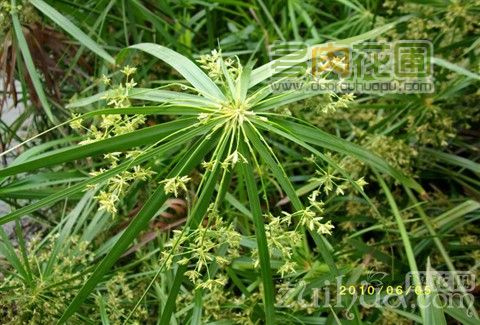
Umbrella papyrus, also known as umbrella grass, water bamboo, water palm bamboo, and windmill grass. It is a perennial evergreen herbaceous plant of the Cyperaceae family. The stems are upright, unbranched, and grow in clumps; the leaves are reduced to sheaths that wrap around the base of the stems. The inflorescence is borne at the top of the stem, with 10~20 involucral bracts, arranged in pairs opposite each other above and below, extending radially and evenly, resembling a wheel-like arrangement. The inflorescence is spicate, with small flowers in white, pale purple, and other colors, blooming in summer. Common cultivated varieties include dwarf umbrella papyrus and variegated umbrella papyrus.
It prefers a warm, humid, and well-ventilated environment, and dislikes direct sun exposure. It is shade-tolerant, prefers higher air humidity, tolerates waterlogging, does not tolerate drought, and is afraid of cold. It has strong shade tolerance and can be kept indoors year-round, and can be grown both in pots and in water.
(1) For pot cultivation, clay soil rich in humus and with strong water retention is suitable. During the growing season, apply a dilute cake fertilizer solution once every 15~20 days, or a chemical fertilizer mainly based on nitrogen, and keep the potting soil moist at all times. Potted umbrella papyrus should not be fertilized too much, otherwise the plant will grow too tall. In summer, prevent direct sunlight, otherwise the leaf-like bracts will dry at the tips and lose color.
(2) In a more shaded environment, the bracts appear fresh and green. In dry seasons or during periods of high summer temperatures, water should be sprayed on the plant frequently to keep the air humid. If the air humidity is low, the tips of the leaf-like bracts easily turn yellow and discolored. In winter, keep the room temperature above 10°C, and no lower than 7°C at the minimum, and appropriately control watering. Insufficient fertilizer and water during the growing season, overly dry potting soil, or excessively low room temperature in winter can all easily cause the stems and leaves to turn yellow.
(3) Yellow leaves should be cut off promptly, and overly old stems should be cut off as early as possible to encourage new stems to sprout, renewing the plant every year. Potted umbrella papyrus generally should be repotted once a year in early spring; when repotting, cut off some old roots and add fresh potting soil.
(4) If water cultivation is used, place some small pebbles in the pot (or bucket), press down the roots of the plant so it does not tilt, add water to submerge the roots, change the water once every 5~7 days, and do not apply organic fertilizer (applying organic fertilizer easily makes the water cloudy and causes root rot).
Hydroponic Method for Umbrella Papyrus
1. Use the root-washing method or division method to grow the plant in water. After about a week, new roots will grow in the water. The water level should be such that the roots are not submerged.
2. Umbrella papyrus has a large crown, so too many stems should not be placed in one container; a sparser arrangement looks more natural and unrestrained.
3. First fill the bottom of a glass container with washed stones, pebbles, etc., then place the plant in it, and use stones and pebbles to press down the root system to ensure the plant does not move and does not fall over in the water.
4. In summer, when temperatures are high, attention should be paid to increasing the frequency of water changes, and the mucus on the roots should be washed clean to avoid root rot and death.
5. Frequently spray the leaves with a clean water spray bottle so they are free of dust, fresh, green, and glossy. During the growing season, foliar fertilizer can be sprayed on the leaves several times, making the leaf color appear even more emerald green.
Care Habits of Umbrella Papyrus
Environmental Requirements:It prefers a high-temperature, humid, and semi-shaded environment, and can be placed year-round in a warm, bright room. The overwintering temperature should preferably not be lower than 5°C. In summer, a cool, ventilated environment is suitable, and it can also tolerate a slightly dry climate.
Fertilization Method: For windmill grass to grow well, it needs frequent fertilization, but hydroponically grown windmill grass must never be given organic fertilizer, otherwise the roots will rot. A chemical fertilizer dissolved in water can be applied once every half month, and the concentration should not be too high. Hydroponically grown windmill grass should be placed in a ventilated spot, otherwise white mold easily grows at the base of the stems.
Seasonal Care:For hydroponically grown umbrella papyrus, in summer change the cooled boiled water once every 2 to 3 days to prevent the cuttings from being contaminated by bacteria and rotting. In winter, changing it once every 10 days is enough, and add 4 to 5 drops of nutrient solution.
The above is what I have learned today about aquatic plants. I hope fellow flower lovers will find this article helpful after reading it. If you want to know more about bulbous flowers, please continue to follow our Succulent Garden, and we will provide you with more related content as soon as possible!
Methods for Potted Umbrella Papyrus and Its Care Knowledge
Umbrella papyrus is an aquatic plant with an elegant and graceful posture, possessing no lack of the charm of green bamboo. Umbrella papyrus has high ornamental value and can be made into potted plants and placed in the living room for care. So, would everyone like to know what the cultivation techniques for umbrella papyrus are? Do you want to grow umbrella papyrus well? Today, the editor and I will next get to know this plant.
Making an Umbrella Papyrus Bonsai
Potting
Potting in spring, from February to March, is preferable. Spread a layer of coarse sand at the bottom of the pot to help drainage. Then choose a sandy soil with good air permeability, fertility, excellent drainage, and rich nutrients required by umbrella papyrus (water palm bamboo) as the potting soil. Silver bamboo is more suitable for expressing group beauty, so for the choice of landscape pot, a rectangular or oval purple clay pot or glazed pottery pot is more suitable.
Styling
Bamboo is often used to express group beauty, because of bamboo's sparseness and elegance. Therefore, in the arrangement, there should be variation in height and proper density. In bamboo bonsai, the alternation of bamboo and stone is relatively common. For the height of bamboo bonsai, pruning control is the most common, and watering can also be regulated to dwarf it.
Care of Umbrella Papyrus Bonsai
Watering
Umbrella papyrus (water palm bamboo) bonsai depends greatly on water, and watering more during its growing period is very necessary; this is done to prevent the leaves from drying out. In summer, move the bonsai to a shady place.
Fertilization
If bamboo bonsai lacks fertilizer, it will have an adverse effect on growth. Therefore, attention should be paid to fertilization during the growing season, normally applying a light fertilizer once a month. (The specific situation depends on local conditions.)
Pruning
Umbrella papyrus (water palm bamboo) grows very quickly, so frequent pruning is very necessary, otherwise it will affect its beauty.
Repotting
Repot once every two or three years, preferably in spring.
Pest and Disease Control
Preventing and controlling pests and diseases of umbrella papyrus (water palm bamboo) is very important, otherwise it will affect the beauty of the bamboo.
By following the above steps, a beautiful and healthy umbrella papyrus (water palm bamboo) bonsai will appear before you.
The above is what I have learned today about aquatic plants. I hope fellow flower lovers will find this article helpful after reading it. If you want to know more about bulbous flowers, please continue to follow our Succulent Garden, and we will provide you with more related content as soon as possible!