What causes yellowing leaves on calla lilies?
There are many causes of yellowing leaves on calla lilies, such as improper watering, over-fertilizing or lack of fertilizer, temperatures that are too high, and dry air. The general solution is: treat the specific cause, water as soon as the soil feels dry and water thoroughly when you do, keeping the potting soil moist; during the flowering period fertilize mainly with phosphorus and potassium, and before flowering mainly with nitrogen, applying little but often; keep the temperature between 20 and 25°C, as plants easily develop yellow leaves when it is too high; keep air humidity between 70% and 80%, as leaves turn yellow when it drops below 50%. Leaves that have already turned yellow need to be pruned off, because yellow leaves also compete for water and consume nutrients.
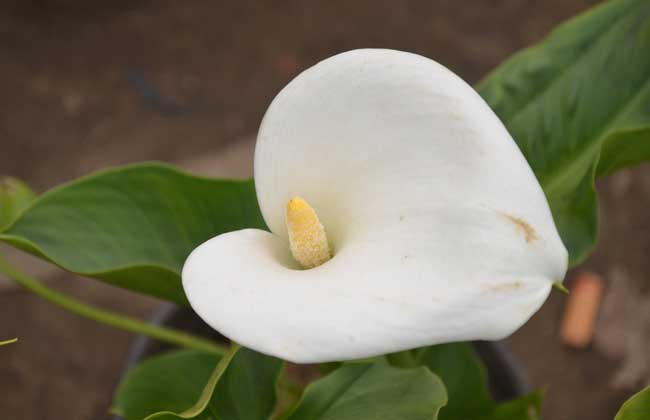
Yellowing leaves caused by overwatering
[Cause of yellowing] Calla lilies like moisture and must not lack water from the moment they sprout, so daily watering is ideal, but overwatering will cause the leaves to turn yellow.
[Solution] Water calla lilies as soon as the soil feels dry, and water thoroughly when you do, but never too much.
Yellowing leaves caused by underwatering
[Cause of yellowing] Calla lilies are wetland flowers, and drought and lack of water can also easily cause the leaves to turn yellow.
[Solution] Be careful to keep watering and maintain adequate moisture, but also avoid getting the leaf center wet, so as to prevent soft rot.
Yellowing leaves caused by humidity that is too low
[Cause of yellowing] Calla lily growth has certain requirements for air humidity; keeping air humidity between 70-85% is ideal, and leaves will also turn yellow when it drops below 50%.
[Solution] Water and mist frequently to keep the potting soil and the environment moist, and provide moderate ventilation to keep the air fresh and circulating.
Yellowing leaves caused by over-fertilizing
[Cause of yellowing] Over-fertilizing calla lilies can cause strong fertilizer to burn the roots, which is the most common cause of yellowing calla lily leaves.
[Solution] Fertilize calla lilies appropriately according to their growth stage.
Yellowing leaves caused by too little fertilizer
[Cause of yellowing] Calla lilies are heavy feeders, and too little fertilizer will cause the leaves to turn yellow.
[Solution] Generally apply decomposed liquid fertilizer once every 10-15 days, and mainly apply phosphorus fertilizer during the flowering period.
Yellowing leaves caused by temperatures that are too low
[Cause of yellowing] Temperature matters when growing calla lilies; keeping it between 20-25°C is ideal. They fear the cold and dislike saline-alkaline conditions, and the nighttime temperature in winter must not drop below 10°C, as plants easily develop yellow leaves when it is too high or too low.
[Solution] When the temperature is too low, move the plant indoors to keep it warm.
Yellowing leaves caused by smoke
[Cause of yellowing] Calla lilies are easily harmed by smoke, and frequent exposure to smoke will cause the leaves to turn yellow and affect flowering.
[Solution] Pay attention to air quality when growing calla lilies, keep the air circulating, and prevent smoke exposure.
What is going on when a calla lily plant goes limp? 4 fixes to give your calla lily a second spring
The beauty of the calla lily lies in its neat plant form and in its pure white, delicate flowers. Every year as the year draws to a close, the calla lily's flowering season arrives and we can enjoy a visual feast. However, due to improper care and other reasons, plants can develop problems, such as yellowing and limp leaves on calla lilies. So what is going on when a calla lily plant goes limp? Below, the editor introduces 4 solutions; once you do them well, your calla lily will be rejuvenated with a second spring.
1. What is going on when a calla lily plant goes limp: root damage
In our guide to growing calla lilies, we explained that they have requirements for soil, light, watering and more, and once these requirements are not met, calla lilies will show limp symptoms that seriously affect their ornamental value.
As for what is going on when a calla lily plant goes limp, the answer is: calla lilies are tuberous-rooted plants, and damage to their roots is the main cause of going limp. There are 4 causes: improper watering, non-breathable soil, improper fertilizing, and pests and diseases, as follows:
1. Improper watering
During the growth of calla lilies, the demand for water is very high. However, when watering you must be careful never to water from top to bottom, because this easily gets water into the center of the calla lily's leaves and causes water to collect in the tuber. At this point the plant is very prone to bacterial soft rot, which damages the roots. So if you are wondering what is going on when a calla lily plant goes limp, it may be that your watering method is wrong.
Solution: The watering method must be right. The specific procedure: use the soak-pot method, letting water slowly seep into the pot through the base so that the soil surface becomes moist. This method avoids water collecting and thus prevents root rot. In addition, growers can also build a small mound of soil about 2 cm high around the base of the calla lily, which prevents water from being poured directly onto the base of the roots when watering.
2. Non-breathable soil
Besides improper watering, soil that is too wet and non-breathable is another cause of a calla lily plant going limp. Calla lilies like loose, breathable soil and dislike non-breathable yellow clay with poor drainage. Once you use the wrong soil, or bury the tuber too deep, root rot will occur, causing the plant to go limp. Not only that, but roots that dry out because the soil is too dry will also cause the plant to go limp.
Solution: If you find that the soil is causing the plant to go limp, growers should dig out the calla lily tuber, remove the rotted parts of the roots, then soak it in an 800-fold carbendazim solution and a 1000-fold potassium permanganate solution for 30 minutes, let it dry, and replant it in a pot. Note: if the potting soil is already infected, replace it directly. After repotting, cut the calla lily's leaves and stems as short as possible to encourage root development.
3. Improper fertilizing
During the growth of calla lilies, their optimum temperature is 22-30°C; once it drops below 10°C or rises above 30°C, calla lilies enter dormancy, during which the plant stops growing. If you are a beginner grower, you may not pay attention to this and keep fertilizing as usual. This definitely will not work, and the result is root rot, which causes the plant to go limp.
Solution: From the above, what is going on when a calla lily plant goes limp is clearly over-fertilizing. At this point growers can adjust the temperature to wake the calla lily from dormancy; during this stage do not fertilize, and after a period of time it will be rejuvenated with a second spring.
4. Red spider mite infestation
In our guide to calla lily pest and disease control, we introduced one of the calla lily's insect pests, the red spider mite, which sucks the plant's sap, leading to a lack of nutrients, whereupon the plant shows limp symptoms and in severe cases dies.
Solution: Open windows for ventilation, and regularly mist to maintain air humidity. If you find red spider mites, growers can spray the branches and leaves with an 800-fold dimethoate solution, focusing on the undersides of the leaves.
When people lack energy they feel exhausted and weak all over; in fact, plants lacking nutrients are the same, and this is the root cause of a plant going limp. After reading the above, I believe everyone now knows what is going on when a calla lily plant goes limp. The solutions are not difficult either, and you who love flowers must remember them, so that when you encounter this situation you can solve it immediately. Finally, may your calla lilies bloom into beautiful flowers!