Cultivation Methods and Technical Key Points for Rose (Rosa chinensis)
There are many cultivation methods for roses, with cuttings and grafting being the most common. Grafting is mainly done by bud grafting. The following introduces the cutting propagation method.
1. Cutting period. Rose seedling cultivation is mostly carried out in spring and autumn. In spring, it starts in late April and ends at the end of May; in autumn, it starts in late August and ends at the end of October. Cuttings taken in autumn cannot be potted separately in the same year; their young roots are not well developed and their cold resistance is poor, so winter frost protection work must be done well.
2. Pot soil preparation. For cultivation pots, small to medium-sized clay pots are preferable, with a diameter of 15-20 cm. For the cutting soil, choose loam with good drainage performance, mix in 30% rice husk ash, and stir evenly before use.
3. Cutting selection. From robust growing mother rose plants, select disease-free new branches of the current year, cut them into 7-15 cm lengths. Cuttings taken during the growing season are best kept with some leaves. To improve the survival rate, generally do the collecting, processing, cutting, and watering in one continuous sequence.
4. Cutting into pots. Cover the drainage holes at the bottom of the selected pot with a few pieces of tile, add a small amount of sand, then add the screened coarse soil, filling 1/5 of the pot height, which helps with future drainage. Then add the mixed soil, filling 3/5 of the pot height. After shaking a few times to make the pot soil relatively compact, leave 1/5 of the pot mouth unfilled for watering. When temperatures are higher in spring and autumn, the cuttings should not be inserted too deep; inserting 1/3 of the total cutting length into the soil is appropriate. Generally, a clay pot with a 15 cm diameter can hold 10-12 cuttings. After inserting, shake the pot a few times so that the soil particles make close contact with the buried part of each cutting. After each pot is planted, water thoroughly once; use a fine-spout watering can and water until water remains in the bottom holes.
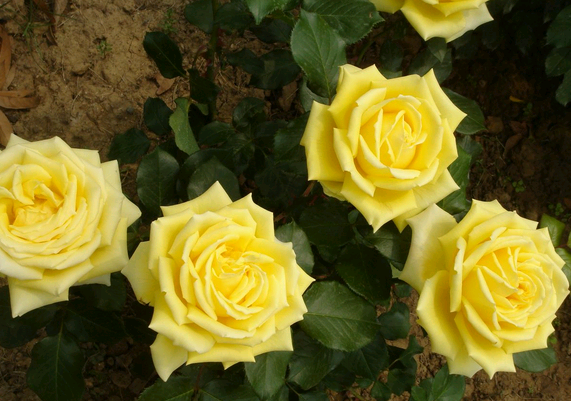
a. Roses prefer slightly acidic soil, and the pH is best kept at around 6.5. If planted in the ground, it is best to use imported peat to improve the soil accordingly, which can neutralize the soil's acidity and salinity, etc.
b. The composition and ratio of the rose cultivation medium: coarse granular material (coconut shell, coconut fiber), fine peat and organic fertilizer, plus a small portion of garden soil. Coarse particles account for about 1/3 to 1/5, and garden soil accounts for about 1/10 or less. The main role of coarse particles is water permeability and air permeability; the main role of fine particles is water retention and nutrient supply. The role of garden soil is to improve the buffering capacity of the medium together with organic fertilizer.
2. Pot selection for rose cultivationThe size of the flower pot should not be smaller than 20 cm at minimum. The holes at the bottom of the pot should not be too small, as that would make drainage poor; about the size of a five-jiao coin is fine. The pots in our garden all have 3 holes. Plastic pots or clay pots are fine. Porcelain pots are best not used, as they have poor air permeability.
3. Water thoroughly when watering rosesWater when dry, drain when wet. When you water, water thoroughly. For ground planting, throw the hose into the pond and fill the pond with water; this refers to when summer temperatures are relatively high. For potted plants, if the water seeps down quickly after watering, that is appropriate. Insert a chopstick into the soil and you can tell whether the bottom is dry or wet. When the temperature is above 30 degrees, water 1-2 times a day.
4. Fertilizer control for rose cultivationDo not fertilize roses when they have just sprouted. When leaves unfold, apply urea or compound fertilizer; when buds appear, apply monopotassium phosphate. The interval between each fertilization is 10-15 days depending on temperature. The higher the temperature, the shorter the interval. Repeat this cycle. Fertilizing before rain is best. Occasionally, you can also water with some rooting solution.
5. Transplanting matters for rose cultivationBecause roses have their roots disturbed during transplanting, yellowing leaves are a normal phenomenon. You can pinch off the yellow leaves; it does not matter if all the leaves fall off. Pinch boldly. After transplanting, water less at first; water again when dry. After some time, the roses will grow new roots and new leaves. Do not be anxious.
6. Pesticide control for rose cultivationPesticides should be applied once every half month; when the weather is hot, apply once about every 10 days. For sterilization and disinfection: potassium permanganate, chlorothalonil, thiophanate-methyl, and carbendazim should be used alternately. The higher the temperature, the shorter the interval. For insect control: dimethoate, dichlorvos, etc. For aphids: imidacloprid. Pesticides are toxic, so pay attention to protection.
7. Ventilation for rose cultivationWhether cultivated in a courtyard or on a balcony, be sure to pay attention to ventilation. With good ventilation, roses can grow robustly and pest and disease occurrence can also be reduced.
Rose Cutting Cultivation Techniques 1. Cutting timeIt can be done in both spring and autumn. In spring, from late April to the end of May, when the climate is mild and the branches have strong vitality, roots can form one month after cutting, and the survival rate is high. Autumn cuttings are done from late August to the end of October; at this time, cuttings are affected by the large temperature difference between day and night, rooting is relatively slow, taking about 40 to 50 days to root, and the survival rate is slightly lower than spring cuttings.
2. Nursery site preparationIn a sunny area, select a plot with deep soil, loose structure, good permeability, rich in humus, and good drainage as the cutting bed. Per mu of cutting bed, mix in 200 kg of decomposed farmyard manure (pig manure, cow dung) and 25 kg of superphosphate as base fertilizer, then mix in 20 to 30 kg of burnt soil ash or rice husk ash to improve air permeability. To reduce disease in cuttings, disinfect the soil before cutting: spray the soil with a 500 to 800 times dilution of 50% tebuconazole wettable powder, then cover with plastic film for 3 to 4 days, and cut 1 week after removing the film.
3. Selection and treatment of cuttingsFrom middle-aged and young mother trees of superior varieties, select strong, plump, vigorously growing, pest-free 1-to-2-year-old spring shoots or current-year autumn shoots as cuttings. Such branches have high growth substance content and strong metabolic vitality, and not only root easily but also produce good-quality seedlings with high selling prices. If branches are transported from elsewhere as cuttings, pay attention to moisture retention and shading to maintain branch vitality. The cuttings are about 8 to 12 cm long; cut off the lower leaves and keep only the upper 3 to 5 leaves. Bundle the prepared cuttings in groups of 50, and soak the lower 5 cm in 100 ppm GGR No. 6 solution for 1 to 2 hours, which can increase the cutting survival rate.
4. CuttingTry to cut, treat, and insert as continuously as possible. When cutting, be sure not to damage the bark. Generally, first use a small wooden stick or your finger to make a small hole in the cutting bed, then place the cutting into the hole. The cutting depth is 1/2 to 2/3 of the cutting length, and the plant-row spacing is 10 x 15 cm. After inserting, press the soil firmly with your hand and water thoroughly once so that the cuttings and soil are closely combined.
5. Post-cutting managementa. Build an arched shed and cover with shade netting. The plastic shed can regulate soil and air temperature and humidity, while the shade net can prevent direct sunlight and lower temperature. The light transmittance of the shade net should preferably be 20% to 30%. Besides covering the top of the seedling bed with shade netting, also hang curtains on the east and west sides of the seedling bed to block light, reducing morning and evening sunlight exposure. The optimal temperature for rose rooting is 20°C to 25°C. If the temperature is too high, besides covering with shade netting, you can also water to cool down and ventilate to cool down.
b. Watering: In the early stage after cutting, the cuttings have not yet sprouted leaves, so water supply should not be too much; generally watering once every 7 to 10 days is enough. One month later, the cuttings begin to root and send out shoots, and water consumption gradually increases, so water once every 3 to 5 days. The amount of watering should be determined according to soil moisture and air humidity, keeping the soil appropriately dry and wet. The best moisture conditions after cutting are: field water-holding capacity of the seedling bed maintained at about 80%, and relative air humidity at 80% to 90%. If humidity is too high, control the amount of watering and strengthen ventilation; if humidity is too low, increase the amount of watering and the number of misting sessions.
c. Fertilization: Cuttings do not need much fertilizer. Since base fertilizer was applied during land preparation, no further soil fertilization is needed before the seedlings are transplanted, but foliar fertilization should be carried out. That is, one month after cutting, alternately use 0.3% urea liquid fertilizer and 0.2% monopotassium phosphate liquid fertilizer once every half month for foliar fertilization to promote rooting.
d. Weeding: Remove weeds in the cutting bed in a timely manner, but do not disturb the seedlings.
e. Hardening off: Half a year after the seedlings root, appropriately extend their ventilation and light exposure time to improve the seedlings' ability to adapt to the external environment.
[Rose] Rose pictures | Rose cultivation methods | Rose cultivation | Rose efficacy and functions
The rose has the reputation of being the "Queen of Flowers," and is also known as "Yueyuehong"; the rose is also one of the flowers that every beauty-loving and flower-loving person compares in planting. Regarding rose planting, rose cultivation methods, rose efficacy and functions, rose characteristics, and other rose knowledge, shouldn't we learn more about them!
[Plant Profile]
Chinese name:Rose
Scientific name:R. chinensis
Aliases:Yueyuehong, Changchun flower
Family:Rosaceae
Genus:Rosa
Product distribution:Widely distributed around the world
Morphological characteristics:It is a deciduous shrub or evergreen shrub species, blooming in all four seasons, with green branchlets and dark green leaves. The flower color is mainly red, occasionally with white growing alongside, and it is the most beautiful ornamental flower plant in the country. The leaflets are generally 3-5 in number, broadly ovate (elliptic) or ovate-oblong, 2.5-6 cm long, with acuminate tips and sharp teeth, serrated leaf margins, hairless and smooth on both sides; stipules are fused with the petiole, entire or with glandular teeth, with the apex separated into ear-like shapes.
[Rose Cultivation and Growing Methods]
Looking at the beautiful and moving rose, cultivation and growing are actually not that easy. Growing roses requires our wholehearted dedication and care to cultivate the best roses.
1、Roses like environments with ample sunlight, air circulation, and wind protection. Remember not to grow them in shady environments; the soil should be loose, fertile, and well-drained neutral soil.
2、Reasonable pruning is key to the rose flowering period. At present, the main bud emergence positions of roses are in two places: 1 to 5 leaves below the flower; 6 to 9 leaves below the flower. For potted roses and cut roses, calculate the flowering date well, and about 45 days before using the flowers, carry out comprehensive branch pruning. Understanding the sprouting characteristics of roses can better help you cultivate roses.
3、Fertilization techniques: Good fertilization techniques can make your roses grow faster, better, and more favorably.
☆ When new-generation buds do not sprout after the plant is pruned, spray 0.2% urea on the leaves once every 5 or 6 days, which can promote new bud sprouting;
☆ If the plant grows quickly and new branches grow rapidly beyond the planned range, controlling water supply can delay growth. During water control, after the branches and leaves wilt, spray water in time; recovery within 1 hour is the critical threshold.
☆ If new branches bud later than planned, spray 0.2% monopotassium phosphate on the leaves once every 5 or 6 days, and the buds will grow rapidly. The rose flowering period consumes a large amount of water and internal nutrients, so water supply must be sufficient.
4、The main propagation methods for roses are cutting and grafting: the best time for cutting is in late May after the first full bloom for semi-hardwood cuttings, or in late October for hardwood cuttings; grafting and budding can be done from June to August. Cut grafting can be done at the beginning of bud break, and the bud break time varies with climate in different places, so pay attention to seizing the opportunity. Soft-tip grafting is done during the growing season. When the rootstock sends out new shoots, cut the new shoot 3-6 cm from the old branch and perform cleft grafting; the scion also uses a soft tip, and its thickness should match that of the rootstock.
5、In the process of growing roses, disease prevention and treatment must not be ignored. Below are several very common rose diseases and control measures.
◆ Black spot disease: Mainly attacks leaves, petioles, and tender shoots. When the leaves first become diseased, purple-brown to brown small spots appear on the upper surface, and after expanding they mostly become round or irregular dark brown lesions. Spraying carbendazim, thiophanate-methyl, daconil, and other chemicals can be used.
◆ Powdery mildew: Attacks tender leaves, with white powdery material appearing on both sides. Early symptoms are not obvious. After the powdery layer appears for 3-5 days, the leaves become water-soaked, gradually lose green and turn yellow, and in severe cases cause leaf drop. Spraying carbendazim or triadimefon during the onset period is enough, but Guoguang Yingna has the best effect.
◆ Leaf blight: Mostly invades from leaf tips or leaf margins, initially as small yellow spots, then rapidly expands inward into irregular large lesions. Severely affected leaves wither up to 2/3 of the whole leaf; the diseased part loses green and turns yellow, then brown, dries, and falls off. To prevent and control the above diseases, besides strengthening fertilizer and water management, in winter cut off diseased branches and diseased leaves, clear fallen leaves on the ground, and reduce the initial infection sources. When disease occurs, comprehensive control should be adopted and fungicides such as carbendazim and thiophanate-methyl should be sprayed.
◆ Diseases should mainly be prevented. During high-temperature, high-humidity, or rainy seasons, spray fungicides regularly. When seedlings enter the dormant stage, spray lime sulfur mixture for comprehensive sterilization to ensure healthy seedling growth. When seedlings are strong in growth, they themselves resist a certain degree of disease invasion.
[Rose Efficacy and Functions]
1、Medicinal value of roses
★ The rose is a common gynecological medicine. In traditional Chinese medicine, the rose is sweet in taste, warm in nature, enters the liver meridian, and has the effects of promoting blood circulation and regulating menstruation, reducing swelling, and detoxifying. Because the rose's effects of removing blood stasis, promoting qi flow, and relieving pain are obvious, it is often used to treat irregular menstruation, dysmenorrhea, and other conditions.
★ The combination of rose and bitter orange flower is an even better prescription for treating menstrual diseases caused by disharmony of qi and blood. Use 15 g each of rose and bitter orange flower, decoct in water and take. Rose emphasizes promoting blood circulation, while bitter orange flower leans toward promoting qi flow. The two medicines together, one qi and one blood, regulate both qi and blood, and their effects of regulating menstruation and promoting blood circulation, promoting qi flow, and relieving pain are very good.
2、Dietary and nutritional benefits of roses
★ Rose porridge: beauty recipe, irregular menstruation recipe.
★ Rose soup: blood-activating and stasis-removing recipe, irregular menstruation recipe, dysmenorrhea recipe.
Crispy fried roses: liver-nourishing recipe, blood-activating and stasis-removing recipe, irregular menstruation.
[When do roses bloom]
The flowering period of roses is relatively long among domestic flower plants. Generally speaking, the flowering period of roses is from May to November; in terms of seasons, from early summer to late autumn is the flowering period of roses.
【More plant encyclopedia】
Peperomia cultivation methods Sago palm cultivation methods Cactus functions Peony characteristics How to grow wintersweet How to grow Aglaia odorata
Pothos cultivation methods and precautions Do cactus balls protect against radiation Guzmania cultivation methods Cyclamen leaves turning yellow Blue enchantress price
Lucky bamboo Sago palm pictures Sago palm cultivation methods Is rubber tree toxic Sunflower flower language, Peace lily Cyclamen Sansevieria with golden edges