Methods and Technical Key Points for Cultivating Multi-Headed Sago Palms
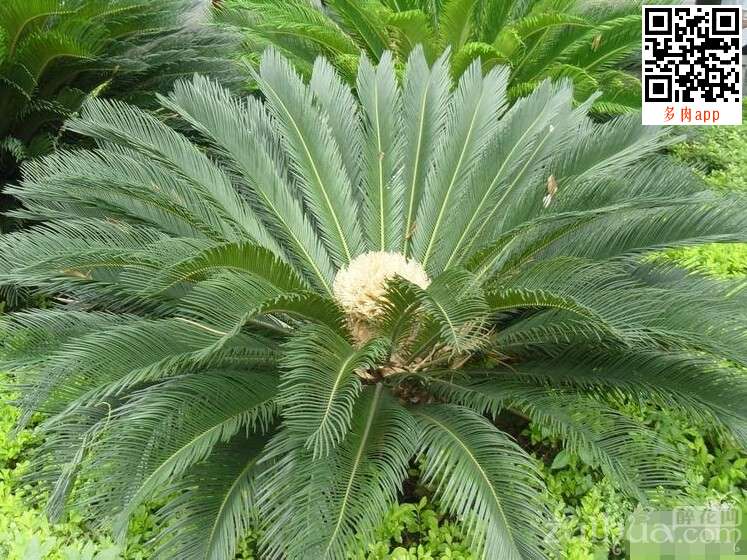
The sago palm is evergreen year-round, with an elegant and unusual plant form and leaf cluster, a long ornamental period, and easy, undemanding care, so it is deeply favored by cultivation enthusiasts. Sago palms can be placed outdoors or used for indoor display.
If a single-headed sago palm can be cultivated into a multi-headed one, its ornamental value becomes even higher. The method is: in early spring, soak the purchased sago palm offset in potassium permanganate disinfectant water for 15 minutes, take it out and let it dry naturally in the shade, then use a small knife to cut off the apical bud together with part of the old stem in one cut. To prevent water accumulation, the cut surface can be made slightly slanted, and the wound sealed with sticky yellow clay. Then peel off the old skin at the base to encourage rooting, also sealing the wound with yellow clay, and once the yellow clay is slightly dry, it can be planted. The substrate can be coarse-grained sandy soil sterilized with hot water. The planting depth is 1/4 of the stem length. Because wounds heal faster under dark conditions, an empty pot can be placed over it. Of course, the first watering should be thorough, and afterward it should be kept on the drier side until leaves grow. Several small suckers will then grow from the top of the stem, and they can be kept or removed selectively according to the desired shape.
1 Materials and Methods
1.1 Materials
The tree species is the fine-leaf sago palm (Cycas revoluta) produced in Fujian, and sago palm plants of different ages, sago palm trunk balls, and seeds were used as test materials.
1.2 Methods
1 Decapitation method: Saw off a section from the top of an adult sago palm to form a stump; the following year, adventitious buds (small balls) grow from the top of the trunk, and in the 3rd year they are kept or removed according to shaping needs to form a multi-headed sago palm. 2 Slant planting method: Plant the sago palm trunk at an angle of about 45° to the ground; the following year, many small balls grow from the root crown area, and they are selected and kept according to shaping needs. 3 Branding method: Burn the apical bud of the sago palm with a branding iron; after a certain period, small balls sprout from the base, and they are shaped year by year. 4 Splice method: Keep the apical buds of 2 (or more than 2) small sago palm balls, use a sharp knife to diagonally cut off about 1/3 of the side of the stem, then join the cut surfaces together, bind them tightly with plastic strips as in grafting, and after healing and union they form one plant. 5 Chiseling method: Use a chisel or thick iron nail to injure the apical bud; multiple new buds will sprout around the wound, thereby obtaining a multi-headed sago palm. 6 Trunk division method: Saw the trunk horizontally (or diagonally) into several sections, then split them lengthwise into blocks, bury them horizontally (or diagonally) on a sand bed with the epidermis facing up; under suitable conditions, the tuberous stem will sprout one to several bud balls, which are then cultivated. 7 Assembly method: Plant two (or more than two) plants that match in form together. 8 Connected-ball method: Dig up the connected small balls produced by asexual reproduction on old trees, and cultivate them by planting. 9 Double-embryo method: Among seeds produced by sexual reproduction, some single seeds can grow two closely connected seedlings, naturally forming a multi-headed sago palm.
2 Results and Analysis
It can be seen that, except for the trunk division method and the splice method, the survival rate of multi-headed sago palms obtained by all the other cultivation methods reached 100%, while the trunk division method was the worst at only 70%. In terms of the number of buds produced, the decapitation method produced the most adventitious buds, reaching 5-10; next was the chiseling method, with 5-8 buds per plant; the double-embryo method produced the fewest, only 2. Although the branding method produced only 3-5 buds per plant, the donor tree age required was only 3-5 years; the connected-ball method required the shortest tree age, 1-2 years. The double-embryo method, however, must be cultivated through sowing.
3 Summary and Discussion
Among the 9 cultivation methods tested, although the decapitation method, slant planting method, branding method, and chiseling method differ in operation, their basic principles are roughly the same: all destroy the plant's apical dominance so that dormant buds sprout or adventitious buds are produced. In the decapitation method, the trunk is cut off, apical dominance is destroyed, and at the same time callus tissue can form at the top cut surface, differentiating to produce adventitious buds; in the slant planting method, because of the plant's negative geotropism, apical dominance is destroyed, and many small balls grow from the base of the trunk; in the branding method and chiseling method, because the apical bud is burned or chiseled, apical dominance is destroyed, releasing dormant buds from inhibition so they sprout, and on the other hand meristematic tissue forms near the wound and differentiates into adventitious buds that then form small balls. Possibly because the decapitation method creates a large wounded area and forms more callus tissue, it produces the most adventitious buds. The double-embryo method uses seeds produced by sexual reproduction to cultivate multi-headed sago palms, but this kind of seed, from which one seed can grow two seedlings, cannot yet be bred deterministically and is completely random, so practical large-scale application is relatively difficult. Apart from this, the other methods can all be carried out artificially and can serve as ways to cultivate multi-headed sago palms of different shapes.
In specific applications, attention should be paid to the following issues:
1. Making multi-headed sago palms should be done during the dormant period, when the temperature is low, rainfall is scarce, air humidity is low, and the plant stores abundant nutrients; after cutting, it is less prone to infection and necrosis, and wound healing is also faster.
2. The cut wounds need to be exposed to sunlight or infrared light, then sealed with wax, to avoid direct contact between the wound and soil or air.
3. The sago palm has a fleshy trunk and fleshy fibrous roots, so excessive water must be avoided; otherwise it will rot the roots and trunk, or cause leggy leaf growth with sparse, elongated leaves.
4. Bonsai sago palms grow well only under full sun, so after being placed indoors for a period, a sago palm bonsai needs to receive sunlight, especially during the leaf sprouting season; otherwise the leaves grown will be both long and sparse, with poor ornamental quality.
5. The cultivation of multi-headed sago palms is a refined biological craft, and only careful, meticulous work can produce fine specimens.
Cultivation Techniques for Multi-Headed Sago Palms
The sago palm is one of the commonly used tree species in modern landscape greening, and is much favored for its upright, elegant, evergreen, and staunch bearing. It is a symbol of longevity, health, and good fortune, and is praised as the "plant panda." Among the many sago palm varieties, the fine-leaf sago palm (Cycas revoluta) produced along the coast of our province has the greatest ornamental value. In order to meet market demand, in recent years the landscaping sector has vigorously developed sago palm production and cultivated large numbers of sago palm seedlings. However, the vast majority of existing cultivated plants are single-headed, single-trunk plants, and cultivating multi-headed sago palms can not only improve their ornamental quality but also increase economic returns. Over the past 10 years, in the course of studying sago palms, the author has accumulated some experience in cultivating multi-headed sago palms, now reported as follows.1 Materials and Methods
1.1 Materials
The tree species is the fine-leaf sago palm (Cycas revoluta) produced in Fujian, and sago palm plants of different ages, sago palm trunk balls, and seeds were used as test materials.
1.2 Methods
1 Decapitation method: Saw off a section from the top of an adult sago palm to form a stump; the following year, adventitious buds (small balls) grow from the top of the trunk, and in the 3rd year they are kept or removed according to shaping needs to form a multi-headed sago palm. 2 Slant planting method: Plant the sago palm trunk at an angle of about 45° to the ground; the following year, many small balls grow from the root crown area, and they are selected and kept according to shaping needs. 3 Branding method: Burn the apical bud of the sago palm with a branding iron; after a certain period, small balls sprout from the base, and they are shaped year by year. 4 Splice method: Keep the apical buds of 2 (or more than 2) small sago palm balls, use a sharp knife to diagonally cut off about 1/3 of the side of the stem, then join the cut surfaces together, bind them tightly with plastic strips as in grafting, and after healing and union they form one plant. 5 Chiseling method: Use a chisel or thick iron nail to injure the apical bud; multiple new buds will sprout around the wound, thereby obtaining a multi-headed sago palm. 6 Trunk division method: Saw the trunk horizontally (or diagonally) into several sections, then split them lengthwise into blocks, bury them horizontally (or diagonally) on a sand bed with the epidermis facing up; under suitable conditions, the tuberous stem will sprout one to several bud balls, which are then cultivated. 7 Assembly method: Plant two (or more than two) plants that match in form together. 8 Connected-ball method: Dig up the connected small balls produced by asexual reproduction on old trees, and cultivate them by planting. 9 Double-embryo method: Among seeds produced by sexual reproduction, some single seeds can grow two closely connected seedlings, naturally forming a multi-headed sago palm.
2 Results and Analysis
It can be seen that, except for the trunk division method and the splice method, the survival rate of multi-headed sago palms obtained by all the other cultivation methods reached 100%, while the trunk division method was the worst at only 70%. In terms of the number of buds produced, the decapitation method produced the most adventitious buds, reaching 5-10; next was the chiseling method, with 5-8 buds per plant; the double-embryo method produced the fewest, only 2. Although the branding method produced only 3-5 buds per plant, the donor tree age required was only 3-5 years; the connected-ball method required the shortest tree age, 1-2 years. The double-embryo method, however, must be cultivated through sowing.
3 Summary and Discussion
Among the 9 cultivation methods tested, although the decapitation method, slant planting method, branding method, and chiseling method differ in operation, their basic principles are roughly the same: all destroy the plant's apical dominance so that dormant buds sprout or adventitious buds are produced. In the decapitation method, the trunk is cut off, apical dominance is destroyed, and at the same time callus tissue can form at the top cut surface, differentiating to produce adventitious buds; in the slant planting method, because of the plant's negative geotropism, apical dominance is destroyed, and many small balls grow from the base of the trunk; in the branding method and chiseling method, because the apical bud is burned or chiseled, apical dominance is destroyed, releasing dormant buds from inhibition so they sprout, and on the other hand meristematic tissue forms near the wound and differentiates into adventitious buds that then form small balls. Possibly because the decapitation method creates a large wounded area and forms more callus tissue, it produces the most adventitious buds. The double-embryo method uses seeds produced by sexual reproduction to cultivate multi-headed sago palms, but this kind of seed, from which one seed can grow two seedlings, cannot yet be bred deterministically and is completely random, so practical large-scale application is relatively difficult. Apart from this, the other methods can all be carried out artificially and can serve as ways to cultivate multi-headed sago palms of different shapes.
In specific applications, attention should be paid to the following issues:
1. Making multi-headed sago palms should be done during the dormant period, when the temperature is low, rainfall is scarce, air humidity is low, and the plant stores abundant nutrients; after cutting, it is less prone to infection and necrosis, and wound healing is also faster.
2. The cut wounds need to be exposed to sunlight or infrared light, then sealed with wax, to avoid direct contact between the wound and soil or air.
3. The sago palm has a fleshy trunk and fleshy fibrous roots, so excessive water must be avoided; otherwise it will rot the roots and trunk, or cause leggy leaf growth with sparse, elongated leaves.
4. Bonsai sago palms grow well only under full sun, so after being placed indoors for a period, a sago palm bonsai needs to receive sunlight, especially during the leaf sprouting season; otherwise the leaves grown will be both long and sparse, with poor ornamental quality.
5. The cultivation of multi-headed sago palms is a refined biological craft, and only careful, meticulous work can produce fine specimens.