How do you grow zinnias? These care tips you need to master
When growing zinnias, keep the following key points in mind:
Light-loving: they like warmth, dislike extreme summer heat, and tolerate early frost; they need fertile, moist soil, and on poor, dry soil the flower quality drops noticeably.
Temperature: zinnias like warmth and sunshine, and do not tolerate extreme summer heat, high temperatures or severe cold. The suitable growing temperature is 18-20°C during the day and 15-16°C at night. Growth is especially rapid in summer.
Light: they can be grown in full sun with direct sunlight. If sunlight is insufficient, the plants tend to grow leggy and their resistance is weaker; flowering will also be affected.
Water: because the light requirement is high, water evaporates very easily, so suitable moisture must be maintained regularly; in summer they can be watered every day.
Planting density: 12—18 plants per sq m. Zinnias like a slightly moist, on the dry side soil environment and dislike waterlogged conditions. Besides applying an appropriate amount of chicken manure as a base fertilizer when planting out, during the vigorous growth stage a dilute liquid fertilizer should also be applied once a week. They are a crop that likes nitrate nitrogen, so do not apply ammonium-nitrogen fertilizers such as ammonium sulfate or ammonium bicarbonate. Zinnias like sufficient sunlight and dislike shaded conditions. Keeping the environment well ventilated can prevent leggy growth and reduce the occurrence of powdery mildew. Zinnias like warmth and are not cold-hardy; their suitable growing temperature is 20—30°C, and after the first frost in autumn the plants gradually die.
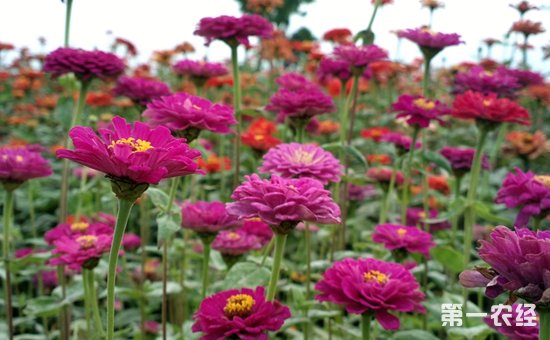
Image: Four-season care methods for zinnias
1. Spring care methods for zinnias
Suitable for placing on east-, south- and west-facing balconies. Zinnias rather like moist soil, but are also fairly tolerant of dryness; they like fertilizer, and also tolerate poor soil.
Sow in late April; for the potting soil, choose a deep, fertile, well-drained soil. When the seedlings have 3-4 leaves, they can be transplanted into pots. Both during sowing and in the early transplant stage, the soil should be kept moist.
In the early planting stage, pinch out the growing tips 1-2 times to keep the plants compact and encourage more side branches, forming a full pot. During the growing period, zinnias need plenty of light, the potting soil should be kept moist, and dilute fertilizer should be applied frequently. Flowering begins in June; placing them in a spot with plenty of light, keeping the potting soil moist and fertilizing appropriately is good for the growth and opening of the next round of flowers.
After a single flower fades, it should be cut off promptly, otherwise it will affect the appearance; in addition, cutting off the spent flowers can also encourage the sprouting, growth and flowering of new branches lower down on the zinnia. If you want to save seeds, you can wait until the flower dries up before cutting it off.
2. Summer care methods for zinnias
Suitable for placing on east-, south- and west-facing balconies. Zinnias do not tolerate high temperatures; high temperatures slow their growth, reduce flowering, and the flowers will not set seed. After the temperature rises, they can be moved to a spot with morning and evening sunlight or bright light for growing and viewing, keeping the potting soil moist and stopping fertilization.
In mid-to-late August, after the temperature drops, they can gradually return to normal growth and flowering. They need to be moved into the light for growing.
Image: Four-season care methods for zinnias
3. Autumn care methods for zinnias
Suitable for placing on east-, south- and west-facing balconies. Autumn is the peak season for zinnia growth and flowering, so keep the potting soil moist, provide plenty of light and fertilize appropriately. Zinnias are not cold-hardy; after the temperature drops in late autumn they are easily frozen and die. If placed on a closed, sunny balcony, the zinnia flowering period and viewing period can be extended.
As the temperature drops, zinnias gradually wither and die.
4. Winter care methods for zinnias
In winter, zinnias will wither and die.
The above is an introduction to four-season care tips for zinnias; I hope it is helpful to everyone!