Daily Cultivation Methods and Care Points for Roses
Roses are common flowers in daily life, usually planted in courtyards, balconies and other places. When planting roses, you need to pay attention to some method-related issues. Let's take a look at how to cultivate roses.
Roses are also known as multiflora rose, Qiangmi, cidmei, and white canhua. Since ancient times they have been fine and famous flowers, with a very strong and alluring floral fragrance. Aromatic oil can be extracted from the petals, and its value is higher than gold. They have high medicinal and edible value, and mainly grow along roadsides, at field edges, on walls, or in shrub thickets on hilly land.
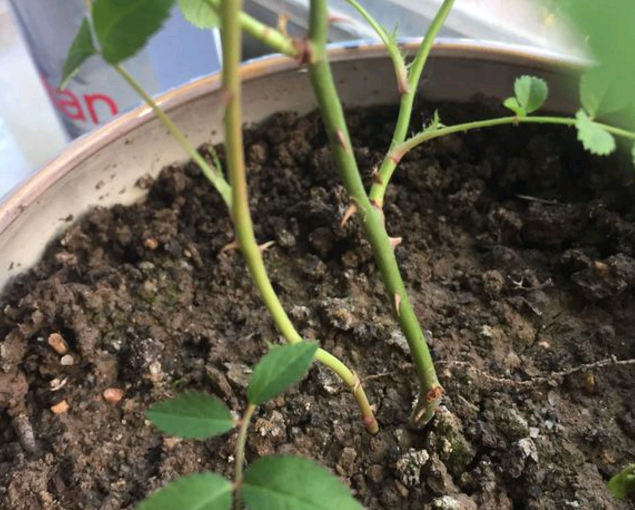
How to grow roses? If you want to grow roses well, you first need to understand the growth requirements of roses. So how do you grow roses well? Below are 7 daily care methods and matters for roses.
How to grow roses 1. Suitable temperatureRoses are relatively cold-tolerant flowering plants. Generally, the suitable growth temperature for roses is around 20°C-25°C, so the environmental temperature for care and maintenance can be controlled within this range.
2. Soil requirementsRoses do not have high soil requirements. They are drought-tolerant and barren-tolerant. Generally, any soil that is loose, fertile and moist, and drains smoothly can meet the requirements of roses.
3. Light requirementsHow to grow roses? Light is very important, because roses are flowering plants that like sufficient light, so care requires plenty of sunlight, especially during the growth period, where sufficient sunlight must be maintained.
4. Watering requirementsHow to grow roses? You should know that roses like moisture but are afraid of wetness and avoid waterlogging. So generally, from rose budding to before flowering, flower lovers can water roses a bit more, mainly to keep the soil moist. In addition, after roses bloom, watering can be reduced, as long as the soil is dry-wet alternating. During the rainy season, pay attention to draining roses to prevent waterlogging.
5. Fertilization requirementsRoses like fertilizer. Generally, in March, apply 1 to 2 times of liquid fertilizer mainly based on nitrogen to promote the growth of rose branches and leaves. In April and May, apply 2-3 times of fertilizer mainly based on phosphorus and potassium to encourage roses to form more buds and bloom more. Then after roses bloom, apply one rejuvenation fertilizer, after which no more fertilization is needed.
6. Pruning and shapingRoses grow luxuriantly. If flower lovers do not prune in time, under conditions of stuffiness, humidity, insufficient light, and poor ventilation, roses are prone to pests and diseases, so roses should be pruned once after flowering.
When pruning, you can choose robust semi-lignified branches of the current year for cuttings, place them in semi-shade, and after they survive, transplant and set them out the following spring. You can also, before budding in early spring, cut off the suckering daughter plants from the roots with roots attached and plant them separately.
7. Pest controlGenerally, under conditions of rain, humidity, unventilated environment, or poor sunlight, roses are very prone to powdery mildew. As long as it is discovered, flower lovers should promptly cut off and destroy the diseased branches to avoid other branches being infected. At the same time, spray low-concentration lime sulfur mixture or Bordeaux mixture or thiophanate solution to prevent the disease from spreading.
What Is the Flower Language of Roses? Characteristics of Roses
Plants of the genus Rosa are mostly erect, spreading, or climbing shrubs, most with prickles, needles, or bristles, rarely thornless, hairy, hairless, or glandular-hairy. Leaves alternate, odd-pinnate compound leaves, rarely simple leaves, leaf margins serrated; stipules adnate or borne on the petiole, rarely absent. They are widely distributed in the cold temperate to subtropical regions of Asia, Europe, North Africa, and North America. Does anyone know the flower language of roses? What flower languages do different roses have? What characteristics do they have? Below, we explain the flower language and characteristics of roses, hoping to help everyone.
Complete Guide to the Flower Language of Roses
1. Roses represent love in China. People love to use roses in flower baskets to enhance a joyful atmosphere. When distinguished guests visit, giving a bouquet of red roses expresses a warm welcome. Young men and women giving each other red roses implies first love. For marriage, giving red or pink roses expresses blessings for the newlyweds to have a happy marriage and good fortune. Exchanging brightly colored roses during festivals expresses holiday blessings.
2. Many ancient civilizations in the world regard roses as a symbol of truth, goodness, and beauty. In Europe, giving a rose expresses courtship. In France, red roses mean "I have fallen madly in love with you"; white roses mean love is quietly budding. Iran designates the rose as its national flower. The United Kingdom designates the rose as its national flower, but does not clearly distinguish among rose, Chinese rose, and multiflora rose; all three flowers are equally cherished, and red roses, like roses, are used as Valentine's Day flowers.
Different Colors of Roses Have Different Flower Languages
1. Red rose. Passionate love. Red flowers give a feeling of passion and boldness. The flower language of red roses is passionate love, suitable for use when expressing love, and a fine gift for first-time lovers.
2. Pink rose. Vow of love, holding your hand and growing old together with you. Pink roses exude a romantic feeling, representing that I want to spend my whole life with you; I want to marry you. Suitable for use when proposing.
3. White rose. Pure love. White is the purest and most flawless color. White roses represent pure love.
4. Yellow rose. Eternal smile. Yellow is a warm color. Yellow roses can soothe a restless heart, representing an eternal smile, always guarding you.
5. Rockrose. Refusal. Rockrose is a kind of grass, and herbivorous animals will deliberately avoid eating this grass, mainly because its sap is toxic, and after slight contact it causes red and swollen skin. Therefore, the flower language of rockrose is - refusal.
6. Blue rose. Despair. Blue is the color of melancholy. Looking at blue roses, one also feels an indescribable sorrow. Blue roses represent despair.
7. Purple rose. Imprisoned love. The purple of purple roses symbolizes love that cannot be obtained. If you love her, express it loudly and let the world witness it for us, but purple roses are like imprisonment, making it impossible for love to be expressed.
Characteristics of Roses
1. Under natural conditions, roses often grow upward by lying flat and spreading or by attaching to other trees. Roses are not very selective about soil, but whether planted in the ground or in pots, they grow best in sandy loam rich in sufficient humus. Roses like moisture but are afraid of wetness and avoid waterlogging, so when caring for roses, from budding to before flowering, water can be appropriately increased a bit, with the standard being that the soil is moist but not waterlogged. After flowering, watering should not be too much, and the soil should be dry-wet alternating. During the rainy season, also pay attention to drainage to prevent waterlogging.
2. Roses can not only be used for ornamental purposes, but also have other uses. In daily life, roses can not only be used for viewing, some can also be used to extract aromatic oil, and some can even be used in cooking.
The above is the explanation of the flower language and characteristics of roses. Is everyone clear now? For more home decoration knowledge, please pay attention.