Detailed Guide to Planting Daisy Seeds and Points to Note
The daisy is a perennial herbaceous plant of the genus Bellis in the Asteraceae family. It is relatively cold-tolerant and is often grown as a biennial. Some flower lovers want to grow it, but are troubled by not knowing how to plant daisy seeds. In fact, planting daisy seeds is not that difficult.
Daisy seeds are mainly sown between August and September each year (this is the relatively best time, because some flower lovers have sown in October and in May, and both succeeded). After sowing, they bloom in 12-14 weeks. For sowing, a loose, breathable medium should be chosen. It is best to cover them with vermiculite (other covering media also work), in a thin layer, just enough that the seeds are no longer visible.
Because daisy seeds are very small, they are not suitable for sowing in individual spots, so broadcasting is generally used. When the seedlings have 2-3 true leaves, they can be transplanted once. After sowing, maintain a temperature of 18-20°C and a humidity of 80-90%, and they sprout in 5-8 days. In the Jiangsu-Zhejiang area, spring sowing is also possible, but the seedlings grow and bloom less well than autumn-sown seedlings. So spring sowing is generally not used.
Daily care of daisies:
Light regulation: Daisies also like sunlight, including during the growing period and the flowering period. Sufficient light can promote plant growth, make the leaves tender green, and increase the number of flowers.
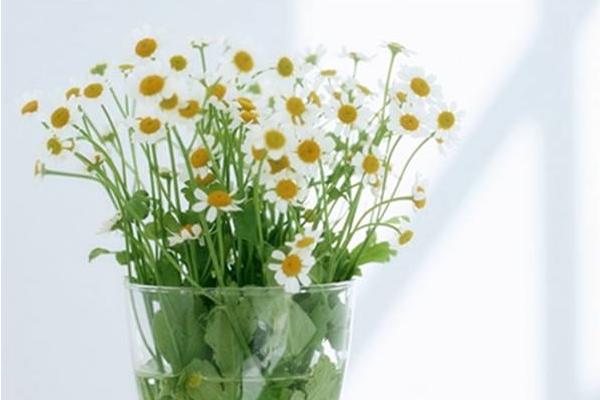
How to grow daisies
1. Transplanting and potting: After the seedlings are hardened off, they can be potted. At this point the seedlings already have 3 pairs of true leaves. If plug trays were used for raising seedlings, the roots have already filled the plug tray. For potting, a 300px-caliber nutrient pot is often used. After potting, there is no need to repot. When potting, compound fertilizer can be added as a base fertilizer. After potting, water thoroughly in time to establish the roots. Light regulation: Daisies also like sunlight, including during the growing period and the flowering period. Sufficient light can promote plant growth, make the leaves tender green, and increase the number of flowers.
2. Temperature control: After potting, move them to a protected area to overwinter, which can prevent the potted flowers from freezing damage in winter. Daisies can overwinter safely above 5°C, and maintaining a temperature of 18-22°C is most suitable for forming good plants. In practice, however, this is hard to achieve. Daisies can bloom normally at 10-25°C; when the temperature is below 10°C, growth is relatively slow, the plant shape becomes smaller, and flowering is delayed. If the temperature is above 25°C, the flower stems will elongate, and both growth vigor and flowering will decline. In May and June, as the temperature rises, growth vigor and flowering are not ideal, so autumn-sown seedlings are generally used to avoid the rising-temperature environment after May.
3. Water and fertilizer management: Daisies like fertile soil, and the base fertilizer in the medium alone cannot meet their growth needs. So topdress once every 7-10 days. Flower fertilizer can be used, or compound fertilizer can be applied in spots or dissolved in water for irrigation, at a concentration of 200-250ppm. But spot application of compound fertilizer is not as quick-acting as irrigation. So if conditions allow, water-soluble flower fertilizer can be used alternately. In winter, however, the amount of flower fertilizer used should be reduced, and before watering with fertilizer the medium should be allowed to dry slightly, moist but not soggy. Because its basal leaves grow in a cluster, if there is no ventilation, the basal leaves very easily rot and become infected with pathogens. Giving sufficient water and fertilizer during the growing season makes it grow lushly and can also extend the flowering period.
Daisy cultivation methods
1. Sow at the end of August to the beginning of September in a potted seedling bed. After daisy sowing, they must not be exposed to the sun; shade with a curtain cloth is advisable, and transparent film must not be used for covering. When the daisy seedlings emerge, remove the curtain cloth.
2. When two or three leaves have grown in the pot soil, begin dividing and planting. The daisies are bare-rooted, without native soil, the pot soil is moist, and watering is appropriate. When the pot soil becomes dry, after shading with a curtain cloth for 2-3 days, they can be watered appropriately.
3. Loosen the soil and turn it over two days later. After emergence, prevent the leaves and stems from growing leggy. Apply an appropriate amount of fertilizer in the pot. The following year the plant shape will be short and sturdy, with strong stress resistance, and the flowers will be large, full, and brightly colored.
4. Daisies are cold-tolerant, but afraid of wind drying and frost. According to the weather conditions and the growth of the flower seedlings, determine the thickness of the matting to effectively control its flowering period and the leggy growth of the flower seedlings.
5. After one or two transplantings in autumn, in spring they can be directly planted out into flower beds while flowering. Those not transplanted in autumn can, in spring, be grown into shape in pot soil with sufficient base fertilizer added.
6. When planting out, use leaf mold fertilizer as the bottom fertilizer. After planting out, water about once every 1 week.
7. Daisies have low fertilizer requirements, so there is no need to fertilize too frequently. Apply a dilute fertilizer once every 2-3 weeks, cultivate the soil once a month, and after flowering in February, fertilization can be stopped.
Points to note in daisy cultivation
During the growing period, daisies are not tolerant of shade and cold, and like a place with sufficient sunlight. Therefore, they should be placed on a balcony, always maintaining their photosynthesis.
If the daisies have not been divided and transplanted after autumn, at the end of autumn the seedlings and buds can be lifted from the pot, separated, with a little native soil left on the roots, then grab a handful of moist soil rich in humus fertilizer, and spray to keep it moist, to promote vigorous growth of the fibrous roots.
Sowing time
Daisies like cool climates, dislike heat, like light, and are also tolerant of half shade. The suitable temperature for seed germination is 22-28°C, and the suitable temperature for growth is 20-25°C. The seeds are very small, with 4900-6600 seeds per gram. They are mostly sown in September, while in the Zhejiang area sowing generally begins in late July, mostly from late July to mid-August, and at this time sowing makes New Year's Day the peak flowering period.
Through the above content, I believe everyone has gained some understanding of daisy cultivation techniques. Many flower lovers like to grow them at home. As a potted daisy, it indeed has very good effects in purifying the air and decorating space, but you must master the correct care techniques!