How to grow wax begonia? Growing methods and precautions
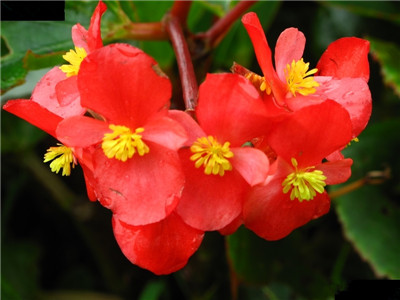
Wax begonia flowers are already loved by many people, so many people grow wax begonia flowers in their own homes. There are many varieties of wax begonia, with advantages such as a rounded plant shape, abundant and dense flowers, being very easy to combine with other flowerbed plants, and a long ornamental period with flowers blooming in all four seasons. Below, the editor introduces the growing methods for wax begonia.
First, potting soil. For wax begonia, the most ideal potting soil is a mixture of river sand, leaf mold and snake wood shavings. Wax begonia fears intense heat, so in summer it should be kept in a cool place for care.
Second, watering. Wax begonia likes warm and moist conditions, so during the growth period, watering should be based on the plant's growth condition and changes in air temperature. Water less during the budding period and keep the potting soil slightly dry; if it is too wet, it will cause root rot. During the growth period, water once every two days, and often spray water around the plant to increase air humidity. In addition, note that when watering, do not pour water down from the leaves and stem tips; water along the edge of the flowerpot, otherwise the stems and leaves are prone to water accumulation and rot.
Third, fertilizing. During the growth period, wax begonia should be fertilized according to the leaf color and leaf growth condition. Do not fertilize too much, otherwise it will cause excessive leaf growth and affect flowering. Before flowering, apply an appropriate amount of phosphorus fertilizer and potassium fertilizer to improve flowering quality.
Fourth, when winter comes, dig up the bulbous roots and hang them for storage in a dry, ventilated place, or place the potted flowers indoors in a warm place to overwinter.
Fifth, disease prevention. During periods of high temperature and dryness, wax begonia is prone to root rot and stem rot. At the early stage of discovery, watering should be controlled in time, and carbendazim should be sprayed for prevention and control. Continuous use for a period of time can show effectiveness.
Sixth, winter and summer management. Because wax begonia is affected by temperature in winter and summer, its growth is relatively slow, so fertilizer and water management need to be strengthened.
Seventh, sunlight. During the high-temperature period of midsummer, by all means avoid exposing wax begonia to direct strong light, as this will scorch it.
Eighth, after the flowers of wax begonia fade, be sure to remember to promptly pinch out the growing tips and remove the spent flowers, so that it can grow more luxuriantly.
Ninth, pests. The common pest of wax begonia is the leaf-roller moth. This insect damages tender leaves and flowers with its larvae, directly affecting the growth and development of wax begonia. In this case, if it is not especially serious, you can catch them by hand; for serious cases, spray diluted dimethoate solution.
Tenth, the flowerpot for wax begonia should usually be placed on a balcony or in a courtyard in semi-shade for care. Direct sunlight must not be allowed in, and attention should be paid to ventilation. After wax begonia has been planted for half a month, a decomposed fertilizer solution can be applied. After that, during the growth period, apply a light fertilizer solution once every 20-30 days. In winter, it should be moved indoors and placed in a sunny place, and the minimum temperature must not be lower than 10 degrees.
How to grow wax begonia
Wax begonia is a relatively easy flower to grow. Below, the editor introduces the growing methods for wax begonia for everyone. Welcome to read.
How to grow wax begonia
1. Moderate watering
Wax begonia likes a moist environment, but in hot summer it is better to keep the potting soil slightly moist. Do not fix watering to several times a day or once every few days; instead, always observe the dry and wet condition of the potting soil. When the potting soil turns white, it can be watered, and the amount of water should not be too much. The best watering time is around 9 o'clock. As much as possible, do not water when not dry, and when watering, water thoroughly, but do not wait until it is completely dry before watering.
2. Fertilizing by category
For summer fertilization of wax begonia, newly planted and old plants should be treated differently. New plants propagated in the previous autumn can be given some decomposed dilute cake fertilizer solution after each flush of flowers. The fertilizer-to-water ratio is preferably 1:5, once a week, applied twice in a row, and after two weeks they can bloom again. For perennial old plants or weak-growing plants, when the temperature is above 25°C, fertilization needs to be stopped, and applied again after the dog days pass, to welcome the second peak flowering season.
3. Lowering temperature and increasing humidity
In summer, the temperature is high and the air is dry. In addition to shading and ventilating wax begonia, it is also necessary to sprinkle water on the ground around the plant several times a day to lower the temperature and increase air humidity. For households with the conditions, a sand bed can be set up in a corner of the balcony or a corner of the courtyard, placing the plant on the sand surface or sitting it in the sand bed. While watering the plant, also wet the sand, which can play a better role in lowering temperature and increasing humidity.
4. Preventing disease and controlling insects
Under conditions of high temperature and high humidity, wax begonia is extremely prone to bacterial leaf spot disease. At first, dark brown spots appear on the leaf surface, gradually spreading into dark brown concentric rings. Before onset, an equal-amount Bordeaux mixture can be sprayed for prevention, and attention should be paid to improving cultivation conditions and management methods. At the early stage of onset, diseased leaves should be promptly removed and burned to prevent further spread. Summer is a high-incidence period for aphids and red spiders, so pollution-free pesticides should be used promptly for control.
How to grow wax begonia
How to grow wax begonia Is wax begonia toxic
As a potted flower, wax begonia is one of the home decorations and can also be an excellent choice for arranging gardens. It is very lovable. How do you grow wax begonia? Is wax begonia toxic? Below, we will tell everyone.
Introduction to wax begonia:
Wax begonia, also known as four-season begonia and cockle-shell begonia, Latin name: Begonia semperflorens Link et Otto. Begoniaceae, Begonia genus, fleshy herbaceous plant. Roots fibrous; stems upright, fleshy, hairless, mostly branched at the base, many-leaved. Leaves ovate or broadly ovate, base slightly oblique, margins serrate and ciliate, glossy on both sides, green, but the main veins are usually slightly red. Native to Brazil. Wax begonia is the most common and most widely cultivated species among begonia plants. Its posture is graceful, the leaf color is tender and glossy, the flowers are clustered, it blooms in all four seasons, and it has a slight fragrance, making it one of the main potted flowers for indoor and outdoor decoration. People use it in flowerbed arrangements with excellent results. With the appearance of some relatively heat-tolerant varieties, wax begonia is very likely to become one of the most important flowerbed flowers in China, with advantages such as a rounded plant shape, abundant and dense flowers, being very easy to combine with other flowerbed plants, and a long ornamental period, thus becoming increasingly popular. It is generally cultivated in spring and autumn.
How to grow wax begonia?
1. Ecological habits: Wax begonia likes a warm and humid climate, and a semi-shady environment with sandy loam rich in humus, loose, and with good permeability. It fears cold and high temperatures, and the suitable temperature is 18-25°C.
2. Watering: Wax begonia watering requires "two more and two less," grasping the principle of "do not water when not dry, and when dry, water thoroughly." That is, during the growth and flowering period, which is spring and autumn, water should be appropriately increased, and the potting soil should be slightly moist; while in summer and winter, four-season begonia is usually in a semi-dormant state, so less water is fine, and it is better for the potting soil to be slightly dry.
3. Fertilizing: Wax begonia fertilization should grasp the principle of "light fertilizer applied frequently." Too much will cause fertilizer damage, resulting in phenomena such as scorched leaves and dead plants.
4. Pruning: Like Chinese roses and jasmine, wax begonia must be pruned of spent flowers and have its growing tips pinched after the flowers fade, in order to promote more branching and more flowering. If this part is neglected, the wax begonia plant tends to grow thin and long, with fewer flowers and an unattractive plant shape.
5. Diseases and pests: The main disease is leaf spot disease, as well as damage from bacterial diseases, which should be controlled with thiophanate, chlorothalonil, jinggangmycin, etc. The main pests of four-season begonia powdery mildew are various pests that harm leaves and stems, including slugs, thrips, leaf miners, etc., and targeted pesticides should be used.
Is wax begonia toxic?
Quite a few people question whether wax begonia is toxic, and many friends no longer dare to grow wax begonia at home. Looking at such beautiful and charming flowers but being unable to grow them must make them very sad. In fact, wax begonia is not toxic, and it can also freshen the air and regulate indoor temperature and humidity.
In fact, the vast majority of plants in nature are harmless to the human body. According to relevant data, 97% of plants grown in homes are beneficial to human health, especially those flowers with fragrance, whose scent can help people prevent and treat diseases. For example, white magnolia and white chrysanthemum have the function of clearing lung heat, and rose and osmanthus have effects such as refreshing the mind. Even if some plants contain mild toxins, they will not necessarily cause very serious consequences, such as the sap of oleander and the white milky latex of poinsettia. Therefore, when growing household plants, do not worry too much. You can consult in advance. In addition, when growing them, be sure to pay attention to air circulation.