What are the ecological characteristics of tuberose? A detailed explanation
Tuberose prefers a sunny, warm and humid climate and cannot tolerate severe cold. The suitable growing temperature is 25-30°C. If the winter temperature drops below -10°C, the bulbs will freeze and rot. It adapts to a wide range of soils and is relatively salt-alkali tolerant. However, in fertile, loose, well-drained neutral or slightly acidic soil, it grows and develops better. In most parts of China, tuberose grown in the open ground will have its aboveground parts wither after the autumn frost. The bulbs can be dug up and kept indoors to overwinter; the underground bulbs left in the soil only need a little covering to safely survive the winter.
Tuberose is mainly propagated by dividing the bulbs, and can also be propagated by sowing seeds. For division propagation, after the aboveground parts wither in autumn, dig out the mother bulb, remove the shrunken old bulbs, and separate out 10-25 daughter bulbs. After drying in the sun, store them indoors in a ventilated and dry place, or put them in gauze bags and hang them in a ventilated and dry place. Keep the indoor temperature at around 8°C. In April of the following year, take out the stored daughter bulbs and plant them in a place with plenty of sunlight, warmth, fertile soil, strong water and fertilizer retention, and good drainage. Prepare the soil and apply base fertilizer, and make beds similar to those for narcissus. Before planting, soak the bulbs in cold water at 25-30°C for 1 day, then plant. When planting, the row spacing for large bulbs is 20 cm * 25-30 cm, and for small bulbs 10 cm * 15 cm. The planting depth should be slightly shallower than for other bulbous plants. Generally, for large bulbs, the tip of the sprout should be slightly exposed above the soil surface; for small bulbs, the tip of the sprout should be below or level with the soil surface. If growing bulbs specifically for production, they can be planted deeper.
After the leaves emerge, the plants must be given one thorough watering, then loosen the soil after it dries slightly, and afterward control fertilizer and water to harden the seedlings. When the flower stalk is emerging, provide sufficient fertilizer and water. From the start of stalk emergence until the bulbs are harvested, generally apply a thin liquid fertilizer mixed with phosphorus and potassium and decomposed cake fertilizer once every half month. Water the day after fertilizing, and loosen the soil after it dries slightly. After the flowers fade, continue to strengthen fertilizer and water management to promote the growth of new bulbs.
If growing in pots, use a fertile, loose, well-drained culture soil with strong water and fertilizer retention and added fertilizer, and plant the bulbs in pots in March-April. The management method is the same as for open-ground planting. If forcing cultivation is desired, the bulbs can be planted in pots in late October or early November, then placed indoors at 25°C, or the pots can be placed in a humid cabinet for cultivation with the bottom temperature maintained at 18°C, and they can bloom early in March-May.
Tuberose has relatively few pests and diseases, mainly root-knot nematodes and gray mold. For root-knot nematodes, use 1% butyl carbofuran powder or 24% oxamyl solution for control. For gray mold, spray with 50% iprodione wettable powder 1000-fold solution. Apply less nitrogen fertilizer and more phosphorus and potassium fertilizer.
Is tuberose toxic?
Tuberose is toxic and is not suitable for growing indoors. Its floral fragrance is harmful to the human body, and this scent is very unfavorable to health, because the fragrance of tuberose can make people with high blood pressure feel unwell, with symptoms of dizziness and chest tightness. If tuberose is kept indoors for a long time, it can cause coughing, dizziness, and even asthma and insomnia. It is recommended not to grow tuberose indoors; tuberose can be planted as an outdoor potted plant.
Above, the editor has explained whether tuberose is toxic. So what are its ecological habits like? Let me briefly introduce them below!
The ecological habits of tuberose
Tuberose is native to the tropical regions of Asia and likes warm, humid places with plenty of sunlight. The suitable temperature is 25-30°C, the critical temperatures are 2°C at night and 14°C during the day. When the temperature is suitable, it grows year-round, and generally blooms most vigorously in summer.
It has no great requirements for soil quality, with clay loam being most suitable; however, it has requirements for soil moisture, and generally prefers fertile, moist but not waterlogged soil.
In daily life, many families like to grow flowers indoors, and many people also like to grow potted tuberose indoors, because tuberose gives off a stronger fragrance at night. Whether tuberose is actually toxic and whether it is suitable for indoor cultivation has been explained above. Tuberose is toxic and not suitable for indoor cultivation, so for the sake of our health, everyone is advised not to choose to grow tuberose indoors. If there is a courtyard, it can be planted in the courtyard!
How to grow tuberose: cultivation methods for tuberose
Because of its strong fragrance, slender flower stems, and soft lines, tuberose is a main filler flower in applications such as bouquets and flower arrangements, so its cultivation value is also very high. But many people do not know how to grow tuberose, so today the editor will explain it in detail for everyone.
Introduction to tuberose
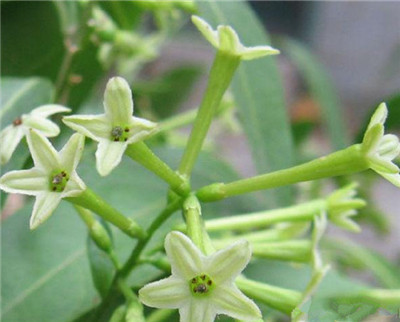
Tuberose (scientific name: Polianthes tuberosa), also known as night-blooming flower or moonlight fragrance, is a perennial bulbous flowering plant of the genus Polianthes in the Amaryllidaceae (or Agavaceae) family. It is a perennial herb with a tuberous rhizome; linear leaves grow in clusters with pointed tips; the flower stem is relatively long, with a raceme at the upper part. It blooms white flowers in summer and autumn, with a strong fragrance that is even stronger at night. Tuberose flowers bloom at night, and in eastern India they are called “Ratkirani”, meaning “Queen of the Night”.
When planted in the open ground, the flowering period is usually from early July to early November, with peak flowering in August-September, and it is a summer cut flower type. Because of its strong fragrance, slender flower stems, and soft lines, and because planting and flowering regulation are easy, it is one of the very important cut flowers and a main filler flower in applications such as bouquets and flower arrangements. Because of its strong fragrance, slender flower stems, and soft lines, and because planting and flowering regulation are easy, it is one of the very important cut flowers and a main filler flower in applications such as bouquets and flower arrangements.
I. Morphological characteristics
Tuberose, also known as night-blooming flower or moon-coming fragrance. It belongs to the Amaryllidaceae family as a winter-dormant bulbous plant and is a perennial bulbous herbaceous flower. It is about 80 cm tall, and the bulb is scaly-tuberous (the upper half is bulb-like, and the lower half is tuber-like). The spike-like flower cluster is terminal, with 12-32 flowers per spike. The flowers are white, funnel-shaped, and strongly fragrant, with an even stronger fragrance at night, hence the name. When planted in the open ground, the flowering period is usually from early July to early November, with peak flowering in August-September, and it is a summer cut flower type. It is about 80 cm tall, with basal leaves that are lanceolate and slightly reddish at the base, and the stem leaves are short and small. The spike inflorescence has 12-18 paired flowers that open successively from bottom to top. The flowers are white, funnel-shaped, fragrant, and even more fragrant at night, hence the name night-blooming flower. The flower scape is upright, 40-90 cm tall; the flowers are opposite, white, arranged in a relatively long spike, strongly fragrant, with the fragrance even stronger at night; the perianth tube is slender with 6 lobes, shorter than the perianth tube; there are double-flowered varieties with a lighter fragrance, and the flowering period is July-October. The fruit is a capsule. Tuberose is self-pollinating, but because the pistil matures later than the stamens, the natural seed-setting rate is very low, and under ordinary cultivation it does not set seed. It blooms from May to November. Capsule. Cultivated varieties include two types, white-flowered and light purple-flowered: the white-flowered type is mostly single-flowered with a stronger fragrance; the light purple-flowered type is mostly double-flowered, with each inflorescence bearing up to about 40 flowers.
It is a winter-dormant bulbous plant. In its place of origin it is evergreen, and the bulb is scaly-tuberous (the upper half is bulb-like, and the lower half is tuber-like).
II. Ecological habits
Tuberose is native to South America. In its place of origin it is an evergreen herb, growing year-round and blooming in all four seasons when the temperature is suitable, but most vigorously in summer; however, when cultivated in the open ground in China, because winter is severe in most areas, it can only be grown as a spring-planted bulbous plant: it sprouts and grows in spring, blooms in summer and autumn, and goes dormant in winter (forced dormancy). It likes warm, humid, sunny environments and cannot tolerate frost. The most suitable growing temperature is 25-30°C during the day and 20-22°C at night. It likes fertilizer and moisture but avoids waterlogging, and grows well in low-lying but non-waterlogged places. It has no strict requirements for soil, with fertile clay loam being suitable. Tuberose is self-pollinating, but because the pistil matures later than the stamens, the natural seed-setting rate is very low. Flower bud differentiation occurs during the growth period in late spring and early summer. During this period, the minimum temperature required is around 20°C, but it is also related to the nutritional status of the bulb. It has oblong tubers borne on short thick tubers. The flowers are white, strongly fragrant, especially strong at night. The flowering period is summer and autumn. There are double-flowered types. Flower bud differentiation occurs during the growth period in late spring and early summer. During this period, the minimum temperature required is around 20°C, but it is also related to the nutritional status of the bulb. Generally, bulbs with a mass greater than 11 grams can bloom in the same year; otherwise they will not bloom that year. It has no strict requirements for soil quality, with clay loam being suitable; it is relatively sensitive to soil moisture and prefers fertile, moist but not waterlogged soil. During drought, the leaf edges curl upward, and the flower buds shrink and are difficult to open. The flowering period control of tuberose is relatively simple. Plant the bulbs in a high-temperature greenhouse, keep sunlight sufficient and air circulating, and pay attention to care and management, and they can bloom in more than 2 months. For example, if planted in February, they can bloom in May-June.
III. Variety classification
There are 12 species in the same genus as tuberose, but only tuberose is cultivated and used, and there are not many varieties, mainly the following:
(1) Albino: a single-flowered variety formed by bud mutation, with pure white flowers;
(2) Dwarf pearl: a dwarf variety;
(3) Var.flore-pleno Hort: a double-flowered variety;
(4) Mexican early bloomi: a single-flowered, early-maturing variety that blooms year-round, most vigorously in autumn;
(5) Pearl: a double-flowered variety, with stems 75 cm-80 cm tall, short inflorescences, many densely packed flowers, and a short corolla tube;
(6) Tall double: a large-flowered double variety with long flower stems;
(7) Variegale: leaves long and curved, with golden yellow stripes.
IV. Distribution area
Native to Mexico and South America, it was introduced and cultivated in China very early, and is now cultivated in various places. It is suitable for planting in warm, sunny environments and is relatively cold-tolerant.
Cultivation methods for tuberose
It is usually planted from April to May. The bulbs should first undergo a 10-15 day moist treatment at 25°C-30°C before planting. Large and small bulbs and old bulbs that bloomed last year (commonly known as "old remnants") should be planted separately. The plant and row spacing for large bulbs is 20 cm × 25 cm (or 30 cm), and for small bulbs 10 cm × 15 cm or denser; the planting depth should be slightly shallower than for other bulbs, but it also varies depending on the cultivation purpose, soil properties, and bulb size. Usually, "deep planting for growing bulbs, shallow planting for bolting" means deep planting is beneficial for bulb growth and enlargement, while shallow planting is beneficial for flowering. Generally, when planting large bulbs, it is suitable for the sprout tip to be slightly exposed above the ground; when planting small bulbs and "remnants", it is suitable for the sprout tip to be below or level with the soil surface. Tuberose emerges slowly, taking more than 1 month, but grows quickly after emergence. Therefore, in the early stage of planting, because the seedlings are small and have few leaves, watering should not be too much; when the flower stem is about to emerge and in the early flowering stage, water fully and keep the soil moist frequently. Tuberose likes fertilizer, so topdressing should be applied frequently: generally once 1 month after planting, once before flowering, and then once every 1.5 months or 2 months. During the rainy season, pay attention to drainage and lodging of flower stems. Before frost in late autumn, dig out the bulbs, dry them slightly, remove soil and fibrous roots, and thinly cut off a layer from the bottom of the bulb so that white is exposed; continue drying until dry, then braid the remaining leaf clusters into a braid and hang it in a warm, dry place for winter storage. Alternatively, use the method of fumigation with a stove: hang the bulbs indoors and place a stove below for fumigation. Initially keep the room temperature at 25°C-26°C so that the moisture inside the bulbs gradually decreases until the outer skin becomes dry and wrinkled, then lower the temperature to 15°C-20°C until they are taken out the following spring. After fumigation, the bulbs can be fully dried, thereby forcing them into complete dormancy, which is beneficial for growth and flower bud differentiation after planting the following spring. Some also dry the bulbs and pile them in a dry, sunny cellar, covering them in layers with straw and soil and pressing them tightly, burying them for the winter; or plant them continuously for 2-3 years before digging them up and replanting, but the flowering quality is poor and the flowering period is not uniform.
[Cultivation management] The planting site should be prepared and base fertilizer applied, and large bulbs, small bulbs, and old bulbs that bloomed last year should be planted separately. The plant spacing for large bulbs is 25 cm, and for small bulbs about 10 cm. The planting depth is shallower than for other bulbs. For large bulbs, it is suitable for the sprout tip to be slightly exposed above the soil surface, while for small bulbs and old bulbs, the sprout tip should be below the soil surface. Old bulbs bloomed last year and can no longer bloom, and only produce many thin, pointed small bulbs around the old bulb. "Deep planting for growing bulbs, shallow planting for bolting" is the principle to follow for the planting depth of tuberose bulbs. In the early stage of planting, because the seedlings are small and have few leaves, water should not be too much; when the flower scape is about to emerge, provide sufficient water and topdressing; only after the flower scape emerges can a thicker liquid fertilizer be applied. In summer, special attention should be paid to watering and keeping the soil moist frequently. After the aboveground parts wither, in the Jiangnan region people often cover with leaves or dry grass to prevent freezing and let them overwinter in the open ground. But it is best to dig up the bulbs, dry them slightly, remove the soil, braid the remaining leaf clusters into a braid, continue drying until dry, and hang them in a warm, dry place for winter storage. Keeping the room temperature above 4°C is sufficient. Tuberose can also be potted, and potted plants can be used for forcing cultivation. If bulbs are planted in late November and kept in a high-temperature greenhouse, they can bloom early in April-May; for home flower growing, forcing is inconvenient.
Notes:
[Fertilization] Tuberose likes fertilizer, so topdressing should be applied frequently: generally once 1 month after planting, once before flowering, and then once every 1.5 months or 2 months. During the rainy season, pay attention to drainage and lodging of flower stems. Before frost in late autumn, dig out the bulbs, dry them slightly, remove soil and fibrous roots, and thinly cut off a layer from the bottom of the bulb so that white is exposed; continue drying until dry, then braid the remaining leaf clusters into a braid and hang it in a warm, dry place for winter storage. Alternatively, use the method of fumigation with a stove: hang the bulbs indoors and place a stove below for fumigation.
[Care] "Deep planting for growing bulbs, shallow planting for bolting" is the principle to follow for the planting depth of tuberose bulbs. In the early stage of planting, because the seedlings are small and have few leaves, water should not be too much; when the flower scape is about to emerge, provide sufficient water and topdressing; only after the flower scape emerges can a thicker liquid fertilizer be applied. In summer, special attention should be paid to watering and keeping the soil moist frequently. After the aboveground parts wither, in the Jiangnan region people often cover with leaves or dry grass to prevent freezing and let them overwinter in the open ground. But it is best to dig up the bulbs, dry them slightly, remove the soil, braid the remaining leaf clusters into a braid, continue drying until dry, and hang them in a warm, dry place for winter storage. Keeping the room temperature above 4°C is sufficient. Tuberose can also be potted, and potted plants can be used for forcing cultivation. If bulbs are planted in late November and kept in a high-temperature greenhouse, they can bloom early in April-May; for home flower growing, forcing is inconvenient.
Propagation methods for tuberose
Division propagation is mostly used. After the aboveground parts wither in late November, dig out the underground stems and remove the shrunken old bulbs. Generally, each clump can be divided into 5-6 mature bulbs and 10-30 daughter bulbs, which are dried and stored indoors in a dry place. Divide the bulbs in spring, and when planting, plant large and small daughter bulbs separately. Usually, daughter bulbs can bloom after one year of cultivation. Large daughter bulbs used for cut flower production should have a diameter of more than 2.5 cm. Small daughter bulbs can grow into large flowering bulbs after 1-2 years of cultivation.
Disease and pest control for tuberose
1. Root-knot nematode larvae attack the roots, often causing poor development, stunting, and yellowing of the plant.
Control method: When it occurs, irrigate the soil with 40% omethoate emulsifiable concentrate 1500-fold solution, or bury 3% carbofuran in the pot soil for control.
2. Powdery mildew mainly damages the leaves.
Control method: When it occurs, spray 50% iprodione wettable powder 1000-fold solution. For other control methods, refer to the relevant sections on dahlia and cineraria.
3. Anthracnose.
It can be controlled by spraying 75% thiophanate-methyl wettable powder 1000-fold solution; 80% anthracnose thiram wettable powder 600-fold solution; 75% chlorothalonil wettable powder 700-fold solution, etc. In ordinary times, a 1:1:200 Bordeaux mixture can be selected for control.
4. Pests mainly include yellow-breasted flower thrips and North China mole cricket, yellow-breasted flower thrips
It can be controlled with 10% cyhalothrin emulsifiable concentrate 200-300-fold solution, 18% abamectin emulsifiable concentrate 3000-fold solution; for North China mole cricket, 5% terbufos granules 45 kg per hectare can be spread as poisoned soil, then covered with soil and watered, or 50% phoxim emulsifiable concentrate 1000-fold solution, 48% chlorpyrifos emulsifiable concentrate 1000-fold solution can be used for drenching and killing.