How to Grow Watermelon Peperomia? Detailed Guide to Cultivation Methods and Precautions
Division Propagation
This can be done in spring and autumn. Choose a parent plant that has new shoots growing at the base. When repotting and changing the soil, take out the plant, shake off the attached soil, and use a sharp knife to cut off the new shoots based on their position and pot them up. When dividing, be careful to protect the root systems of both the parent plant and the new shoots. It can also be done when the plant has filled the pot - take out the plant and divide it into several pots for planting. Cutting propagation includes both stem cuttings and leaf cuttings. (1) Stem cuttings can be done in spring and summer. Select healthy branches, cut 5-8 cm cuttings, remove the lower leaves, let the cut surface dry, then insert into a moist sand bed. Under semi-shade, maintain a temperature of 18-25°C and roots will form.
Leaf Cuttings
This is mostly done from May to October. For leaf cuttings, select healthy, plump leaves. Remove entire plump leaves with petioles, keeping 2-3 cm of petiole. Let them dry for 2-3 hours until the wound is slightly dry, then insert them diagonally into a sand bed or pot, with the petiole at an angle of 35-45 degrees to the bed. Use washed river sand mixed with 20%-30% vermiculite as the substrate. Keep moist, place in semi-shade at 20-25°C. In about 4-5 weeks, adventitious roots and adventitious buds will form, and in about 2 months, small seedlings will grow. When the seedlings reach 4-5 cm, transplant them into pots. But avoid overly wet medium to prevent cutting rot. Avoid covering with plastic film or glass during propagation, otherwise they will easily rot.
2. Growth Habits
Watermelon peperomia (Peperomia argyreia) has an optimal growth temperature of 20-28°C. Above 30°C and below 15°C, growth slows down. It has poor cold tolerance; in winter, the indoor minimum temperature must not be below 10°C, otherwise it is prone to cold damage. It is commonly propagated by division and leaf cuttings.For potted plants, use a growing medium based mainly on leaf mold. Normally place it in semi-shade; avoid direct strong light. Apply diluted decomposed cake fertilizer water once a month. If too much fertilizer is applied, especially too much nitrogen fertilizer with a lack of phosphorus fertilizer, the leaf markings are prone to disappear, reducing ornamental value. The watermelon peperomia is short in stature and grows lushly. Whether as a potted display or hanging for appreciation, it is very suitable. Its leaf color stripes resemble a watermelon. Suitable for potted or hanging cultivation. The roundleaf peperomia (Peperomia obtusifolia) has thick, plump leaves, glossy and emerald green, evergreen all year round. It is a common small foliage plant. Suitable for potted and hanging basket cultivation, often used as indoor decorative display. For potted plants, use a growing medium based mainly on leaf mold with a small amount of river sand added. Normally place it in a bright, indirectly lit indoor spot; avoid direct strong light. During the growing season, keep the potting soil moist, but water must not accumulate in the pot, otherwise roots and leaves will easily rot, and even the whole plant may die. Apply diluted cake fertilizer water or complete-element fertilizer once a month. If too much fertilizer is applied, especially too much nitrogen fertilizer with a lack of phosphorus fertilizer, the leaf markings are prone to disappear, reducing ornamental effect. In summer and dry seasons, spray water on the leaves 2-3 times a day, and also sprinkle water on the ground around the pot to help maintain higher air humidity, which can promote the formation of leaf markings. When growing watermelon peperomia, it is best to move it outdoors in spring and autumn to a well-ventilated spot with a little sunlight for a period of care before moving it back indoors. This way the plant grows robustly and the leaf markings are more distinct.
3. Planting Methods
Substrate preparation: Use loose imported peat with good drainage and aeration in the 5-40 mm grade. Crush the peat and mix well with water (standard for adding water: after mixing, squeeze a handful of peat tightly and water should seep out between your fingers). Then it is ready for potting. A 9 cm pot uses about 250 ml of peat per pot. One 300-liter package of imported peat can fill about 1,200 cups.Requirements for seedlings to be potted: Choose high-quality seedlings from professional production, with a height of 5-8 cm, 6-10 leaves, free of pests and diseases, and no dead or yellow leaves.
Potting: For reused old pots, they must be soaked in 1000x potassium permanganate solution for more than half an hour, then rinsed with clean water and dried for use. New pots can be used directly. Generally, start with a smaller pot (9 cm plastic pot). When planting, first place an appropriate amount of substrate at the bottom of the cup, then move the screened seedling into the cup. Small seedlings can be planted slightly deeper, with the base of the plant slightly above the substrate surface. 1 clump per pot; the substrate should be moderately firm, filled to 9/10 of the cup. Gently shake the pot soil, then water with half-soaked water or just surface water to settle the roots.
4. Propagation Methods
Division Propagation
This can be done in spring and autumn. Choose a parent plant that has new shoots growing at the base. When repotting and changing the soil, take out the plant, shake off the attached soil, and use a sharp knife to cut off the new shoots based on their position and pot them up. When dividing, be careful to protect the root systems of both the parent plant and the new shoots. It can also be done when the plant has filled the pot - take out the plant and divide it into several pots for planting. Cutting propagation includes both stem cuttings and leaf cuttings. (1) Stem cuttings can be done in spring and summer. Select healthy branches, cut 5-8 cm cuttings, remove the lower leaves, let the cut surface dry, then insert into a moist sand bed. Under semi-shade, maintain a temperature of 18-25°C and roots will form.Leaf Cuttings
This is mostly done from May to October. For leaf cuttings, select healthy, plump leaves. Remove entire plump leaves with petioles, keeping 2-3 cm of petiole. Let them dry for 2-3 hours until the wound is slightly dry, then insert them diagonally into a sand bed or pot, with the petiole at an angle of 35-45 degrees to the bed. Use washed river sand mixed with 20%-30% vermiculite as the substrate. Keep moist, place in semi-shade at 20-25°C. In about 4-5 weeks, adventitious roots and adventitious buds will form, and in about 2 months, small seedlings will grow. When the seedlings reach 4-5 cm, transplant them into pots. But avoid overly wet medium to prevent cutting rot. Avoid covering with plastic film or glass during propagation, otherwise they will easily rot.Cultivation Characteristics
Watermelon peperomia prefers a high-temperature, humid, semi-shaded environment with relatively high air humidity. It is neither cold-tolerant nor heat-tolerant. For potted containers, choose rough-textured, highly permeable clay pots or coarse sand pots. For potting, use a growing medium based mainly on leaf mold, which can be a mix of equal parts leaf mold, garden soil, and river sand. When potting seedlings, be careful to protect the root system. After planting, water thoroughly once and place in a ventilated, shaded spot to recover for about a week, after which normal care can resume. Normally place it in semi-shade; avoid direct strong light. It prefers ample indirect light.
Light that is too strong is unfavorable for growth. When too shaded, it tends to become leggy and lose its beautiful markings, reducing ornamental effect. The stems and leaves are somewhat succulent and serve to store water, so it has a certain drought tolerance. Avoid overwatering; waterlogged potting soil will cause root rot and plant death. During the growing season, keep the potting soil moist, but water must not accumulate in the pot, otherwise roots and leaves will easily rot, and even the whole plant may die. Watering or spraying the plant with lukewarm calcium-free soft water gives better results; water that is too cold can also cause plant rot. After winter begins, watering should be controlled even more, and the water temperature must not be lower than room temperature. Apply diluted decomposed cake fertilizer water once a month. Avoid concentrated fertilizer and avoid contaminating the leaves. If too much fertilizer is applied, especially too much nitrogen fertilizer with a lack of phosphorus fertilizer, the leaf markings are prone to disappear, reducing ornamental value. A 0.1%-0.2% urea solution can also be used as a foliar feed.
Humidity Requirements
It has relatively high requirements for air humidity. In summer and dry seasons, it is advisable to spray water on the leaves 1-2 times a day and also sprinkle water on the ground around the pot to maintain higher air humidity and promote the formation of leaf markings. In spring and autumn, it is best to move it outdoors to a well-ventilated spot with a little sunlight, care for it there for a period, then move it back indoors. This will help the plant grow robustly. Repot once every 1-2 years. Since older plants cannot maintain strong ornamental value, they should be regularly renewed. When ventilation is poor, it is susceptible to scale insect damage. Remove them promptly or spray 40% omethoate EC at 1000x dilution for control. When the soil is too wet or even waterlogged, root rot is easily triggered. Drain promptly or repot and improve the soil.5. Cultivation Management
Watermelon peperomia prefers a high-temperature, humid, semi-shaded environment with relatively high air humidity. To keep the leaves' beautiful markings, the following points must be observed:Substrate
It needs to be grown in loose, fertile, well-drained soil; it grows poorly in clay soil. For potting soil, use leaf mold mixed with coarse sand or cinder ash. Peat moss + perlite can also be used.Temperature
Watermelon peperomia is neither tolerant of severe cold nor extreme heat. The optimal growth temperature is 20-30°C. When the temperature exceeds 30°C or drops below 15°C, growth slows down. In winter, the minimum temperature must not be below 10°C, otherwise it is prone to cold damage, and may even develop physiological disorders.Soil
For potting soil, use a growing medium based mainly on leaf mold with a small amount of river sand mixed in.Light
Since watermelon peperomia is relatively shade-tolerant, it should normally be placed in a bright, indirectly lit indoor spot; avoid direct strong light. In spring and autumn, it should be moved outdoors to a well-ventilated spot with a little sunlight for care. It prefers semi-shade or indirect light; only in winter can it be grown in full sun. In summer, it must be shaded by 50%, otherwise the leaves are easily scorched. But if too shaded, the leaf color becomes dull, grayish-green, and the markings are not distinct.Water
During the growing season, keep the potting soil moist, but water must not accumulate in the pot, otherwise roots and leaves will easily rot, and even the whole plant may die. In summer and dry seasons, spray water on the leaves 2-3 times a day to increase air humidity and promote the formation of leaf markings. It fears both drought and waterlogging. Drought causes wilting, yellowing, and even death; waterlogging causes root rot. Keep the potting soil slightly moist; alternatively, water when the surface of the potting soil looks dry. In winter, if the temperature is somewhat low, watering should be controlled, letting the potting soil alternate between dry and moist.Fertilizer
Generally, apply diluted cake fertilizer water or compound fertilizer once a month. Nitrogen fertilizer should not be excessive. If phosphorus fertilizer is lacking, the leaf markings are prone to disappear, reducing ornamental effect. Use a balanced fertilizer; do not apply nitrogen fertilizer alone, otherwise the "watermelon" stripes will be less distinct and the ornamental value will be greatly reduced. It is best to use diluted liquid fertilizer to water the potting soil; fertilizer that is too concentrated can easily cause plant death.Humidity
It requires relatively high air humidity and is not tolerant of dryness. In addition to normal watering, frequently spray water on the plant. If conditions permit, it is best to sprinkle water in the growing environment to increase humidity, which gives good results. In a dry environment, leaf growth is extremely abnormal.Pest and Disease Prevention
There are relatively few pests and diseases. The common disease is leaf spot, which can be controlled by spraying carbendazim, propiconazole, etc. The main pests are red spider mites and scale insects. Spraying specific pesticides is sufficient, such as dicofol and hexythiazox for red spider mites; methidathion and chlorpyrifos for scale insects. Attention should be paid to disinfecting the cultivation site, pots and containers, and soil. For root collar rot and canker disease damage, spraying Bordeaux mixture can control the spread of the disease.
Cultivation Methods and Precautions for Watermelon Peperomia
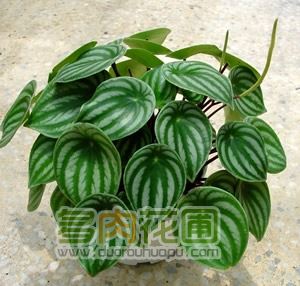
Watermelon peperomia is evergreen year-round, with short clustered stems and ovate leaves. The areas between the veins are silvery-gray, resembling watermelon rind. It is an excellent indoor decorative plant and is very popular with residents. How do you grow watermelon peperomia? What causes root rot in watermelon peperomia? And how should it be solved? Below is an introduction to these topics so that you can have a correct understanding in daily life. We have carefully prepared some knowledge here; come and learn about it with us. We hope our content is helpful to you!
How to Grow Watermelon Peperomia
How to Grow Watermelon Peperomia1. Fertile soil: For potted watermelon peperomia, use a growing medium based mainly on leaf mold. You can mix leaf mold with coarse sand or cinder ash, or use peat moss + perlite. For potted containers, choose rough-textured, highly permeable clay pots or coarse sand pots.
2. Indirect light care: Watermelon peperomia is relatively shade-tolerant and avoids direct strong light. During normal care, place it in a bright indoor spot with indirect light. Light that is too strong is unfavorable for the growth of watermelon peperomia, while light that is too dim will cause it to become leggy, with indistinct markings, reducing its ornamental value.
3. Suitable temperature: The optimal growth temperature for watermelon peperomia is 20-25°C. When the temperature exceeds 30°C or drops below 15°C, its growth slows down. When the temperature is below 10°C, watermelon peperomia is prone to cold damage, and may even develop physiological disorders.
4. Maintain air humidity: A dry environment is unfavorable for the growth of watermelon peperomia. Therefore, in addition to normal watering, also increase environmental humidity by spraying water on the plant.
5. Reasonable watering: During the growing season of watermelon peperomia, keep the potting soil moist, but water must not accumulate in the pot, otherwise roots and leaves will easily rot, and even the whole plant may die. In summer and dry seasons, spray water on the leaves 2-3 times a day to increase air humidity and promote the formation of leaf markings. In winter, if the temperature is somewhat low, watering should be controlled, letting the potting soil alternate between dry and moist. Water that is too cold will cause plant rot, so in winter the water temperature must not be lower than room temperature.
6. Proper fertilizing: Watermelon peperomia is usually given diluted decomposed cake fertilizer water once a month. Avoid concentrated fertilizer and avoid contaminating the leaves. If too much fertilizer is applied, especially too much nitrogen fertilizer with a lack of phosphorus fertilizer, the leaf markings of watermelon peperomia are prone to disappear, reducing ornamental value. A 0.1%-0.2% urea solution can also be used as a foliar feed.
7. Pay attention to pest and disease prevention: If the potting soil remains overly wet for a long time, watermelon peperomia will develop root rot and stem rot. Air humidity that is too high will cause anthracnose. Therefore, when growing watermelon peperomia, be sure to place it in a ventilated environment, water appropriately, and preferably water in the morning. If disease occurs, spray medicine promptly, and regular preventive treatment can also be carried out.
Causes of Root Rot in Watermelon Peperomia and Solutions
Causes of Root Rot in Watermelon Peperomia and Solutions1. Water temperature too low
After winter begins, watermelon peperomia needs controlled watering and water temperature. If the water temperature is lower than room temperature, it will cause the watermelon peperomia to suffer cold damage and root rot. Generally, watering or spraying the plant with lukewarm calcium-free soft water gives better results.
2. Too much watering
The most common cause of root rot in watermelon peperomia is too much watering. If the rot is not too severe, place it in a spot with ample indirect light. Be careful not to repot or water at this time. Wait until the rotten area dries and heals before resuming normal care. If the rot is severe, cut off the top with two or three leaves, or cut off a single leaf with about 0.5 cm of stem, insert it into looser soil, water it moist, and place it in a cool spot; it will easily grow roots.
3. Phytophthora infection
Phytophthora infection is another cause of root rot in watermelon peperomia. In this case, careful maintenance is needed. Be careful not to let it become too wet, and do everything possible to reduce humidity. When watering, do not splash soil onto the base of the plant stems. Drain promptly after rain to prevent moisture from lingering. In the early stage of the disease, spray 27% copper hydroxide suspension at 600x dilution, or 53.8% Kocide 2000 dry suspension at 1000x dilution, 70% fosetyl-Al + mancozeb WP at 500x dilution, 69% dimethomorph + mancozeb WP at 1000x dilution, or 70% mancozeb WP at 500-700x dilution.
The watermelon peperomia plant is small and lovely, with unique leaf colors, hanging diagonally beneath the petiole like watermelon rind, novel and interesting. In the hot summer, placing or hanging it indoors can give people a fresh and cool feeling. Placed as a potted plant on a bookcase, desk, or coffee table, it is quite distinctive.