How to grow pocketbook plant? Cultivation methods and precautions
Technical points
Pocketbook plant (Calceolaria) is a herbaceous plant of the genus Calceolaria in the family Scrophulariaceae. The flower colors include yellow, purple, red, creamy white, orange-red, dark brown, etc. The flowers are adorned with colorful spots and markings, very lovely, and are often used for indoor decoration and display. It blooms from December to February of the following year; under greenhouse cultivation, the flowering period is from March to April.
Pocketbook plant is native to the regions of Mexico and Chile. It prefers cool and humid conditions, and can grow indoors in winter at 3°C to 6°C. During the growing period, relatively high air humidity must be maintained, and attention should be paid to ventilation. Sufficient light is beneficial to the plant's flowering.
Ventilation and shading
Pocketbook plant prefers cool conditions, with an optimum growing temperature of around 10°C. If the stems and leaves grow luxuriantly during the growing period, but the potting soil is too wet combined with muggy heat, the plant's stems and leaves will rot. To reduce the temperature, shading measures are often taken at noon to create a ventilated and cool environment. Especially after flowering in spring until the seeds mature in May to June, ventilation work must be done well, and shading at noon is beneficial for the seeds to develop and mature.
Watering and fertilizing
Pocketbook plant prefers a warm and humid environment, but avoid overly wet potting soil and excessive watering during flowering. Generally, water only when the potting soil is dry. If in a greenhouse, frequently spraying water to increase air humidity is even better. When watering, do not directly spray the plant; if water accumulates on the leaves and buds, it easily causes rot. During the pre-flowering growing season, apply decomposed cake fertilizer water once every 10 days (diluted 10 times). At the early flowering stage, increase the application of phosphorus-based fertilizer. When fertilizing, do not let the fertilizer water contaminate the leaves, so as to avoid rotting the heart and leaves.
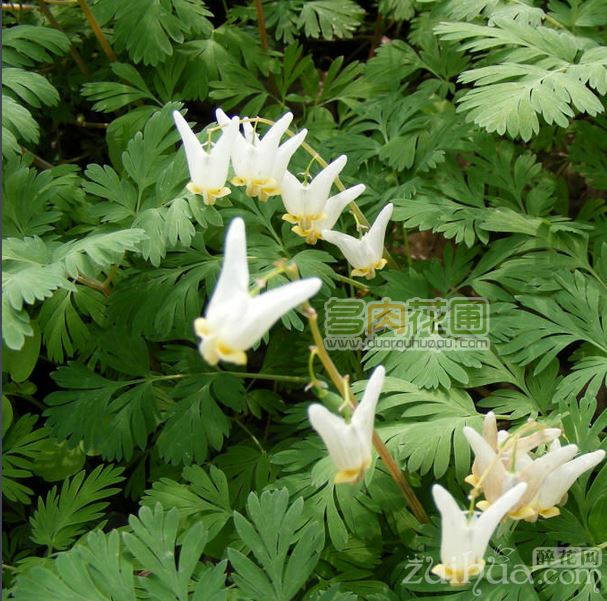
Its scientific name is Dicentra cucullaria. The flowers are white with yellow tips, borne on flowering stems, swaying in the wind, resembling hanging Dutchman's breeches, hence the common name Dutchman's breeches. It is native to open woodlands of eastern and midwestern North America. The leaves are grayish-green, growing from white underground tubers; the flower stalks rise above the leaves and also emerge directly from the underground stems. It grows well in shaded, windless wild gardens.