Do you know all these methods for making homemade flower fertilizer?
1. Chinese medicine residue is a good flower fertilizer
The leftover residue after decocting Chinese medicine is an excellent fertilizer for growing flowers and vegetables. This is because Chinese medicine is mostly made up of plant roots, stems, leaves, flowers, fruits and bark, as well as the limbs, organs and shells of birds and animals, plus some minerals, and is rich in organic and inorganic substances. The nitrogen, phosphorus and potassium fertilizers needed for plant growth are all present in Chinese medicine. Using Chinese medicine residue as fertilizer has many benefits for growing flowers and trees, and it can also improve soil permeability.
To use Chinese medicine residue as flower fertilizer, you must first put the residue into a vat, bowl or other container, mix in garden soil, add some water, and compost it for a period of time until the residue rots and turns into humus before use. It is generally placed in the pot as a base fertilizer, and it can also be mixed directly into the growing soil. Of course, residue fertilizer should not be added in too large an amount; generally the mixing ratio should not exceed one tenth, as too much will instead affect the growth of flowers and trees.
I. Chinese medicine residue is a good flower fertilizer
The leftover residue after decocting Chinese medicine is an excellent fertilizer for growing flowers and vegetables. This is because Chinese medicine is mostly made up of plant roots, stems, leaves, flowers, fruits and bark, as well as the limbs, organs and shells of birds and animals, plus some minerals, and is rich in organic and inorganic substances. The nitrogen, phosphorus and potassium fertilizers needed for plant growth are all present in Chinese medicine. Using Chinese medicine residue as fertilizer has many benefits for growing flowers and trees, and it can also improve soil permeability.
To use Chinese medicine residue as flower fertilizer, you must first put the residue into a vat, bowl or other container, mix in garden soil, add some water, and compost it for a period of time until the residue rots and turns into humus before use. It is generally placed in the pot as a base fertilizer, and it can also be mixed directly into the growing soil. Of course, residue fertilizer should not be added in too large an amount; generally the mixing ratio should not exceed one tenth, as too much will instead affect the growth of flowers and trees.
II. Clever uses of vinegar
1. When growing southern flowers in the north, mixing an appropriate amount of vinegar into the water when watering the potting soil can promote the absorption of trace elements such as phosphorus and iron and prevent chlorosis of the leaves and branches.
2. Spraying leaves and flower buds with about 40% vinegar solution can increase the accumulation of photosynthetic products, making the flowers larger, the leaves greener and the flowers more vivid.
3. Potted flowers that have been given organic fertilizer will give off a fishy, foul smell when placed indoors. Pouring in an appropriate amount of vinegar solution can both eliminate the odor and sterilize and disinfect the soil.
4. Wiping the leaves with a cotton ball dipped in some vinegar can make scale insects, red spiders, aphids and the like restless, after which they can be brushed off and destroyed.
5. If phytotoxicity occurs from spraying alkaline agents (lime sulfur mixture, thiophanate, thiram, etc.), spraying an appropriate amount of vinegar solution on the branches and leaves can reduce the damage.
III. Okara as fertilizer is good for growing flowers and vegetables
Okara is a superior fertilizer, non-alkaline. Although it is the residue left after grinding soybeans for juice, it still contains a considerable amount of protein, various vitamins, carbohydrates and so on, and after artificial treatment it is most suitable for the growth of flower seedlings.
The method for making homemade okara fertilizer is to put the okara into a vat and add 10 times its volume of clean water to ferment it (about 10 days in summer, about 20 days in spring and autumn). Then add another 10 times its volume of clean water and mix evenly, and use it to water various potted flowers; the effect is truly good. It works especially well when used to water cactus-family flowers such as the night-blooming cereus, Epiphyllum, Christmas cactus, Euphorbia, cactus and ball cactus.
IV. Homemade fertilizer for growing flowers
Spoiled glucose powder is a good flower fertilizer. Crush a small amount of spoiled glucose powder and mix it with clean water at a ratio of 1:100, and use it to water flowers and trees; it can prompt yellow leaves to turn green and make the plants grow luxuriantly. It is suitable for spider plants, crown of thorns, lucky bamboo and Monstera deliciosa.
Rice-washing water and rotten tomatoes fermented together make flower fertilizer. Put rice-washing water and rotten tomatoes in a container, and after fermentation use it to water flowers and trees; it will make the branches lush and the leaves abundant.
Use a baking soda solution to water flowers. For home flower growing, when the flowers are about to burst into bloom, watering them with a baking soda solution at a concentration of one ten-thousandth will promote abundant flowering. Use settled rice-washing water to encourage moss to grow on bonsai rocks. Place the rock bonsai in a damp, shady spot, and every day water the places where you want moss to grow with settled rice-washing water; under normal circumstances green moss will grow in 15-20 days.
V. Beer is also a good flower fertilizer
Beer has a good effect on growing flowers because beer contains a large amount of carbon dioxide, and carbon dioxide is an indispensable substance for the metabolism of various plants and flowers; moreover, beer contains nutrients such as sugar, protein, amino acids and phosphate, which are beneficial to flower growth.
1. Watering flowers. Watering flowers with an appropriate amount of beer can make them grow vigorously, with green leaves and bright flowers; it not only gives the flowers sufficient nutrients but is also absorbed especially quickly. The specific method is to evenly mix water and beer at a ratio of 1:50 and then use it.
2. Spraying leaves. After evenly mixing water and beer at a ratio of 1:10, spray the leaves, and it will likewise achieve the effect of foliar feeding.
3. Wiping leaves with beer. For foliage plants, use absorbent cotton or a clean soft cloth dipped in beer to gently wipe the leaves. Because the leaves can directly absorb nutrients, the leaves become even greener and more glossy, and the texture of the leaves also appears thicker.
4. For cut flowers. Pour 1/10 beer into a vase to make the cut flowers more radiant and extend the viewing time by several days.
VI. It is not appropriate to cover potting soil with used tea leaves, eggshells or watermelon rind
It is common to see some families growing flowers and trees place used tea leaves, eggshells or even watermelon rind directly on the potting soil, hoping to increase the fertility of the potting soil, but in fact this method is not scientific.
Used tea leaves easily become moldy and smelly, polluting indoor air and looking unsightly; excessive moisture will, moreover, attract anaerobic microorganisms, bacteria and pill bugs to gather and reproduce. Eggshells placed on the potting soil are also unsightly, and at the same time the residual egg white flows into the surface layer of the potting soil, directly clogging the capillaries and affecting soil aeration and root respiration. Furthermore, the fermentation of the egg white produces hydrogen sulfide gas, whose stench is unpleasant, pollutes indoor air and attracts flies, especially fly species that lay root maggots.
As for watermelon rind, some say it can reduce water evaporation and serve both as a water source for potted flowers and as fertilizer. In fact, in hot and humid weather the rind quickly spoils, giving off a sour, foul smell and also attracting flies. Therefore do not use used tea leaves, eggshells or watermelon rind to directly cover flower pots. These things can be mixed with garden soil and composted before use.
Complete guide to flower fertilizer making methods, complete guide to homemade flower fertilizer methods
Complete guide to flower fertilizer making methods, complete guide to homemade flower fertilizer methods
Flower fertilizer is an indispensable source of nutrients for flowers, and using it at the right time and in the right amount can make flowers and plants grow better. Although there is no shortage of various flower fertilizers on the market, many beginners at growing flowers still worry about not having flower fertilizer. In fact, in daily life we can also use discarded things, such as fruit peels and rotten vegetable leaves, to make flower fertilizer ourselves. Below, the editor introduces somecomplete guide to homemade flower fertilizer methods:
1. Rotten leaf mud (that is, leaf mold)
Rotten leaf mud (that is, leaf mold) contains the three fertilizer components N, P and K, and also has the effect of improving the soil.
Image: leaf mold rotten mud
When composting, you can dig a soil pit on an empty patch of ground by a window or in a corner, or place a small waste bin in a corner of the balcony (lined with 2-3 cm of soil or mountain soil), put in chopped vegetable leaves, fruit peels, eggshells, fish heads, fish guts and so on, then pour in a small amount of water left after gutting fish, mix and cover with soil, and press it down firmly. When composting in summer, turn the pit and check once a month; generally after turning the pit 3 times, the piled material rots into mud. In winter the temperature is low and fermentation is slow, requiring about half a year or more.
2. Soybean cake powder fermentation liquid
Soybean cake powder fermentation liquid contains the fertilizer components P and K and can make flower colors vivid.
To make it, add water to soybean cake powder and put it into a sealed basin or vat to ferment. In summer it can be used to water flowers after 1 month. In winter fermentation is slow, and you must wait until the soybean cake powder turns black before pouring it out; after diluting it with 20 times water it can be used as a top dressing.
3. Artificial sawdust soil
This is a compound fertilizer commonly used by city residents for growing flowers. It is rich in organic matter, has good air permeability, does not grow weeds, and is clean and hygienic, and is even a bit better than mountain soil.
This fertilizer is simple to make: grind leaves, twigs or sawdust into powder, add a small amount of nitrogen, phosphorus and potassium fertilizer and saprophytic bacteria, and ferment it.
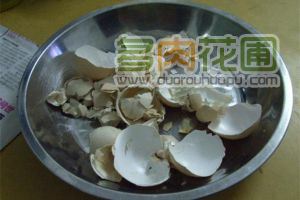
Image: household waste such as rotten vegetable leaves, fruit peels and eggshells
4. Soaked liquid fertilizer
Put waste vegetable leaves, melon and fruit peels, chicken and fish innards, fish scales and crushed bones, eggshells and moldy food (peanuts, sunflower seeds, beans, etc.) into a small vat or small jar or even a wide-mouthed bottle, add water (if possible sprinkle in some insecticide), cover tightly, and after fermentation and rotting (about 2-3 months) it is ready (if the temperature is high, the time can be shortened). When using, add water to dilute it and take the clear liquid on top as a top dressing.
5. Waste composting
If you mix waste vegetable leaves, melon and fruit peels, chicken and fish innards, fish scales and crushed bones, eggshells and moldy food and so on with some old growing soil, add a small amount of water, spray on insecticide, put it into a large plastic bag and tie it tightly, or put it into a lidded plastic bucket, and ferment it until there is no foul smell (about 2-3 months), it is ready and can be used directly as a base fertilizer or top dressing.
These homemade fertilizers are all organic fertilizers and all contain the various nutrient elements needed by flowers and rich organic matter. Besides having a fertilizing effect, they can also improve the soil, causing the soil to form a granular structure and coordinating the ratio of air and moisture in the soil, which benefits the growth and development of the root system and the absorption of nutrients. They are indispensable fertilizers in flower cultivation.
6. Glucose powder
Crush spoiled glucose powder and mix it with clean water at a ratio of 1:100, and use it to water flowers and trees; it can prompt yellow leaves to turn green and make the plants grow luxuriantly. Sprinkle it around the soil in the flower pot, and after three days the yellow leaves turn green and the growth is vigorous. This method is suitable for spider plants, crown of thorns, lucky bamboo and Monstera deliciosa.
7. Rice-washing water
Use it after fermentation. Put the rice-washing water into an empty jar and seal the mouth of the jar tightly. Some friends use a large cola bottle, which also works. After about two weeks - shorter in summer, a little longer in other seasons - it can be used. Remember to let the sealed bottle breathe. When watering, take the clear liquid, add water to dilute it and stir; 70%-80% clean water is recommended. Be careful not to pour it on the leaf surface. Use it up in one go and replenish it promptly.
In fact, in daily life fruit peels and rotten vegetables can be mixed directly into sandy soil, put into a small bucket or pot or jar and other containers, and sealed with mud to make leaf mold, which then becomes a very good potting soil for flowers. Mixed bones, fish scales and eggshells are very good base fertilizers for potted flowers, and if they are further soaked to make a phosphorus-containing top dressing, they can make the flowers vivid. Medicine residue is a clean fertilizer containing relatively many nutrients; mixed into the surface of the potting soil, it can gradually improve the potting soil and can also keep the potting soil moist, and if soaked into a rotten fertilizer it becomes a very good top dressing. Leftover tea, rice-washing water and plant ash all have certain nitrogen, phosphorus and potassium components and can make flowers and trees develop a robust root system and lush branches and leaves.
8. Chinese medicine residue
The leftover residue after decocting Chinese medicine is an excellent fertilizer for growing flowers. This is because Chinese medicine is mostly made up of plant roots, stems, leaves, flowers, fruits and bark, as well as the limbs, organs and shells of birds and animals, plus some minerals, and is rich in organic and inorganic substances. The nitrogen, phosphorus and potassium fertilizers needed for plant growth are all present in Chinese medicine. Using Chinese medicine residue as fertilizer has many benefits for growing flowers and trees, and it can also improve soil permeability.
Image: Chinese medicine residue
To use Chinese medicine residue as flower fertilizer, you must first put the residue into a vat, bowl or other container, mix in garden soil, add some water, and compost it for a period of time until the residue rots and turns into humus before use. It is generally placed in the pot as a base fertilizer, and it can also be mixed directly into the growing soil. Placing it in the middle of the flower pot gives an even better effect. Of course, residue fertilizer should not be added in too large an amount; the mixing ratio should not exceed one tenth, as too much will instead affect the growth of flowers and trees. This fertilizer has the characteristics of promoting growth, strengthening stems and leaves, and producing good blooms.
9. Green manure
Take a small amount of bone meal and plant ash and put them into a vat or jar, soak them in 2.5 kg of clean water, add 1 kg of vegetable leaves or tree leaves or green grass, and after 20-30 days of decomposition, fish out the residue and it is ready to use. Afterwards add more vegetable leaves and water, and the fertilizer liquid made by composting can still continue to be used. This fertilizer liquid has high fertilizer efficiency and takes effect quickly.
10. Fertilizer made from scallion skins
When eating scallions at home, collect the peeled-off scallion skins and soak them for a few days, and they become a good flower fertilizer containing various trace elements. The method is very easy: cut one or two scallion skins into one-inch segments and soak them in 10 jin of hot water at about 40°C to 45°C; after soaking for a week the scallion skin juice can be used as flower fertilizer.
11. Beer is also a good flower fertilizer
Beer has a good effect on growing flowers because beer contains a large amount of carbon dioxide, and carbon dioxide is an indispensable substance for the metabolism of various plants and flowers; moreover, beer contains nutrients such as sugar, protein, amino acids and phosphate, which are beneficial to flower growth. Watering flowers with an appropriate amount of beer can make them grow vigorously, with green leaves and bright flowers; it not only gives the flowers sufficient nutrients but is also absorbed especially quickly. The specific method is to evenly mix beer and water at a ratio of 1:50 and then use it. Spraying leaves: after evenly mixing water and beer at a ratio of 1:10, spray the leaves, and it will likewise achieve the effect of foliar feeding. Wiping leaves with beer: for foliage plants, use absorbent cotton or a clean soft cloth dipped in beer to gently wipe the leaves. Because the leaves can directly absorb nutrients, the leaves become even greener and more glossy, and the texture of the leaves also appears thicker. For cut flowers: pour 1/10 beer into a vase to make the cut flowers more radiant and extend the viewing time by several days.
12. Homemade phosphorus fertilizer
These are also very common in life, such as fish guts, meat bones, fish bones, cut hair, nails, chicken and duck feathers, crab shells and so on. These odds and ends all contain very rich phosphorus, and after fermentation and rotting they can be used to water flowers, which will make the flowers vivid in color, glossy and full-fruited.
13. Homemade nitrogen fertilizer
Take moldy, insect-eaten beans, peanuts, sunflower seeds, castor beans that can no longer be eaten, leftover vegetable leaves, bean shells, melon and fruit peels, or pigeon droppings and expired spoiled milk powder, crush and boil them soft, put them in a small jar, fill it with water, then seal it up to ferment and decompose (if possible sprinkle in some insecticide).
Good flower fertilizer will make flowers more gorgeous and varied. Friends who grow flowers can pay more attention to this in ordinary times. Some household waste used to make flower fertilizer is more environmentally friendly than going out to buy fertilizer and works even better. The editor above has gathered and organized more than a dozen methods for making homemade flower fertilizer, which everyone can put to flexible use.