How to Grow Alocasia (Dumb Cane Elephant Ear)? 8 Common Cultivation Questions Explained
Alocasia (Alocasia macrorrhizos) is a common indoor plant, a perennial herbaceous plant. Its stem is fairly thick and sturdy, and it has a noticeable effect on removing dust. People in Guangdong call Alocasia "wolf's bane". The reason is that Alocasia is toxic, so if there are children at home and you want to grow Alocasia, you need to be especially careful. In a warm climate with sufficient moisture, Alocasia will drip water downward from the leaf tips or edges, and the shape of its flowers closely resembles Guanyin. This is the origin of the name "dripping-water Guanyin". This article will focus on the cultivation methods for Alocasia from the aspects of temperature, fertilizing, watering, sunlight and so on.
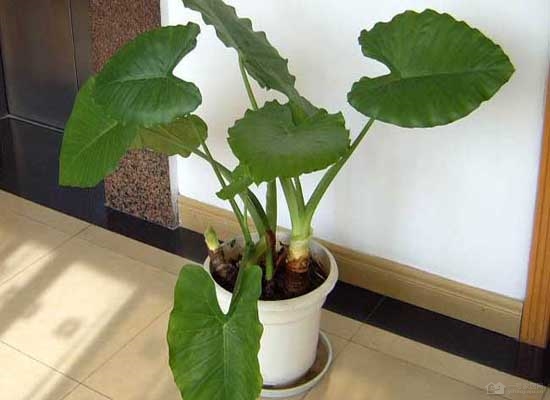
Alocasia (Alocasia macrorrhizos) is a common indoor plant, a perennial herbaceous plant. Its stem is fairly thick and sturdy, and it has a noticeable effect on removing dust. People in Guangdong call Alocasia "wolf's bane". The reason is that Alocasia is toxic, so if there are children at home and you want to grow Alocasia, you need to be especially careful. In a warm climate with sufficient moisture, Alocasia will drip water downward from the leaf tips or edges, and the shape of its flowers closely resembles Guanyin. This is the origin of the name "dripping-water Guanyin".
During the process of growing Alocasia, you may run into the following problems. If they are not dealt with in time, they will not only affect its appearance but may also affect its survival.
1. What causes Alocasia leaves to turn yellow?
The potting soil of Alocasia has been too wet or too dry for a long time, and you have not followed the rule of watering as soon as the soil dries. You have given "half-hearted water", that is, watering not thoroughly, without watering until water seeps out of the bottom of the Alocasia pot. It got cold in winter and the Alocasia roots have already been frostbitten. The Alocasia leaves have not been sprayed and cleaned for a long time, so dust accumulates and hinders photosynthesis. After overwintering, the Alocasia was rushed out of the room and placed in a warm spot to sunbathe, and it could not adapt to the sudden change in climate for a while. The Alocasia has been placed in a poorly ventilated environment for a long time. Once you understand the cause, you can prescribe the right remedy.
2. What should I do if Alocasia roots rot?
Alocasia is prone to root rot in summer, mainly caused by potting soil that is too wet. Pull up the Alocasia, cut off the rotten roots; when cutting the roots you must wear rubber gloves, and cut off a little of the healthy tissue near the rotten part. Let it dry, and after the wound heals, plant it again in plain sand or sandy soil. Do not water for the time being; wait until the potting soil is completely dry before watering. Do the same from then on: if it is not dry, do not water. In addition, place it in a ventilated spot.
3. How should Alocasia be grown in water culture?
Water culture requirements: diffused light, and sufficient light in winter. The water in the container should be changed frequently, and when changing the water, clean the container and the plant roots. Note that it is best to rinse with tap water; if conditions permit, you can disinfect with potassium permanganate solution. The temperature should preferably be kept above 12°C. Since it is water culture, the air humidity generally meets the needs. When growing in water, do not submerge too much in the water; it is enough for half of the lower roots to be in the water.
4. What is the problem if Alocasia falls over?
Because ordinary watering is usually done only at the roots, water cannot reach the leaf part, so it falls over. It is recommended to put clean water in a spray bottle and spray it on the leaves. After a few days, there will be an effect.
5. How should Alocasia be grown and cared for in winter?
In winter, its transpiration will decrease. If it is a newly transplanted young plant, after the soil it originally came with is moistened, it is enough to keep the environment around the young plant moist; use a spray bottle to moisten the surrounding environment. If it is an old plant, touch the surface soil with your hand and water only when it is dry, but do not water too much, because when the temperature is below 18 degrees, Alocasia goes dormant and hardly grows, so it does not need much water; otherwise the roots will rot.
6. How do I control the height of Alocasia?
By spraying the whole plant with a 2% paclobutrazol solution, you will find during the later growth of the Alocasia that its growth height will not exceed 40cm. If the Alocasia continues to grow, you can spray the whole plant again. Generally, spraying once about every half a year can achieve the effect of controlling height.
Have you encountered any of the above problems when growing Alocasia? Have you tried the above solutions? If you have more effective methods, why not share them too.
What to Do If Alocasia Leaves Turn Yellow: A Summary of Common Problems in Alocasia Cultivation
Indoor plants will develop yellow leaves during cultivation, so what should you do if Alocasia leaves turn yellow? Xiao Qi has put together some ways to deal with yellowing Alocasia leaves and common problems in Alocasia cultivation.
Picture of yellowing Alocasia leaves
What to do if Alocasia leaves turn yellow
1. Spider mites. Flower lovers can check whether the surface of the Alocasia leaves has white dots and a waxy texture, feels rough, and lacks gloss. If so, then spider mites are the culprit. The solution is to wash with soapy water twice, with a two-day interval between each wash, and that will do it.
2. If the soil is too poor and lacks nutrients, it will also cause the leaves to turn yellow. Therefore, it is very necessary to add nutrients to the soil in time and apply some nitrogen and phosphorus fertilizer and organic fertilizer.
3. Alocasia is more suited to a warm and humid climate. Because winter temperatures are low, if it is kept outdoors for a long time, the leaves are very likely to be frostbitten and turn yellow. At this time, place it indoors at a constant temperature and in a spot with sufficient light.
4. A large accumulation of dust on the leaves will hinder the leaves' absorption of light and cause the leaves to turn yellow. Therefore, the leaves should be maintained regularly and can be wiped and washed with clean water.
5. Not watering for a long time will also cause the leaves to turn yellow due to drought. So keep the soil moist at all times, and when watering, make sure to water thoroughly, not just wet the surface of the soil.
ps: Once Alocasia leaves turn yellow, they cannot recover, so cut off the yellowed leaves right at the base, taking care not to damage the other leaf stems. If the yellowing is not especially severe, there is no need to cut them off.
Picture of yellowing Alocasia leaves
Common problems in Alocasia cultivation
1. What should I do if I get poisoned after touching Alocasia sap?
Answer: It is recommended to use vinegar for detoxification. Rinse with plenty of clean water. The toxic components are calcium oxalate and saponin (Sapotoxin); after the skin comes into contact with the sap, it itches; contact with the eyes causes blindness. Folk practice is to boil a little vinegar with ginger juice, and take it orally or gargle with it to detoxify. If the poisoning symptoms are obvious, it is recommended to go to the hospital for medical treatment.
2. What should I do if Alocasia roots rot?
Answer: Alocasia is prone to root rot in summer, mainly caused by potting soil that is too wet. Pull up the Alocasia, cut off the rotten roots; when cutting the roots you must wear rubber gloves (Alocasia is toxic! Those with skin allergies should be careful.), and cut off a little of the healthy tissue near the rotten part. Let it dry, and after the wound heals, plant it again, planting it in plain sand or in sandy soil. Do not water for the time being; wait until the potting soil is completely dry before watering. Do the same from then on: if it is not dry, do not water. In addition, place it in a ventilated spot.
3. Why does Alocasia drip water in the morning?
Answer: Alocasia, under warm and humid conditions with sufficient soil moisture, will drip water downward from the leaf tips or leaf edges; if the air humidity is too low, the water that comes out will evaporate immediately. Because the temperature is lower at night, there is no sunlight, and the air humidity is high, the water-dripping phenomenon is obvious in the morning. Therefore, water droplets generally appear mostly in the morning when guttation occurs.
4. How should Alocasia be grown in water culture?
Answer: Water culture requirements: diffused light, and sufficient light in winter. The water in the container should be changed frequently, and when changing the water, clean the container and the plant roots. Note that it is best to rinse with tap water; if conditions permit, you can disinfect with potassium permanganate solution. The temperature should preferably be kept above 12°C. Since it is water culture, the air humidity generally meets the needs. When growing in water, do not submerge too much in the water; it is enough for half of the lower roots to be in the water.
5. What is the problem if Alocasia falls over?
Answer: Because ordinary watering is usually done only at the roots, water cannot reach the leaf part, so it falls over. It is recommended to put clean water in a spray bottle and spray it on the leaves. After a few days, there will be an effect.
6. How should Alocasia be cared for?
Answer: In winter its transpiration will decrease. If it is a newly transplanted young plant, after the soil it originally came with is moistened, it is enough to keep the environment around the young plant moist; use a spray bottle to moisten the surrounding environment. If it is an old plant, touch the surface soil with your hand and water only when it is dry, but do not water too much, because when the temperature is below 18 degrees, Alocasia goes dormant and hardly grows, so it does not need much water; otherwise the roots will rot.
7. What should I do if Alocasia is too tall?
Answer: By spraying the whole plant with a 2% paclobutrazol solution, you will find during the later growth of the Alocasia that its growth height will not exceed 40cm. If the Alocasia continues to grow, you can spray the whole plant again. Generally, spraying once about every half a year can achieve the effect of controlling height.
Picture of yellowing Alocasia leaves
The above iswhat to do if Alocasia leaves turn yellowand an introduction to ways to handle common problems in cultivation. We hope it is helpful to everyone. When Alocasia leaves turn yellow, you should first find out the cause and then deal with it accordingly.
Recommended reading:
① How to Grow Alocasia: Alocasia Cultivation Methods and Precautions
② What Causes Pothos Leaves to Turn Yellow: Solutions for Yellowing Pothos Leaves
③ Causes of Yellowing Clivia Leaves: What to Do If Clivia Leaves Turn Yellow
④ What to Do If Christmas Cactus Leaves Wilt and Turn Yellow: Solutions for Wilting and Yellowing Christmas Cactus Leaves
⑤ What to Do If Money Tree Leaves Turn Yellow: The Correct Way to Handle Yellowing Money Tree Leaves