How to grow lilacs? A detailed guide to cultivation and management methods
In the cultivation and management methods of lilacs, the first thing is to distinguish clearly between medicinal clove and ornamental lilac, which are two completely different plants. The cultivation and management methods for medicinal clove and ornamental lilac are different.
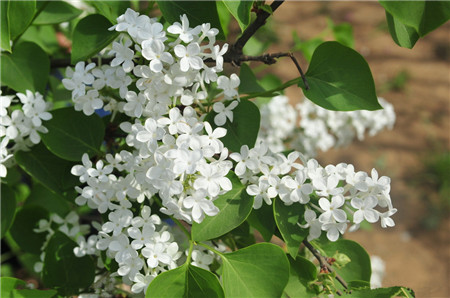
Chinese aliases: Baijie, Qingke, lilac, clove, foreign lilac; the lilac plant grows 2 to 8 m tall, with opposite leaves, entire or sometimes lobed, rarely pinnately compound. Flowers are bisexual, borne in terminal or lateral panicles. Flower colors are purple, pale purple or blue-purple, and there are also white, purplish-red and blue-purple forms, with white and purple being the most common. The purple one is the purple lilac, the white one is the white lilac, and the white lilac is a variety of the purple lilac; its capsule is oblong and dehisces between the locules.
Lilacs like sunlight, are fairly shade-tolerant, like moisture but dislike waterlogging, are cold- and drought-tolerant, and generally do not need much watering. Lilacs require fertile, well-drained sandy soil. Lilacs do not like heavy fertilizer; do not fertilize too much, otherwise flowering will be affected. The corolla is a raceme and belongs to an indeterminate inflorescence. Lilacs like sunlight, are slightly shade-tolerant, strongly cold-tolerant and also drought-tolerant, like moisture and dislike waterlogging. They have strong stress resistance and are not demanding about soil, but they grow best in fertile, loose, well-drained soil, and must never be planted in low-lying, damp, shaded spots. Lilacs are best transplanted in early spring before the buds sprout.
In the planting hole, first apply plenty of base fertilizer, then cover the base fertilizer with a layer of soil, then place the seedling and fill in soil. After planting, water thoroughly once, then water 2—3 more times and they will survive. Lilacs are highly adaptable and their management is relatively extensive; normally you only need to keep weeds down, prevent waterlogging in the rainy season, and water during drought, and they will grow well. Lilacs do not like too much fertilizer; never fertilize excessively, lest the branches grow excessively and flowering be affected. Generally, applying rotted compost once a year or every other year before winter is enough.
Before budding in mid-March, lilacs should be shaped and pruned: remove overly dense branches, thin weak branches and diseased or pest-infested branches, and cut back vigorous growing branches to let light and air into the canopy. After flowering, if seed is not wanted, the spent flowers can be cut off together with the two buds below the flower spike to reduce nutrient consumption and promote new shoots and flower bud formation. After leaf fall, another pruning can be done to keep the canopy round and attractive and to benefit growth and flowering the following year.
In lilac cultivation and management, pests and diseases are few. The main pests are aphids, bagworms and stinging caterpillars. They can be controlled by spraying 800-1000 times 40% dimethoate emulsion or 1000 times 25% phosmet emulsion.
Cultivation and management methods for lilacs
To grow lilacs, you must first distinguish clearly that medicinal clove and ornamental lilac are two completely different plants;Chinese aliases: Baijie, Qingke, lilac, clove, foreign lilac; the lilac plant grows 2 to 8 m tall, with opposite leaves, entire or sometimes lobed, rarely pinnately compound. Flowers are bisexual, borne in terminal or lateral panicles. Flower colors are purple, pale purple or blue-purple, and there are also white, purplish-red and blue-purple forms, with white and purple being the most common. The purple one is the purple lilac, the white one is the white lilac, and the white lilac is a variety of the purple lilac; its capsule is oblong and dehisces between the locules.
Lilacs like sunlight, are fairly shade-tolerant, like moisture but dislike waterlogging, are cold- and drought-tolerant, and generally do not need much watering. Lilacs require fertile, well-drained sandy soil. Lilacs do not like heavy fertilizer; do not fertilize too much, otherwise flowering will be affected. The corolla is a raceme and belongs to an indeterminate inflorescence. Lilacs like sunlight, are slightly shade-tolerant, strongly cold-tolerant and also drought-tolerant, like moisture and dislike waterlogging. They have strong stress resistance and are not demanding about soil, but they grow best in fertile, loose, well-drained soil, and must never be planted in low-lying, damp, shaded spots. Lilacs are best transplanted in early spring before the buds sprout.
In the planting hole, first apply plenty of base fertilizer, then cover the base fertilizer with a layer of soil, then place the seedling and fill in soil. After planting, water thoroughly once, then water 2-3 more times and they will survive. Lilacs are highly adaptable and their management is relatively extensive; normally you only need to keep weeds down, prevent waterlogging in the rainy season, and water during drought, and they will grow well. Lilacs do not like too much fertilizer; never fertilize excessively, lest the branches grow excessively and flowering be affected. Generally, applying rotted compost once a year or every other year before winter is enough.
Before budding in mid-March, lilacs should be shaped and pruned: remove overly dense branches, thin weak branches and diseased or pest-infested branches, and cut back vigorous growing branches to let light and air into the canopy. After flowering, if seed is not wanted, the spent flowers can be cut off together with the two buds below the flower spike to reduce nutrient consumption and promote new shoots and flower bud formation. After leaf fall, another pruning can be done to keep the canopy round and attractive and to benefit growth and flowering the following year.
Cultivation and management of lilacs
Cultivation and management of lilacs
The genus Syringa is also called the lilac genus, in the family Myrtaceae; the flowers of some species can be used to make aromatic oil, and they are also nectar-source plants
(1) Overview: Because its flowers are lovely and fragrant, it is one of the most popular flowering trees in Europe. The lilac is a deciduous small tree in the family Oleaceae, flowering in April to May, with terminal panicles borne on the upper part of the branches; the inflorescence bears many small pale purple flowers, the inflorescence is 10-20 cm long, and the flowers are tubular, more than 10 cm long.
The lilac is native to southeastern Europe and has weak tolerance to summer heat. The flowers of the basic lilac species are pale purple, while horticultural cultivars have rich and varied flower colors, including white, pale red, purple-red and sky blue, and there are also double-flowered types.
(2) Cultivation methods: Because it is suited to sunny, well-drained fertile land, choose a warm area with good ventilation where it can avoid the western sun, avoid mixed planting with other trees, and preferably plant it as a single specimen, training it into a near-natural plant shape.
(3) Key management points: After flowering, prune heavily, cutting away branches that spread sideways. To ensure sufficient sunlight within the canopy, remove surplus branches during the leaf-fall period. To achieve good flower set, careful fertilization is needed, but nitrogen fertilizer use should be controlled. As for pests and diseases, pay attention to controlling powdery mildew, aphids and longhorn beetle larvae, etc.
(4) Transplanting and planting: The suitable planting period is the leaf-fall period except in severe cold, and it should be planted high, with support stakes added if necessary.