Peony Planting Methods and Precautions
Although peonies are beautiful, they are not easy to grow. So how do you plant peonies? Today Huabaike answers for you: how do you plant peonies?
1. Planting
Choose a sunny spot that does not accumulate water, preferably a slope facing the morning sun, with fertile soil and well-draining sandy loam. Before planting, dig the soil deeply, and make the planting hole appropriately large. Place the peony roots into the hole so they spread out vertically and do not ball up. Do not plant too deeply; it is best to just barely cover the roots. Generally, container growing is less common.
2. Light and Temperature
Abundant sunlight is fairly beneficial for its growth, but it does not tolerate harsh summer sun exposure. When the temperature is above 25°C, the plant will enter a dormant state. The suitable temperature for flowering is 17-20°C, but before flowering it must undergo low-temperature treatment at 1-10°C for 2-3 months. It can withstand low temperatures down to -30°C, but in cold northern regions, appropriate winter protection measures are needed in winter to avoid frost damage. The hot, humid weather of the south is extremely unfavorable for peony growth, so cultivating peonies in the south requires giving them specific environmental conditions before you can admire the wonderfully beautiful peony flowers.
3. Watering and Fertilizing
Before planting, water thoroughly twice. Before winter sets in, water once to ensure it safely overwinters. After spring begins, water according to whether the soil is dry or moist, but do not water too heavily. Generally, fertilize 3 times a year. The 1st is pre-flowering fertilizer, applying a quick-acting fertilizer to promote large, beautiful blooms. The 2nd is post-flowering fertilizer, applying 1 round of organic liquid fertilizer. The 3rd is autumn-winter fertilizer, mainly base fertilizer, to promote growth the following spring. In addition, pay attention to cultivating and weeding; if there are no weeds, shallow cultivation to loosen the soil is fine.
4. Shaping and Pruning
After the flowers fade, promptly remove spent flowers and prune branches. Cut according to the tree's natural growth habit combined with the shape you want. At the same time, apply wound-healing anti-corrosion film to the pruning cuts to protect the wounds and prevent pathogen invasion and infection. If you want a low, compact plant with dense flower clusters, prune more heavily to inhibit branch spread and root-sucker formation. Generally, it is suitable to keep 5-6 branches per plant.
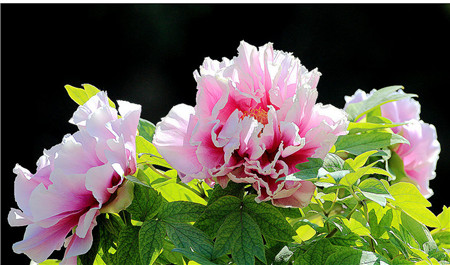
5. Flowering Period Control
Container-grown peonies can be forced in winter to bloom at Spring Festival. The method is: 60 days before Spring Festival, select robust peony varieties with plump scale buds (such as Zhaofen, Luoyang Hong, Shengdanlu, Gejinzi, Zhushalei, Dazihuhong, Mokui, Wulong Pengsheng, etc.), lift them with soil, injuring the roots as little as possible, dry them in a cool place for 12-3 days, then pot them, and carry out shaping and pruning, keeping 10 branches with plump terminal buds per plant, keeping the terminal buds and removing the rest. When potting, the pot size should match the plant to achieve a satisfactory plant shape. After watering thoroughly, manage normally. 50-60 days before Spring Festival, move them into a greenhouse at about 10°C and spray water 2-3 times daily, keeping the potting soil moist. When the scale buds swell, gradually raise the temperature to 25-30°C, with night temperature not lower than 15°C; in this way, flowers can be seen at Spring Festival.
How to Plant Peonies: Peony Planting Methods
The peony ranks second among China's top ten famous flowers and has the reputation of being the king of flowers. Luoyang is one of the birthplaces of Chinese peonies and is a city famous for peonies. Peonies are deeply loved for their brilliant colors and beautiful flower shapes. So how do you plant peonies? Next, Xiao Qi shares the peony planting methods.
Peony Flower Picture
I. How to Plant Peonies
The peony is a deep-rooted deciduous shrub flower. It likes sunlight, is cold-resistant, loves a cool environment, and avoids high temperatures and muggy heat. It is suitable for growing in loose, fertile, well-draining sandy soil. Therefore, the potting soil for cultivating peonies is generally a mixed soil of sandy soil and cake fertilizer, or a culture soil thoroughly mixed with fully decomposed barnyard manure, garden soil, and coarse sand in a 1:1:1 ratio.
Peony Flower Picture
II. Peony Planting Methods
1. Planting: For the soil used to plant peonies, we should choose loose, fertile loam with a neutral to slightly alkaline nature. We should also cut off broken and diseased roots from the peony seedlings to be planted, then disinfect them, etc., and place them into a prepared pot or hole. Let its root system spread out. Fill the soil to more than half full, gently shake the seedling, then firm the soil and seal it.
2. Watering: After planting, peonies should be watered thoroughly the first time. Peonies also dislike water accumulation, so during the growing season they also need to be watered as appropriate.
3. Fertilizing: One year after planting peonies, they can be fertilized in autumn, mainly with decomposed organic fertilizer. Then combine it with loosening the soil, and so on. In spring and summer, chemical fertilizers are often used, applying pre-flowering fertilizer and post-flowering fertilizer together with watering. If grown in containers, liquid fertilizer can also be applied together with watering.
4. Pruning: In the year peonies are planted, after spring sprouting, keep about 5 branches and remove the others. This concentrates nutrients so that next year's flowers can be even more brightly colored. In autumn and winter, while clearing the garden, we can also prune thin, weak, flowerless and other branches and leaves. When grown in containers, they can also be pruned into different shapes according to your preferences.
5. Repotting: After container-grown peonies have grown for three or four years, we need to add new fertile soil and move them into a larger pot in autumn, or divide the clumps and plant them separately.
Peony Flower Picture
The above is an introduction to how to plant peonies and peony planting methods. Friends who like peonies may as well learn from it and grow some at home.
How to Plant Peonies: Peony Cultivation Methods
There are many flower-loving friends around us, and the peony is one of everyone's favorite varieties. How do you plant peonies? Below we will tell you the peony cultivation methods.
1. Temperature and Light
Abundant sunlight is fairly beneficial for peony growth, but it does not tolerate harsh summer sun exposure. When the temperature is above 25°C, the plant will enter a dormant state. The suitable temperature for flowering is 17-20°C, but before flowering it must undergo low-temperature treatment at 1-10°C for 2-3 months. It can withstand low temperatures down to -30°C, but in cold northern regions, appropriate winter protection measures are needed in winter to avoid frost damage. The hot, humid weather of the south is extremely unfavorable for peony growth, so cultivating peonies in the south requires giving them specific environmental conditions before you can admire the wonderfully beautiful peony flowers.
2. Watering
Whether watering is done properly is a key issue in the success or failure of container-grown peonies. After moving outdoors in early spring, first apply fertilizer once, then water thoroughly. After the water seeps in, loosen the soil and maintain the moisture of the potting soil until buds appear. If the potting soil is too dry, water lightly once more until flowering. After that, it is best to keep the potting soil moist at all times. During continuous rainy days in summer, promptly pour out accumulated water in the pot to prevent root rot.
3. Fertilizing
The peony is a fertilizer-loving plant. If you want peony flowers to be large and brightly colored and to avoid the phenomenon of "blooming every other year," you must pay attention to reasonable fertilization. Newly planted peonies do not need fertilizer within half a year; fertilizer can be applied only after half a year. Generally, fertilizer needs to be applied at least 3 times each year. The first is "pre-flowering fertilizer," applied after the soil thaws and when leaves and flower buds are extending, together with watering "thawing water." The second is "post-flowering fertilizer," applied within half a month after the flowers fade. This fertilization has a relatively large effect on restoring the plant's growth momentum and promoting flower bud differentiation. Apply the third fertilizer before winter begins; this fertilization plays an important role in enhancing growth the following spring. For the first and second fertilizing, use quick-acting fertilizers; for the third fertilizing, mainly use slow-release base fertilizer.
4. Pruning
To ensure a beautiful peony plant shape, abundant flowering, and robust growth, shaping and pruning are also needed. Pruning container-grown peonies can be divided into two types: winter pruning and spring-summer pruning. In spring, for container-grown peonies, select and retain branches and buds, wipe away excess buds sprouting at the root crown, cut off inward-growing branches, crossing branches, and heavily overlapping branches, and thin out weak and excess branches to ensure a beautiful plant shape and ventilation and light penetration. In summer, spent flowers can be cut off. After leaf fall in late autumn, diseased, withered, and leggy branches can be cut off.
5. Pests and Diseases
The common disease of peonies is brown spot disease. At first, yellow-green spots appear on the leaf surface, then gradually expand to form brown or black patches. Bordeaux mixture can be sprayed 1-2 times per month; if the condition is severe, spray 3 times. Leaves with heavier infection should be cut off and burned to prevent summer spread. There is also a root rot disease that specifically harms peony roots. The symptoms are the roots turning black and rotting, hindering growth, and in severe cases it can cause the entire branch to die. To prevent this disease, carefully inspect when dividing and planting. If diseased roots are found, be sure to cut them off and burn them, and when planting, sprinkle some sulfur powder in the planting hole. The common insect pest is the cottony cushion scale, which can be sprayed with 40% omethoate emulsifiable concentrate at 1500 times dilution. In winter or early spring, applying lime sulfur mixture to the lower part of the trunk also has a fairly good control effect.