How to grow Pyracantha? Mastering these care methods is key
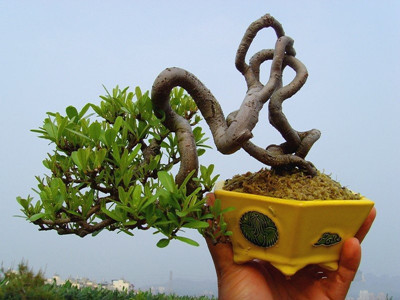
Pyracantha is a common evergreen bonsai plant that stays green all year round, with lush branches and leaves. It can be enjoyed for its flowers and foliage, as well as its fruit, and is favored by many bonsai enthusiasts. The care of Pyracantha has also become a topic of great concern. Below, the editor takes you through the care methods for Pyracantha.
One: Soil among the care methods for Pyracantha
Pyracantha is not demanding about soil, but for good plant growth and development, it is still best to choose a slightly acidic soil with deep soil layers, loose texture, rich organic matter, relatively fertile, and good drainage, with a pH of 5.5-7.3.
Two: Watering among the care methods for Pyracantha
Pyracantha is drought-tolerant. In spring, the soil should be kept dry. Apply fertilizer once before flowering and water thoroughly. During the flowering period, keep the soil on the dry side, which helps fruit set; therefore, do not water too much. If the flowering period coincides with the rainy season, also pay attention to digging trenches and draining water to avoid flower drop caused by excessive moisture. After the fruit ripens and is harvested, water thoroughly for overwintering before entering winter dormancy.
Three: Sunlight among the care methods for Pyracantha
Pyracantha likes ample sunlight. Giving it sufficient light allows it to bear more fruit and greatly increases its ornamental effect.
Four: Temperature among the care methods for Pyracantha
The optimal growing temperature for Pyracantha is 20-30°C. In addition, Pyracantha also has strong cold resistance and can still grow normally at -16°C and overwinter safely. If planted in places where the winter temperature is above 10°C, the plant will not enter dormancy favorably, which will affect flowering and fruiting the following year.
Five: Pruning among the care methods for Pyracantha
In its natural state, the crown of Pyracantha is messy and irregular, and the inner branches are often slender due to insufficient light, resulting in poor fruiting ability. To promote growth and fruiting, prune water sprouts, thin and weak branches, overly dense branches, and diseased and pest-damaged branches every year to improve ventilation and light penetration and promote new shoot growth.
Six: Fertilizing among the care methods for Pyracantha
After pruning Pyracantha, apply cake fertilizer water once. If wind and rain occur at this time, move it indoors to avoid affecting pollination and fruit set. During the flowering period, apply a compound fertilizer once. After entering autumn, during the fruit enlargement period, apply cake fertilizer water once more.
Seven: Pests among the care methods for Pyracantha
Pyracantha powdery mildew is one of the main diseases of Pyracantha, attacking the leaves, young branches, flowers, and fruit. During the disease period, spray lime sulfur mixture at 0.2-0.3 degrees Baume, once every half month, and persist with spraying 2-3 times. In midsummer, you can switch to Bordeaux mixture at 0.5:1:100 or 1:1:100, or a 1000-fold solution of 50% thiophanate to control it.
Propagation methods for Pyracantha
Pyracantha is usually propagated by sowing, cuttings, and layering.
Seed propagation
Seed harvesting and storage
The fruit ripening period of Pyracantha is from September to December, and fruit for seedling cultivation is suitable for harvesting from January to February. After harvesting, remove leaves, branch thorns, fruit stalks, and other debris, place them in a cool place and spread them out to air for about 10-15 days, turning them once a day. The Pyracantha fruit is a pome containing a large amount of flesh. First use a plastic basin or bucket, add an appropriate amount of warm water at 40°C, then put the fruit into the container and soak for 2h to soften the fruit skin. Squeeze with your hands to press the seeds out of the flesh, then rinse with clean water 4 to 5 times, removing fruit skin, flesh, shriveled seeds, and other debris to obtain relatively pure, mature, plump black seeds. Mix the seeds with fine sand at a ratio of 1:3. The fine sand should be sifted through a 200-mesh sieve, and the humidity should be such that it forms a ball when held in the hand and falls apart when released. At the lower layer of an indoor corner, spread 3cm of fine sand and place in the seeds, then cover the upper layer with 5cm of fine sand for storage, and check the humidity frequently to prevent freezing damage. You can also remove the Pyracantha seeds from the flesh and dry them for later use.
Sowing
In early March of the following year, evenly sow the seeds together with the fine sand on a seedbed prepared before winter, cover with fine soil, with the thickness such that the seeds are not visible. Because the seeds are relatively small, the covering soil must not be too thick, and cover the seedbed with rice straw and water thoroughly. Seedlings begin to emerge in about 10 days. At this time, remove the rice straw and manage moisture according to the seedbed humidity. The seedling emergence rate from sowing is 80.6%. Treatment with 0.2‰ gibberellin can increase the germination rate of Pyracantha seeds. Pyracantha is suitable for sowing in the second spring. If the seeds are stored too long, the germination rate drops significantly, and Pyracantha is not suitable for sowing in an environment below 20°C. During the 3-month seedling stage, check the temperature and humidity every day. If it is below 20°C or above 30°C, measures to raise or lower the temperature should be taken. The main measures include controlling shading and misting. If there are no abnormal conditions, watering once a week is sufficient. In the rainy season, pay attention to waterproofing and drainage.
Cutting propagation
Spring cuttings are generally taken from late February to early March. Select healthy, plump one- or two-year-old branches and cut them into 15-20 cm cuttings for planting. Summer cuttings are generally taken from mid-June to early July. Select one-year-old semi-lignified green shoots with leaves and cut them into 12-15 cm cuttings for planting, treating them with ABT rooting powder and paying attention to strengthening water management. The survival rate can generally reach more than 90%, and they can be transplanted in the following spring.
Layering propagation
This can be done from spring to summer. When layering, select one- to two-year-old branches close to the ground, first notch the part of the branch to be buried in the soil down to the cambium or peel off half a ring of bark, allowing organic nutrients to accumulate there to promote rooting, then bury the notched branch down to the cambium in the soil about 10-15 cm. In 1-2 years, a new plant can form, then cut it off and separate it from the mother plant, and plant it in the following spring.
Cultivation management
During the seedling process, fertilize, water, and weed in a timely manner to reduce weeds competing with seedlings for fertilizer and water. After watering, loosen the soil promptly to increase soil aeration, so as to promote fertilizer decomposition and reduce soil moisture evaporation. Pyracantha has relatively few pests and diseases. Aphids often occur in spring and can be controlled by spraying 3000-fold decis. The main diseases are root rot and rust, which can be controlled by spraying 1% carbendazim solution once every half month, with very good results. For rust, spray a 200-250-fold solution of the original powder of sodium dimethyldithiocarbamate for control.
Propagation methods for Pyracantha
Pyracantha, also known as red fruit, torch fruit, military provisions, etc. An evergreen shrub of the Rosaceae family. Native to our country, distributed in East China, South China, and the Southwest region.
The genus Pyracantha has about 10 species with similar morphology. The main species native to our country include Pyracantha angustifolia, Pyracantha fortuneana, and Pyracantha crenulata. There is also Pyracantha coccinea, native from Italy to West Asia.
Morphological characteristics: The lateral branches of Pyracantha are short, with the tips becoming thorns. The leaves are oblanceolate-oblong, with rounded blunt teeth, and the surface is glossy. Compound corymbose inflorescences, many-flowered, flowers small, white. Fruit nearly spherical,
The fruit cluster diameter is about 5.1^ bright red, a few orange-yellow or yellow.
2-Growth habits: It likes warmth, and severe frost often causes leaf drop. In sunny places it flowers profusely and fruits abundantly, and it is slightly tolerant of semi-shade. It can also grow well in arid and barren environments. It is commonly propagated by sowing or cuttings, both of which root easily. If fruit-bearing cuttings are taken during the plum rain season, they can be cut, potted, and grown into a miniature fruit-viewing bonsai or potted plant in the same year.
Horticultural uses: Pyracantha is evergreen all year round, covered with white flowers in late spring, and laden with red fruit in autumn, which remains through winter, making it highly ornamental. It is a common cultivated tree species in courtyards, suitable for specimen planting, or paired with rockery, which is even more charming. Some also plant it in front of walls and weave it into hedges, giving people a uniquely ingenious feeling. Pyracantha is also an excellent bonsai tree species.
In addition, the fruit of wild Pyracantha can also be used to brew red fruit
Propagation methods for Pyracantha