Keep houseplants sensibly indoors in summer to help you stay healthy through the hot season
In the scorching summer, running the air conditioner indoors can cool things down, but closing doors and windows blocks air circulation. So keeping a few flowers with "complementary functions" in the home can act as an "air filter."
Most flowers carry out photosynthesis during the day, absorbing carbon dioxide and releasing oxygen, and respire at night, absorbing oxygen and releasing carbon dioxide, while cacti, Orostachys species and the like are just the opposite.
Growing flowers with "complementary functions" together in one room can both balance the indoor oxygen and carbon dioxide levels and keep indoor air fresh.
According to reports, narcissus, four o'clocks, chrysanthemums and cockscomb can convert nitrogen oxides into protein, thereby removing their toxicity.
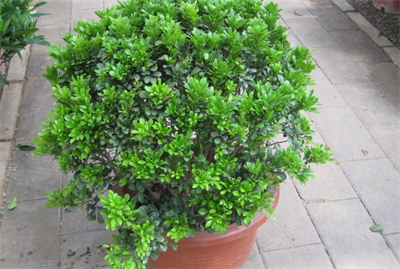
Spider plants, aloe and snake plants can absorb large amounts of indoor pollutants such as formaldehyde, eliminating and preventing indoor air pollution. Spider plants especially: place one pot in a room, and within 24 hours its leaves will "eat" harmful gases such as carbon monoxide from the indoor air, with an effect even exceeding that of an air filter.
Aglaia odorata, orchids, lilacs, cacti, Clivia and others can all effectively purify the air. Camellias can resist the harm of harmful substances such as sulfur dioxide, and crape myrtles have fairly strong resistance to indoor toxic gases such as sulfur dioxide, hydrogen chloride, chlorine and hydrogen fluoride.
Plum has the ability to monitor pollution in the environment from sulfur dioxide, hydrogen fluoride, hydrogen sulfide, ethylene, benzene, aldehydes and more; once sulfides appear in the environment, markings will appear on its leaves, which may even turn yellow and drop off.
It should be pointed out that these functions of plants have certain limits, and their effect strengthens as the number planted increases; it is impossible to rely entirely on indoor plants to meet the need. Therefore, windows still need to be opened often to let the air circulate.
In addition, experts also specifically remind people: in summer, never turn your home into a "flower house." If all kinds of flowers and trees are placed in excess and indoor ventilation is limited, the air will become as thin as at high altitude. Especially at night, most flowers release carbon dioxide and absorb oxygen, "competing for air" with people, and at night rooms are mostly closed; add the carbon dioxide from the soil in the flower pots and from the breathing of people and pets, and the carbon dioxide concentration will increase, causing oxygen deprivation in the body and affecting health, producing the opposite result.
Keeping houseplants sensibly indoors in summer promotes health
Flowers with complementary functions
Most flowers carry out photosynthesis during the day, absorbing carbon dioxide and releasing oxygen, and respire at night, absorbing oxygen and releasing carbon dioxide, while cacti, Orostachys species and the like are just the opposite.
Growing flowers with "complementary functions" together in one room can both balance the indoor oxygen and carbon dioxide levels and keep indoor air fresh.
According to reports, narcissus, four o'clocks, chrysanthemums and cockscomb can convert nitrogen oxides into protein, thereby removing their toxicity.
Plants that absorb harmful gases
Spider plants, aloe and snake plants can absorb large amounts of indoor pollutants such as formaldehyde, eliminating and preventing indoor air pollution. Spider plants especially: place one pot in a room, and within 24 hours its leaves will "eat" harmful gases such as carbon monoxide from the indoor air, with an effect even exceeding that of an air filter.
Aglaia odorata, orchids, lilacs, cacti, Clivia and others can all effectively purify the air. Camellias can resist the harm of harmful substances such as sulfur dioxide, and crape myrtles have fairly strong resistance to indoor toxic gases such as sulfur dioxide, hydrogen chloride, chlorine and hydrogen fluoride.
Plum has the ability to monitor pollution in the environment from sulfur dioxide, hydrogen fluoride, hydrogen sulfide, ethylene, benzene, aldehydes and more; once sulfides appear in the environment, markings will appear on its leaves, which may even turn yellow and drop off.
It should be pointed out that these functions of plants have certain limits, and their effect strengthens as the number planted increases; it is impossible to rely entirely on indoor plants to meet the need. Therefore, windows still need to be opened often to let the air circulate.
Never place too many plants in a room
In addition, experts also specifically remind people: in summer, never turn your home into a "flower house." If all kinds of flowers and trees are placed in excess and indoor ventilation is limited, the air will become as thin as at high altitude. Especially at night, most flowers release carbon dioxide and absorb oxygen, "competing for air" with people, and at night rooms are mostly closed; add the carbon dioxide from the soil in the flower pots and from the breathing of people and pets, and the carbon dioxide concentration will increase, causing oxygen deprivation in the body and affecting health, producing the opposite result.
Do you know this knowledge about growing flowers at home?
1. What should be noted when growing flowers at home?
(1) Do not grow plants that are harmful to people. Lilacs and night-blooming jessamine can release particles at night that irritate the sense of smell and have adverse effects on people with high blood pressure and heart disease; the floral scent of oleander can make people drowsy and reduce intelligence; the particles released by Hydrangea macrophylla can cause skin allergies and itching; tulip flowers contain toxic alkaloids, and excessive contact can easily cause hair loss; the oily fragrance released by pine and cypress plants can affect people's appetite.
(2) Do not grow flowers and trees that "clash" with each other. If roses and reseda are put together, the reseda will wither, but before withering the reseda releases a substance that poisons the roses to death. Herbaceous flowers such as corn poppies, orchids, dianthus, stock and lilies are hard to keep together with other flowers.
(3) Do not keep flowers indoors in a sick person's room. Fungal spores produced by the soil in flower pots will spread into the indoor air, causing surface or internal infections in the human body, and may also invade parts such as the skin, respiratory tract, external auditory canal, meninges and brain. For patients who are already ill and in poor health, this makes things worse, and it is especially harmful to leukemia patients and organ transplant recipients.
2. How should plant species be chosen sensibly?
The choice of plant species should be based on room size, lighting conditions and personal preference, with primary and secondary choices. Fully consider the weaker natural light conditions indoors, and choose more species that like shade or tolerate shade, such as rainbow fern, Peperomia caperata, variegated ivy, Syngonium, and pothos, Aspidistra, Monstera deliciosa, Rohdea japonica, Rhapis excelsa, asparagus fern, Areca palm, begonia, orchid grass, rubber plant, Clivia, Cordyline australis, Philodendron and so on.
3. How should attention be paid to the color of green plants?
The colors should be harmonious. Leaf color should be chosen to harmonize with the colors of the walls and furniture. For example, green or tea-colored walls should not be paired with dark green plants, otherwise the room will feel gloomy. In addition, rooms with different functions should also differ in leaf color choices: a study should create a sense of tranquility, mainly with white, yellow (or variegated) and light pink; while a bedroom should increase a sense of relaxation, with light green leaves being best.
4. How should green plants be chosen according to the season?
Generally speaking, spring should focus on enjoying flowers; summer should focus on foliage, and can be arranged with asparagus fern, Caladium, Pilea cadierei and other plain, cool-feeling flowers; in autumn, autumn chrysanthemums, coral beans and other fruit-viewing potted flowers can be arranged; in winter, poinsettias, camellias, narcissus, plum blossoms and the like are mostly used for decoration.