Detailed Explanation of Sunflower Planting Techniques and Methods
Sunflowers (moss rose) are very easy to survive, so their planting technique is very simple. Although simple, the following points should still be noted during the operation of sunflower planting.
Sunflower seeds are very tiny, about 8400 seeds per gram, and are often sown in seedling trays, with a very light covering of fine vermiculite, or merely lightly pressed down after sowing, to ensure sufficient moisture. The germination temperature is 21-24 degrees Celsius, and seedlings emerge in about 7-10 days. The seedlings are extremely slender and weak, so if a relatively high temperature is maintained, the young plants grow very quickly and can form relatively thick, fleshy stems and leaves. At this point the young plants can be directly potted up, using pots about 10 cm in diameter, planting 2-5 plants per pot, with a high survival rate and rapid growth. It is extremely tolerant of poor soil and can adapt to ordinary soil, but well-drained sandy soil is most suitable. It can self-sow and reproduce. It blooms when it sees sunlight and closes in the morning, evening, and on cloudy days, hence the names "sunflower" and "noon flower."
Propagate by sowing or cutting. Sowing can be done in spring, summer, or autumn. When the temperature is above 20 degrees Celsius the seeds germinate, sprouting about 10 days after sowing. The soil covering should be thin; it can grow even without being covered with soil. Transplant the seedlings, with a plant-to-row spacing of 5×6 cm. Liquid fertilizer needs to be applied several times. Under conditions above 15 degrees Celsius it can bloom in about 20 days. Cutting propagation is often used for double-petaled varieties; in summer, use the cut shoot tips as cuttings, and wilted stems can also be used. After rooting, flower buds appear. Transplanted plants do not need to be moved with soil, and there is no need to water frequently during the growing period. The fruit cracks open as soon as it matures, and the seeds scatter easily, so they must be harvested promptly.
Planting techniques:
Sunflower planting technique one: Seed propagation: In the Sichuan region, sow in September to October. Before sowing, prepare the land well and dig furrows 1.3 m deep. On the furrows, open horizontal trenches at a row spacing of 30 cm and a depth of 4-6 cm, with a sowing width of about 10 cm, keeping the bottom level and the soil loose. The seeds need to be mixed into plant ash mixed with human and livestock manure water to make seed ash. Use 5-6 liang of seed per mu. When sowing, first apply human manure water into the trenches, then evenly scatter the seed ash in.
Sunflower planting technique two: Division propagation: After the summer harvest, dig out the old clumps, select the well-grown ones, divide them into small clumps, and plant them at a row spacing of 30 cm and a plant spacing of 7-10 cm, then pour in livestock manure water.
Sunflower planting technique three: Field management: For seed propagation, when the seedlings are one cm tall, water once with light human and livestock manure water to promote seedling growth. When the seedlings are 3-4 cm tall, thin and fill in the seedlings. Leave one plant every 3-4 cm; when filling in seedlings, transplant them with soil. After thinning, cultivate and weed once, and apply a top dressing at the same time. For division propagation, when new shoots emerge after planting, cultivate and weed, and apply a top dressing once; afterward only weeding and loosening the soil are needed, and after the September harvest and in November apply a top dressing once each for overwintering.
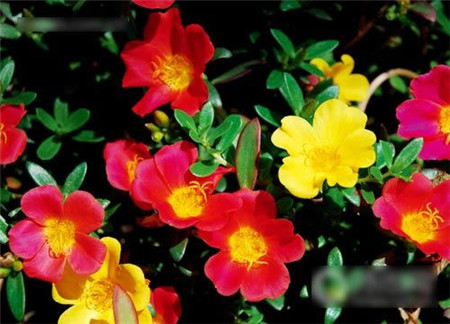
Sunflower planting methods
Sunflowers not only have the characteristic of blooming when they see sunlight and closing in the morning, evening, and on cloudy days, but also come in many colors. Gardeners all like to plant them, and the sunflower planting method is not very difficult either. Gardeners can not only sow seeds but also take cuttings.
Daily care for planting sunflowers
Sunflowers are best placed in a sunny environment for care. If the light is weak, they will become leggy, with few flowers or even no flowers. Sunflowers are relatively tolerant of poor soil, so ordinary potting soil can suit them. If conditions allow, well-drained sandy soil can be used. Usually just keep the potting soil at a certain humidity, and apply a one-thousandth dilution of monopotassium phosphate (or other flowering fertilizer) once every half month, and you can achieve the effect of large, brightly colored flowers that bloom continuously.
Sowing as a sunflower planting method
Sunflower seeds are very tiny, about 8400 seeds per gram. Sowing can be done in spring, summer, or autumn, and seedling trays are often used for sowing. After sowing, you can cover with just a tiny bit of soil, or you can leave it uncovered. The germination temperature is 21-24 degrees Celsius, and seedlings emerge in about 7-10 days. The seedlings are extremely slender and weak, so if a relatively high temperature is maintained, the young plants grow very quickly and can form relatively thick, fleshy stems and leaves. At this point the young plants can be directly potted up, using pots about 10 cm in diameter, planting 2-5 plants per pot, with a high survival rate and rapid growth.
Cutting as a sunflower planting method
Sunflowers are very easy to root from cuttings. In summer, use the cut shoot tips as cuttings, and wilted stems can also be used. After rooting, flower buds appear. Transplanted plants do not need to be moved with soil, and there is no need to water frequently during the growing period.
Winter management of sunflowers
In winter, sunflowers can be moved indoors to a spot that gets sunlight, and the potting soil can be kept slightly drier, so they can overwinter safely. After Qingming the following year, the flowerpot can be placed outside the window. If a cold wave strikes, it still needs to be brought inside the window for care.
Cultivation techniques for sunflowers
At present they are cultivated throughout China, with many flower colors and a light fragrance, easy to grow and easy to keep alive. The sunflower planting method is not very difficult either. Gardeners can not only sow seeds but also take cuttings. Today I will introduce the cultivation techniques of sunflowers to everyone.
Sunflower cultivation techniques:
Sowing: Sunflower seeds are very tiny, about 8400 seeds per gram. Sowing can be done in spring, summer, or autumn, and seedling trays are often used for sowing. After sowing, you can cover with just a tiny bit of soil, or you can leave it uncovered. The germination temperature is 21-24 degrees C, and seedlings emerge in about 7-10 days. The seedlings are extremely slender and weak, so if a relatively high temperature is maintained, the young plants grow very quickly and can form relatively thick, fleshy stems and leaves. At this point the young plants can be directly potted up, using pots about 10 cm in diameter, planting 2-5 plants per pot, with a high survival rate and rapid growth.
Cutting: Sunflowers are very easy to root from cuttings. In summer, use the cut shoot tips as cuttings, and wilted stems can also be used. After rooting, flower buds appear. Transplanted plants do not need to be moved with soil, and there is no need to water frequently during the growing period.
Winter management of sunflowers: In winter, sunflowers can be moved indoors to a spot that gets sunlight, and the potting soil can be kept slightly drier, so they can overwinter safely. After Qingming the following year, the flowerpot can be placed outside the window. If a cold wave strikes, it still needs to be brought inside the window for care.
Daily care: Sunflowers are best placed in a sunny environment for care. If the light is weak, they will become leggy, with few flowers or even no flowers. Sunflowers are relatively tolerant of poor soil, so ordinary potting soil can suit them. If conditions allow, well-drained sandy soil can be used. Usually just keep the potting soil at a certain humidity, and apply a one-thousandth dilution of monopotassium phosphate (or other flowering fertilizer) once every half month, and you can achieve the effect of large, brightly colored flowers that bloom continuously.
The cultivation techniques of sunflowers are introduced here. Sunflowers are also known as pine-leaved peony and large-flowered purslane, of the purslane family and purslane genus. They like warm, sunny, and dry environments, bloom when they see sunlight, and close in the morning, evening, and on cloudy days, hence the names "sunflower" and "noon flower."