How to Grow Cattleya Orchids? A Detailed Guide to Cattleya Care
If you want Cattleya orchids to bloom on schedule, the simplest approach is to choose varieties with different flowering periods. To have them bloom from January to March, choose winter-flowering and early-spring varieties, such as ‘Big Eyes’, ‘Yanggang’, and ‘Red Rose’. To have them bloom from April to May, choose late-spring varieties, such as ‘Ruby’, ‘Big Boss’, and ‘Dream Comes True’.
To have Cattleya orchids bloom from June to September, choose summer-flowering varieties, such as ‘Big Marshal’ and ‘Akifen’, etc. To have them bloom from October to December, choose autumn-winter varieties, such as ‘Sapphire’, ‘Yellow Diamond’, ‘Green’, and ‘Green Virgin’. For autumn-winter Cattleyas that require short-day conditions, you can control their flowering period by shortening or extending the light exposure so they bloom on schedule. For temperature-sensitive varieties, you can control the flowering period by adjusting the temperature.
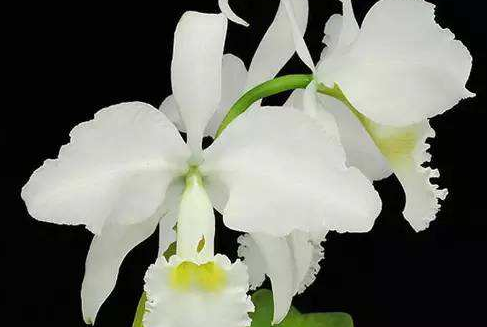
2. Temperature
The suitable growing temperature for Cattleya orchids is 20-30°C. In winter, it is best to grow them indoors, and the temperature should preferably be above 10°C so the plants do not enter dormancy. In summer, when the temperature exceeds 35°C, cool them down promptly by misting with water and improving ventilation, so as to keep growth vigorous.
3. Water
Cattleya orchids need plenty of water during their vigorous growth period, but do not water too much, especially in winter, when the plants are in a semi-dormant state and watering should be reduced even more to avoid root rot. Generally, water once every two or three days in spring, summer, and autumn, and just once a week in winter.
4. Potting medium
The potting medium for Cattleya orchids can be a mix of fern roots, moss, bark chunks, perlite, peat soil, coal cinder, etc. It generally needs to be replaced every one or two years, usually when repotting.
How to Grow Cattleya Orchids
How to Grow Cattleya Orchids
Temperature
The suitable growing temperature for Cattleya orchids is 20-30°C. By March of the following year, change it to 12-24°C; 25-30°C is suitable during the day, and 15-20°C is best at night. A day-night difference of 5-10°C is ideal. To keep them from entering a semi-dormant state, the greenhouse temperature in winter should be kept above 10°C. When the temperature falls below 12°C, move them indoors as soon as possible. When it exceeds 35°C in summer, create a cool environment for them so they can maintain vigorous growth and avoid rotting stems and leaves.
Light
Cattleya orchids are suited to growing in a semi-shaded environment. If the light is too strong, the pseudobulbs are easily scorched, which can trigger other diseases. In seasons other than winter, shade them by 50-60%. No shading is needed in winter; they can be placed by a window to get a little sunlight.
Water
Cattleya orchids require relatively high air humidity. They need plenty of water during the growing season, but do not overwater, especially in winter, when the plants are in a semi-dormant state and watering must be controlled. Otherwise, root rot and dieback can easily occur.
Potting medium
Vigorously growing Cattleya orchids need their potting medium replaced every 1-2 years, preferably when new spring growths have just emerged or after the flowers fade, at which time you can divide and repot them.
Fertilizer
Cattleya orchids need relatively little fertilizer, and the fertilizer must be fully decomposed. When the temperature is above 32°C or below 15°C, stop fertilizing; you should also stop fertilizing during their flowering period and dormancy to avoid damaging the roots and rhizomes.
Precautions for Growing Cattleya Orchids
When growing Cattleya orchids, do not change the direction of the pot at will. If you keep changing its orientation, the fleshy leaf sheaths may shrivel due to phototropism, and if the leaves become twisted and yellow, flowering will be affected.
For home-grown Cattleya orchids, division is mostly used for propagation. Generally, vigorous plants are divided about once every three years. The division method is basically the same as that for Chinese orchids. After division, each new plant must have at least three or more pseudobulbs; otherwise, it will not bloom, or will bloom very little, within 2-3 years.