How to grow Chinese ixora (red hydrangea)? Cultivation methods and precautions
Chinese ixora is a common woody flowering plant; it can be found in parks, courtyards and other green spaces. Although the flowers of Chinese ixora are not large, they win by sheer quantity. Regardless of the variety or flower color, when in full bloom you see only round clusters of flowers hanging on the branches, with the leaves almost entirely submerged in a sea of flowers.
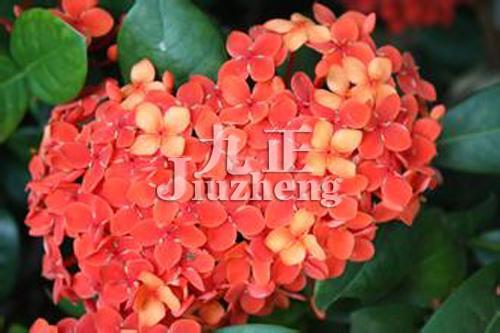
Chinese ixora is native to tropical Asia. Also known as red hydrangea, maizi mu and shandan hua, it belongs to the Rubiaceae family and is an evergreen shrub or small tree. Plant height, leaf size and flower color all vary by variety. The flowers have four petals and are borne in umbel-like inflorescences; flower colors include bright red, orange-red, pink, white and yellow. In recent years, many parks and green spaces have switched to the shorter dwarf ixora for hedges.
The cultivation site needs at least half-day sun; the more sunlight, the more flowers. Chinese ixora is not fussy about soil, as long as the medium drains well. The optimum growing temperature is about 23-32 degrees. Spring to autumn is the period of vigorous growth, and the flowering period lasts almost all year, with the peak from early summer to autumn. Low temperatures in winter easily cause leaf drop, so watering should be reduced. In early spring each year, the branches can be pruned to encourage sparse branches to sprout new shoots, making the plant bushier and increasing the number of flowers.
5. Fertilizing: During the growing period, apply once every half month a liquid fertilizer made by mixing nitrogen, phosphorus, potassium, ferrous sulfate and horseshoe chips in a ratio of 1:1:1:2:3, adding water and allowing it to decompose and ferment.
6. Pruning: Pruning is mostly done in spring after the plants are moved outdoors, mainly to thin out the branches appropriately to improve ventilation and light penetration. In addition, pinching appropriately during the flowering period can encourage more buds and flowers.
7. Pests and diseases: Common diseases of Chinese ixora include leaf spot, anthracnose and sooty mold. If they occur, ventilation should be improved promptly and water and fertilizer management done well; carbendazim 800 times dilution can also be sprayed for control. Common pests include scale insects, red spider mites and aphids. If these pests appear, when their numbers are small they can be caught by hand; when there are many, it is necessary to spray 40% omethoate emulsifiable concentrate 1500 times dilution, as well as 2.5% derris extract emulsifiable concentrate 1200 times dilution.
8. Propagation: Chinese ixora is best propagated by cuttings; this method roots easily and the mature plants flower quickly. Cuttings should be taken in March and April each year, and two-year-old, already lignified branches are best. After cutting, Chinese ixora will root in about 35 days, and after 60 days the seedlings can be transplanted into pots.
Precautions for growing Chinese ixora:
Chinese ixora prefers a warm, humid environment with plenty of sunlight. It is not cold-tolerant, tolerates partial shade, and does not tolerate waterlogging or strong light. The optimum growing temperature for Chinese ixora is 15-25 degrees C; from March to September it is 24-30 degrees C, and from September to March of the following year it is 13-18 degrees C. In winter the temperature should not be lower than 0 degrees C, as too low a temperature easily causes cold damage. Conversely, Chinese ixora tolerates high temperatures and grows normally above 32 degrees C.
Overall, Chinese ixora has fairly strong adaptability to temperature. Chinese ixora likes moisture and fears dryness. During the growth period of stems and leaves it needs sufficient water; keeping the potting soil moist is beneficial for shoot sprouting and leaf growth. However, being too wet for a long time easily causes part of the root system to rot, affecting growth and flowering. If the soil is too dry or alternately dry and wet, and water is not supplied in time, leaf drop will occur.
Chinese ixora needs plenty of sunlight, especially during the growth period of stems and leaves. Under sufficient sunlight, the leaves are emerald green and glossy, which is beneficial for inflorescence formation, neat flowering and vivid flower color. It can also grow in a semi-shaded environment, but the leaves are pale green and lack gloss, there are fewer flowers, and the flower color is lighter. However, appropriate shading under strong summer light can extend the viewing period of the flowers.
The best cultivation soil for Chinese ixora is fertile, loose, well-drained acidic sandy loam. For potted plants, use a mixed soil of culture soil, peat soil and coarse sand, with a pH of 5-5.5 being suitable.
The uses of Chinese ixora:
1. Medicinal value
Besides being an ornamental plant, Chinese ixora also has certain medicinal value. The roots, stems and leaves of Chinese ixora can all be used as medicine. Chinese ixora has the effects of dissipating blood stasis and stopping bleeding, regulating menstruation, lowering blood pressure, clearing the liver, promoting blood circulation and relieving pain. It can be used for high blood pressure, irregular menstruation, tendon and bone fractures, sores and ulcers, etc. The roots and stems of Chinese ixora have the effects of treating pulmonary tuberculosis hemoptysis, stomach pain, rheumatic joint pain, bruises and injuries, etc.
2. Ornamental value
Chinese ixora has a long flowering period, vivid flower color and dense flowering. In the south it is widely planted in courtyards as an ornamental flower. In the north, Chinese ixora is more often grown in pots for ornament and used to decorate the home. We can place Chinese ixora on a windowsill with plenty of sunlight, so that we can both enjoy the beautiful Chinese ixora and let it grow healthily, bloom abundantly and produce lush flowers.
The uses and cultivation methods of Chinese ixora
Chinese ixora, also known as shandan hua and dragon boat flower, is the evergreen shrub commonly called dwarf ixora. It also has other aliases such as red hydrangea, maizi mu, maizi mu and sanduan hua. The side branches of the whole Chinese ixora plant grow upright and smooth. The leaves are smooth, leathery, opposite, entire and obovate or elliptical. They are generally about 9 cm-12 cm long and about 4 cm-5 cm wide. The first leaf flush period is roughly between March and June each year, and the second is around August to early October.
The uses and cultivation methods of Chinese ixora
The uses of Chinese ixora
Chinese ixora, also known as shandan hua and dragon boat flower, is the evergreen shrub commonly called dwarf ixora. It also has other aliases such as red hydrangea, maizi mu, maizi mu and sanduan hua. Its English name is Chinese ixora, and its formal scientific name is Ixora chinensis. The side branches of the whole Chinese ixora plant grow upright and smooth. The leaves are smooth, leathery, opposite, entire and obovate or elliptical. They are generally about 9 cm-12 cm long and about 4 cm-5 cm wide. The first leaf flush period is roughly between March and June each year, and the second is around August to early October.
Cultivation methods of Chinese ixora
Soil: The best soil is fertile, loose, well-drained acidic sandy loam. For potted plants, use a mixed soil of culture soil, peat soil and coarse sand, with a pH of 5-5.5 being suitable.
Watering: Chinese ixora likes moisture and fears dryness. During the growth period of stems and leaves it needs sufficient water; keeping the potting soil moist is beneficial for shoot sprouting and leaf growth. However, being too wet for a long time easily causes part of the root system to rot, affecting growth and flowering. If the soil is too dry or alternately dry and wet, and water is not supplied in time, leaf drop will occur.
Sunlight: Chinese ixora needs plenty of sunlight, especially during the growth period of stems and leaves. Under sufficient sunlight, the leaves are emerald green and glossy, which is beneficial for inflorescence formation, neat flowering and vivid flower color. It can also grow in a semi-shaded environment, but the leaves are pale green and lack gloss, there are fewer flowers, and the flower color is lighter. However, appropriate shading under strong summer light can extend the viewing period of the flowers.
Temperature: The optimum growing temperature for Chinese ixora is 15-25 degrees C; from March to September it is 24-30 degrees C, and from September to March of the following year it is 13-18 degrees C. In winter the temperature should not be lower than 0 degrees C, as too low a temperature easily causes cold damage. Conversely, Chinese ixora tolerates high temperatures and grows normally above 32 degrees C. Overall, Chinese ixora has fairly strong adaptability to temperature.
Fertilizing: During the growing period, apply once every half month a liquid fertilizer made by mixing nitrogen, phosphorus, potassium, ferrous sulfate and horseshoe chips in a ratio of 1:1:1:2:3, adding water and allowing it to decompose and ferment.
Pruning: Pruning is mostly done in spring after the plants are moved outdoors, mainly to thin out the branches appropriately to improve ventilation and light penetration. In addition, pinching appropriately during the flowering period can encourage more buds and flowers.
Pests and diseases: Common diseases of Chinese ixora include leaf spot, anthracnose and sooty mold. If they occur, ventilation should be improved promptly and water and fertilizer management done well; carbendazim 800 times dilution can also be sprayed for control. Common pests include scale insects, red spider mites and aphids. If these pests appear, when their numbers are small they can be caught by hand; when there are many, it is necessary to spray 40% omethoate emulsifiable concentrate 1500 times dilution, as well as 2.5% derris extract emulsifiable concentrate 1200 times dilution.
Propagation: Chinese ixora is best propagated by cuttings; this method roots easily and the mature plants flower quickly. Cuttings should be taken in March and April each year, and two-year-old, already lignified branches are best. After cutting, the dragon boat flower will root in about 35 days, and after 60 days the seedlings can be transplanted into pots.
Precautions for growing Chinese ixora
Chinese ixora prefers a warm, humid environment with plenty of sunlight. It is not cold-tolerant, tolerates partial shade, and does not tolerate waterlogging or strong light. The optimum growing temperature for Chinese ixora is 15-25 degrees C; from March to September it is 24-30 degrees C, and from September to March of the following year it is 13-18 degrees C. In winter the temperature should not be lower than 0 degrees C, as too low a temperature easily causes cold damage. Conversely, Chinese ixora tolerates high temperatures and grows normally above 32 degrees C.
Overall, Chinese ixora has fairly strong adaptability to temperature. Chinese ixora likes moisture and fears dryness. During the growth period of stems and leaves it needs sufficient water; keeping the potting soil moist is beneficial for shoot sprouting and leaf growth. However, being too wet for a long time easily causes part of the root system to rot, affecting growth and flowering. If the soil is too dry or alternately dry and wet, and water is not supplied in time, leaf drop will occur.
Chinese ixora needs plenty of sunlight, especially during the growth period of stems and leaves. Under sufficient sunlight, the leaves are emerald green and glossy, which is beneficial for inflorescence formation, neat flowering and vivid flower color. It can also grow in a semi-shaded environment, but the leaves are pale green and lack gloss, there are fewer flowers, and the flower color is lighter. However, appropriate shading under strong summer light can extend the viewing period of the flowers.
The best cultivation soil for Chinese ixora is fertile, loose, well-drained acidic sandy loam. For potted plants, use a mixed soil of culture soil, peat soil and coarse sand, with a pH of 5-5.5 being suitable.
Well, that is the article the editor introduced to you today on the uses and cultivation methods of Chinese ixora, or you can click on the related reading at the end of the article.