How to fertilize potted camellias? These methods are essential to master
Fertilizing camellias should be done selectively according to the different growth stages of the camellia. During the growing period, camellias need topdressing, and it is best to apply quick-acting liquid fertilizers and chemical fertilizers. At the stage of sprouting branches and leaves, nitrogen fertilizer or a mixed fertilizer mainly based on nitrogen should be applied. Before flower bud differentiation, flower bud formation, enlargement, and flowering, phosphorus fertilizer or a mixed fertilizer mainly based on phosphorus is needed. In autumn and winter, a mixed fertilizer mainly based on phosphorus and potassium is most suitable.
(1) Nitrogen fertilizer to promote spring shoots
Camellias generally begin to sprout spring shoots at around 18°C. At this time, a bud-promoting fertilizer mainly based on nitrogen should be applied, once every 10 days, until the spring shoots begin to lignify. If conditions permit, a dilute mixed solution of 1000 times potassium dihydrogen phosphate, about 1% urea, and about 300 times rice vinegar can also be sprayed on the leaves at the same time. After multiple applications to the roots and foliar sprays, the spring shoots will grow very luxuriantly, the leaves can extend to the maximum, and the branches and shoots can accumulate rich nutrients, creating good conditions for flower bud differentiation.
(2) Increase the application of phosphorus and potassium fertilizers to promote flower bud differentiation and form flower buds
After the spring shoots of the camellia have fully sprouted and entered lignification, there will be a relatively short semi-dormant period. At this time, the camellia shifts from the vegetative growth stage to the reproductive growth stage, and flower buds begin to differentiate. If you want the camellia to produce more buds, more phosphorus and potassium fertilizers should be applied, and no or little nitrogen fertilizer. If the goal for a small camellia plant is mainly to grow larger, then nitrogen fertilizer should still be the main choice, with no or little phosphorus fertilizer. About every 10 days, use a dilute mixed solution of 1000 times potassium dihydrogen phosphate, a small amount of borax, and rice vinegar for foliar spraying. This can not only control excessive growth of camellia branches but also promote and shorten the time of flower bud differentiation, which is beneficial to flower bud formation.
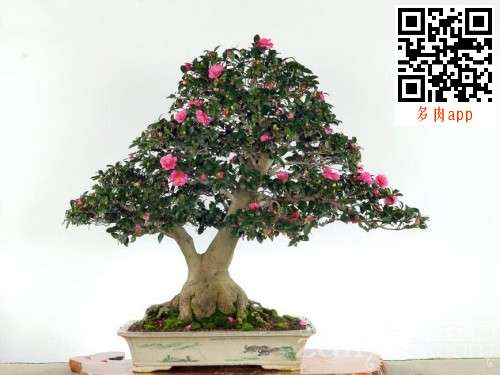
Camellias generally begin to sprout spring shoots at around 18°C. At this time, a bud-promoting fertilizer mainly based on nitrogen should be applied, once every 10 days, until the spring shoots begin to lignify. If conditions permit, a dilute mixed solution of 1000 times potassium dihydrogen phosphate, about 1% urea, and about 300 times rice vinegar can also be sprayed on the leaves at the same time. After multiple applications to the roots and foliar sprays, the spring shoots will grow very luxuriantly, the leaves can extend to the maximum, and the branches and shoots can accumulate rich nutrients, creating good conditions for flower bud differentiation.
(2) Increase the application of phosphorus and potassium fertilizers to promote flower bud differentiation and form flower buds
After the spring shoots of the camellia have fully sprouted and entered lignification, there will be a relatively short semi-dormant period. At this time, the camellia shifts from the vegetative growth stage to the reproductive growth stage, and flower buds begin to differentiate. If you want the camellia to produce more buds, more phosphorus and potassium fertilizers should be applied, and no or little nitrogen fertilizer. If the goal for a small camellia plant is mainly to grow larger, then nitrogen fertilizer should still be the main choice, with no or little phosphorus fertilizer. About every 10 days, use a dilute mixed solution of 1000 times potassium dihydrogen phosphate, a small amount of borax, and rice vinegar for foliar spraying. This can not only control excessive growth of camellia branches but also promote and shorten the time of flower bud differentiation, which is beneficial to flower bud formation.
(3) Do not fertilize in midsummer, and even more so do not apply concentrated fertilizer
In midsummer, when the weather is hot, camellias grow slowly or fall into a semi-paused state. At this time, fertilization is not suitable, and special attention should be paid not to apply concentrated fertilizer. If the soil is poor and thin, a light application of dilute liquid fertilizer can be made along with watering to improve the soil.
(4) In autumn, appropriately apply a mixed fertilizer mainly based on phosphorus and potassium
In autumn, when the sky is high and the air is crisp, it is the period of nutrient accumulation for the camellia plant. In order to overwinter safely, a mixed fertilizer mainly based on phosphorus and potassium can be applied every half month, combined with foliar spraying, to promote robust plant growth and improve the cold resistance of the camellia.
(5) In winter, it is suitable to apply dilute phosphorus-potassium liquid fertilizer
In the cold winter, camellias enter a semi-dormant period. When camellias are moved indoors or into storage, vegetative growth has entered dormancy, and not much fertilizer is needed. However, their reproductive growth has not completely stopped, and they are in the season of flowering or preparing to flower, so a dilute phosphorus-potassium liquid fertilizer should be applied along with watering. Absolutely avoid applying concentrated fertilizer.