How to grow Paeonia rockii? Growing methods and precautions
Paeonia rockii is a plant endemic to China and a precious floral germplasm resource, with its root bark used for medicinal purposes. Paeonia rockii belongs to the cold and dry ecotype, with strong stress resistance, and is suited to low temperatures and arid climates. Paeonia rockii is scattered across Shaanxi, Gansu and western Henan in China. Because its root bark is used as medicine, it has long suffered from overharvesting, its resources are continually being destroyed, and its natural reproductive capacity is weak. To protect it, more and more people have begun to cultivate Paeonia rockii, and some flower enthusiasts spare no expense to grow it. Mastering the key points of growing Paeonia rockii is of great significance for growing it well.
(1) Growing environment
Paeonia rockii generally can grow from an altitude of 60 m (north of Shanhaiguan) to 3000 m in the Bailong River basin. The effect of altitude on Paeonia rockii is in fact the effect of temperature on the flowering date of the peony: the higher the altitude, the lower the temperature, and the flowering date of the peony is relatively delayed. For example, the peony flowering time in the Beijing area and in Lanzhou city is basically the same, but Beijing's latitude is higher than Lanzhou's while Lanzhou's altitude is higher than Beijing's. Beijing and Shenyang are at basically the same altitude, but Shenyang's latitude is higher than Beijing's, and Shenyang's peony flowering time is about twenty days later than Beijing's.
(2) Water
As long as Paeonia rockii receives enough water at planting time to take root and survive, it can also grow drought-resistant. But if you want it to flower well, it needs to be watered 2-3 times a year.
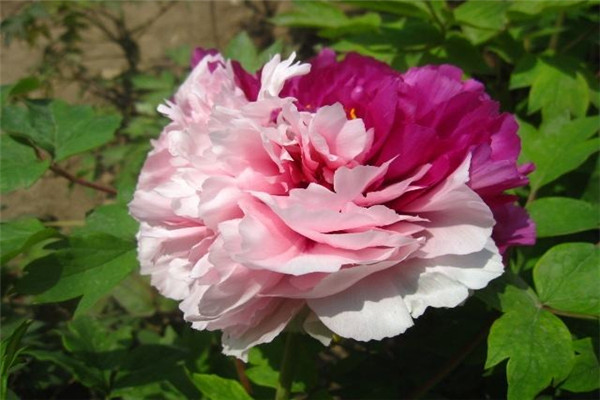
Growing methods for Paeonia rockii
Light
Paeonia rockii likes light and is a long-day plant. However, in the hot months of July and August, good shading and ventilation must be provided, otherwise leaf scorch is very likely to occur. Note that during the flowering period of Paeonia rockii, excessively strong light will also shorten the flowering period, so appropriate shade can be provided with a canopy.
Water
It is drought-resistant and is generally watered 2-3 times a year. It fears waterlogging, so be sure to drain promptly.
Soil
Paeonia rockii has low soil requirements, is resistant to salt and alkali, and has good soil adaptability. Of course, it grows better in soil with good fertility, and the flowers it produces are more ornamental.
Propagation methods
It is often propagated by division, sowing and grafting.
Precautions for growing Paeonia rockii
Paeonia rockii planted south of the Yellow River and in low-lying areas needs good drainage, especially in the rainy season, to avoid waterlogging.
The soil in the Northeast region is relatively loose, so surface water infiltrates quickly. Therefore, for newly planted Paeonia rockii plants, sufficient water supply must be ensured. Generally, after two years, once the new roots of Paeonia rockii have taken root deeply, there is no need to water too much.
Daily precautions for growing Paeonia rockii
1. Water
Paeonia rockii has extremely strong drought resistance. After newly planted Paeonia rockii plants receive a certain amount of water and grow until they have taken root deeply, they only need to be watered 2-3 times a year afterward. But be sure to pay attention to drainage at ordinary times, as Paeonia rockii fears waterlogging.
2. Light
Paeonia rockii is a sun-loving plant, but it is not the case that the more sun the better. In July and August, it must not be left in full sun; appropriate shading is needed, otherwise leaf scorch will occur. During the flowering period of Paeonia rockii, excessively strong light will also shorten the flowering period, so appropriate shading should also be provided.
3. Soil
Paeonia rockii is resistant to salt and alkali and has good adaptability, but fertile soil is of course better, and the flowers it produces will be highly ornamental.
That is all for today's introduction. Thank you for reading. If you like it, bookmark and share Four Seasons Plants website!