How to grow gardenias? Master the care methods to solve yellow leaves and buds that won't open
Gardenias are deeply loved by the public, and how to grow gardenias is also a question everyone cares about very much. Below we introduce the home growing methods for gardenias.
Gardenia is also known as zhizi, and in the Ningbo area it is called yulanhua. It originated in our country. Rubiaceae family, an evergreen shrub. Its branches and leaves are lush, and its tree shape is beautiful. At the turn of spring and summer, flower buds first appear, and the whole plant is interspersed with white and green, glossy and shining, much like something carved from green jade. When gardenia blooms, its fragrance is rich and refreshing. It likes a warm, humid and sunny environment, is relatively cold-tolerant, tolerates partial shade, fears waterlogging, and requires loose, fertile and acidic sandy loam.
Commonly propagated by cuttings and layering:
Cuttings: In the plum rain season, use softwood branches 15 cm long, insert them into a seedbed, and they root in 10—12 days.
Layering: in April, select two-year-old branches, 2o—25 cm long, press and bury them in soil, keep them moist, and they root in about 3o days; separate them from the mother plant in summer, and divide and plant them the following spring.
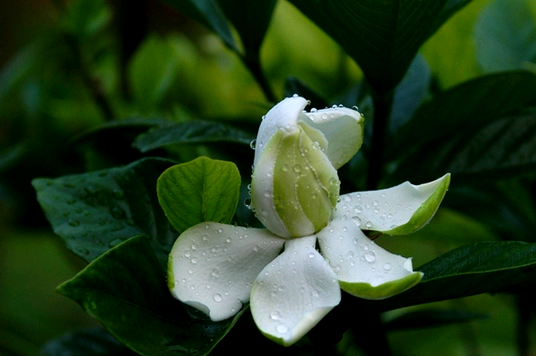
What to do if gardenia buds wither and fall off? Many people like gardenias and jasmine, because when they bloom the whole room is filled with fragrance, but people often encounter the phenomenon that after gardenias and jasmine bloom once, they are grown for several years without blooming again. Sometimes even if a gardenia grows buds, the buds soon wither. What exactly is going on? How should it be solved?
What to do if gardenia buds wither and fall off 1. Gardenia buds falling off: insufficient lightGardenias like light very much, and even in hot summer they can take full sun. If light is insufficient for a long time, gardenias find it relatively difficult to produce flower buds.
SolutionThis causes failure to bloom. Therefore, ensure sufficient light is provided, with at least 4 hours of direct sunlight per day.
2. Gardenia buds falling off: soil in the pot becoming alkaline or compactedGardenia is a typical acid-loving flower. If potted gardenias are not given acidified water, over time the soil very easily becomes alkaline, especially in northern regions. After the soil becomes alkaline, gardenias show malnutrition and yellow leaves, and even surviving is already difficult, let alone blooming. Some people like to use heavy, sticky mud to grow gardenias; after the soil compacts, water cannot soak in and the soil is not breathable, which also easily causes poor growth in gardenias and prevents blooming.
SolutionWhen watering normally, pay attention to combining it with the application of ferrous sulfate or acetic acid water to maintain the pH of the soil, and loosen the soil frequently to ensure the soil's looseness and breathability.
3. Gardenia buds falling off: lack of phosphorus and potassium fertilizerSome friends pay great attention to fertilizing when growing flowers, and the gardenia grows lush branches and leaves but simply does not bloom. This is often because too much nitrogen fertilizer is applied while phosphorus and potassium fertilizer is insufficient. If phosphorus and potassium fertilizer are lacking, gardenias will also find it very difficult to produce flower buds normally, so they do not bloom, or even if buds appear, the buds soon wither.
SolutionWhen caring for gardenias, pay attention to increasing the amount of phosphorus and potassium fertilizer applied, and keep nutrients balanced rather than supplementing only one-sidedly.