How do you rescue a wilted nerve plant so it recovers its vitality?
A perfectly healthy nerve plant may suddenly be found wilted, and growers do not know what to do. In fact, there are generally three reasons a nerve plant wilts: lack of water, waterlogged soil, and cold weather. So what should you do when a nerve plant wilts?
Analysis of the reasons a nerve plant wilts:
1. Lack of water
Because some growers do not water thoroughly, the nerve plant ends up short of water. The best solution is to replenish water immediately; generally speaking, it can recover in half a day. The correct watering method is to check the surface soil, water when dry and withhold when wet, and water thoroughly when you do water. Do not water on a fixed schedule; change it according to the soil and the weather at any time. The surface soil is the shallow layer 3~5 cm deep. Test the moisture with a toothpick or tweezers, and water thoroughly once it has dried out completely.
2. Overwatering
Frequent watering causes water to accumulate inside the soil, the roots cannot breathe properly, and this leads to root rot and wilting. A plant with root rot from waterlogging is generally very hard to bring back; growers can try pulling it out and replanting it, but the chance of recovery is not very great.
3. Temperature too low
When the temperature drops below 13°C, the nerve plant's leaves turn yellow and wilt, so in regions where the temperature cannot be guaranteed in winter, it is advisable not to keep nerve plants casually.
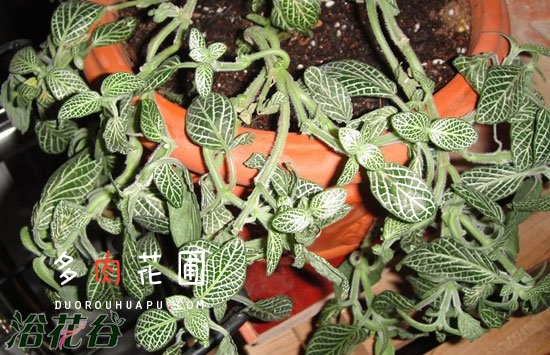
Now let us go over the basic habits of the nerve plant:
The nerve plant likes a hot, humid and semi-shaded environment. The nerve plant is a heat-loving plant and is especially sensitive to temperature; the optimum growing temperature is 18-24°C. In winter the temperature should not be lower than 13°C; at 13-16°C it can maintain normal growth. Below 13°C, the nerve plant stops growing and some leaves begin to drop, but the stems will not be frost-damaged; if the room temperature rises back above 18°C, it can continue to sprout new leaves. If the temperature falls below 8°C, the plant will freeze and die.
The nerve plant prefers a humid environment, and during the growing season it needs relatively high air humidity. Especially in the hot summer season, when water evaporation is high and the air is dry, besides watering to increase the moisture of the potting soil, misting the leaves and sprinkling water on the ground are even more necessary. Maintaining relatively high air humidity is good for the growth of the nerve plant's stems and leaves. However, the potting soil must drain well and must not become waterlogged, and the leaves must not be soaked in water mist for long periods, otherwise the leaves turn white in color and are prone to dropping and rotting. But in winter or on rainy days, the potting soil can be slightly drier and the air humidity can be moderate.
For the nerve plant, diffused light is best, and direct light should be avoided. In summer, a shade net is needed, with a shading rate of 50%-60% being most suitable. In winter, plenty of sunlight is needed, with slight shading at noon for protection; on rainy and snowy days, supplementary light should be added, so that the leaves grow robustly, the leaf color is emerald green, and the veins are clear. If it is too shaded for a long time, the stems and leaves tend to grow leggy and the ornamental value of the leaves is poor. For planting the nerve plant, the soil should be a sandy loam rich in humus.
What to do when a nerve plant wilts, and how to prevent a nerve plant from wilting
The nerve plant is a common indoor foliage plant, but during care, improper maintenance and other reasons may cause the nerve plant to wilt, seriously affecting its ornamental value. So what should you do when a nerve plant wilts? How do you prevent a nerve plant from wilting? Read on below to find the answers.
What to do when a nerve plant wilts
What to do when a nerve plant wilts, part one: lack of water
The nerve plant was not watered thoroughly, causing it to lack water and wilt. The best solution is to replenish water immediately; generally speaking, it can recover in half a day. The correct watering method is to check the surface soil, water when dry and withhold when wet, and water thoroughly when you do water. Do not water on a fixed schedule; change it according to the soil and the weather at any time. The surface soil is the shallow layer 3~5 cm deep. Test the moisture with a toothpick or tweezers, and water thoroughly once it has dried out completely.
What to do when a nerve plant wilts, part two: overwatering
Watering the nerve plant frequently causes water to accumulate inside the soil, the roots cannot breathe properly, and this leads to root rot and wilting. Try pulling the nerve plant out and replanting it, but the chance of recovery is not very great.
What to do when a nerve plant wilts, part three: temperature too low
When the temperature drops below 13°C, the nerve plant's leaves turn yellow and wilt, so when the temperature cannot be guaranteed in winter, it is advisable not to keep nerve plants casually.
How to prevent a nerve plant from wilting
The nerve plant prefers a humid environment, and during the growing season it needs relatively high air humidity. Especially in the hot summer season, when water evaporation is high and the air is dry, besides watering to increase the moisture of the potting soil, misting the leaves and sprinkling water on the ground are even more necessary. Maintaining relatively high air humidity is good for the growth of the nerve plant's stems and leaves. However, the potting soil must drain well and must not become waterlogged, and the leaves must not be soaked in water mist for long periods, otherwise the leaves turn white in color and are prone to dropping and rotting. In winter or on rainy days, the potting soil can be slightly drier and the air humidity can be moderate.
For the nerve plant, diffused light is best, and direct light should be avoided. In summer, a shade net is needed, with a shading rate of 50%-60% being most suitable. In winter, plenty of sunlight is needed, with slight shading at noon for protection; on rainy and snowy days, supplementary light should be added, so that the leaves grow robustly, the leaf color is emerald green, and the veins are clear. If it is too shaded for a long time, the stems and leaves tend to grow leggy and the ornamental value of the leaves is poor.