A Detailed Guide to Hydroponic Methods and Techniques for Bird's Nest Fern
Bird's nest fern, also known as Shan Su Hua, is a species in the genus Asplenium of the family Aspleniaceae. The bird's nest fern is an epiphytic fern, a perennial shade-loving herbaceous foliage plant. Bird's nest fern can be grown hydroponically, but practice has shown that soil culture makes it grow better. When growing bird's nest fern hydroponically, you usually need to be familiar with some care points:
1. For hydroponic bird's nest fern, choose a smaller single plant and use the potted root-washing method.
2. During the growing season, spray water on the leaves frequently to raise air humidity.
3. Pay attention to fertilizer supply; when fertilizer is lacking or the temperature is too low, the leaf margins turn brown.
4. Indirect light is sufficient; avoid harsh sun exposure, so take care to shade it in summer.
5. In winter it can overwinter at above 8 degrees Celsius.
6. In summer, change the water about every 20 days; in winter the interval can be longer.
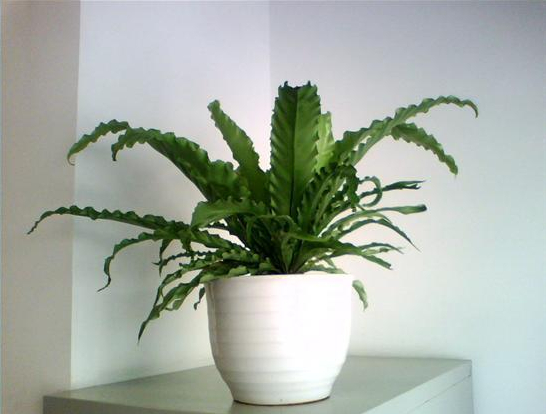
Bird's nest fern often grows epiphytically on tree trunks in rainforests or monsoon forests, or on rocks beneath the forest. The clustered bird's nest can catch large amounts of dead branches and fallen leaves, bird droppings and rainwater; these materials are converted into humus, which can serve as its own nutrients, and at the same time can also provide settling conditions for other tropical epiphytic plants, such as orchids and other tropical epiphytic ferns. Its ecological habit is to prefer high temperature and humidity, and it is not tolerant of strong light.
Precautions for Hydroponic Plants and Flowers Overwintering
Winter is here, and our flowers and plants will face a test. According to my experience, the mortality rate of hydroponic plants in winter is higher than at other times, and almost all hydroponic plants are less cold-resistant than potted plants. So to protect our flowers and plants we must start now. Below is a brief introduction to some methods; you can start doing them according to your own situation.1. Climate Overview In November, the weather in northern regions already feels cold, with strong cold air from time to time, occasionally accompanied by early frost; rainfall is also much less or stops, and the temperature drops day by day, gradually heading toward winter. 2. Temperature for Hydroponic Flowers Many friends ask me: "What do you think the minimum limit for hydroponic plants is?" I thought for a long time and could not come up with a clear answer, so I can only say: my hydroponic plants can withstand 5 degrees; below 5 degrees my hydroponic plants also struggle. (Referring to most green foliage plants) However, if we want to improve the cold resistance of plants, we need to do some cold-resistance training for the plants in advance for overwintering.
3. Cold-Resistance Training for Hydroponic Plants Since it is training, first let me explain two points: 1. The word "training" refers to a process; if you cannot keep it up, it cannot be called training; 2. The word "training" indicates that there must be a certain limit; only without going to excess can it produce good results. Methods for cold-resistance training of hydroponic plants: (1) Move the hydroponic plants to a sunny place to strengthen light exposure. Be careful to use newspaper to shade the container to prevent a sudden rise in water temperature, algae, and the "light pruning phenomenon" from affecting the plants. For round containers, also prevent the "magnifying glass" effect from burning the plant roots. Add nutrient solution regularly every week; as far as possible choose a flowering-type nutrient solution, apply less nitrogen fertilizer and more phosphorus and potassium, so as to accumulate nutrients and improve cold resistance. (2) Move the plants to a place with ample light to facilitate photosynthesis in the flowers and accumulate sufficient nutrients, improving the cold resistance of the plants. (3) Cold-resistance training means putting the plants outdoors or opening windows when the temperature drops in autumn, letting the plants go through a process of temperature change and physiologically form adaptation to low temperatures. When training plants, be sure that under conditions the plants can endure, let the plants receive training at as low a temperature as possible, so that the plants gradually adapt to a low-temperature environment, which is beneficial for overwintering. During the day, ventilate more and open windows to keep consistent with the outdoor temperature; you can open the windows from morning to afternoon, but close them at night. Do not overtrain; it is impossible for plants to adapt to ever-lower temperatures without limit, and cold-resistance training cannot make plants break through their own cold resistance. Trained plants are only slightly more cold-tolerant than plants that have not undergone cold-resistance training. Do not mistakenly think that just because my plant has undergone cold-resistance training it is no longer afraid.
(4) The above training is all carried out under relatively normal temperature conditions. If trained plants suddenly encounter a sharp drop in temperature, they should temporarily be moved to a sunny place and the windows closed; after the temperature rises slightly and stabilizes, continue training. If you keep forgetting to close the windows, a large temperature drop may very likely cause leaf drop. Remember that cold wind must never blow directly on the plants. Cold-resistance training is mainly aimed at plants that do not go dormant or are semi-dormant in winter; plants that go dormant in winter do not need training. (5) The water temperature when changing water should not differ too greatly, otherwise the roots will suffer physiological disorder, affecting the roots' absorption of water and nutrients and also causing leaf drop. (6) They must be brought indoors in good time and placed in a warm place or near a heater. In the first week after being brought indoors, doors and windows should also be opened to let the plants have a slight adaptation process. Never overtrain and cause cold damage, and do not place them near the heater too early, to prevent being brought indoors too early from affecting nutrient accumulation or consuming nutrients too early, which is not good for hydroponic plants overwintering or for growing well the following year. As for timing, it is roughly before Frost's Descent that they should be brought indoors to overwinter. (7) Bring the plants indoors before frost to prevent frost damage. (8) Some plants do not need training at all and will basically die during the training process. For example, high-temperature-loving plants such as Anthurium andraeanum and Caladium bicolor should be brought indoors by November at the latest; any later and they will freeze to death.
4. Fertilizer and Water Management for Hydroponic Plants In October, once a week; the plants are still at the end of the growing period. In November, add less, 1-2 times per month; most plants are about to stop growing. From December onward to early spring, do not add nutrients. For most flowers, in this season the temperature is very low, and most plants are in a dormant or semi-dormant state, so generally there is no need to fertilize. The water level gradually decreases. In northern regions, after all the flowers are brought indoors, sometimes the heating is very hot, making the room very dry; pay attention to spraying water and maintaining humidity. 5. Statistics on Cold Resistance of Hydroponic Plants Strong cold resistance: sago palm, Aspidistra elatior, hyacinth, calla lily, Rhapis excelsa, Cyclamen persicum, Tropaeolum majus, Clivia miniata, Strelitzia reginae, Pilea cadierei, etc. Average cold resistance: Alocasia macrorrhizos, Epipremnum aureum, Chlorophytum comosum, Sansevieria trifasciata, Philodendron bipinnatifidum, etc. Low cold resistance: Anthurium andraeanum, Caladium bicolor, Epiphyllum oxypetalum, Epiphyllum hybrid, cactus, etc.
6. Several Methods for Cold Resistance of Hydroponic Plants 1. Wrapping method Use double-layer plastic bag film to cover the flower together with the bottle. You can DIY it yourself, using wire to make a frame and plastic bags as the film, or other better methods. Place it in a bright indoor spot. At noon each day when the temperature is higher, promptly remove the cover for ventilation. Suitable for high-end plants; the artificial "microclimate" helps maintain humidity, prevents dust and cold, and makes the branches and leaves fresher and more lovely. 2. Pruning method For most woody hydroponic plants, remove yellow leaves and old leaves by pruning, and shorten long branches. This is mainly to prevent tender branches, old leaves and yellow leaves from consuming the nutrients the plant has accumulated. 3. Potting method For many plants that root quickly and grow quickly, they can be put into pots to overwinter, with reduced watering or no watering and no fertilizing. Switch back to hydroponics the following year. 4. Grouping method Usually hydroponic plants are placed arbitrarily; to get through winter, you can gather them all together, giving up temporary aesthetics in exchange for their lives. When placing them, gather them in a sunny place, a place with ample light. And pay attention to some small tips: put sun-loving ones in the front row, shade-loving ones in the back row, small ones in the front row, large ones in the back row. This saves space and also allows centralized heating, which is good for unified management and keeping warm and raising the temperature. (In some areas without heating, there is no need for every household to install an air conditioner)
5. Cold-protection training method (mentioned above, not repeated here) Plants suitable for hydroponics in this season: Let's divide them by temperature: Maintain around 05 degrees: Spathiphyllum, Rhapis excelsa, Aucuba japonica var. variegata, Chamaedorea elegans, Hedera helix, white calla lily, colored calla lily, Ficus elastica, Pelargonium, Schefflera arboricola var. variegata, Nephrolepis cordifolia, Adiantum, etc. For more difficult ones you can try: Cordyline fruticosa, Araucaria heterophylla, Asparagus densiflorus. Maintain around 10 degrees: Besides the above, Pachira aquatica, Clivia miniata, Dracaena, pineapple, Caryota mitis, Epipremnum aureum, Philodendron bipinnatifidum, Chlorophytum comosum, Sansevieria trifasciata, Alocasia macrorrhizos, Syngonium podophyllum, Strelitzia reginae, etc. Maintain around 15 degrees: Besides the above, Euphorbia pulcherrima, Cyclamen persicum, Pericallis hybrida, Dieffenbachia, Codiaeum variegatum, bird's nest fern, Fittonia, Sansevieria, Peperomia, etc. For more difficult ones you can try: Anthurium andraeanum, cactus. 7. Clinical Symptoms of Hydroponic Plants in Winter Generally, hydroponic plants will show symptoms of various sizes during overwintering, such as: wilting leaves, leaf drop, withered branches, fruit drop, flower drop, but as long as they can get through the cold winter, that is victory.
Key Points for Overwintering Hydroponic Plants and Flowers
Winter is here, and our flowers and plants will face a test. According to my experience, the mortality rate of hydroponic plants in winter is higher than at other times, and almost all hydroponic plants are less cold-resistant than potted plants. So to protect our flowers and plants we must start now. Below is a brief introduction to some methods; you can start doing them according to your own situation.1. Climate Overview
In November, the weather in northern regions already feels cold, with strong cold air from time to time, occasionally accompanied by early frost; rainfall is also much less or stops, and the temperature drops day by day, gradually heading toward winter.
2. Temperature for Hydroponic Flowers
Many friends ask me: "What do you think the minimum limit for hydroponic plants is?" I thought for a long time and could not come up with a clear answer, so I can only say: my hydroponic plants can withstand 5 degrees; below 5 degrees my hydroponic plants also struggle. (Referring to most green foliage plants) However, if we want to improve the cold resistance of plants, we need to do some cold-resistance training for the plants in advance for overwintering.
3. Cold-Resistance Training for Hydroponic Plants
Since it is training, first let me explain two points:
1. The word "training" refers to a process; if you cannot keep it up, it cannot be called training;
2. The word "training" indicates that there must be a certain limit; only without going to excess can it produce good results.
Methods for cold-resistance training of hydroponic plants:
(1) Move the hydroponic plants to a sunny place to strengthen light exposure. Be careful to use newspaper to shade the container to prevent a sudden rise in water temperature, algae, and the "light pruning phenomenon" from affecting the plants. For round containers, also prevent the "magnifying glass" effect from burning the plant roots. Add nutrient solution regularly every week; as far as possible choose a flowering-type nutrient solution, apply less nitrogen fertilizer and more phosphorus and potassium, so as to accumulate nutrients and improve cold resistance.
(2) Move the plants to a place with ample light to facilitate photosynthesis in the flowers and accumulate sufficient nutrients, improving the cold resistance of the plants.
(3) Cold-resistance training means putting the plants outdoors or opening windows when the temperature drops in autumn, letting the plants go through a process of temperature change and physiologically form adaptation to low temperatures. When training plants, be sure that under conditions the plants can endure, let the plants receive training at as low a temperature as possible, so that the plants gradually adapt to a low-temperature environment, which is beneficial for overwintering. During the day, ventilate more and open windows to keep consistent with the outdoor temperature; you can open the windows from morning to afternoon, but close them at night. Do not overtrain; it is impossible for plants to adapt to ever-lower temperatures without limit, and cold-resistance training cannot make plants break through their own cold resistance. Trained plants are only slightly more cold-tolerant than plants that have not undergone cold-resistance training. Do not mistakenly think that just because my plant has undergone cold-resistance training it is no longer afraid.
(4) The above training is all carried out under relatively normal temperature conditions. If trained plants suddenly encounter a sharp drop in temperature, they should temporarily be moved to a sunny place and the windows closed; after the temperature rises slightly and stabilizes, continue training. If you keep forgetting to close the windows, a large temperature drop may very likely cause leaf drop. Remember that cold wind must never blow directly on the plants. Cold-resistance training is mainly aimed at plants that do not go dormant or are semi-dormant in winter; plants that go dormant in winter do not need training.
(5) The water temperature when changing water should not differ too greatly, otherwise the roots will suffer physiological disorder, affecting the roots' absorption of water and nutrients and also causing leaf drop.
(6) They must be brought indoors in good time and placed in a warm place or near a heater. In the first week after being brought indoors, doors and windows should also be opened to let the plants have a slight adaptation process. Never overtrain and cause cold damage, and do not place them near the heater too early, to prevent being brought indoors too early from affecting nutrient accumulation or consuming nutrients too early, which is not good for hydroponic plants overwintering or for growing well the following year. As for timing, it is roughly before Frost's Descent that they should be brought indoors to overwinter.
(7) Bring the plants indoors before frost to prevent frost damage.
(8) Some plants do not need training at all and will basically die during the training process. For example, high-temperature-loving plants such as Anthurium andraeanum and Caladium bicolor should be brought indoors by November at the latest; any later and they will freeze to death.
4. Fertilizer and Water Management for Hydroponic Plants
In October, once a week; the plants are still at the end of the growing period.
In November, add less, 1-2 times per month; most plants are about to stop growing.
From December onward to early spring, do not add nutrients. For most flowers, in this season the temperature is very low, and most plants are in a dormant or semi-dormant state, so generally there is no need to fertilize.
The water level gradually decreases.
In northern regions, after all the flowers are brought indoors, sometimes the heating is very hot, making the room very dry; pay attention to spraying water and maintaining humidity.
5. Statistics on Cold Resistance of Hydroponic Plants
Strong cold resistance: sago palm, Aspidistra elatior, hyacinth, calla lily, Rhapis excelsa, Cyclamen persicum, Tropaeolum majus, Clivia miniata, Strelitzia reginae, Pilea cadierei, etc.
Average cold resistance: Alocasia macrorrhizos, Epipremnum aureum, Chlorophytum comosum, Sansevieria trifasciata, Philodendron bipinnatifidum, etc.
Low cold resistance: Anthurium andraeanum, Caladium bicolor, Epiphyllum oxypetalum, Epiphyllum hybrid, cactus, etc.
6. Several Methods for Cold Resistance of Hydroponic Plants
1. Wrapping method
Use double-layer plastic bag film to cover the flower together with the bottle. You can DIY it yourself, using wire to make a frame and plastic bags as the film, or other better methods. Place it in a bright indoor spot. At noon each day when the temperature is higher, promptly remove the cover for ventilation. Suitable for high-end plants; the artificial "microclimate" helps maintain humidity, prevents dust and cold, and makes the branches and leaves fresher and more lovely.
2. Pruning method
For most woody hydroponic plants, remove yellow leaves and old leaves by pruning, and shorten long branches. This is mainly to prevent tender branches, old leaves and yellow leaves from consuming the nutrients the plant has accumulated.
3. Potting method
For many plants that root quickly and grow quickly, they can be put into pots to overwinter, with reduced watering or no watering and no fertilizing. Switch back to hydroponics the following year.
4. Grouping method
Usually hydroponic plants are placed arbitrarily; to get through winter, you can gather them all together, giving up temporary aesthetics in exchange for their lives. When placing them, gather them in a sunny place, a place with ample light. And pay attention to some small tips: put sun-loving ones in the front row, shade-loving ones in the back row, small ones in the front row, large ones in the back row. This saves space and also allows centralized heating, which is good for unified management and keeping warm and raising the temperature. (In some areas without heating, there is no need for every household to install an air conditioner)
5. Cold-protection training method (mentioned above, not repeated here)
Plants suitable for hydroponics in this season:
Let's divide them by temperature:
Maintain around 05 degrees: Spathiphyllum, Rhapis excelsa, Aucuba japonica var. variegata, Chamaedorea elegans, Hedera helix, white calla lily, colored calla lily, Ficus elastica, Pelargonium, Schefflera arboricola var. variegata, Nephrolepis cordifolia, Adiantum, etc. For more difficult ones you can try: Cordyline fruticosa, Araucaria heterophylla, Asparagus densiflorus.
Maintain around 10 degrees: Besides the above, Pachira aquatica, Clivia miniata, Dracaena, pineapple, Caryota mitis, Epipremnum aureum, Philodendron bipinnatifidum, Chlorophytum comosum, Sansevieria trifasciata, Alocasia macrorrhizos, Syngonium podophyllum, Strelitzia reginae, etc.
Maintain around 15 degrees: Besides the above, Euphorbia pulcherrima, Cyclamen persicum, Pericallis hybrida, Dieffenbachia, Codiaeum variegatum, bird's nest fern, Fittonia, Sansevieria, Peperomia, etc. For more difficult ones you can try: Anthurium andraeanum, cactus.