When is the best time to sow China pinks (Dianthus chinensis)?
Some gardening enthusiasts want to grow China pinks (Dianthus chinensis) themselves, but they don't know when to sow them. In fact, the sowing time for China pinks varies from region to region. Gardeners need to know that the optimal germination temperature for China pinks seeds is 21°C-22°C, but this temperature is not an absolute value.
Sowing is not just about seeing germination; there is also the subsequent care to consider. China pinks are cold-hardy but not heat-tolerant. If sown in spring or summer, they will likely struggle to survive the summer, because many places are very hot and stuffy in summer. So the relatively ideal sowing months are September to December, because many gardeners now sow on balconies and have seedling trays, so the temperature can be artificially created, and after germination there is no need to worry about getting China pinks through the summer. Although sowing in winter can also create the germination temperature, many gardeners' homes do not have abundant light, which may cause the seedlings to become leggy. So when sowing China pinks, gardeners should consider temperature, light, and subsequent care together as three aspects.
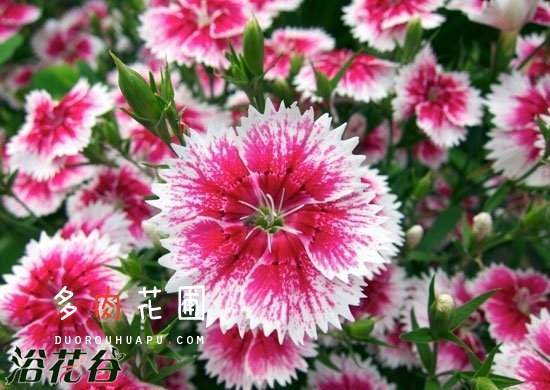
When to sow China pinks and the flower meaning of China pinks
Many beginners at growing flowers want to try growing China pinks (Dianthus chinensis), but they don't know when to sow them? What is the flower meaning of China pinks? Let's take a look at the answers together below.
When to sow China pinks
China pinks, also called Shiyangjin, are perennial herbaceous plants of the Caryophyllaceae family, native to Northeast China, North China, the Yangtze River basin, and Southeast Asia. From the distribution areas, we can tell that China pinks are a relatively cold-hardy plant. To understand when to sow China pinks, let's first look at their basic growth habits.
Because of its place of origin, China pinks are relatively cold-hardy but cannot tolerate extreme heat. The editor's China pinks were definitely placed on the balcony where the temperature was too high, so they did not grow. Alas~ At the same time, it also likes environments with dry, ventilated, well-drained, fertile soil. The best germination temperature for the seeds is 21-22°C.
Based on the above information, the best time for sowing and raising seedlings of China pinks is September each year. September has just passed the hottest period of summer, but the temperature is not too low, which is just right for sowing China pinks. Generally, they sprout in 10 days. The editor thinks the germination rate of China pinks is quite high, but note that when sowing, they must not be too densely planted, otherwise it is very easy to cause the newly sprouted seedlings to die.
China pinks seeds are very small, so when sowing, we just need to scatter them in an open-field seedbed. Since the seeds are scattered on the surface, while keeping the soil pot moist, it is best to soak the seeds in some water before sowing. Besides scattering seeds, China pinks can also be grown from cuttings. The best time for cuttings propagation is from October to February of the following year.
The flower meaning of China pinks:
Since the flower color of China pinks is mostly purple, and purple symbolizes elegance and nobility, in the south they are mostly used for decorating flower borders and flower beds. Seen from afar, under the care of the breeze, the layer upon layer of waves stirred up by China pinks are like elegant little elves dancing, so the flower meaning of China pinks has been defined by people as feminine beauty.
More information