Spring Grass: Planting Methods and Daily Care Tips
Division
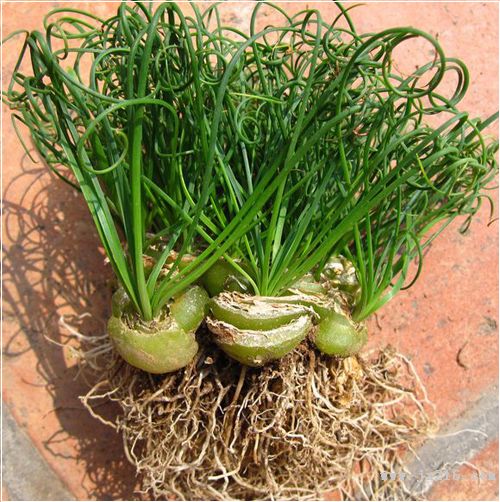
This can be done together with repotting in autumn. The method is to break off the small bulbs that sprout around the large bulb and plant them separately in potting soil; they will survive whether they have roots or not.
Sowing
This method is suitable for mass propagation and is carried out in autumn. After sowing, cover with a thin layer of soil and place a piece of glass over it to keep the soil and air moist, which gives a high germination rate. After sowing and during the seedling stage, to avoid washing the seeds or young seedlings out of the soil when watering, use the "seep-watering" method: place the pot in a basin of water so that water slowly seeps up through the drainage holes at the bottom of the pot to moisten the soil.
Propagation Techniques
Spring Grass can be propagated by division and sowing.
Division: This can be done together with repotting in autumn. The method is to break off the small bulbs that sprout around the large bulb and plant them separately in potting soil; they will survive whether they have roots or not.
Temperature: It can overwinter safely as long as the temperature does not drop below 5°C.
Light: Spring Grass loves light, and during the growing season it should be given plenty of light. If light is insufficient, the leaves will be thin and weak and will curl poorly, making it hard to bring out the unique charm of Spring Grass. Plants grown in full sun have low, thick, sturdy leaves that spiral and twist, giving them high ornamental value. However, after April, a shade net should still be put up to avoid harsh sun exposure and prevent the leaf tips from drying out.
Water and Fertilizer: Spring Grass likes a moist environment. During the growing season, keep the soil moist but not waterlogged. If it is dry and short of water for a long time, the plant will not die, but growth will stall, the leaves will turn yellow and may even wither; if the potting soil stays waterlogged for a long time, the bulb will rot. You can mist the plant frequently to increase air humidity and prevent the leaf tips from drying out. In summer, to avoid being flooded during the rainy season, place the pot on a rack or a stand of a certain height, and pay attention to controlling watering to prevent the bulb from rotting due to waterlogging, but do not let the potting soil dry out completely either, so as to avoid the bulb drying up. Each year from October to April of the following year is the plant's vigorous growth period. Apply a once-monthly diluted well-rotted liquid fertilizer or compound fertilizer to provide sufficient nutrients and keep the plant growing vigorously. After the flower stalk emerges in spring, spray a 0.5% potassium dihydrogen phosphate solution 2 to 3 times to promote flowering.
How to Plant Spring Grass, Spring Grass Planting Methods
Spring Grass, also called Spiral Grass, is a small potted ornamental plant newly introduced in recent years and is very popular among flower lovers. Spring Grass has a unique form, with quaint bulbs, and depending on the variety, its leaves resemble springs, kelp drifting in water, curled long hair, or wrought-iron works. Its lines are smooth and graceful and full of variation, and its flowers are elegantly understated and fresh. It is suitable for growing in small pots and using as an accent on windowsills, desks and similar places. Below is an introduction to how to plant and grow Spring Grass, in the hope that it will help flower lovers who are about to grow Spring Grass.
How to Plant Spring Grass 1. Light and TemperatureSpring Grass likes light. If light is insufficient, its leaves will become thin and weak and will curl poorly, losing their ornamental value. Sufficient light, on the other hand, can meet the growth needs of Spring Grass, making it spiral and twist and giving it strong ornamental appeal.
However, in summer a shade net needs to be put up for shading, to prevent intense direct light from scorching the leaf tips. Spring Grass likes a cooler environment and is rather afraid of heat. Generally, in winter the temperature can be kept above 10°C for normal growth, and it can overwinter safely as long as it does not drop below 5°C. In summer the plant begins to go dormant and the leaves dry up; it can be placed in a ventilated, dry place to pass the summer, and after autumn arrives it can grow again and be managed normally.
2. SoilSpring Grass likes fertile, loose soil and requires soil rich in humus. Generally, leaf mold or peat soil can be chosen and mixed with sand to ensure good drainage; a little bone meal can be added to the soil as a base fertilizer.
3. Water and Fertilizer ManagementSpring Grass likes a moist growing environment. During the growing period, keep the soil moist but not waterlogged; waterlogging will cause the Spring Grass bulb to rot. Also be careful not to let it lack water, otherwise the Spring Grass plant will stop growing and its leaves will turn yellow.
You can frequently mist the Spring Grass plant to maintain higher air humidity, and drain promptly in the rainy season. As for fertilizing, during the vigorous growth period each year, apply a diluted well-rotted liquid fertilizer once a month to keep the plant growing vigorously. When it blooms in spring, spray some phosphorus fertilizer to promote flowering.
4. Pest and Disease ControlSpring Grass has few pests and diseases. The main pests are snails and nematodes in the soil, which harm the bulb. When planting, the soil can be treated at high temperature to kill pests and eggs in the soil, or insecticides such as carbofuran can be mixed into the potting soil. However, because 'carbofuran' is a highly toxic pesticide with very poor degradability, improper use can harm the environment, so it must be used with great care.
Spring Grass Planting Precautions 1. Spring Grass PollinationAfter Spring Grass blooms, different plants should be selected for artificial pollination so that the plants set seed. After the seeds mature, be careful to harvest them and not let them scatter; if you do not want to keep seeds, promptly cut off the remaining flower stalks after flowering to avoid consuming too many nutrients.
Spring Grass Propagation MethodsSpring Grass is generally propagated by sowing. After flowering, you can choose cross-pollination between different plants to make them set seed, and after taking out the seeds you can sow them. Note that if you are not keeping seeds, you can cut off the flower stalks after Spring Grass blooms to reduce nutrient consumption.
3. Repotting Spring GrassSpring Grass needs repotting, usually in August each year. When repotting, trim the roots, and when potting, the bulb can be left exposed above the soil surface. After replanting, water thoroughly and place it in a spot with plenty of light for care.
How to Grow Spring Grass: Spring Grass Planting Methods and Precautions
Spring Grass is a plant that likes shade and cannot tolerate high temperatures. Its leaves are curled, just like springs, which is very interesting. Green leaves are relatively common, and its ornamental value is high, which is why it has attracted many people who want to grow it. Before growing it, understanding its cultivation methods is essential.
How to Grow Spring Grass
1. Spring Grass likes cool conditions and fears heat. Its growing period is from September each year to April of the following year. In winter the temperature should be kept at around 10°C to 20°C; in this environment the plant can continue to grow and normal fertilizer and water management can be carried out. If watering is controlled to make the plant go dormant, it can overwinter safely indoors as long as the temperature does not drop below 0°C.
2. In mid-to-late May, as the temperature rises, the above-ground leaves gradually wither and the plant enters dormancy. You can remove the dried leaves and leave the bulb in the original pot to pass the summer. The pot should be placed in a dry, ventilated place without standing water. Wait until late August or early September, when the weather turns cooler, and new shoots will grow from the bulb; then you can slowly return to normal management.
3. It is worth noting that during summer dormancy, you do not have to withhold water for the entire summer; you can keep it slightly moist. Although the leaves have dried up, the underground bulb will still grow. Do not pour water into the dried leaf centers. Over the course of a summer, the bulb will grow considerably larger.
Spring Grass Planting Methods
1. Light: Spring Grass loves light, and during the growing season it should be given plenty of light. If light is insufficient, the leaves will be thin and weak and will curl poorly, making it hard to bring out the unique charm of Spring Grass. Plants grown in full sun have low, thick, sturdy leaves that spiral and twist, giving them high ornamental value. However, after April, a shade net should still be put up to avoid harsh sun exposure and prevent the leaf tips from drying out.
2. Watering: Spring Grass likes a moist environment. During the growing season, keep the soil moist but not waterlogged. If it is dry and short of water for a long time, the plant will not die, but growth will stall, the leaves will turn yellow and may even wither; if the potting soil stays waterlogged for a long time, the bulb will rot. You can mist the plant frequently to increase air humidity and prevent the leaf tips from drying out. In summer, to avoid being flooded during the rainy season, place the pot on a rack or a stand of a certain height, and pay attention to controlling watering to prevent the bulb from rotting due to waterlogging, but do not let the potting soil dry out completely either, so as to avoid the bulb drying up.
3. Fertilizing: Each year from October to April of the following year is the vigorous growth period of Spring Grass. Apply a diluted well-rotted liquid fertilizer or compound fertilizer once a month to provide sufficient nutrients and keep the plant growing vigorously. After the flower stalk emerges in spring, spray a 0.5% potassium dihydrogen phosphate solution 2 to 3 times to promote flowering.
4. Repotting: Spring Grass is generally repotted once a year at the end of August. The potting soil should be fertile and loose, rich in humus and with good drainage and air permeability. You can mix 3 parts leaf mold or peat soil with 2 parts vermiculite or sandy soil, and mix in a small amount of bone meal. When repotting, cut off the rotted roots. When planting, leave about 1/3 of the bulb exposed above the soil surface, water thoroughly after planting, and place it in a spot with plenty of light for care. Afterward, keep the soil moist, and before long new leaves will grow from the top of the bulb.
Precautions for Spring Grass
Spring Grass is generally propagated by sowing. After flowering, you can choose cross-pollination between different plants to make them set seed, and after taking out the seeds you can sow them. Note that if you are not keeping seeds, you can cut off the flower stalks after Spring Grass blooms to reduce nutrient consumption.
Spring Grass Propagation Methods
1. Division: Spring Grass can be propagated by division together with autumn repotting. The method is to break off the small bulbs that sprout around the large bulb and plant them separately in potting soil; they will survive whether they have roots or not.
2. Sowing: Spring Grass sowing is done in autumn. After sowing, cover with a thin layer of soil and place a piece of glass over it to keep the soil and air moist, which gives a high germination rate.
The cultivation method for Spring Grass is relatively simple. First, start with its growth habits, then strengthen management of fertilizer and water, light, temperature and other aspects in the later stage of cultivation. As long as these tasks are done well, the Spring Grass you grow will certainly do very well.