How to Keep Potted Flowers Warm in Winter? Master These Frost Protection Tips
1. How to Manage Potted Flowers in Winter?
Potted flowers in the north need to be moved indoors one after another in early winter. After bringing them indoors, the placement should take into account the characteristics of each type of flower. Therefore, pay attention to the following aspects:
(1) Flowers that bloom in winter and spring and flowers that love light and warmth: such as Christmas cactus, cyclamen, camellia, poinsettia and autumn-sown herbaceous flowers, as well as Milan and jasmine, should be placed on the windowsill or in a sunny spot near the windowsill.
(2) Evergreen flowers and trees that love sunlight but can tolerate low temperatures, or flowers in a dormant state: such as osmanthus and citrus, can be placed in a cool spot with scattered light.
(3) Flowers with generally low light requirements: such as potted water lilies and roses, can be placed in a cool, dark spot without light.
(4) Pay attention to ventilation indoors: throughout the entire winter, windows should be opened at noon on clear days for ventilation, to reduce the occurrence of pests and diseases, and also to help the flowers grow robustly.
(5) Fertilizing and watering: generally, potted flowers should have fertilizer and water strictly controlled. After the beginning of winter, the temperature continues to drop, the metabolism of flowers slows down, or they enter a dormant state. Apart from continuing to water and fertilize according to actual needs, generally potted flowers should have fertilizer and water strictly controlled. If the potting soil is not too dry, do not water it, especially for shade-tolerant flowers; even more, avoid excessive watering that causes root rot and leaf drop. Water used for watering flowers in winter must be exposed to sunlight so that the water temperature is close to room temperature before use. Generally, the appropriate watering time is around noon. For some shade-loving and moisture-loving evergreen flowers, such as asparagus fern and camellia, the leaves should often be sprayed and washed with water close to room temperature to facilitate photosynthesis.
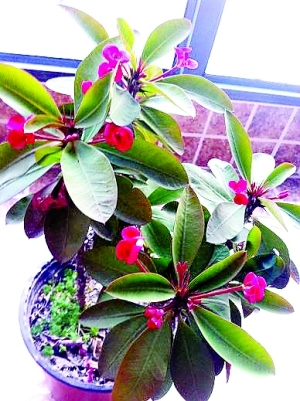
2. Winter Management of Potted Camellia
I. Frost protection and warmth. When the temperature drops below 0°C, move potted camellias to a sunny, warm, wind-sheltered spot outdoors, or place them in a plastic shed sealed on three sides and facing the sun on one side. They can also be placed indoors, but the location must have good light and ventilation. In severe cold and frosty weather, attention should be paid to keeping them warm; before a sudden temperature drop, it is best to move outdoor camellias indoors. If they are placed outdoors, plastic film, newspaper or cloth and other materials should be added as a cover at night.
II. Water and fertilizer management. Camellia likes a warm, humid environment and is afraid of waterlogging. Before flowering, watering should follow the principle of not watering if the potting soil is not dry, and watering thoroughly when watering.
How to Keep Potted Flowers Warm in Winter?
In winter, some more cold-tolerant flowering trees and bonsai can be left outdoors to overwinter naturally, but do not neglect cold protection and warmth for these trees and flowers, especially potted plants overwintering outdoors, because low temperatures can easily freeze the potting soil through and freeze the root system. For seedlings moved from the south to the north and cold-intolerant perennial flowers, frost protection measures must be taken to avoid low-temperature damage.How to Keep Potted Flowers Warm in Winter?
After the beginning of winter, the weather turns cold, and most potted flowers cannot withstand the outdoor cold. I believe many plant lovers have already moved their outdoor potted flowers indoors. In winter, potted plants are very easy to freeze to death, especially some southern plants, which are even less cold-resistant. How can potted plants be kept warm? How to Keep Potted Flowers Warm in Winter?
Step 1,Use plastic film
Use plastic film to build a warmth-retaining shed for the potted plants. In this way, the potted plants enter a greenhouse and are as warm as spring. Use bamboo or metal to build a frame, cover the film on top, and then secure the film with wire and the like.
How to Keep Potted Flowers Warm in Winter?
Step 2,Use a glass cover
Make a glass box to cover the potted plants. Generally, several pots in one box will do. You can buy a few pieces of glass and glue them into a box shape with glass adhesive.
How to Keep Potted Flowers Warm in Winter?
Step 3,Move indoors
Move them indoors. The indoor temperature is significantly higher than the outdoor temperature, so the potted plants will not freeze to death. If there is heating indoors, even better.
How to Keep Potted Flowers Warm in Winter?
Step 4,Use a charcoal stove for heating
If there are many potted plants, it is better to provide some warmth for these potted plants; otherwise, it would be such a pity if they froze to death. Burning a kang, or a charcoal-burning stove, are both very good options.
How to Keep Potted Flowers Warm in Winter?
Step 5,Balcony sunlight
If there is space on the balcony at home, placing them on the balcony is a good choice. It does not take up indoor space and also keeps the potted plants warm. Once the sun comes out on the balcony, it is like a glass greenhouse, very warm; and if a few plants are blooming, it is even more beautiful.
Precautions
Keeping potted plants warm is very important. Carefully cultivated flowers and trees are all the result of painstaking effort.
How to Keep Potted Flowers Warm in Winter? Essentials
In winter, some more cold-tolerant flowering trees and bonsai can be left outdoors to overwinter naturally, but do not neglect cold protection and warmth for these trees and flowers, especially potted plants overwintering outdoors, because low temperatures can easily freeze the potting soil through and freeze the root system. For seedlings moved from the south to the north and cold-intolerant perennial flowers, frost protection measures must be taken to avoid low-temperature damage.
How to Keep Potted Flowers Warm in Winter?
After the beginning of winter, the weather turns cold, and most potted flowers cannot withstand the outdoor cold. I believe many plant lovers have already moved their outdoor potted flowers indoors. In winter, potted plants are very easy to freeze to death, especially some southern plants, which are even less cold-resistant. How can potted plants be kept warm? How to Keep Potted Flowers Warm in Winter?
Step 1,Use plastic film
Use plastic film to build a warmth-retaining shed for the potted plants. In this way, the potted plants enter a greenhouse and are as warm as spring. Use bamboo or metal to build a frame, cover the film on top, and then secure the film with wire and the like.
How to Keep Potted Flowers Warm in Winter?
Step 2,Use a glass cover
Make a glass box to cover the potted plants. Generally, several pots in one box will do. You can buy a few pieces of glass and glue them into a box shape with glass adhesive.
How to Keep Potted Flowers Warm in Winter?
Step 3, move indoors
Move them indoors. The indoor temperature is significantly higher than the outdoor temperature, so the potted plants will not freeze to death. If there is heating indoors, even better.
How to Keep Potted Flowers Warm in Winter?
Step 4,Use a charcoal stove for heating
If there are many potted plants, it is better to provide some warmth for these potted plants; otherwise, it would be such a pity if they froze to death. Burning a kang, or a charcoal-burning stove, are both very good options.
How to Keep Potted Flowers Warm in Winter?
Step 5, balcony sunlight
If there is space on the balcony at home, placing them on the balcony is a good choice. It does not take up indoor space and also keeps the potted plants warm. Once the sun comes out on the balcony, it is like a glass greenhouse, very warm; and if a few plants are blooming, it is even more beautiful.
Precautions
Keeping potted plants warm is very important. Carefully cultivated flowers and trees are all the result of painstaking effort.